Festival Dates: 18 April - 22 April 2027
Location: Ura Valley, Bumthang
Festival Tour: Starts 18 April 2027 | Ends 22 April 2027
The Ura Yakchoe Tshechu Festival is one of Bhutan’s most meaningful community-based festivals, celebrated each spring in the remote Ura Valley of Bumthang. Unlike larger and more crowded tshechus, this festival feels deeply personal - rooted in local legend, faith and generations of living tradition.
At the heart of the celebration is the sacred Ura Yakchoe dance, performed to honor a revered relic believed to carry powerful blessings. According to local legend, a humble elderly woman once offered water to a visiting lama. When she returned, the lama had vanished, leaving behind a sack containing a sacred statue. This relic has been carefully preserved by her descendants and is ceremonially displayed during the festival each year, allowing villagers and visitors alike to receive blessings.
Another important highlight is the ritual procession of a small statue of Chana Dorje (Vajrapani), carried from Gaythen Temple across the countryside to Ura village. This symbolic journey represents protection, compassion, and spiritual continuity, reinforcing the festival’s strong connection to the land and its people.
Held at the Ura Temple overlooking the village- adorned with beautiful murals and a large statue of Guru Rinpoche - the Ura Yakchoe Tshechu offers a rare opportunity to experience authentic Bhutanese spirituality, untouched by mass tourism.
The Festival is Perfect for Meaningful Cultural Engagement, Soft Spring Travel, and Deep Bhutan Heritage.
| Day | Program Highlights | Overnight |
|---|---|---|
| Day 1 | Arrival in Paro, scenic drive to Thimphu; visit Tashichhoe Dzong and local craft markets. | Thimphu |
| Day 2 | Thimphu sightseeing including Memorial Chorten, Buddha Dordenma, Changangkha Lhakhang, and archery ground. | Thimphu |
| Day 3 | Drive to Punakha via Dochula Pass; visit Chimi Lhakhang and Punakha Dzong. | Punakha |
| Day 4 | Scenic full-day drive to Bumthang via Pele La Pass; visit Trongsa Dzong en route. | Bumthang |
| Day 5 | Drive to Ura Valley and experience the Ura Yakchoe Festival with sacred mask dances and local celebrations. | Ura Valley |
| Day 6 | Morning festival rituals in Ura; return to Bumthang with visits to Jakar Dzong, Jambay, Tamshing, and Kurjey Lhakhang. | Bumthang |
| Day 7 | Drive to Gangtey via Trongsa; visit Gangtey Monastery and Phobjikha Valley. | Gangtey |
| Day 8 | Drive back to Paro via Thimphu; optional local market or archery stop. | Paro |
| Day 9 | Hike to Tiger’s Nest Monastery; visit Kyichu Lhakhang and Drukgyel Dzong. | Paro |
| Day 10 | Transfer to Paro International Airport for final departure. | — |
Upon arrival at Paro International Airport, after completing immigration and visa formalities, you will be warmly welcomed by our representative at Paro International Airport. Enjoy a scenic drive to Thimphu, Bhutan’s capital, following the picturesque Paro–Thimphu valley. On arrival, check in to your hotel and take some time to relax.
In the afternoon, visit Tashichhoe Dzong, an impressive fortress-monastery that houses Bhutan’s main government offices and the central monastic body, reflecting the country’s unique blend of spirituality and governance.
Later, explore the local craft markets and handicraft areas, where artisans showcase traditional Bhutanese arts such as handwoven textiles, masks, paintings, wood carvings, and other locally made products.
In the evening, return to your hotel for dinner and overnight stay in Thimphu.
After breakfast, enjoy a relaxed day exploring the cultural and spiritual highlights of Thimphu.
Begin with a visit to the National Memorial Chorten, a sacred stupa dedicated to Bhutan’s Third King and an important gathering place for local worshippers. Continue to the impressive Buddha Dordenma, offering panoramic views over the Thimphu Valley.
Explore Changangkha Lhakhang, one of the oldest temples in the valley, followed by a visit to the Takin Preserve, home to Bhutan’s unique national animal.
Later, visit the Folk Heritage Museum to gain insight into traditional Bhutanese rural life. End the day at Changlimithang Stadium, where you may witness a traditional archery match, Bhutan’s national sport.
Dinner and overnight stay in Thimphu.
After breakfast, depart Thimphu and enjoy a scenic drive toward the warm and fertile Punakha Valley. The journey passes through forested hills and changing landscapes as you cross the famous Dochula Pass (3,050 m). On a clear day, enjoy panoramic views of the Himalayan range and a short walk among the 108 memorial chortens.
Descending into the valley, take a gentle walk through rice fields to Chimi Lhakhang, the Temple of Fertility, dedicated to the revered saint Drukpa Kunley, known as the Divine Madman.
Arrive in Punakha by afternoon and check in to your hotel. Later, visit the magnificent Punakha Dzong, beautifully located at the confluence of the Mo Chhu and Po Chhu rivers and considered one of Bhutan’s most impressive dzongs.
If time permits, enjoy a short hike to Khamsum Yulley Namgyal Chorten, offering lovely views over the Punakha Valley.
Dinner and overnight stay in Punakha.
After an early breakfast, begin a scenic full-day drive from Punakha to Bumthang, widely regarded as the spiritual heartland of Bhutan. The journey offers some of the country’s most dramatic mountain scenery.
Travel via Trongsa, crossing the high Pele La Pass (3,300 m), often adorned with prayer flags and panoramic Himalayan views on clear days. En route, stop at the historic Chendebji Chorten, a beautiful whitewashed stupa set in a peaceful mountain landscape.
In Trongsa, visit the impressive Trongsa Dzong, an important landmark in Bhutanese history and the ancestral seat of the royal family. Continue the drive across Yotong La Pass (3,430 m) before descending into the tranquil Bumthang Valley.
Arrive in Bumthang by late afternoon and check in to your hotel. The remainder of the day is free to relax and enjoy the peaceful surroundings.
Dinner and overnight stay in Bumthang.
After breakfast, depart from Bumthang on a scenic drive to the remote and beautiful Ura Valley, one of Bhutan’s highest and most traditional valleys.
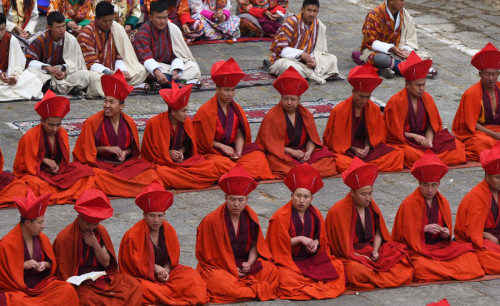
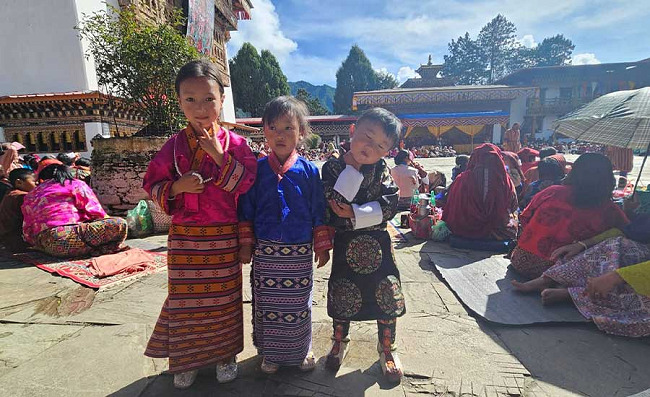
Today offers the rare privilege of witnessing the Ura Yakchoe Festival, a deeply spiritual and community-centered celebration unique to this valley. Locals arrive dressed in their finest traditional attire and ornate silver jewelry, creating a vibrant and joyful atmosphere.
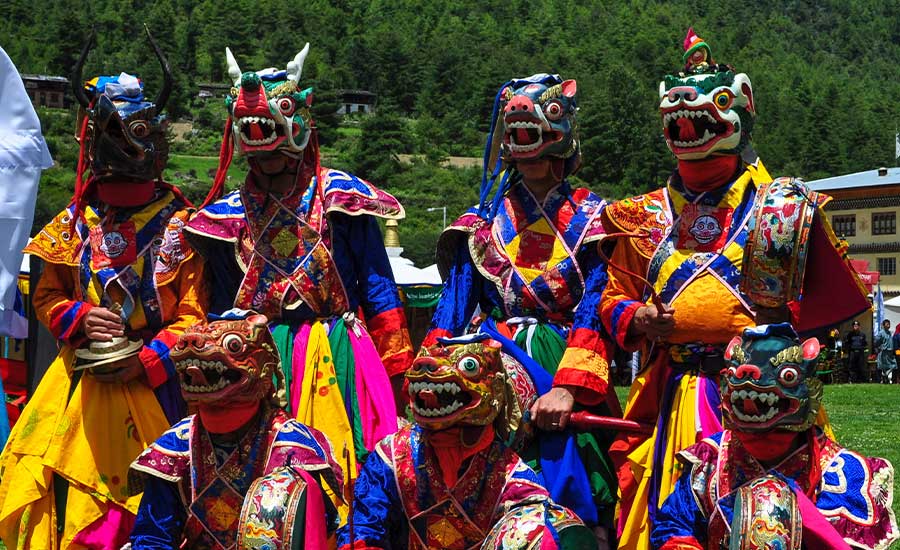
As the festival unfolds, observe sacred masked dances performed with precise choreography, including the powerful Thunderbolt Dance, symbolizing the triumph of wisdom over negativity. The performances, music, and rituals offer an authentic glimpse into Bhutan’s living spiritual heritage.
Spend the day immersing yourself in the festivities, interacting with locals, and absorbing the serene yet energetic spirit of Ura. This cultural encounter is a true highlight of the journey and an unforgettable insight into rural Bhutanese life.
In the late afternoon, settle into your accommodation in Ura and enjoy a peaceful evening surrounded by the valley’s timeless charm.
This morning, return to the Ura Yakchoe Festival for a final, meaningful experience. If possible, meet the Head Lama of Ura Valley, whose presence adds deep spiritual significance to the day.
As the celebrations continue, watch for the playful Atsara, the traditional festival clown, whose humorous gestures, witty mimicry, and light-hearted interactions bring joy and balance to the sacred rituals.
Throughout the festival, deities are invoked through ritual mask dances and blessings, believed to cleanse negative energies and bring good fortune. The vibrant costumes, rhythmic cymbals, long horns, and chanting monks create an immersive and unforgettable cultural atmosphere.
In the afternoon, drive back to Bumthang and enjoy guided visits to some of Bhutan’s most sacred monasteries:
Jakar Dzong – Built in 1667 by Ngagi Wangchuk, overlooking the Chokhor Valley
Jambay Lhakhang – Built in 659 AD by Tibetan King Songtsen Gampo
Tamshing Lhakhang – Founded in 1501 by the great tertön Pema Lingpa
Kurjey Lhakhang – Home to the sacred body imprint of Guru Rinpoche on a rock, one of Bumthang’s holiest sites
In the evening, return to your hotel and enjoy a relaxed dinner after a culturally rich and spiritually uplifting day.
After breakfast, depart Bumthang and begin a scenic drive toward the tranquil Gangtey Valley.
En route, visit Ta Dzong, which houses the Royal Heritage Museum, offering fascinating insight into Bhutan’s monarchy and history.
Continue to Trongsa Dzong, built in 1648 by Chogyal Minjur Tempa. Strategically located above the Mangde Chhu River, this impressive dzong served as the seat of power from which Bhutan’s first two kings ruled the country.
In the afternoon, drive onward to the beautiful Gangtey region. Visit Gangtey Monastery, founded by Gyaltse Pema Thinley, the grandson and mind reincarnation of the great tertön Pema Lingpa. The monastery offers sweeping views over the glacial valley below.
Later, visit the Black-Necked Crane Information Centre and enjoy a gentle exploration of the Phobjikha (Gangtey) Valley, one of the most beautiful glacial valleys in the Himalayas and the winter habitat of the endangered black-necked cranes.
In the evening, check in to your hotel, followed by dinner and a peaceful overnight stay in Gangtey.
After breakfast, depart Gangtey Valley and begin your return journey westward to Paro, retracing a scenic route through Bhutan’s tranquil valleys and ever-changing landscapes.
En route, pass through Thimphu, where you’ll enjoy a relaxed lunch break. With a population of approximately 114,551, Thimphu is famously known as the world’s only capital city without traffic lights, adding to its unique charm.
Along the way, there may be time to visit a lively local market or stop to observe a traditional archery match, where locals enthusiastically take part in Bhutan’s beloved national sport.
By late afternoon, arrive in Paro and check in to your hotel. The evening is free to relax, unwind, and enjoy the peaceful atmosphere of the Paro Valley.
After an early breakfast, set out for one of Bhutan’s most iconic experiences - a scenic hike to Taktsang Monastery, famously known as the Tiger’s Nest.
The memorable round-trip hike winds through pine and rhododendron forests, with prayer flags fluttering in the mountain breeze. Along the way, stop at a charming hillside café for breathtaking views of the monastery dramatically perched on a sheer cliff, nearly 900 meters above the Paro Valley.
Built in the 17th century, Taktsang is among Bhutan’s most sacred pilgrimage sites. According to legend, Guru Padmasambhava (Guru Rinpoche) flew here on the back of a tigress and meditated in a cave for three months. Though partially damaged by fire in 1998, the monastery has been lovingly restored and remains a powerful symbol of Bhutan’s spiritual heritage.
After descending, continue to Kyichu Lhakhang, one of Bhutan’s oldest and holiest temples, founded in 659 AD by Tibetan King Songtsen Gampo.
Later, visit Drukgyel Dzong, built in 1647 by Shabdrung Ngawang Namgyal, once used as a fortress to defend Bhutan against Tibetan invasions.
As the day winds down, enjoy free time to stroll along Paro’s charming main street—browse local shops, relax at cafés, and pick up handmade Bhutanese crafts and souvenirs.
Return to your hotel for dinner and a comfortable overnight stay in Paro.
After breakfast, your unforgettable Bhutan journey comes to a close as we transfer you to Paro International Airport for your onward flight.
Our representative will assist you with all departure formalities and ensure a smooth check-in process. With a traditional Bhutanese farewell and warm smiles, we say goodbye—not as a final goodbye, but with the hope of meeting again somewhere along the trail.
Safe travels, and we truly hope to welcome you back to Bhutan in the future.
The Ura Yakchoe Festival is held annually in Ura Valley, located in Bumthang, central Bhutan.
The festival is happening in 2026 from April 18th to April 22nd according to the Bhutanese Lunar Calendar.
Yes, the festival running from April 18th to 22nd April is confirmed in the local calendars, there may be slight changes depending on any religious reason since these are traditional Bhutanese festivals. Changes are often made to allow the festival to properly align with the main events and rituals of the celebrations.
No. Compared to the larger festivals in places like Paro and Thimphu, the Ura Yakchoe festival is less crowded, and a more authentic experience. Most people don't know it, despite it being a local, community event and being a more relaxed festival where you can meet and be with the local people.
The Ura Yakchoe Festival takes place in a high-altitude mountain valley, so dressing modestly, comfortably and in layers is essential. Clothing should respect local customs while also keeping you warm during cool mornings and evenings.
Dress modestly at all times, especially around temples and festival grounds. Shoulders and knees should be covered and clothing should be neat and comfortable rather than revealing.
Recommended Clothing & Accessories:
Simple Cultural Guidelines:
Cultural and religious festivals in Bhutan are a smaller subset of larger festivals, and show Bhutan's "living" traditions. To have a good experience at the festivals, dress thoughtfully and comfortably.
Yes. All international visitors to Bhutan are required to travel with a licensed Bhutanese guide at all times. This rule applies to attending festivals, sightseeing, and traveling between regions, including the Ura Yakchoe Festival.
Your guide ensures...
Having a guide is not just a requirement it greatly enhances the experience by providing cultural insight and helping you engage meaningfully with the festival and local people.
The Ura Yakchoe Festival offers a rare opportunity to experience Bhutanese culture in its most authentic and spiritual form. Unlike larger festivals, its highlights are deeply rooted in local belief and community life.
Sacred Mask Dances (Cham):
Visitors can witness powerful ritual mask dances performed by monks, including rare and symbolic performances such as the “dance of the old man and woman (Gutin Gutpo)”, which represents impermanence, wisdom, and the cycle of life. These dances are both spiritual and visually striking.
Blessings from the Sacred Relic:
One of the most important moments of the festival is the ceremonial display of the sacred Ura Yakchoe relic, believed to embody Vajrapani (Chana Dorje). Locals and visitors alike receive blessings, making this a deeply meaningful spiritual experience.
Local Folk Songs and Dances:
In addition to monastic rituals, villagers perform traditional songs and folk dances passed down through generations. These performances reflect the agricultural and nomadic roots of the Ura community and are rarely seen outside this valley.
Authentic Cultural Immersion:
The festival is a true community gathering, not staged for tourism. Visitors experience daily village life, traditional dress, shared celebrations, and warm local hospitality-offering an intimate glimpse into Bhutan’s living heritage.
Yes. The Ura Yakchoe Festival is very suitable for families who are interested in culture, nature, and meaningful travel experiences. It is a peaceful, safe and community-focused festival, making it a comfortable choice for travelers with children.
Held in the scenic Ura Valley of Bumthang during spring (April–May), the festival takes place in an open village setting rather than a crowded town center. The relaxed pace and friendly atmosphere allow families to enjoy the celebrations without feeling rushed or overwhelmed.
Why families enjoy the Ura Yakchoe Festival:
Overall, the Ura Yakchoe Festival is a rewarding cultural experience for families who prefer gentle travel, authentic traditions, and close interaction with local life rather than large crowds.
The Ura Yakchoe Festival, held in late April to early May, takes place during Bhutan’s pleasant spring season. The weather is generally mild, fresh, and comfortable, making it a lovely time to visit the Ura Valley.
- Daytime temperatures: usually range between 15°C and 22°C, with sunny and pleasant conditions
- Mornings: cool and clear, often with fresh mountain air
- Afternoons: mild, with occasional clouds and the chance of light showers
- Evenings and nights: cooler, often dropping to around 5°C to 8°C, due to Ura’s higher altitude
Overall, the climate during the festival is comfortable for sightseeing and outdoor celebrations, especially when wearing light layers. The cool mountain air adds to the peaceful and spiritual atmosphere of the festival.
The Ura Yakchoe Festival stands out for its intimate, authentic and deeply spiritual character. Unlike the large and busy tshechus of Paro or Thimphu, this festival is a local community celebration held in the quiet Ura Valley, where traditions remain largely untouched by mass tourism.
Its spiritual heart is the rare public blessing of the sacred Ura Yakchoe relic, believed to embody Guru Rinpoche. This relic is displayed only during this festival, making the experience especially meaningful. Combined with unique local mask dances, a rural setting, and warm village hospitality, Ura Yakchoe offers a genuine glimpse into Bhutan’s living Buddhist heritage that few other festivals can match.
Yes, photography is generally allowed during the Ura Yakchoe Festival, and visitors are welcome to capture the colors, dances, and atmosphere of this special event. However, the festival is deeply spiritual, so respectful behavior is essential.
Guidelines for respectful photography:
- No flash photography: Flash is not permitted during rituals or mask dances, as it disrupts performers and the sacred atmosphere.
- Be respectful: Don’t stand in the way of people. Don’t walk into the performance areas or the people who are performing. Don’t shove people to get a picture.
- Ask when appropriate: Always ask permission before taking close-up photos of monks, dancers, or local villagers.
- Sacred areas: Photography may be restricted inside certain temples or during specific rituals.
- Follow your guide’s advice: Licensed Bhutanese guides are present throughout the festival and will advise where and when photography is appropriate.
Taking photos can be a meaningful way to remember the festival, provided it done in a way that respects the customs and beliefs of the people.
No reviews yet. Traveled with us on this trip? Be the first to share your experience.
Enjoy the popular trekking and tour packages in Nepal Himalayas. 2026.
© 2011 - 2026 All rights reserved. Himalayan Dream Team