

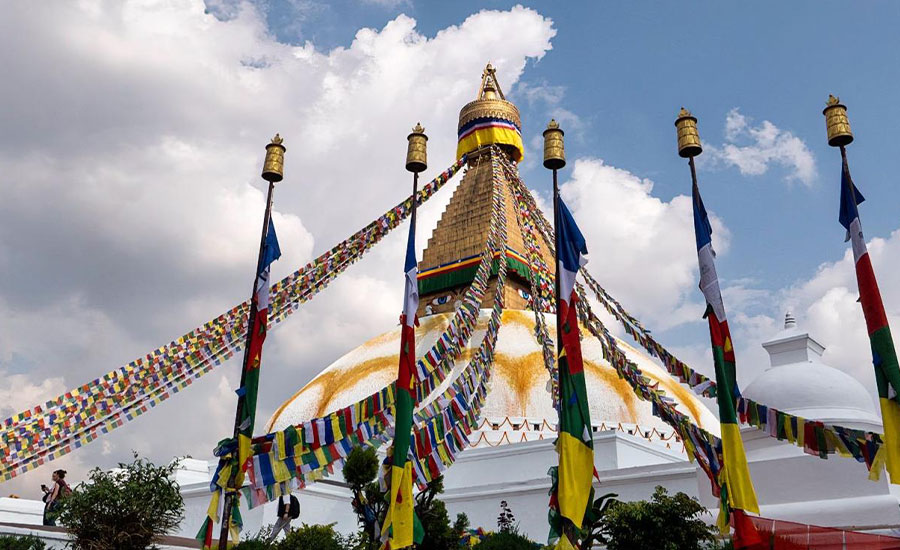
Boudhanath Stupa Nepal, also called Stupa Boudhanath or simply Boudha, is one of the most famous Buddhist monuments in Kathmandu Valley. Recognized as a UNESCO World Heritage Site, it stands among the largest spherical stupas in the world, drawing thousands of visitors, monks, and pilgrims every year. Known locally as Jhyarung Khashyor, the Boudhanath Stupa Kathmandu Nepal symbolizes peace, spirituality, and enlightenment, making it an essential cultural landmark for both locals and international travelers.
Deeply rooted in history and legend, the Boudhanath Stupa Kathmandu carries profound importance for the Tibetan and Tamang communities who have preserved its rituals and traditions for centuries. With its massive white dome, iconic Buddha eyes, prayer wheels, and colorful prayer flags, the stupa offers a serene yet vibrant atmosphere for meditation, circumambulation, and photography. Today, the importance of Boudhanath Stupa goes beyond religion—it serves as a hub of Tibetan-Nepalese culture, a center for Buddhist learning, and one of the most visited attractions in Nepal.
Where is Boudhanath Stupa Located?
Boudhanath Stupa is located about 11 km northeast of central Kathmandu, near Tribhuvan International Airport. Surrounded by vibrant monasteries, prayer flags, and Tibetan markets, it is the spiritual heart of the Kathmandu Valley. Many visitors combine their visit with nearby attractions like Pashupatinath Temple, Shechen Monastery, and the lively streets of Boudha.
Boudhanath Stupa History in Nepali Context
The history of Boudhanath Stupa dates back to the 5th century, when it was built by King Mandev of the Licchavi dynasty. According to Nepali legends, the stupa was constructed as an act of penance and spiritual devotion. Over the centuries, it became a major pilgrimage site for Buddhists across Nepal and Tibet.
Another popular legend mentions Jyajima, a humble widow, who along with her sons built the stupa. Her devotion symbolizes compassion, unity, and dedication, values deeply rooted in Buddhist philosophy.
The stupa has also played a vital role for Tibetan refugees since the 1950s, who settled around Boudhanath and established monasteries, turning it into a thriving center of Tibetan Buddhism outside Tibet.
In 1979, UNESCO declared Boudhanath Stupa a World Heritage Site, recognizing its cultural, religious, and architectural importance. Despite damage during the 2015 earthquake, it was beautifully restored and continues to shine as a beacon of peace.
Who Built Boudhanath Stupa?
Historical records attribute the construction of Boudhanath Stupa to King Mandev in the 5th century. However, local myths also connect its origin to King Ashoka’s Buddhist influence and the devotion of Jyajima, the poultry keeper. These multiple narratives add layers of meaning to its heritage, making the stupa not just a monument but a spiritual storybook of Nepal’s past.
Architectural Highlights of Boudhanath Stupa
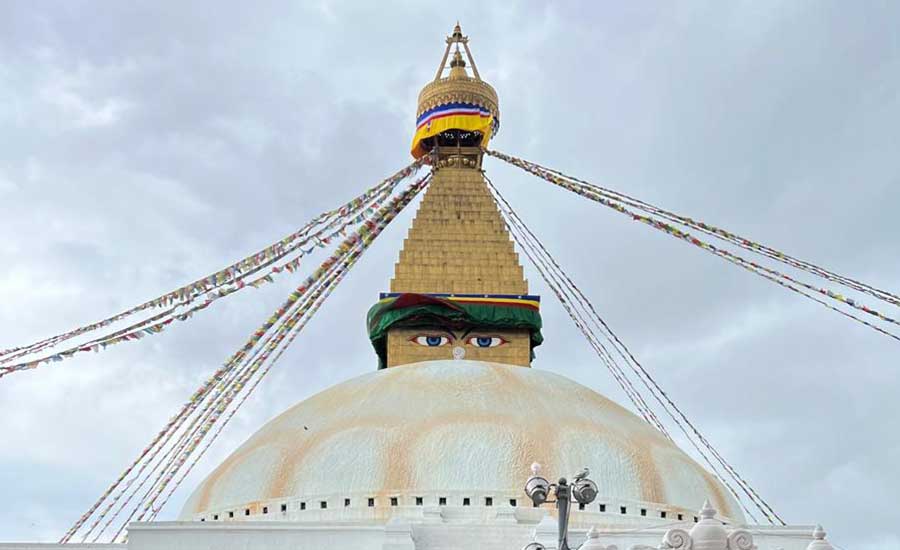
The architecture of Boudhanath Stupa reflects Buddhist cosmology and profound symbolism:
- Massive White Dome: Represents the universe and purity of existence.
- Harmika & Buddha’s Eyes: Painted on four sides, the Wisdom Eyes symbolize awareness and compassion.
- Thirteen Steps Tower: Represents stages to enlightenment.
- Prayer Wheels & Flags: Circumambulation (pradakshina) with prayer wheels spreads blessings and positive energy.
- Mandalas: Geometric designs around the base represent cosmic harmony.
The entire structure is decorated with saffron patterns and vibrant prayer flags, making it one of the most photogenic spots in Nepal.
Importance of Boudhanath Stupa
Aspect | Description |
Center of Buddhist Worship | Boudhanath Stupa serves as a sacred site in Kathmandu for daily prayers, rituals, and spiritual gatherings. |
Circumambulation (Kora) | Devotees walk clockwise around the stupa, spinning prayer wheels and chanting mantras to accumulate merit. |
Symbol of Enlightenment | Lighting butter lamps and offering prayers represent the journey from ignorance to wisdom in Buddhist teachings. |
Sacred for Tibetan Buddhists | Regarded as the most important stupa outside Tibet, central to Tibetan–Nepalese religious life and traditions. |
UNESCO World Heritage Site | Recognized globally for its religious, cultural, and architectural significance in Nepal. |
Peace & Compassion | The monument symbolizes harmony, compassion, and spiritual awakening for pilgrims and visitors. |
Meditation & Learning Hub | Surrounded by monasteries, Boudhanath Stupa functions as a center for Buddhist study, meditation, and retreats. |
Cultural Exchange | A vibrant meeting place where Tibetan, Nepali, and international communities share traditions and practices. |
Festivals at Boudhanath Stupa
- Buddha Jayanti: Celebrates the birth, enlightenment, and death of Lord Buddha with grand rituals, butter lamps, and processions.
- Losar (Tibetan New Year): A lively festival marked by prayers, dances, and colorful decorations around the stupa.
- Lhosar & Other Ceremonies: Pilgrims from Nepal and Tibet gather, making it a vibrant cultural hub.
Visiting during festivals allows travelers to experience the full spiritual and cultural energy of the stupa.
Activities for Visitors
When visiting Boudhanath Stupa Kathmandu Nepal, travelers can:
- Circumambulate (Kora): Walk clockwise around the stupa while spinning prayer wheels.
- Photography: Capture stunning Boudhanath Stupa photos of prayer flags, monks, and devotees.
- Rooftop Dining: Enjoy Tibetan dishes like Thukpa and momos with panoramic views of the stupa.
- Meditation Sessions: Join monks in nearby monasteries to experience Tibetan Buddhist practices.
- Shopping: Explore Tibetan markets for thangkas, prayer beads, and souvenirs.
Entrance Fee & Travel Tips
- Foreign Nationals: NPR 400
- SAARC Nationals: NPR 100
- Nepali Citizens & Children under 10: Free
Travel Tips:
- Always walk clockwise around the stupa.
- Dress modestly and respectfully.
- Visit early morning or late afternoon for a peaceful experience.
- Autumn (Sept–Nov) and Spring (Mar–May) are the best seasons to visit.
Nearby Attractions
- Pashupatinath Temple – Sacred Hindu site, just 2 km away.
- Shechen Monastery – Center of Tibetan learning and art.
- Tibetan Market – Ideal for souvenirs and cultural shopping.
Conclusion
The Boudhanath Stupa Kathmandu Nepal is more than just a monument—it is a living symbol of peace, compassion, and enlightenment. Whether you come for spiritual devotion, cultural exploration, or photography, this sacred site will leave you inspired.
On behalf of Himalayan Dream Team, we invite you to explore the Boudhanath Stupa Nepal as part of your cultural and spiritual journey. Visiting this stupa is not just sightseeing; it’s an unforgettable encounter with Nepal’s soul.