

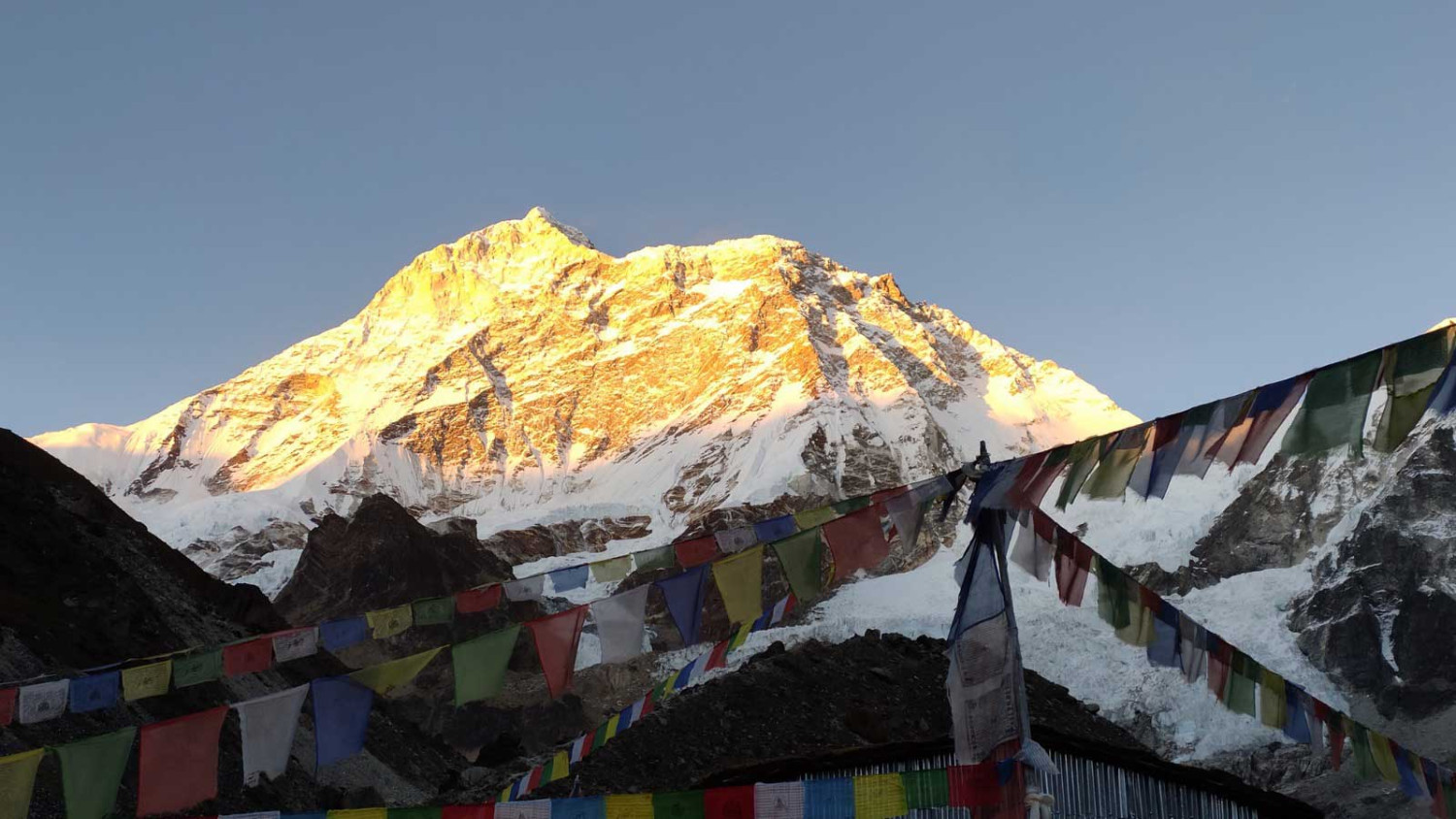
When Is the Best Time for Makalu Base Camp Trekking in Nepal?
The best time for the Makalu Base Camp Trek is spring and autumn, particularly March to April and October to November. These months generally provide the most favourable combination of passable high-altitude trails, mountain visibility, manageable temperatures and more reliable access to the remote Makalu region of eastern Nepal.
Spring brings flowering rhododendron forests, longer daylight and gradually warmer conditions, while autumn is especially attractive for crisp post-monsoon skies and clear Himalayan views. However, choosing the best month for Makalu Base Camp trekking involves more than simply choosing between spring and autumn.
The Makalu Base Camp Trek is a remote high-altitude journey through Makalu Barun National Park, reaching Makalu Base Camp at approximately 4,870 m beneath Mount Makalu (8,485 m), the world's fifth-highest mountain. The route also crosses the high ridges and passes between Khongma Danda and Dobate, where snow, ice, rain and poor visibility can significantly affect trekking conditions.
Unlike trekking routes that remain relatively accessible throughout much of the year, Makalu requires careful consideration of the high passes, Tumlingtar flight, road access to Num, Barun Valley weather and conditions around Makalu Base Camp.
This complete guide by Himalayan Dream Team explains the best time for Makalu Base Camp Trekking month by month, including spring, monsoon, autumn and winter conditions, temperatures, visibility, trail conditions, flowers, wildlife, flight considerations and how each season can affect our 20-day Makalu Base Camp Trek itinerary.
Best Time for Makalu Base Camp Trek – Quick Answer
| Season | Months | Typical Makalu Trekking Conditions | Suitability |
|---|---|---|---|
| Spring | March–May | Warmer weather, rhododendrons, generally good visibility and improving high-pass conditions | Excellent |
| Summer / Monsoon | June–August | Heavy rain at lower elevations, cloud, mud, leeches and landslide risk | Generally Avoid |
| Autumn | September–November | Post-monsoon clarity, drier trails and excellent mountain views | Excellent |
| Winter | December–February | Very cold with possible deep snow and ice on the high passes | Conditions Dependent |
For travellers with flexibility, April, October and November are particularly attractive months. March can also offer excellent trekking, although winter snow may remain on the high passes early in the season.
May can provide beautiful conditions but becomes warmer at lower elevations and increasingly unsettled as Nepal approaches the summer monsoon. September is a transition month: early September may still be wet, while conditions generally improve later in the month.
Why Timing Matters on the Makalu Base Camp Trek
The Makalu Base Camp Trek is not simply a walk through one high Himalayan valley. Our route begins with a flight from Kathmandu to Tumlingtar, followed by an overland journey toward Num. From there, the trekking route follows:
Num → Seduwa → Tashigaon → Khongma Danda → Dobate → Yangri Kharka → Langmale Kharka → Makalu Base Camp
Between Khongma Danda and Dobate, the route crosses a demanding high-ridge section associated with passes including Khongma La, Shipton La, Keke La and Tutu La.
This means the success and comfort of the trek depend on several different weather zones. At lower elevations, heavy monsoon rain can create mud, landslides and difficult road conditions. At higher elevations, snow and ice can make the passes difficult or temporarily unsafe.
Weather can also affect domestic flights to Tumlingtar, while temperatures around Makalu Base Camp can fall below freezing even when the lower valleys are comparatively warm.
Makalu Base Camp Weather and Climate
One of the most remarkable aspects of trekking in the Makalu region is the enormous change in climate as you gain altitude. The journey begins in the warmer valleys of eastern Nepal and eventually enters an alpine and glacial environment at almost 5,000 metres.
During a single trek, you can experience:
- Warm subtropical valleys
- Humid forests
- Rhododendron woodland
- Temperate mountain forests
- High alpine meadows
- Exposed mountain passes
- Rocky glacial valleys
- Sub-zero nights near Makalu Base Camp
Weather figures for Makalu should always be treated as approximate. Temperatures vary significantly according to altitude, cloud cover, wind, sun exposure, snowfall and the exact location.
Spring: March to May
Is Spring a Good Time for Makalu Base Camp?
Yes. Spring is one of the main trekking seasons for Makalu Base Camp. As winter gradually retreats, the lower and middle sections of Makalu Barun National Park become greener and warmer, while rhododendrons and other mountain plants begin flowering.
Spring combines high Himalayan trekking with one of the most colourful periods in the forests. However, conditions change considerably between March and May.
Makalu Base Camp Trek in March
March marks the beginning of Nepal's spring trekking season. Lower sections of the route become increasingly pleasant as winter ends, but high-altitude areas can still retain substantial winter snow.
What to Expect in March
- Cooler conditions than April and May
- Possible snow and ice on the high passes
- Increasingly clear trekking days
- Beginning of spring flowering at lower elevations
- Cold nights above 3,500 m
- Possibility of fresh snowfall at high altitude
The most important consideration in March is the condition of the high-pass section between Khongma Danda and Dobate. Winter snow does not automatically disappear simply because spring has begun.
Is March good for Makalu? Yes, particularly later in the month, but current snow and pass conditions should always be checked.
Makalu Base Camp Trek in April
April is one of the strongest months for trekking to Makalu Base Camp. Temperatures are generally warmer than in March, daylight is longer and spring vegetation is well developed.
Why Trek Makalu in April?
- Beautiful spring scenery
- Rhododendron forests
- Longer daylight hours
- Generally comfortable daytime walking
- Good Himalayan visibility, particularly in the morning
- High passes generally becoming more manageable as winter recedes
- Active trekking season with lodges operating along the route
April is particularly attractive for trekkers who want a combination of forest colour and high Himalayan scenery. Lower elevations can become warm during sunny afternoons, while conditions around Langmale Kharka and Makalu Base Camp remain cold.
Makalu Base Camp Trek in May
May remains within the spring trekking window, particularly during the earlier and middle parts of the month. The lower valleys become considerably warmer and vegetation is lush.
As the month progresses, Nepal moves closer to the summer monsoon.
What to Expect in May
- Warmer lower valleys
- Comfortable high-altitude daytime conditions when sunny
- Increasing afternoon cloud
- Possibility of pre-monsoon showers
- Remaining spring flowers
- Long daylight hours
- Cold nights still possible at high altitude
May can be a very good month for Makalu, but trekkers should expect a greater possibility of afternoon cloud and changing weather than during the core dry-season months.
Why Spring Is Special in Makalu Barun National Park
The Makalu region is not only about mountains. Makalu Barun National Park protects one of Nepal's most biologically diverse mountain environments.
The dramatic elevation range supports vegetation from subtropical forest to alpine ecosystems. Wildlife recorded within the protected landscape includes species such as:
- Red panda
- Snow leopard
- Himalayan black bear
- Clouded leopard
- Himalayan tahr
- Ghoral
- Barking deer
- Wild boar
- Himalayan marmot
- Serow
Wildlife sightings are never guaranteed, particularly for elusive species such as snow leopards and red pandas. Spring is nevertheless particularly memorable for travellers interested in botany, forests, wildflowers and landscape photography.
Summer and Monsoon: June to August
Can You Trek Makalu Base Camp During the Monsoon?
Trekking may be possible at certain times, but June to August is generally not the preferred period for the standard Makalu Base Camp Trek.
Eastern Nepal receives significant summer rainfall. The greatest problems are often not at base camp itself but on the approach through the lower elevations.
Monsoon Challenges
- Heavy rainfall
- Muddy and slippery trails
- Leeches in forested areas
- Landslide risk
- Swollen streams
- Cloud-covered mountain views
- High humidity
- Difficult road conditions
- Domestic flight disruption
- Reduced visibility on exposed mountain sections
Makalu Base Camp Trek in June
June is a transition month. Early June can sometimes retain characteristics of late spring, but the monsoon increasingly affects Nepal as the month progresses.
Expect increasing humidity, more afternoon cloud, greater rainfall and less consistent mountain visibility.
Makalu Base Camp Trek in July
July falls within the main summer monsoon and is generally one of the least practical months for the standard Makalu Base Camp Trek.
Persistent rainfall, mud, leeches, cloud, landslides, difficult road access and flight delays can all affect the journey.
Makalu Base Camp Trek in August
August remains within the monsoon. Conditions are often similar to July, although the exact end of the monsoon varies each year.
Late August should not automatically be considered dry. Trekkers planning around the end of the monsoon should maintain flexibility rather than assuming a fixed date when autumn conditions begin.
Autumn: September to November
Is Autumn a Good Time for Makalu Base Camp Trek?
Yes. Autumn is one of the finest periods for Makalu Base Camp trekking. After the summer monsoon, the atmosphere becomes cleaner and drier, often producing excellent Himalayan visibility.
Trails gradually dry, river levels begin to fall and the high mountains become more consistently visible. For trekkers whose priority is clear mountain photography and crisp Himalayan panoramas, autumn is particularly attractive.
Makalu Base Camp Trek in September
September is a transition month. Early September can still feel very much like monsoon, particularly in the lower valleys.
Early September
- Remaining monsoon rainfall
- Muddy trails
- Leeches
- Cloud
- Possible flight disruption
- Possible landslide-affected roads
Late September
- Drier trails
- Improving mountain visibility
- Lower humidity
- Clearer mornings
- More favourable trekking conditions
For travellers with fixed September dates, later September is generally more favourable than early September, although weather patterns vary from year to year.
Makalu Base Camp Trek in October
October is one of the strongest all-round months for the Makalu Base Camp Trek. The monsoon has normally withdrawn, skies are often clearer and temperatures have not yet reached the deepest winter cold.
Why October Is Excellent
- Strong mountain visibility
- Generally dry trekking conditions
- Comfortable lower-altitude temperatures
- Manageable high-altitude conditions with proper equipment
- Excellent photography opportunities
- Active teahouses
- More predictable access than during monsoon
- Excellent views from the high passes and Barun Valley when weather is clear
October is particularly attractive for trekkers who have only one opportunity to attempt this remote journey. However, no Himalayan month guarantees perfect weather, and fresh snowfall remains possible at high altitude.
Makalu Base Camp Trek in November
November is another excellent Makalu trekking month. The atmosphere is often dry and clear, creating outstanding visibility, but temperatures progressively decrease as winter approaches.
Early November
- Clear skies
- Dry trails
- Excellent mountain visibility
- Relatively manageable temperatures
Late November
- Considerably colder nights
- Possible frozen water at higher lodges
- Increasing possibility of snow
- High-pass conditions require closer monitoring
- Some seasonal services may begin reducing operations
What Mountains Can You See on the Makalu Base Camp Trek?
Clear spring and autumn weather provides the best opportunity to appreciate the extraordinary Himalayan geography of the Makalu region.
Depending on your location and visibility, the route can offer views toward major Himalayan peaks including:
- Mount Makalu – 8,485 m
- Mount Everest
- Lhotse
- Chamlang
- Baruntse
- Other peaks of the Makalu and eastern Himalayan region
The dominant experience at Makalu Base Camp itself is the immense scale of Makalu and the surrounding glacial landscape.
Winter: December to February
Can You Trek Makalu Base Camp in Winter?
Winter trekking is considerably more complicated. The main challenge is not simply the cold at Makalu Base Camp.
Snow accumulation on the high passes can make the Khongma Danda–Dobate crossing difficult or unsafe.
Winter Conditions Can Include
- Deep snow
- Ice
- Very cold nights
- Frozen water
- Strong winds
- Shorter daylight hours
- Difficult pass crossings
- Reduced lodge services
- Fewer trekkers
- Possible itinerary changes
A clear blue winter sky does not necessarily mean that the high passes are safe to cross. Current trail and snow conditions are more important than the calendar.
Makalu Base Camp Trek in December
Early December can sometimes retain relatively favourable post-autumn conditions. As winter develops, temperatures drop, snow becomes increasingly possible and seasonal lodge availability may decrease.
Makalu Base Camp Trek in January
January is generally one of the coldest periods in the Makalu region. At high altitude, temperatures can fall far below freezing, while snow can make the high-pass section particularly difficult.
Makalu Base Camp Trek in February
February remains winter at high altitude. Lower elevations may begin showing signs of spring toward the end of the month, but the high passes can still hold significant snow.
Makalu Base Camp Trek Month-by-Month Comparison
| Month | Typical Character | Mountain Visibility | Main Concern | Overall Conditions |
|---|---|---|---|---|
| January | Deep winter | Can be very clear | Extreme cold and snow-covered passes | Difficult |
| February | Late winter | Often clear | Snow and ice remain at altitude | Difficult |
| March | Early spring | Good | Winter snow may remain | Good with conditions checked |
| April | Main spring season | Very good | Afternoon cloud possible | Excellent |
| May | Late spring | Good but increasingly variable | Heat below and pre-monsoon cloud | Very Good |
| June | Monsoon transition | Variable | Increasing rain and cloud | Limited |
| July | Main monsoon | Often poor | Rain, mud, leeches and landslides | Generally Avoid |
| August | Monsoon | Often poor | Rain and transport disruption | Generally Avoid |
| September | Monsoon to autumn transition | Improving | Rain can linger early | Good later in month |
| October | Main autumn season | Excellent | Cold nights at altitude | Excellent |
| November | Late autumn | Excellent | Increasing cold and possible snow | Excellent |
| December | Early winter | Often clear | Cold and increasing snow | Conditions Dependent |
April vs October: Which Is Better for Makalu Base Camp?
| Factor | April | October |
|---|---|---|
| Rhododendrons | Excellent | Limited |
| Green Vegetation | Excellent | Good after monsoon |
| Mountain Visibility | Very Good | Excellent |
| Lower-Valley Temperature | Warmer | Comfortable |
| High-Altitude Temperature | Cold | Cold |
| Trail Conditions | Generally Good | Generally Good |
| Photography | Flowers + Mountains | Crisp Mountain Landscapes |
| Main Attraction | Spring Colour | Post-Monsoon Clarity |
Choose April if spring forests, rhododendrons and somewhat warmer conditions appeal to you. Choose October if clear post-monsoon mountain views are your main priority.
October vs November for Makalu Base Camp
Both months provide favourable trekking conditions, but there is an important difference. October is generally warmer, while November becomes colder but can provide exceptionally clear Himalayan visibility.
Early November can be particularly attractive for experienced trekkers properly equipped for cold conditions. Late November requires greater attention to snow and approaching winter conditions.
March vs April for Makalu Base Camp
March is cooler and carries a greater possibility of lingering winter snow on the passes. April is generally warmer and spring vegetation is more developed.
For travellers specifically interested in rhododendron forests and a more established spring season, April is generally easier to plan around.
The Shipton La Factor: Why High-Pass Conditions Matter
One of the most important things to understand when choosing the best time for Makalu Base Camp Trekking is the high-pass crossing between Khongma Danda and Dobate.
This section is one of the most demanding parts of the itinerary. The route crosses a sequence of high ridges and passes associated with:
- Khongma La
- Shipton La
- Keke La
- Tutu La
The highest sections reach approximately 4,200 m. Snow, ice, fog and strong winds can transform the difficulty of this section.
Before crossing, your guide should consider recent snowfall, snow depth, ice, visibility, wind, local trail information, group condition and the latest weather forecast.
A flexible itinerary is far more valuable than forcing a fixed schedule when conditions are unsuitable.
Best Time for Makalu Base Camp Mountain Views
For mountain photography and long-distance visibility, particularly favourable periods are generally October–November and clear spring days during March–April.
Autumn often benefits from cleaner post-monsoon air. Spring can also provide excellent visibility, although afternoon cloud tends to increase as the season moves toward May.
Best Time to See Rhododendrons on the Makalu Trek
Spring is the main season for travellers interested in rhododendrons and other mountain flowers.
Flowering time changes with elevation, temperature and the timing of spring. Rather than expecting every elevation to bloom simultaneously, trekkers move through different ecological zones as they climb.
Best Time for Wildlife on the Makalu Base Camp Trek
Makalu Barun National Park protects habitat for an exceptional range of Himalayan wildlife. However, the Makalu Base Camp Trek is not a wildlife safari.
Animals such as red pandas, snow leopards and clouded leopards are elusive, and sightings cannot be promised in any season. Trekkers interested in wildlife should walk quietly, carry binoculars and consider sightings a fortunate bonus.
Makalu Base Camp Temperatures
Publishing one temperature for the entire Makalu Base Camp Trek would be misleading because the itinerary covers an enormous elevation range.
Lower Valleys
Num, Seduwa and the lower sections can feel warm, particularly during April, May and the monsoon period.
Khongma Danda and the High Passes
Temperatures become considerably colder, while wind can make exposed sections feel much colder than the measured air temperature.
Langmale Kharka – 4,420 m
Nights are cold even during the principal spring and autumn trekking seasons.
Makalu Base Camp – 4,870 m
Sub-zero nighttime temperatures are possible during spring and autumn, with substantially colder conditions during winter.
Always check the current forecast and follow local advice before departure.
Does It Snow at Makalu Base Camp?
Yes. Snow can fall at Makalu Base Camp and on the high passes even outside the deepest winter months.
Spring and autumn provide the principal trekking windows, but they do not guarantee snow-free conditions. A short period of unstable weather can produce fresh snow at altitude while the lower valleys remain comparatively warm.
How the Season Affects the Kathmandu–Tumlingtar Flight
Himalayan Dream Team's Makalu journey begins with a domestic flight from Kathmandu to Tumlingtar. Flight duration is generally around 30–45 minutes, depending on the day's operation.
Domestic flights in Nepal are weather dependent. Spring and autumn generally provide more favourable conditions than the summer monsoon, but delays and cancellations can occur in any season.
For a remote journey such as Makalu, keeping some flexibility in your international travel schedule is sensible.
How the Season Affects the Tumlingtar–Num Road
After reaching Tumlingtar, our itinerary continues overland toward Num. The journey takes approximately 6–7 hours under suitable conditions, but this is a mountain-road transfer and driving times can vary.
During the monsoon:
- Heavy rain can damage roads
- Mud can slow vehicles
- Landslides can interrupt travel
- Driving times can increase considerably
Spring and autumn generally provide more favourable road conditions.
How Weather Affects Our 20-Day Makalu Base Camp Itinerary
The 20-Day Makalu Base Camp Trek by Himalayan Dream Team includes both an acclimatization day and a dedicated exploration day at Makalu Base Camp.
| Day | Route / Activity | Approx. Altitude |
|---|---|---|
| 1 | Arrival in Kathmandu | 1,335 m |
| 2 | Kathmandu sightseeing & trek preparation | 1,335 m |
| 3 | Fly Kathmandu–Tumlingtar; drive to Num | Approx. 1,900 m |
| 4 | Num–Seduwa | Approx. 1,540 m |
| 5 | Seduwa–Tashigaon | Approx. 2,100 m |
| 6 | Tashigaon–Khongma Danda | 3,562 m |
| 7 | Acclimatization at Khongma Danda | 3,562 m; higher hike possible |
| 8 | Khongma Danda–Dobate via high passes | Up to approx. 4,200 m |
| 9 | Dobate–Yangri Kharka | Approx. 3,600 m |
| 10 | Yangri Kharka–Langmale Kharka | 4,420 m |
| 11 | Langmale Kharka–Makalu Base Camp | 4,870 m |
| 12 | Makalu Base Camp exploration / optional ridge hike | Up to approx. 5,300 m |
| 13 | Makalu Base Camp–Yangri Kharka | Approx. 3,600 m |
| 14 | Yangri Kharka–Dobate | Approx. 3,550 m |
| 15 | Dobate–Khongma Danda | High passes up to approx. 4,200 m |
| 16 | Khongma Danda–Seduwa | Approx. 1,530 m |
| 17 | Seduwa–Num; drive to Tumlingtar | — |
| 18 | Fly Tumlingtar–Kathmandu | 1,335 m |
| 19 | Free day / optional Kathmandu sightseeing | 1,335 m |
| 20 | Final departure | — |
The Khongma Danda acclimatization day is particularly important before crossing the high passes.
The exploration day at Makalu Base Camp also gives trekkers time to experience the area rather than reaching base camp and immediately turning around. An optional ridge hike reaching approximately 5,300 m may be considered only when weather, trail conditions and individual acclimatization allow.
Altitude and the Best Trekking Season
Good weather does not remove altitude risk. Our itinerary reaches:
- Khongma Danda – 3,562 m
- High-pass area – approximately 4,200 m
- Langmale Kharka – 4,420 m
- Makalu Base Camp – 4,870 m
- Optional ridge hike – up to approximately 5,300 m
Altitude illness can occur during any season. The most important factors include ascent profile, individual acclimatization and how your body responds to altitude.
Is Makalu Base Camp Suitable for Beginners?
The Makalu Base Camp Trek should not be considered a typical beginner trek. It is a strenuous, remote high-altitude trek.
No technical climbing is required on the standard route, but trekkers should be prepared for:
- Long walking days
- Steep ascents and descents
- Remote terrain
- High mountain passes
- Basic mountain accommodation
- Several days above 3,500 m
- Limited communication
- Changing weather
- High altitude
- Long distances from advanced medical facilities
Previous multi-day trekking or high-altitude experience is highly beneficial. Good cardiovascular fitness, strong legs and trekking endurance are important.
Accommodation and Seasons on the Makalu Trek
Makalu does not have the same developed trekking infrastructure as the main Everest or Annapurna routes. Accommodation is primarily in simple mountain teahouses and lodges.
Depending on location and season, trekkers should expect:
- Simple rooms
- Basic beds
- Shared toilets
- Limited hot-water facilities
- Limited menus
- Limited electricity
- Little or no Wi-Fi in remote sections
- Cold bedrooms at altitude
During winter and less-used periods, some seasonal lodges may provide reduced services or may not operate normally. Spring and autumn are therefore more convenient not only because of weather but also because trekking infrastructure is generally more active.
What to Pack for Makalu in Spring and Autumn
Even during the main trekking seasons, Makalu requires equipment for both warm valleys and freezing high-altitude conditions.
- Well-broken-in trekking boots
- Moisture-wicking base layers
- Warm fleece or mid-layer
- Insulated down jacket
- Waterproof jacket
- Waterproof trousers
- Warm trekking trousers
- Thermal layers
- Warm hat
- Sun hat
- Insulated gloves
- Trekking poles
- UV-protection sunglasses
- High-SPF sunscreen
- Sleeping bag suitable for cold mountain conditions
- Headlamp
- Reusable water bottles
- Water-treatment method
- Personal medication
- Power bank
- Small daypack
What to Pack Differently in March or November
March and November sit closer to winter than April and October. Consider additional emphasis on:
- Warmer gloves
- Thermal base layers
- Insulated jacket
- Warm sleeping bag
- Extra warm socks
- Traction equipment if advised for current conditions
Your equipment should always be based on the actual forecast and high-pass conditions rather than the month alone.
How Difficult Is the Makalu Base Camp Trek?
The Makalu Base Camp Trek is a strenuous Himalayan trek. Its difficulty comes from a combination of remote location, long trekking days, steep terrain, high passes, altitude, basic infrastructure and changing weather.
Most trekking days involve approximately 5–7 hours of walking, although actual duration varies according to trail conditions, weather and individual pace.
Good weather makes the experience more manageable, but choosing October instead of July does not turn Makalu into an easy trek.
How to Train for Makalu Base Camp
Begin training several weeks or months before departure.
Cardiovascular Training
- Hiking
- Brisk walking
- Cycling
- Running
- Stair climbing
Strength Training
Focus particularly on your legs, glutes, calves and core stability.
Hill Training
Regular uphill and downhill walking is particularly valuable.
Consecutive Hiking Days
Try walking on several consecutive days before travelling. Makalu requires endurance and recovery, not simply the ability to complete one long hike.
Makalu Base Camp Trek Permits
The standard Himalayan Dream Team Makalu Base Camp route requires the applicable Makalu Barun National Park Entry Permit and trekking documentation required under current Nepal regulations.
Himalayan Dream Team arranges the applicable permits included in the package before departure. Because trekking regulations and fees can change, requirements should always be confirmed for your actual travel date.
Makalu Barun National Park
The trek passes through Makalu Barun National Park, one of Nepal's most remarkable protected landscapes.
Its landscapes include:
- Subtropical forest
- Temperate forest
- Rhododendron woodland
- Subalpine vegetation
- Alpine meadows
- High mountain valleys
- Glacial terrain
The combination of biological diversity and extreme Himalayan relief is one of the defining characteristics that separates Makalu from Nepal's more commercial trekking routes.
Best Time for Photography on the Makalu Trek
Spring Photography
Spring is particularly attractive for:
- Rhododendrons
- Forests
- Wildflowers
- Green landscapes
- Snow mountains combined with colourful foregrounds
Autumn Photography
Autumn is particularly attractive for:
- Clear Himalayan panoramas
- Crisp mountain light
- Post-monsoon landscapes
- High-pass views
- Makalu and surrounding peaks
Is Makalu Base Camp Crowded in Peak Season?
Compared with the Everest Base Camp Trek and Nepal's busiest Annapurna routes, Makalu remains a much quieter trek.
Even during the main spring and autumn trekking seasons, the trail generally retains a strong sense of remoteness. You therefore do not need to choose winter or monsoon simply to avoid crowds.
For more remote trekking ideas, read our Less Crowded Treks in Nepal guide.
Spring or Autumn: Which Should You Choose?
| Choose Spring If You Prefer | Choose Autumn If You Prefer |
|---|---|
| Rhododendrons and spring flowers | Clear Himalayan views |
| Green forests | Drier trail conditions |
| Warmer conditions | Crisp post-monsoon atmosphere |
| Longer daylight | Cooler trekking temperatures |
| Colourful landscape photography | Mountain photography |
Both seasons can provide an outstanding Makalu experience. The better choice depends on what you most want to experience.
When Should You Avoid the Makalu Base Camp Trek?
Peak Monsoon
For most trekkers, July and August are among the least favourable months because of heavy rain, muddy trails, landslide risk, leeches, cloud and transport disruption.
Deep Winter
Winter can become difficult when heavy snowfall makes the high passes challenging or unsafe.
The exact dates vary each year. Makalu conditions should therefore be assessed using current weather and local trail information, not the calendar alone.
How Much Extra Time Should You Allow?
Makalu is a remote trek involving domestic flights and mountain roads. Travellers should avoid arranging an international departure with no margin after returning from the trek.
Himalayan Dream Team's 20-day itinerary includes a free day in Kathmandu on Day 19, providing useful flexibility before final departure. Weather delays are possible in every season.
Why Trek Makalu Base Camp with Himalayan Dream Team?
Makalu is precisely the type of Himalayan journey where experienced local organization matters.
Experienced Local Trekking Guides
Our Makalu trek is led by an experienced, government-licensed, English-speaking trekking guide familiar with high-altitude trekking and remote Himalayan conditions.
Acclimatization Built into the Itinerary
The itinerary includes a dedicated acclimatization day at Khongma Danda (3,562 m) before the major high-pass crossing.
Makalu Base Camp Exploration Day
Instead of immediately turning around after reaching base camp, Day 12 is reserved for exploring the area, with an optional higher ridge hike when conditions and acclimatization permit.
Porter Support
Porter support helps trekkers manage the long and demanding journey while keeping the daypack lighter.
Complete Trekking Logistics
Depending on your selected package, Himalayan Dream Team can arrange:
- Airport transfers
- Kathmandu accommodation
- Kathmandu–Tumlingtar domestic flights
- Overland transfers
- Required trekking permits
- Teahouse accommodation
- Trekking meals
- Licensed trekking guide
- Porter support
- Return transportation
Seasonal Flexibility
Most importantly, we do not treat a mountain itinerary as something that must be followed regardless of conditions. Snow, rain, flight delays, road conditions, altitude and individual health can all require sensible adjustments.
Frequently Asked Questions About the Best Time for Makalu Base Camp Trek
1. What is the best time for Makalu Base Camp Trek?
The main trekking seasons are spring and autumn. March–April and October–November are particularly favourable periods, while May can also offer good conditions before the monsoon becomes established.
2. What is the best month for Makalu Base Camp Trek?
April and October are two particularly attractive all-round choices. November is excellent for clear views but colder, while March can still have winter snow on the high passes.
3. Is October a good month for Makalu Base Camp?
Yes. October is one of the principal months for the trek because post-monsoon conditions often provide drier trails and excellent Himalayan visibility.
4. Is April good for Makalu Base Camp?
Yes. April is an excellent spring month, particularly for trekkers interested in rhododendrons, forests and somewhat warmer conditions.
5. Can I trek Makalu Base Camp in March?
Yes, but snow from winter may remain on the high passes, particularly early in March. Current conditions should be checked before departure.
6. Can I trek Makalu Base Camp in May?
Yes. May can provide good trekking conditions, especially earlier in the month, but cloud and pre-monsoon showers generally become more likely as summer approaches.
7. Is September a good time for Makalu?
Later September can be good as the monsoon withdraws. Early September may still experience rain, cloud, mud and transport disruption.
8. Can I trek Makalu Base Camp in November?
Yes. November is one of the main trekking months. Conditions are generally dry and visibility can be excellent, although temperatures become progressively colder.
9. Can you trek Makalu in December?
It may be possible when conditions allow, particularly earlier in the month, but winter cold and snow on the passes become increasingly important considerations.
10. Can you trek Makalu in January?
January is generally not a preferred month for the standard trek because of extreme high-altitude cold and the possibility of heavy snow on the high passes.
11. Can you trek Makalu in February?
Possible conditions vary considerably. The lower valleys may begin warming toward late February, but high passes can remain snow-covered.
12. Can you trek Makalu Base Camp during monsoon?
It can be possible, but June–August is generally not recommended for the standard itinerary because of rain, mud, leeches, landslide risk, cloud and transport disruption.
13. Does it snow on the Makalu Base Camp Trek?
Yes. Snow can occur at high altitude during winter and can also occur during spring and autumn storms.
14. How cold is Makalu Base Camp?
Makalu Base Camp is at approximately 4,870 m, and nights can fall below freezing even during the principal trekking seasons. Winter conditions can be substantially colder.
15. What is the altitude of Makalu Base Camp?
Himalayan Dream Team's standard trek reaches Makalu Base Camp at approximately 4,870 m.
16. What is the highest point of the Makalu Base Camp Trek?
Makalu Base Camp is the highest overnight point at approximately 4,870 m. On our exploration day, an optional ridge hike may reach approximately 5,300 m when weather, trail conditions and acclimatization allow.
17. Is Shipton La difficult?
The high-pass section between Khongma Danda and Dobate is one of the most demanding parts of the trek. Snow, ice, wind and poor visibility can substantially increase the difficulty.
18. Is Makalu Base Camp harder than Everest Base Camp?
The two treks present different challenges. Makalu Base Camp is lower than Everest Base Camp but is much more remote, has more limited infrastructure and includes demanding high-pass terrain.
19. Is Makalu Base Camp suitable for beginners?
It is not normally our first recommendation for someone with no trekking background. Good fitness is essential, and previous multi-day or high-altitude trekking experience is highly beneficial.
20. How many days is the Makalu Base Camp Trek?
Himalayan Dream Team's Makalu Base Camp Trek is a 20-day journey beginning and ending in Kathmandu.
21. How long do you walk each day?
Most trekking days involve approximately 5–7 hours of walking, although actual times depend on pace, weather and trail conditions.
22. Is Makalu Base Camp a teahouse trek?
Yes. Himalayan Dream Team operates the standard itinerary using local teahouses and mountain lodges. Facilities are considerably simpler than on the main Everest and Annapurna routes.
23. Are teahouses open in winter?
Some services can become limited outside the main trekking seasons. Lodge availability should therefore be confirmed when planning a winter departure.
24. When do rhododendrons bloom in Makalu?
Spring is the main flowering season. Exact timing varies according to altitude, temperature and annual weather patterns.
25. Can I see Everest from the Makalu trek?
On clear days, some high viewpoints and ridges along the route can provide views toward Everest, Lhotse and other major Himalayan peaks. Makalu itself dominates the scenery as the trek approaches base camp.
26. What is the best season for Makalu photography?
Autumn is excellent for clear mountain panoramas, while spring is particularly attractive for rhododendrons, forests and mountain landscapes.
27. Are flights to Tumlingtar reliable?
Flights operate subject to weather and aviation conditions. Spring and autumn generally provide more favourable conditions than monsoon, but delays or cancellations remain possible in any season.
28. How long is the flight from Kathmandu to Tumlingtar?
The domestic flight generally takes approximately 30–45 minutes, depending on the day's operation.
29. How do you reach the Makalu Base Camp trail?
Himalayan Dream Team's itinerary flies from Kathmandu to Tumlingtar and then travels overland toward Num, where the trekking journey begins.
30. Do I need a guide for Makalu Base Camp?
The trek should be undertaken according to Nepal's current guide, permit and trekking regulations. Himalayan Dream Team's Makalu package includes an experienced licensed trekking guide.
31. What permits are required for Makalu Base Camp?
The standard route requires the applicable Makalu Barun National Park entry permit and trekking documentation required under current Nepal regulations. Himalayan Dream Team arranges the applicable permits included in the package.
32. Do I need travel insurance for Makalu Base Camp?
Comprehensive travel insurance is strongly recommended and should cover high-altitude trekking to at least the maximum altitude of your itinerary and appropriate emergency evacuation.
33. Is there mobile network or Wi-Fi on the Makalu trek?
Connectivity is limited and should never be relied upon. Some lower settlements may have mobile or internet access, but remote sections can have little or no reliable connection.
34. Is Makalu Base Camp crowded in October?
October is a popular trekking month in Nepal, but Makalu receives far fewer trekkers than the major Everest and Annapurna routes. It remains a remote trekking experience.
35. Should I keep extra days for Makalu Base Camp Trek?
Yes. Schedule flexibility is sensible because domestic flights, mountain roads, weather, trail conditions and altitude can occasionally cause delays.
Related Makalu and Nepal Trekking Guides
- Makalu Base Camp Trek – 20 Days – View the complete itinerary, altitude profile, accommodation, meals, transportation and trekking information.
- Less Crowded Treks in Nepal – Discover Makalu and other quieter Himalayan trekking routes.
- Top Himalayan Trekking Routes in Nepal – Compare Makalu with other major trekking adventures in Nepal.
- Everest Base Camp Trek – Compare a classic Himalayan base-camp trek with the more remote Makalu experience.
Conclusion: When Is the Best Time for Makalu Base Camp Trekking?
The best time for Makalu Base Camp Trekking in Nepal is spring and autumn, with March–April and October–November providing the principal trekking windows.
For many travellers, April is an excellent spring choice because of warmer conditions, longer days and colourful rhododendron forests. October is particularly attractive for dry post-monsoon conditions and clear Himalayan views.
November can provide exceptional visibility but becomes progressively colder, while March offers beautiful early-spring trekking with the possibility of lingering winter snow on the high passes.
May and late September can also work well, but both sit closer to seasonal transitions and require greater flexibility. The summer monsoon from June through August brings heavy rain to the lower Makalu region, while deep winter can leave the high passes covered in snow and ice.
Most importantly, there is no calendar date that can guarantee perfect Himalayan conditions. Current snow, weather, road and flight conditions matter just as much as the month printed on your itinerary.
With its quiet trails, extraordinary biodiversity, remote mountain communities, high passes, Barun Valley and immense Himalayan landscapes, Makalu is one of Nepal's great journeys for experienced trekkers seeking something beyond the busiest trekking routes.
The 20-day Makalu Base Camp Trek with Himalayan Dream Team combines gradual acclimatization, the Khongma Danda high-pass crossing, Langmale Kharka, Makalu Base Camp and an additional exploration day before returning to Kathmandu.
Choose the right season, prepare properly and allow enough flexibility for the mountains—and Makalu can provide one of the most remarkable remote trekking experiences in Nepal.
Contact Himalayan Dream Team to discuss the best Makalu Base Camp trekking dates for your available travel period.