

Embarking on the Everest Base Camp Trek in Nepal is one of the most rewarding adventures on earth — a journey that combines breathtaking Himalayan scenery, rich Sherpa culture, and personal achievement. However, success on the Everest Base Camp Trek depends not only on determination but also on careful preparation. Whether you’re planning the classic 14-day Everest Base Camp Trek, EBC with helicopter return trek, or a luxury Everest Base Camp package, having the right trekking gear is vital to ensure safety, comfort, and confidence at high altitudes.
This detailed Everest Base Camp Trek Packing Guide by Himalayan Dream Team provides everything you need to know about what to pack for your adventure. From trekking clothing layers, boots, and sleeping bags to essential electronics, accessories, and personal care items, this comprehensive checklist ensures you are fully prepared for every challenge the Himalayas present. With the right gear and guidance, your Everest Base Camp Trek in Nepal will be not just a trek, but a truly life-changing Himalayan experience.
Why Having the Right Gear Matters
The Everest Base Camp trail takes you from Lukla (2,860 m) to Base Camp (5,364 m) through diverse terrain — from lush pine forests and suspension bridges to rocky moraine and snow-covered trails.
Temperatures can drop below freezing at night, and weather can change rapidly. Carrying the right trekking clothing layers, insulated gear, and sturdy boots can make the difference between an enjoyable journey and an exhausting struggle.
Proper preparation also helps reduce the risk of altitude sickness, fatigue, and injuries — ensuring a smooth, memorable adventure in the heart of the Khumbu region.
Essential Gear for Everest Base Camp Trek
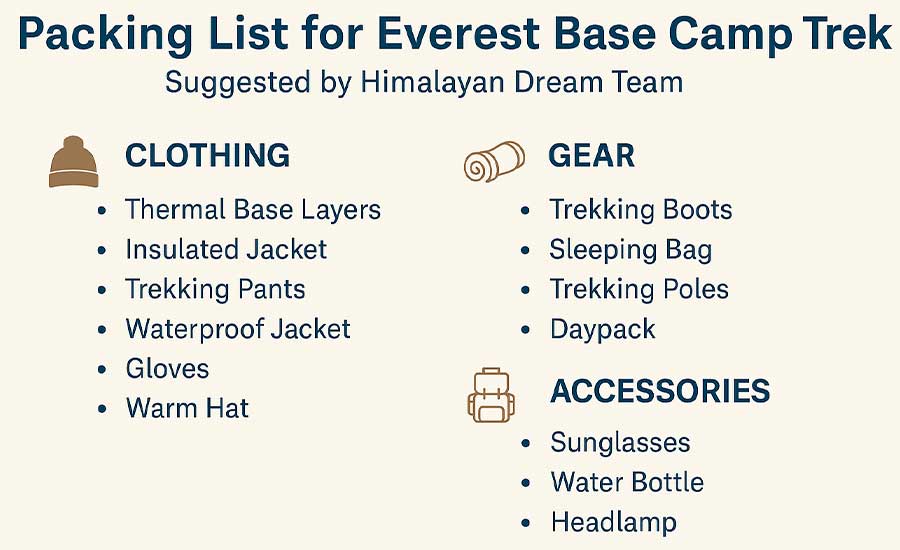
1. Trekking Clothing (Layering System)
Layering allows you to adapt to temperature changes as you ascend higher.
Base Layer (Thermal Wear): Moisture-wicking tops and bottoms (merino wool or synthetic).
Mid Layer (Insulation): Fleece jacket or lightweight down sweater.
Outer Layer (Shell): Waterproof and windproof jacket and pants (GORE-TEX or similar).
Trekking Pants: Quick-drying convertible pants ideal for long hikes.
T-Shirts: 3–4 breathable, quick-dry shirts.
Warm Jacket: Down or synthetic insulated jacket for cold nights.
Rain Poncho or Shell: Protects you and your backpack from sudden rainfall.
Pro tip: Avoid cotton — it retains moisture and dries slowly, increasing the risk of hypothermia.
2. Footwear
Your feet are your best asset on this trek. Choose quality over cost.
Trekking Boots: Waterproof, ankle-supporting, and well broken-in before departure.
Camp Shoes / Sandals: Lightweight footwear for evenings in tea houses.
Trekking Socks: 3–4 pairs of wool or synthetic socks.
Gaiters: Prevent snow or debris from entering boots (especially in early spring/winter).
3. Headwear & Handwear
Warm Hat / Beanie: For cold mornings and nights.
Sun Hat / Cap: Protects from strong UV rays at altitude.
Buff / Neck Gaiter: Shields against dust and wind.
Gloves: Inner thermal gloves plus outer waterproof shell gloves.
4. Sleeping Gear
Tea houses along the Everest route provide basic bedding, but temperatures often drop below zero.
Sleeping Bag: Rated to at least –15 °C (4 °F).
Sleeping Bag Liner: Adds warmth and keeps the bag clean.
Inflatable Pillow: Optional, for extra comfort.
5. Trekking Equipment
Daypack (30–40 L): For essentials during daily hikes.
Duffel Bag (60–80 L): Carried by porters; waterproof preferred.
Trekking Poles: Help reduce strain on knees and joints.
Headlamp: With spare batteries for early starts or power outages.
Water Bottles / Hydration Bladder: Minimum 2 liters capacity.
Water Purification Tablets / Filter: Safe drinking water on the trail.
6. Personal Items & Toiletries
Quick-dry towel
Toothbrush, toothpaste, biodegradable soap
Sunscreen (SPF 50+) and lip balm
Wet wipes and hand sanitizer
Small first-aid kit (band-aids, blister patches, painkillers)
Personal medication (consult your doctor before departure)
Toilet paper (not always available in lodges)
7. Electronics & Accessories
Camera or Smartphone: For breathtaking photos of Everest, Ama Dablam, and Lhotse.
Power Bank (10,000 mAh+): Charging facilities are limited.
Universal Adapter: Nepal uses 220 V with type C/D/M sockets.
Extra SD Cards / Cables: Backup your memories.
Solar Charger (Optional): Useful on longer treks.
8. Travel Documents & Essentials
Passport (valid > 6 months)
Flight tickets (Kathmandu–Lukla)
Trekking permits: Sagarmatha National Park Permit and Khumbu Pasang Lhamu Permit
Travel insurance covering high-altitude trekking (above 5,000 m)
Emergency contact list
Optional but Useful Items
Lightweight book or Kindle
Energy bars, snacks, and rehydration salts
Journal or notebook
Earplugs and sleep mask
Small Nepali currency notes for tea houses and donations
Packing Tips for the Everest Base Camp Trek
- Pack Light but Smart: Keep your duffel under 15 kg; porters usually carry up to 20 kg.
- Use Dry Bags: Separate clothes and electronics to protect from moisture.
- Test Everything: Break in boots and adjust backpack before leaving.
- Dress in Layers: Weather can change rapidly; be ready to add or remove clothing.
- Leave Non-Essentials in Kathmandu: Most hotels offer luggage storage.
Everest Base Camp Trek – Additional Packing List for Female Trekkers

| Category | Recommended Items for Women | Purpose / Notes |
|---|---|---|
| Clothing & Comfort |
| Designed for layering and flexibility during varying mountain temperatures. |
| Hygiene & Health |
| Essential for maintaining personal hygiene during multi-day treks where facilities are basic. |
| Skin & Hair Care |
| Cold, dry weather and strong UV rays make daily care vital for comfort and protection. |
| Footwear & Accessories |
| Ensures comfort, warmth, and foot protection at varying altitudes. |
| Toiletries & Essentials |
| Helps maintain cleanliness during extended treks with limited facilities. |
| Personal Items |
| Supports comfort, relaxation, and personal well-being during rest periods. |
| Additional Recommendations |
| Enhances convenience and comfort, especially during high-altitude or remote sections of the trek. |
Note: Female trekkers are encouraged to pack light but prioritize warmth, comfort, and personal hygiene. Himalayan Dream Team provides guidance and equipment rental options to ensure you’re fully prepared for the Everest Base Camp Trek.
Additional Packing Tips for the Everest Base Camp Trek

At Himalayan Dream Team, we believe that a successful Everest Base Camp Trek starts with smart preparation. To help you make the most of your Himalayan adventure, here are our expert packing and trekking tips:
Check your gear before departure: Ensure all your trekking equipment is in excellent condition and suitable for varying weather conditions — from cold mountain nights to sunny daytime hikes.
Pack light but smart: Minimize unnecessary items, but don’t compromise on essentials like a quality sleeping bag, warm insulated jacket, and sturdy hiking boots.
Health and safety first: Always carry a first-aid kit, along with sunscreen and insect repellent for added protection.
Acclimatize properly: Spend enough time adjusting to the altitude before starting your trek to reduce the risk of altitude sickness.
Stay hydrated and eat well: Drink plenty of water and maintain a balanced diet to keep your energy levels high throughout the journey.
Listen to your body: Take regular breaks and avoid overexertion — trekking in the Himalayas is about endurance, not speed.
With thoughtful preparation, the right gear, and guidance from our professional team, you can enjoy a safe, comfortable, and truly unforgettable Everest Base Camp Trek with Himalayan Dream Team.
Best Time to Pack for the Everest Base Camp Trek
| Season | Months | Conditions | Clothing Focus |
|---|---|---|---|
| Spring | March – May | Clear skies, rhododendron blooms, moderate temps | Light layers, sun protection |
| Autumn | Sept – Nov | Stable weather, crystal-clear views | Warm layers, fleece, down jacket |
| Winter | Dec – Feb | Cold, snow at higher altitudes | Heavy down, insulated gloves, boots |
| Monsoon | Jun – Aug | Rainy, cloudy trails | Waterproof shell, quick-dry gear |
Both spring and autumn remain the most recommended seasons for comfort, safety, and the best mountain visibility.
Where to Buy or Rent Trekking Gear in Kathmandu
If you forget any item, Thamel (Kathmandu) has dozens of trekking shops selling both local and international brands like The North Face, Black Yak, and Sherpa Adventure Gear.
Himalayan Dream Team can assist you with high-quality gear rental, ensuring perfect fit and reliability before your flight to Lukla.
What NOT to Pack for the Everest Base Camp Trek
When preparing for the Everest Base Camp Trek, one of the biggest mistakes new trekkers make is overpacking. The trail may test your endurance, but unnecessary weight can make the journey far more difficult. Knowing what not to pack for the Everest Base Camp Trek is just as important as knowing what to bring. Every extra kilogram can slow you down and strain both you and your porter.
Below is a list of items that most trekkers regret carrying — avoid these to keep your backpack light, efficient, and focused on essentials.
1. Heavy or Unnecessary Clothing
Avoid packing multiple jeans, cotton hoodies, or bulky sweaters. These items are heavy, take a long time to dry, and are unsuitable for trekking conditions. Instead, focus on lightweight, quick-dry, and layered trekking wear that keeps you warm and comfortable at altitude.
Skip:
Jeans and cotton pants
Heavy wool sweaters
Extra outfits you won’t wear
Fashion clothing or formal wear
2. Duplicate Gear and Footwear
Bringing more than one pair of trekking boots or several jackets only adds unnecessary weight. One durable, waterproof pair of boots and a good down jacket are all you need.
Skip:
Extra hiking boots or sneakers
Multiple jackets or outer layers
Duplicate equipment like headlamps or trekking poles
3. Excess Toiletries and Cosmetics
Remember, the Everest trail has basic facilities. You won’t need large shampoo bottles, hairdryers, or full cosmetic kits. Stick to travel-size toiletries and essentials only.
Skip:
Full-size shampoo and conditioner
Makeup kits and perfumes
Hair straighteners or dryers
Unnecessary skincare products
4. Too Many Snacks or Food Items
While energy bars and nuts are useful, packing too many snacks can add a lot of bulk. Tea houses along the route provide plenty of nutritious local meals like dal bhat, noodles, and soups.
Skip:
Large snack packets or canned food
Glass bottles or bulky containers
Excess sweets or chocolates
5. Valuables and Fragile Electronics
The Himalayas are not the place for jewelry or expensive gadgets. Dust, cold, and rough trails can easily damage them, and losing valuables can cause unnecessary stress.
Skip:
Jewelry or watches
Laptops or tablets
Drones (restricted in certain areas)
Excessive camera equipment
6. Books and Heavy Accessories
It’s tempting to bring reading material, but books and large journals are heavy. Instead, bring a Kindle, lightweight notebook, or read digitally on your phone.
Skip:
Hardbound books
Large diaries or notebooks
Board games or entertainment gadgets
7. Unnecessary “Luxury” Items
Items like umbrellas, multiple towels, or big pillows may seem useful, but they only take up space. Tea houses provide blankets and warm bedding, and you can rent sleeping bags in Kathmandu if needed.
Skip:
Umbrellas (carry a rain jacket instead)
Large towels (use quick-dry travel towels)
Heavy pillows or blankets
Final Thoughts – Be Fully Prepared for the Himalayas
Packing correctly for the Everest Base Camp Trek isn’t just about convenience — it’s about safety, comfort, and maximizing your Himalayan adventure.
When you trek with Himalayan Dream Team, we provide expert guidance, porter support, quality equipment, and personalized packing advice based on the season and your fitness level.
Whether you choose a classic trek, a helicopter return package, or a luxury Everest experience, being well-equipped ensures that every step toward the base of Mount Everest becomes a story of confidence and achievement.