

What Is Nepal Sambat 1146?
Nepal Sambat 1146 ( ) is Nepal’s traditional lunisolar calendar, still celebrated today as a symbol of national pride and cultural identity.
It began in 879 AD, making it one of the oldest functioning calendars in Asia. The current year, 1146 Nepal Sambat, corresponds roughly to October 2025 – October 2026 Gregorian calendar.
This calendar marks more than just the passage of time — it embodies Nepal’s historical independence, local innovation, and the enduring heritage of the Newar civilization of the Kathmandu Valley.
The Legend of Sankhadhar Sakhwa – Founder of Nepal Sambat
The story of Nepal Sambat begins with Sankhadhar Sakhwa, a kind-hearted merchant from Kathmandu.
Legend says that he discovered gold dust in the sand from the Bishnumati River and used it to pay off the debts of the entire city, marking a new era of freedom and prosperity.
To honor this act, King Raghav Dev proclaimed the beginning of a new era — Nepal Sambat Year 1 (879 AD).
Today, Sankhadhar Sakhwa is celebrated as a national hero of Nepal, and his legacy is central to Newar identity.
Calendar Structure and How It Works
Nepal Sambat is a lunisolar calendar, based on the movement of both the moon and the sun.
A year typically has 12 lunar months (354 days).
Every three years, an extra month (Adhika M–sa) is added to balance lunar and solar cycles.
The calendar usually begins in October or November.
Month names include Kachhal–, Thinl–, Pohel–, Sill–, Chill–, and so on.
This system ensures harmony between seasonal changes, agricultural cycles, and religious rituals — deeply rooted in Nepal’s agrarian and spiritual life.
Historical Significance of Nepal Sambat
From the Malla period to early Shah rule, Nepal Sambat was the official administrative calendar of the kingdom.
Royal decrees, coins, and stone inscriptions from the 10th to 18th century carry Nepal Sambat dates, proving its widespread official use.
It symbolized sovereignty and unity, representing a uniquely Nepali system of timekeeping — separate from India and China.
Decline and Revival Through the Centuries
After the Gorkha conquest of 1769, Nepal Sambat was replaced by the Saka Era and later by the Bikram Sambat calendar.
However, the Newar community continued to preserve it in rituals, documents, and festivals.
Thanks to cultural revival movements in the late 20th century, the government recognized Nepal Sambat as a national calendar in 2008 AD.
Today, both Kathmandu Metropolitan City and Lalitpur Municipality use Nepal Sambat alongside the Gregorian system.
Nepal Sambat New Year Celebrations – Mha Puja and Nhu Daya Bhintuna
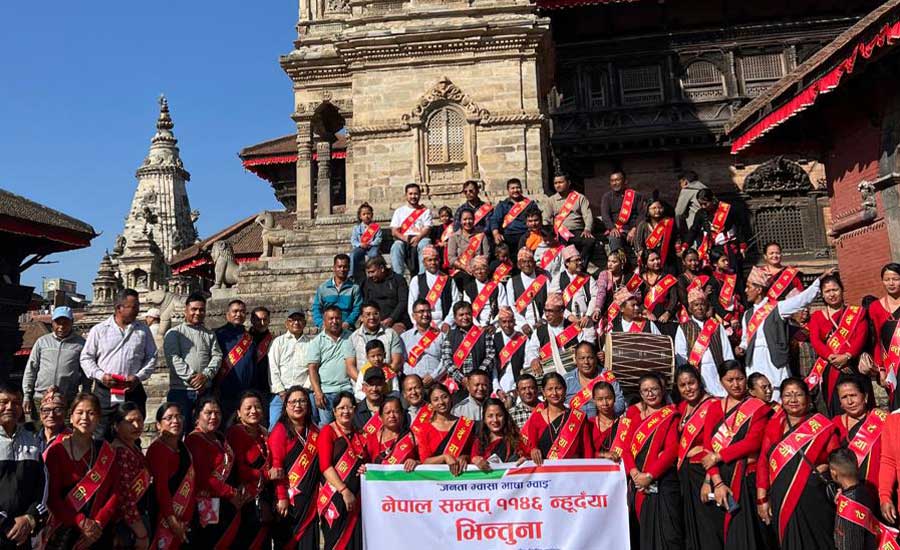
The Nepal Sambat New Year, known as Nhu Daya Bhintuna, is celebrated on the first day of Kachhal month (around late October or November).
It coincides with Mha Puja, the sacred Newar ceremony of self-purification and spiritual renewal.
During the celebrations:
Families perform rituals at home and light oil lamps (diyas) for prosperity.
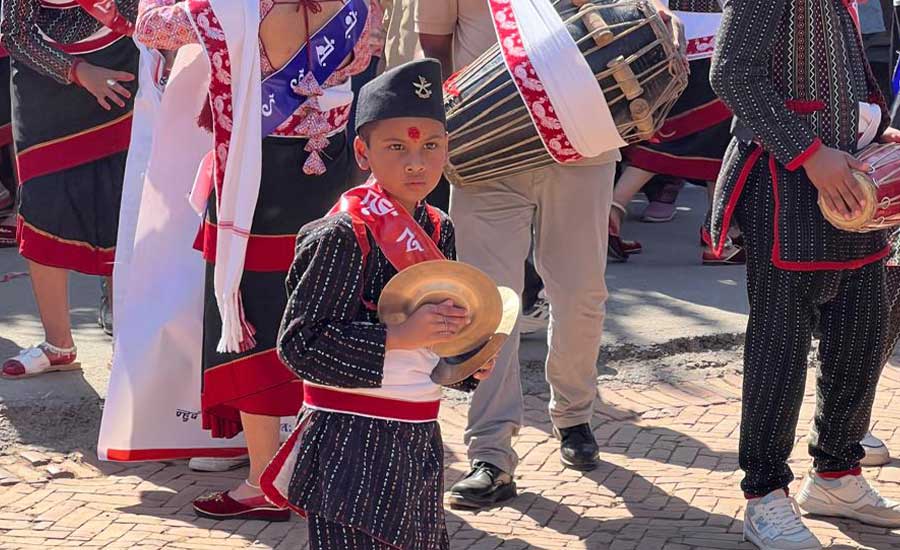
Colorful processions parade through Kathmandu, Lalitpur, and Bhaktapur.
People exchange greetings saying “Nhu Daya Bhintuna” meaning Happy New Year.
Cultural groups perform Newar dances, play traditional drums (dhime), and decorate the streets with banners of Nepal Sambat 1146.
This festival beautifully expresses the unity of Nepal’s heritage and the resilience of its people.
Nepal Sambat 1146 Today – Recognition and Use
In modern Nepal, Nepal Sambat stands as a nationally recognized heritage calendar.
It appears on official documents, newspapers, and even digital platforms.
Cultural organizations host exhibitions, street rallies, and awareness campaigns.
Schools and universities now teach Nepal Sambat history as part of Nepali culture.
This revival reflects growing national pride and respect for the diversity of Nepal’s timekeeping traditions.
How to Convert Nepal Sambat to Gregorian Year
To convert a Nepal Sambat year to the Gregorian year:
Add 879 years.
For example:
Nepal Sambat 1146 ≈ AD 2025.
However, because of the lunar system and leap months, exact date conversion requires calendar charts or an online converter.
Nepal Sambat New Year dates for 2025 and 2026
| Year (Gregorian) | Nepal Sambat Year | New Year Date (Gregorian) | Equivalent Bikram Sambat (BS) | Day / Festival | Remarks |
|---|---|---|---|---|---|
| 2025 | Start of NS 1146 | Wednesday, 22 October 2025 | Kartik 5, 2082 BS (Shukla Pratipada) | Mha Puja / Newar New Year | Marks the beginning of Nepal Sambat 1146 during Tihar Festival (Swanti) |
| 2026 | Start of NS 1147 | Tuesday, 10 November 2026 | Kartik 24, 2083 BS (Pratipada) | Mha Puja / Newar New Year | Beginning of Nepal Sambat 1147; falls during Tihar Festival week |
Why Nepal Sambat Matters for Heritage and Tourism
Cultural Identity: It celebrates the unique history and contribution of the Newar civilization.
National Pride: As Nepal’s only indigenous calendar, it reinforces national unity.
Festive Tourism: Nepal Sambat New Year draws travelers who wish to witness traditional street parades, Mha Puja rituals, and authentic local culture.
Educational Value: Understanding Nepal Sambat helps researchers interpret inscriptions, temple records, and royal archives.
Conclusion – Celebrating Time in Nepal’s Own Era
As Nepal enters Nepal Sambat 1146, this calendar continues to symbolize freedom, compassion, and identity.
It is not merely a way to count days — it is a living tradition that connects the people of Nepal to their ancestors and their land.
From Sankhadhar Sakhwa’s generosity to modern revival movements, Nepal Sambat remains an enduring symbol of Nepalese culture, unity, and pride.
Final Note:
When you visit Nepal during Nepal Sambat 1146 New Year, don’t miss the vibrant parades in Basantapur, Patan, and Bhaktapur.
It’s the perfect opportunity to witness living history — where ancient traditions meet the heart of modern Nepal.