

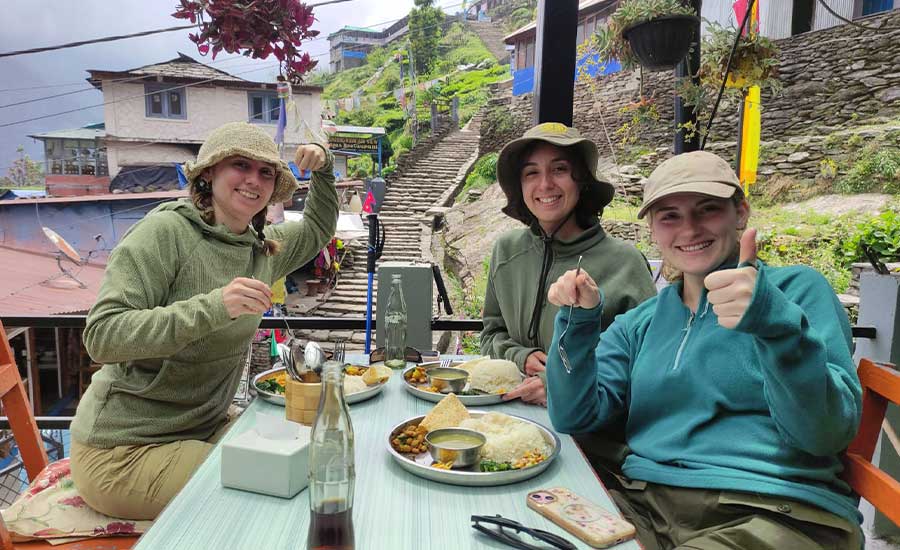
The Annapurna Base Camp Trek is one of the most iconic trekking experiences in Nepal. While much attention is given to routes, altitude, and scenery, food remains one of the most critical yet often underestimated aspects of the journey.
Trekking in the Himalayas places significant physical demands on the body. Daily walking durations typically range between five to seven hours, often involving steep ascents, uneven terrain, and increasing altitude. In such conditions, proper nutrition is essential not only for maintaining energy levels but also for supporting acclimatization and overall health.
Food along the Annapurna Base Camp trail is simple, freshly prepared, and designed to meet the nutritional needs of trekkers. Despite the remote environment, teahouses provide a surprisingly diverse range of meals, combining traditional Nepali cuisine with Tibetan and basic Western dishes.
Quick Overview of Food on Annapurna Base Camp Trek
| Meal Type | Typical Options | Description | Energy Value |
|---|---|---|---|
| Breakfast | Porridge, Tibetan bread, toast with jam, eggs, pancakes, chapati, muesli, potatoes | Warm and filling meals served early morning to prepare for long trekking hours. Rich in carbohydrates and proteins. | High – Provides sustained morning energy |
| Lunch | Dal Bhat, noodles, fried rice, momos, thukpa, pasta, sandwiches, soup | Mid-day meals taken at teahouses along the trail. Balanced meals designed to refuel energy for the afternoon trek. | Very High – Main energy replenishment |
| Dinner | Dal Bhat, vegetable curry, noodles, soup, spaghetti, potato dishes | Warm and nutritious meals served at lodges. Focus on easy digestion and recovery after a long trekking day. | Moderate to High – Recovery and warmth |
| Snacks | Chocolate bars, biscuits, cookies, nuts, energy bars, chips | Quick energy sources consumed during trekking breaks. Useful for maintaining stamina between meals. | Quick Energy Boost |
| Drinks | Tea (ginger, lemon, masala), coffee, hot chocolate, hot lemon, boiled water | Essential for hydration and warmth. Helps prevent dehydration and supports acclimatization at higher altitude. | Essential for hydration |
How Food Is Transported to Annapurna Base Camp
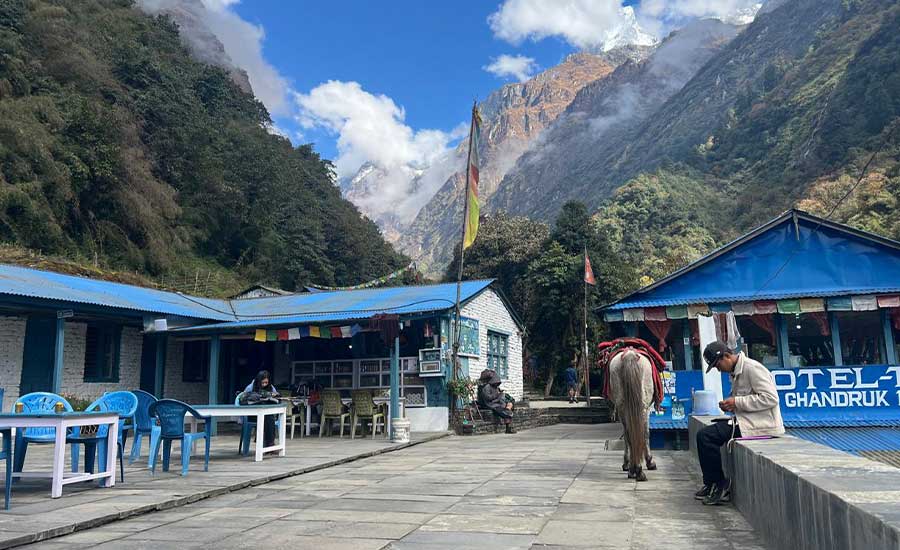
Understanding how food reaches remote Himalayan villages helps explain both the menu limitations and price variations along the trail.
In lower regions such as Nayapul, Jhinu Danda, and Chhomrong, food supplies are transported by vehicles where roads are accessible. However, beyond these points, the transportation system changes entirely.
All goods—including rice, vegetables, cooking gas, and packaged food—are carried manually by porters or transported by mules. This traditional supply chain significantly impacts:
- Food variety at higher elevations
- Portion sizes
- Availability of fresh ingredients
- Price increases as altitude rises
Each meal served in the mountains represents considerable logistical effort and local labor.
Overview of Food Availability on the ABC Trek
Teahouses along the Annapurna Base Camp Trek provide a broad selection of meals that cater to international trekkers. The menu typically includes:
- Traditional Nepali meals
- Tibetan-style dishes
- Basic Western options
At lower altitudes, the variety is extensive, including bakery items, fresh vegetables, and even meat dishes. As the trek progresses toward higher elevations, the menu gradually becomes simpler, focusing primarily on carbohydrate-rich meals that are easier to prepare and digest at altitude.
Meals are generally prepared fresh and served hot, which is essential for both hygiene and maintaining body warmth in colder environments
Breakfast Options on the Annapurna Base Camp Trek
Breakfast plays a crucial role in preparing trekkers for the physical demands of the day. It is typically served early in the morning, between 6:30 AM and 7:30 AM.
A good breakfast provides sustained energy for several hours of trekking, especially during steep ascents and long walking days.
Common Breakfast Choices:
- Porridge with milk, honey, or dried fruits
- Tibetan bread served with butter or jam
- Eggs prepared in various styles (boiled, fried, scrambled, omelette)
- Pancakes, often with apple or banana
- Toast or chapati with spreads
- Muesli with yogurt or milk
- Boiled or fried potatoes
These meals are rich in carbohydrates and proteins, helping to maintain stamina and endurance throughout the morning trek
Lunch and Dinner Meals on the Trail
Lunch is typically taken at a teahouse along the route, providing a necessary break during the trekking day. Dinner is served at the lodge where trekkers stay overnight and is usually the most relaxed meal of the day.
Popular Meal Options:
Traditional Nepali Dishes:
- Dal Bhat (rice, lentils, vegetables, and pickles)
- Vegetable curry with rice or chapati
Tibetan and Regional Meals:
- Thukpa (noodle soup)
- Fried noodles (Chowmein)
- Vegetable soups
Western and Comfort Foods:
- Pasta and spaghetti
- Pizza
- Sandwiches
- Fried rice
At higher altitudes, lighter meals such as soups and noodles are often preferred, as they are easier to digest and help maintain hydration levels
Snacks and Energy Supplements
Snacks are essential for maintaining energy levels between meals, especially during long trekking days.
Common Snacks Available:
- Chocolate bars
- Biscuits and cookies
- Roasted peanuts
- Packaged chips
- Energy bars
Due to increasing prices at higher elevations, it is advisable to carry additional snacks from Kathmandu or Pokhara.
Drinks and Hydration Requirements
Maintaining proper hydration is critical for preventing altitude sickness and ensuring physical performance.
Trekkers are advised to drink at least 3 to 4 liters of water per day.
Common Beverages:
- Masala tea (spiced tea with milk)
- Ginger tea and lemon tea
- Black tea and green tea
- Coffee (mostly instant)
- Hot chocolate
- Hot lemon with honey
Warm drinks are particularly beneficial in cold conditions and can help improve digestion and comfort during the trek
Dal Bhat: The Essential Trekking Meal
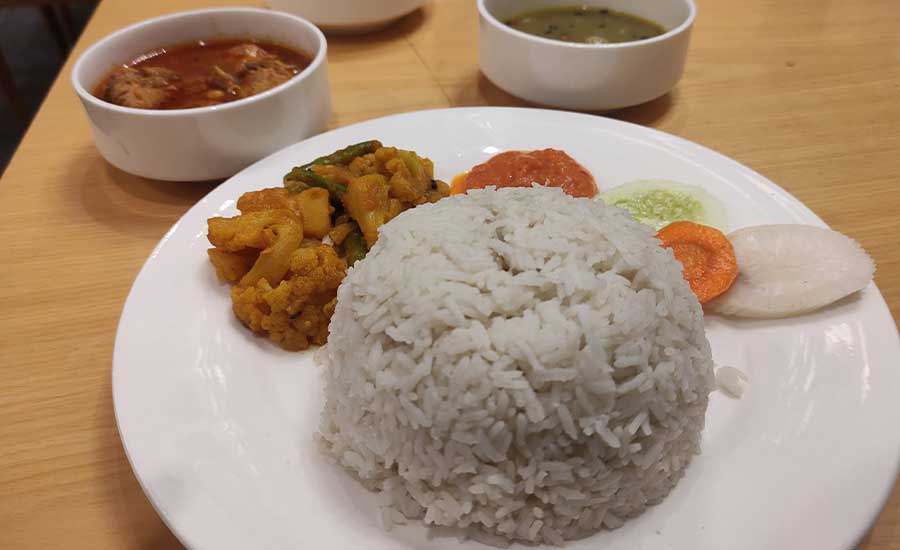
Dal Bhat is widely regarded as the most suitable and reliable meal during the Annapurna Base Camp Trek.
It consists of:
- Steamed rice (primary carbohydrate source)
- Lentil soup (protein source)
- Seasonal vegetable curry
- Leafy greens and pickles
This meal provides a balanced combination of nutrients necessary for sustained energy. One of its key advantages is that it is often served with unlimited refills, making it especially popular among trekkers.
Its simplicity, digestibility, and nutritional value make it the most recommended dish throughout the trek
Food Variation by Altitude
Food availability changes significantly as you ascend:
| Location | Food Characteristics |
|---|---|
| Lower regions | Wide variety including meat and bakery items |
| Chhomrong (2,170m) | Last reliable point for meat |
| Bamboo / Dovan | Basic but varied meals |
| Deurali (3,200m) | Limited options |
| ABC (4,130m) | Simple, vegetarian, high-carb diet |
At higher elevations:
- Fresh vegetables become scarce
- Meat is no longer available
- Meals are simpler and focused on energy
Vegetarian, Vegan, and Dietary Options
The Annapurna region is well-suited for vegetarian travelers. Many dishes are naturally plant-based.
Vegetarian Options:
- Dal Bhat
- Vegetable noodles
- Fried rice
- Vegetable curry
Vegan Options:
With simple requests, meals can be prepared without dairy products.
Special Diets:
Gluten-free options such as rice, potatoes, and soups are widely available.
Trekkers with allergies should inform their guide and lodge staff in advance to ensure safe meal preparation
Food Safety and Hygiene Practices
Maintaining food hygiene is essential in remote mountain environments.
Key Safety Practices:
- Always eat freshly cooked food
- Avoid raw vegetables and salads
- Wash hands before meals
- Choose reputable teahouses
Unhygienic food can lead to serious health issues such as dehydration, stomach infections, and fatigue, which can be particularly dangerous at high altitude
Drinking Water and Purification Methods
Access to clean drinking water is limited, and untreated water should not be consumed.
Safe Water Options:
- Boiled water from teahouses
- Water purification tablets
- Portable water filters
- UV purification devices
Water prices increase with altitude due to transportation challenges. Bottled water can become expensive and is not environmentally sustainable.
Using reusable bottles with purification methods is strongly recommended
Foods to Avoid During the Trek
To minimize health risks, trekkers should avoid:
- Raw or uncooked foods
- Meat at higher altitudes
- Alcohol (affects acclimatization)
- Excess caffeine
These can contribute to dehydration, digestion problems, and altitude-related issues.
Practical Nutrition Tips for Trekkers
- Eat small and frequent meals
- Focus on high-energy foods
- Stay consistently hydrated
- Carry personal snacks and supplements
- Listen to your body, especially at higher altitude
Loss of appetite is common above 3,000 meters and should be managed carefully to avoid fatigue and weakness
Conclusion: A Key Part of Your Himalayan Experience
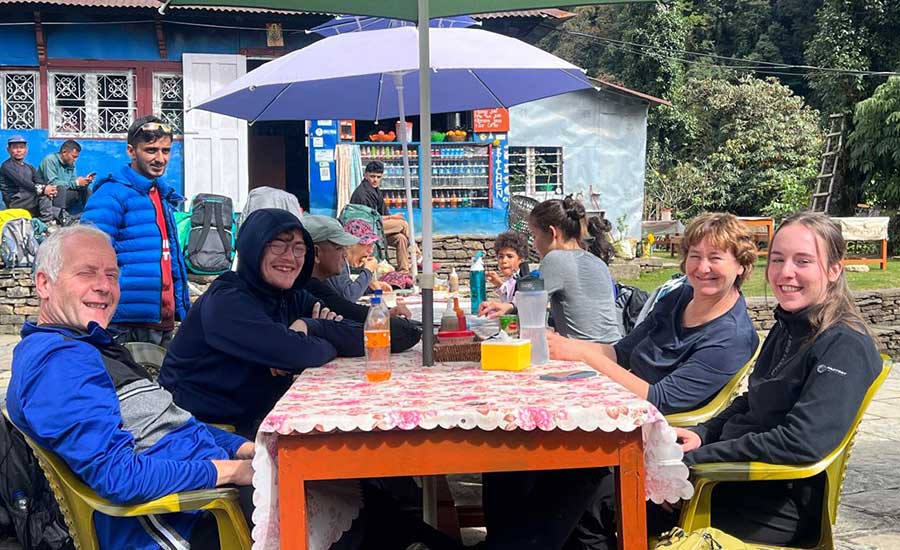
Food on the Annapurna Base Camp Trek is an integral part of the journey. While it may not offer luxury, it provides exactly what trekkers need: warmth, nourishment, and energy.
Meals shared in mountain lodges, prepared with care by local communities, create a meaningful connection to the culture and lifestyle of the Himalayas.
At Himalayan Dream Team, we prioritize selecting clean, reliable, and welcoming lodges to ensure that your trekking experience is both safe and enjoyable.