

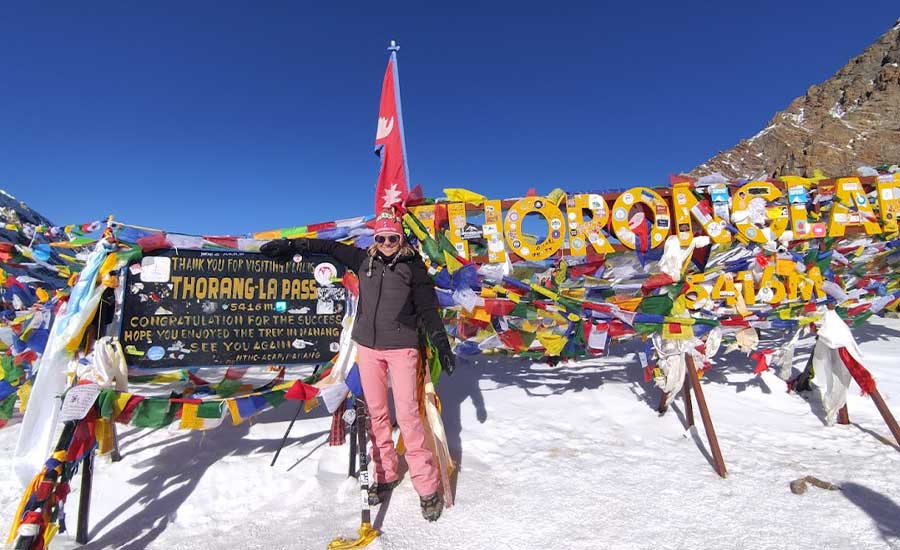
Thorong La Pass: Nepal’s Most Iconic High-Altitude Crossing
Thorong La Pass rises to 5,416 meters (17,769 feet), marking the highest point of the legendary Annapurna Circuit Trek and standing as one of the most celebrated trekking achievements in Nepal. For many adventurers, reaching this high Himalayan saddle is the defining moment of their journey. It represents not only physical endurance but also a dramatic transition between two distinct Himalayan landscapes.
The pass connects the lush alpine valley of Manang, known for its traditional stone villages and green highland pastures, with the dry, windswept terrain of Mustang, a trans-Himalayan region that resembles a high-altitude desert. Crossing Thorong La feels like stepping from one world into another in a single day. This extraordinary shift in scenery, culture, and atmosphere makes it one of the most unforgettable trekking experiences in the Himalayas.
Thorong La lies in the Annapurna region of central Nepal and is classified as a non-technical high-altitude pass. While no ropes or mountaineering equipment are required, the challenge should not be underestimated. The crossing from Thorong Phedi to Muktinath typically covers around 15 to 18 kilometers, and the complete Annapurna Circuit usually takes between 12 and 18 days depending on the itinerary. The trek is considered strenuous but achievable with proper preparation. Spring and autumn are widely regarded as the best seasons to attempt the pass due to stable weather and clear mountain views.
Altitude and Oxygen Level at Thorong La Pass
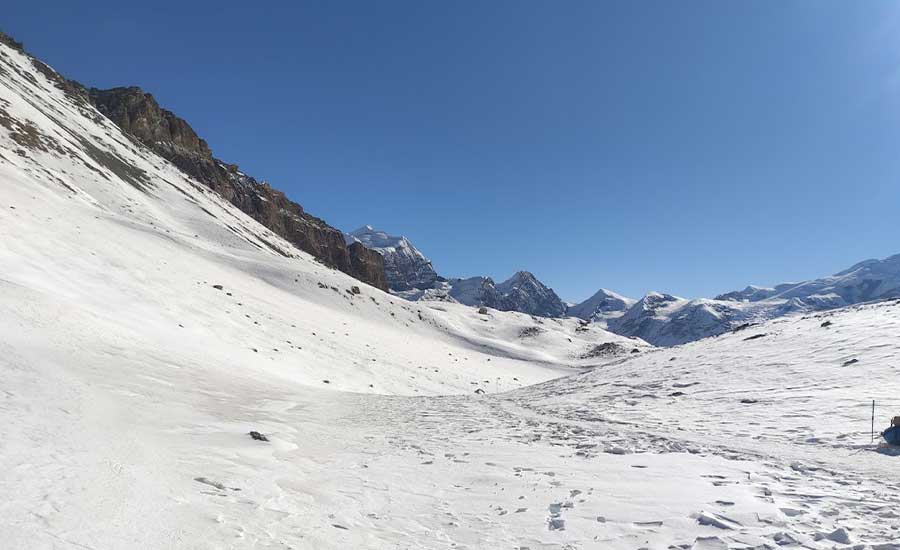
At 5,416 meters above sea level, the oxygen level at Thorong La drops to roughly 50 to 55 percent of what is available at sea level. This reduced oxygen concentration makes breathing noticeably more difficult and increases physical effort with every step. Even experienced trekkers feel the effects of altitude at this elevation. The thinner air is the primary reason the pass feels demanding, despite the trail itself being straightforward and non-technical.
How Difficult Is Thorong La Pass?
Although Thorong La does not require technical climbing skills or specialized equipment, it is considered challenging because of its high altitude and environmental conditions. Early morning temperatures often range between minus 10 and minus 20 degrees Celsius, and trekkers typically walk for seven to ten hours on the day of crossing. Strong winds frequently develop after mid-morning, and the long descent toward Muktinath can strain tired legs and knees.
Beginners can successfully complete Thorong La Pass if they follow proper acclimatization procedures and choose the recommended anticlockwise route from Manang to Muktinath. This direction allows gradual altitude gain and significantly reduces the risk of altitude sickness. Preparing physically three to four weeks before the trek with hiking, stair climbing, and cardiovascular training greatly improves comfort and safety on the pass day.
Weather and Temperature Conditions
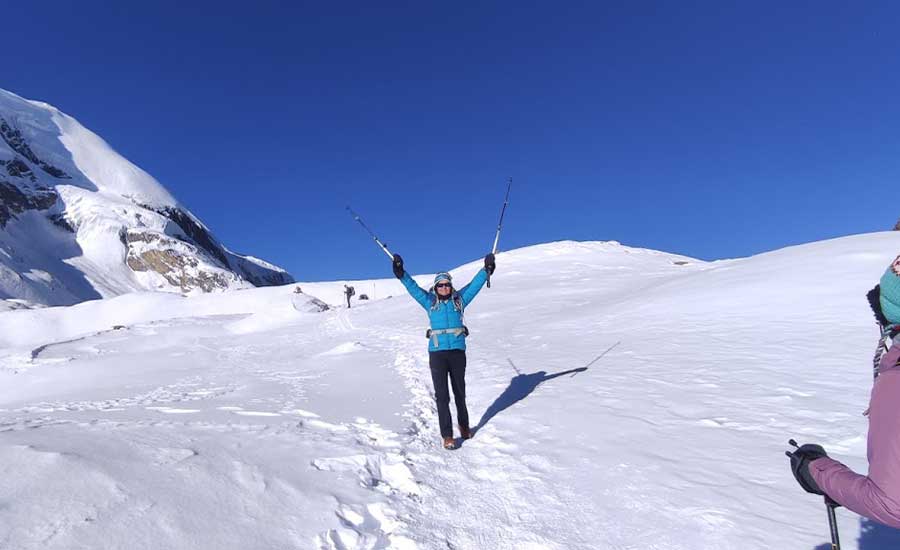
Spring, from March to May, offers relatively stable weather, with daytime temperatures ranging from minus 5 to 10 degrees Celsius and clear views of the Annapurna and Dhaulagiri ranges. Autumn, from September to November, is often considered the most favorable season due to excellent visibility and generally predictable weather patterns, though mornings can be colder.
Winter, from December to February, brings heavy snowfall and extremely low temperatures that can drop below minus 20 degrees Celsius. During this time, the pass may close temporarily due to snow accumulation. The monsoon season, from June to August, increases the risk of slippery trails, landslides, and limited visibility caused by cloud cover and rain.
Classic Thorong La Pass Route
The traditional approach to Thorong La begins with gradual ascent through the Annapurna region. Trekkers pass through Chame and Pisang before reaching Manang, where an acclimatization day is highly recommended. From Manang, the trail continues toward Yak Kharka and then to Thorong Phedi, the final overnight stop before the early morning ascent to the pass. After reaching the summit at 5,416 meters, trekkers descend to the sacred town of Muktinath. The crossing day typically requires seven to ten hours of walking.
Is Thorong La Higher Than Everest Base Camp?
Thorong La Pass stands slightly higher than Everest Base Camp. Thorong La reaches 5,416 meters, while Everest Base Camp sits at 5,364 meters. Although the difference is modest, Thorong La remains one of the highest non-technical trekking passes in Nepal.
Thorong La vs Annapurna Base Camp
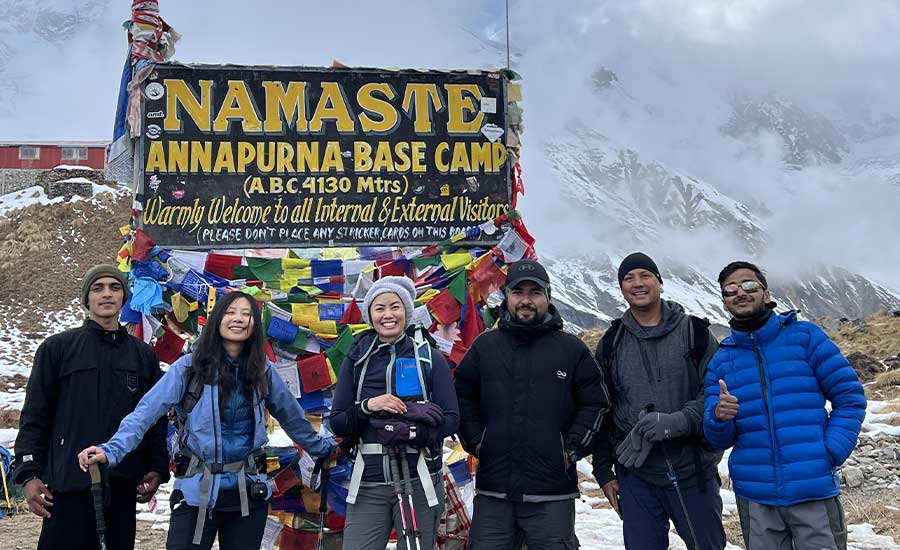
Thorong La, as part of the Annapurna Circuit, reaches a significantly higher elevation than Annapurna Base Camp. The Annapurna Base Camp trek climbs to 4,130 meters and is generally considered moderate in difficulty. In contrast, Thorong La involves a higher altitude and a longer, more demanding crossing day. Annapurna Base Camp offers a dramatic mountain sanctuary experience surrounded by towering peaks, while the Annapurna Circuit provides diverse landscapes ranging from alpine valleys to desert-like Mustang terrain. Trekkers seeking a greater altitude challenge often prefer Thorong La, while those looking for a shorter and less strenuous trek may choose Annapurna Base Camp.
Everest Base Camp vs Annapurna Circuit

Everest Base Camp involves a longer, gradual ascent toward 5,364 meters, whereas the Annapurna Circuit combines extended trekking distance with the demanding crossing of Thorong La Pass. Annapurna Base Camp is easier overall. Among these options, the Annapurna Circuit is typically considered more physically demanding due to the high-altitude pass.
Risks at High Altitude
High-altitude trekking carries inherent risks such as altitude sickness, hypothermia, dehydration, snowstorms, and overexertion. Proper acclimatization, adequate hydration, and steady pacing significantly reduce these risks. Recognizing early symptoms of altitude sickness and descending if necessary are essential safety practices.
Although rare, fatalities have occurred at Thorong La, mainly due to severe snowstorms, ignoring altitude symptoms, or poor weather timing. However, with professional guidance, careful planning, and responsible trekking practices, the pass is considered safe. Thousands of trekkers cross Thorong La successfully each year.
Highest Trekking Passes and Peaks
Thorong La is one of the highest non-technical trekking passes in Nepal among popular routes. Other notable high passes include Larkya La at 5,160 meters, Cho La at 5,420 meters, and Kongma La at 5,535 meters. Globally, several Himalayan passes exceed 5,600 meters.
The second highest peak in the world is K2, rising to 8,611 meters along the border of Pakistan and China. Everest remains the highest mountain above sea level at 8,848.86 meters, and no natural mountain exceeds this elevation.
Everest Base Camp is among the highest standard trekking base camps in Nepal. Some of the toughest treks in Nepal are widely considered to be the Dhaulagiri Circuit, Kanchenjunga Circuit, and Upper Dolpo, while the Snowman Trek in Bhutan is often regarded as even more challenging in the greater Himalayan region.
Humans can walk 25 miles in a day under normal conditions, but covering such distance at high altitude is extremely exhausting and generally not advisable during acclimatization stages. Mount Kailash in Tibet remains forbidden to climb due to its sacred spiritual significance.
What Makes Thorong La Pass Special
Thorong La Pass is remarkable because it unites two contrasting Himalayan environments in one powerful crossing. The early morning ascent under starlit skies, the fluttering prayer flags at the summit, and panoramic views of Annapurna and Dhaulagiri create a deeply emotional experience. The descent into Mustang and toward the sacred site of Muktinath adds a spiritual dimension to the journey. It is far more than a geographical point on a map; it is a milestone of endurance, humility, and transformation.
The Most Beautiful Regions of Nepal
Nepal’s beauty varies across regions. The Everest region is defined by dramatic towering peaks, the Annapurna region by its diversity of landscapes, Mustang by its desert-like Himalayan terrain, and Dolpo by its remote wilderness. Among trekking routes, the Annapurna Circuit, Everest Base Camp, Upper Mustang, and Manaslu Circuit are often cited as the most beautiful in the country.
Accommodation and Tea Houses Around Thorong La Pass
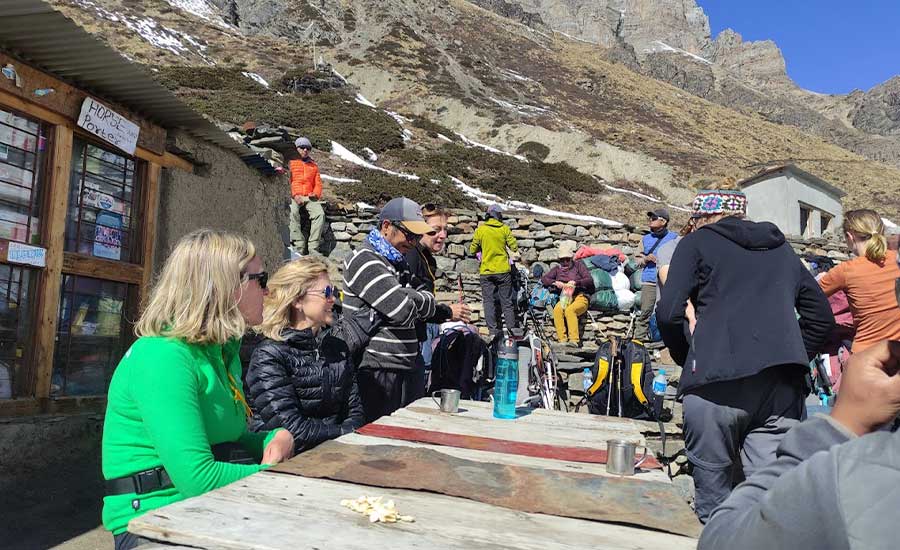
When planning to cross Thorong La Pass (5,416m), one of the most important things trekkers should understand is that there are no lodges, tea houses, or shelters at the actual summit of the pass. Thorong La is a high, exposed mountain saddle where weather conditions can change quickly, and overnight stays are neither possible nor safe. Proper planning of your accommodation before and after the pass is therefore essential.
Where Do Trekkers Stay Before Crossing Thorong La?
Most trekkers spend their final night at either Thorong Phedi (4,540m) or High Camp (4,880m), both located on the Manang side of the pass.
Thorong Phedi is the lower and more popular option. It offers basic but comfortable tea house accommodation with shared rooms, warm dining halls, and simple meals such as dal bhat, soups, pasta, and tea. Because it sits at a slightly lower elevation than High Camp, many trekkers find it easier to sleep and acclimatize here. From Thorong Phedi, the early morning climb to the pass typically takes 4–6 hours depending on pace.
High Camp, located higher up the trail, shortens the ascent distance on pass day. However, due to its higher altitude, sleep can be more difficult and colder conditions are common. Accommodation is more limited and basic compared to lower villages. Choosing between Thorong Phedi and High Camp depends on your acclimatization status, physical condition, and guide’s recommendation.
At Himalayan Dream Team, we carefully assess each group’s condition before deciding the most suitable overnight stop to maximize safety and comfort.
After the Pass: Accommodation in Muktinath
After crossing Thorong La, trekkers descend to Muktinath (3,760m), a sacred pilgrimage site for both Hindus and Buddhists. Unlike the exposed pass area, Muktinath offers a wider range of tea houses and guesthouses with more comfortable rooms, better facilities, and a warmer environment.
Here, you can find:
Private or twin-sharing rooms
Attached bathrooms in selected lodges
Hot meals and bakery options
Warm dining areas for relaxation
The lower altitude in Muktinath makes breathing easier and sleep significantly more comfortable after the demanding pass day. Many trekkers describe the evening in Muktinath as a rewarding and peaceful experience following the long crossing.
Why Proper Accommodation Planning Matters
Because there are no facilities at Thorong La Pass itself, careful itinerary planning is critical. Staying too high too soon can increase the risk of altitude sickness, while rushing the crossing without adequate rest can lead to exhaustion.
With Himalayan Dream Team, we design Annapurna Circuit itineraries that prioritize:
Gradual acclimatization
Safe overnight elevation planning
Comfortable tea house selection
Flexible scheduling based on weather and health
Crossing Thorong La is a highlight of the Annapurna Circuit, but it requires thoughtful preparation. Choosing the right place to rest before and after the pass ensures that your experience is not only successful, but also safe and enjoyable.
Preparation and Packing Essentials for Thorong La Pass (5,416m)
Crossing Thorong La Pass on the Annapurna Circuit is a true high-altitude challenge. At Himalayan Dream Team, we always emphasize that the right preparation and smart packing can make the difference between a comfortable crossing and a difficult one. The key is layering, practicality, and choosing gear that performs well in cold, windy, and low-oxygen conditions.
| Category | Essential Item | Why It’s Important for Thorong La Pass | Himalayan Dream Team Recommendation |
|---|---|---|---|
| Layering System | Base layer, fleece jacket, insulated down jacket | Temperatures before sunrise can drop below -10°C to -20°C. Proper layering traps heat while allowing flexibility during ascent. | Use moisture-wicking thermal base layers and a high-quality down jacket for summit morning. |
| Outer Protection | Windproof and waterproof shell jacket | Strong winds and sudden weather changes are common near the pass. | Choose a lightweight but durable shell that blocks wind and light snow. |
| Footwear | Well-broken-in trekking boots and warm socks | The long descent to Muktinath can strain feet and knees. Proper grip and ankle support are crucial. | Wear waterproof boots you have already used on previous hikes to avoid blisters. |
| Cold Protection | Gloves, beanie, neck buff | Extremities lose heat quickly at high altitude, especially during early morning crossings. | Carry insulated gloves and a wind-resistant beanie for summit conditions. |
| Sun Protection | Sunglasses (UV400) and high-SPF sunscreen | UV exposure increases significantly above 5,000m and snow reflection can cause snow blindness. | Use glacier-rated sunglasses and reapply sunscreen regularly. |
| Support Gear | Trekking poles | Pole support reduces pressure on knees during the long descent. | Adjust poles slightly shorter for uphill and longer for downhill stability. |
| Lighting | Headlamp with spare batteries | Most trekkers start between 3:00–4:00 AM in complete darkness. | Choose a reliable headlamp with strong beam and keep spare batteries warm. |
| Electronics | Power bank and spare camera batteries | Cold temperatures drain batteries quickly at high altitude. | Store electronics inside your jacket to preserve battery life. |
| Hydration | Water bottles or thermos; optional rehydration salts | Hydration helps prevent altitude sickness and fatigue. | Carry at least 2 liters of water and consider a thermos for warm drinks. |
| Physical Preparation | Cardio and leg-strength training (3–4 weeks prior) | The pass day requires sustained effort for 7–10 hours at reduced oxygen levels. | Focus on hiking, stair climbing, and endurance exercises before arriving in Nepal. |
Best Time to Cross Thorong La Pass
The most favorable seasons for crossing Thorong La Pass are Spring (March to May) and Autumn (September to November). During these months, skies are generally clearer, weather conditions are more stable, and visibility of the Annapurna and Dhaulagiri ranges is at its best.
Even in peak seasons, early mornings at 5,416 meters are extremely cold. However, conditions are far more manageable compared to winter (December to February), when heavy snowfall and severe cold can temporarily close the pass. Choosing the right season significantly increases both safety and overall trekking experience.
At Himalayan Dream Team, we carefully plan itineraries around optimal weather windows and ensure that every trekker is properly prepared with the right gear and guidance for a safe and successful Thorong La crossing.
Tips for Crossing Thorong La Pass Safely
| Safety Tip | Why It Matters at Thorong La Pass (5,416m) | Himalayan Dream Team Advice |
|---|---|---|
| Train ahead of time | Thorong La crossing day is long (often 7–10 hours) and the descent to Muktinath can be tough on knees and legs. Good fitness improves endurance and recovery at high altitude. | Do 3–4 weeks of regular training: hiking, stair climbing, cycling, and brisk walking. Add light strength training (legs + core) and stretching for flexibility. |
| Take acclimatization seriously | At 5,416m, oxygen is much lower than sea level, increasing the risk of AMS (altitude sickness). Proper acclimatization improves safety and success rate. | Spend time in the Manang area and follow a gradual ascent profile. Never rush above 3,000m—your body needs time to adapt. |
| Start early and pace slowly | Weather is usually calmer in the early morning, while wind often increases after mid-morning. Moving too fast at altitude causes rapid exhaustion. | Start around 3:00–4:00 AM and walk in small, steady steps. Focus on breathing rhythm and consistent pacing rather than speed. |
| Stay hydrated and eat regularly | Dehydration and low calorie intake can worsen altitude symptoms, reduce energy, and slow recovery—especially on the toughest day of the Annapurna Circuit. | Drink water frequently (even if not thirsty) and eat balanced meals. Include warm fluids (tea/soup) and carry light snacks for the climb. |
| Avoid alcohol before the pass | Alcohol increases dehydration, disturbs sleep, and reduces your body’s ability to acclimatize properly—raising risk on pass day. | Avoid alcohol for at least 48 hours before crossing Thorong La Pass. Prioritize rest, hydration, and nutrition instead. |
| Watch for altitude sickness symptoms | Early warning signs like headache, nausea, dizziness, or unusual fatigue can escalate quickly at high altitude if ignored. | Do daily self-checks and inform your guide immediately if symptoms increase. If symptoms become severe, descent is the safest option. |
| Get comprehensive travel insurance | Emergency evacuation (including helicopter rescue) can be costly in remote high-altitude areas if insurance does not cover trekking above 5,000m. | Choose a policy that covers high-altitude trekking and emergency evacuation. Keep insurance and emergency contact details easily accessible. |
| Trek with an experienced local team | Local knowledge improves safety in changing weather, trail conditions, and altitude management—especially near Thorong Phedi and the pass section. | Our Himalayan Dream Team guides monitor pacing, acclimatization, and weather updates daily, helping you cross Thorong La safely and confidently. |
Trek Thorong La with Himalayan Dream Team
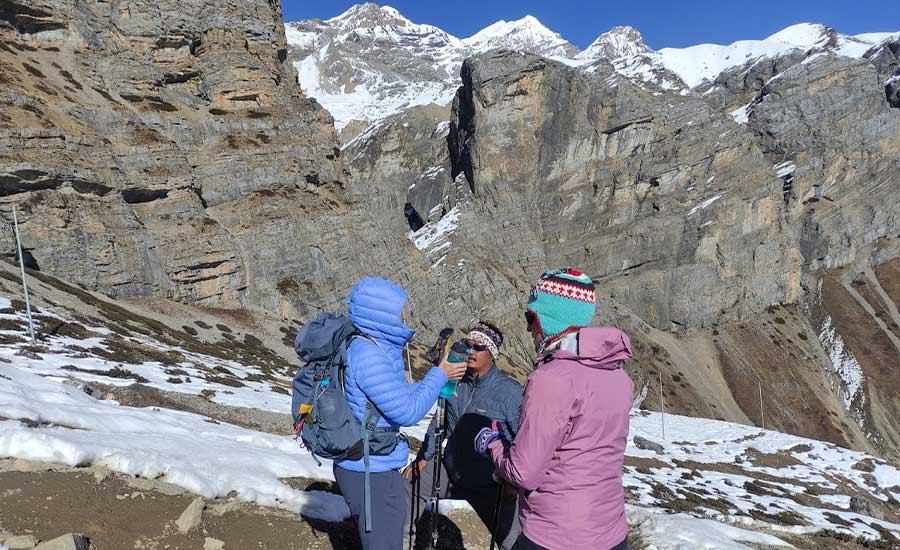
At Himalayan Dream Team, we prioritize expert acclimatization planning, real-time weather monitoring, safe pacing strategies, and responsible altitude management. Since 2014, we have guided hundreds of trekkers safely across Thorong La Pass while maintaining ethical standards for our guides and porters.
Crossing this iconic Himalayan saddle is not just about reaching 5,416 meters. It is about resilience, perspective, and the profound sense of achievement that comes from stepping beyond your comfort zone. If you are ready to experience one of Nepal’s most legendary mountain crossings, we are ready to guide you safely and confidently to the top.