

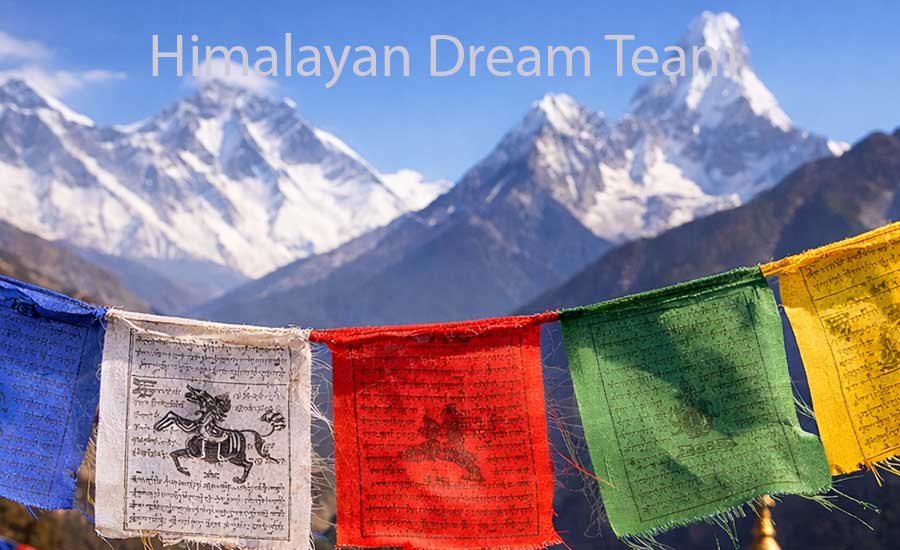
As you travel through the Himalayan regions of Nepal, Tibet, and Bhutan, you will often see colorful flags gently fluttering in the wind. These are Tibetan prayer flags—one of the most recognizable spiritual symbols of the mountains.
At Himalayan Dream Team, we always explain to our travelers that these flags are not simply decorative. They represent a deep spiritual tradition rooted in compassion, peace, and harmony. When the wind passes through them, it is believed to carry prayers and blessings across the landscape, benefiting all living beings.
What Are Tibetan Prayer Flags?
Tibetan prayer flags are sacred pieces of cloth printed with mantras, prayers, and symbolic images. Their origins date back to ancient Tibetan traditions, even before Buddhism, and they later became an important part of Buddhist practice.
The purpose of these flags is to spread positive energy into the environment. Instead of directing prayers toward a single person, prayer flags are meant to benefit everyone by promoting peace, strength, wisdom, and compassion.
What Is Written on Tibetan Prayer Flags?
Prayer flags are filled with sacred texts and powerful imagery that hold deep spiritual meaning.
One of the most common mantras printed on prayer flags is “Om Mani Padme Hum,” associated with compassion and spiritual purification. Each syllable of this mantra is believed to cleanse negative emotions and bring clarity to the mind.
In addition to mantras, prayer flags often include symbols such as the Lungta or Wind Horse, which represents the movement of positive energy. You will also find images of four powerful animals—the dragon, garuda, tiger, and snow lion—each symbolizing protection, wisdom, confidence, and fearlessness.
Together, these texts and symbols create a spiritual message that is carried by the wind to all corners of the world.
Tibetan Prayer Flag Colors and Their Meaning
Tibetan prayer flags always appear in a specific sequence of five colors: blue, white, red, green, and yellow. This order is important and should always be maintained.
Each color represents one of the five natural elements:
- Blue symbolizes the sky and space
- White represents air and wind
- Red stands for fire and energy
- Green symbolizes water and balance
- Yellow represents earth and stability
These five elements together reflect harmony and balance in the universe, which is a key concept in Buddhist philosophy.
Types of Tibetan Prayer Flags
There are two main types of Tibetan prayer flags commonly seen in the Himalayas.
- The first type is Lungta, also known as horizontal prayer flags. These are the most common and are usually strung between trees, poles, or across mountain ridges. Their purpose is to allow the wind to carry blessings far and wide.
- The second type is Darchor, which are vertical prayer flags mounted on tall poles. These are often placed near monasteries, stupas, or sacred sites and are believed to offer protection and stability to the surrounding area.
Tibetan Prayer Flags Benefits
Tibetan prayer flags are not about personal gain but about spreading positive energy. Their benefits are spiritual and emotional rather than material.
They are believed to promote peace and harmony, encourage mindfulness, and create a calming environment. By hanging prayer flags, people express their wish for the well-being of all living beings, not just themselves.
This universal intention is what makes prayer flags so unique and powerful.
Tibetan Prayer Flags Where to Hang
The placement of prayer flags is very important and should be done with care and respect.
They are traditionally hung in high places where the wind can easily pass through them. Common locations include mountain passes, rooftops, gardens, monasteries, and near stupas.
It is important to ensure that the flags are placed above ground level and never allowed to touch the ground. The correct order of colors should also be maintained to preserve their symbolic meaning.
Is It Disrespectful to Hang Tibetan Prayer Flags?
Many people wonder whether it is appropriate to hang Tibetan prayer flags, especially if they are not Buddhist.
The answer is no—it is not disrespectful. Anyone can hang prayer flags, as long as it is done with the right intention and respect.
They should not be used as mere decoration or placed in inappropriate locations. Instead, they should be treated as sacred objects, with a mindset of compassion and positivity.
Tibetan Prayer Flags Near Me: Can You Use Them at Home?
Tibetan prayer flags are no longer limited to the Himalayas. People around the world use them in their homes, gardens, and meditation spaces.
You can hang them on a balcony, in a garden, or even indoors in a respectful way. The most important aspect is your intention—wishing peace, happiness, and well-being for all.
Tibetan Prayer Flags Cotton and Traditional Materials
Traditionally, Tibetan prayer flags are made from cotton or other natural fabrics. Cotton flags are preferred because they are environmentally friendly and naturally fade over time.
This fading is not considered damage but part of their spiritual meaning. It represents the idea of impermanence—a core concept in Buddhist philosophy.
Modern synthetic flags may last longer, but they do not carry the same traditional and symbolic value.
The Deeper Philosophy Behind Prayer Flags
One of the most meaningful aspects of Tibetan prayer flags is that they are not meant to last forever. As they fade and eventually disintegrate, they symbolize the natural cycle of life and renewal.
When old flags fade, new ones are often hung in their place, continuing the flow of prayers and blessings. This reflects the idea that life is constantly changing, and energy is always being renewed.
Tibetan Prayer Flags in Nepal Trekking Experience
One of the most memorable cultural highlights during trekking in Nepal is the presence of Tibetan prayer flags. As you walk through the Himalayas, these colorful flags appear again and again—adding both beauty and spiritual depth to your journey.
You will commonly see prayer flags at:
- High mountain passes, where trekkers pause, reflect, and celebrate their journey
- Scenic viewpoints, offering breathtaking Himalayan panoramas combined with spiritual energy
- Monasteries and stupas, where they enhance the sacred atmosphere
- Memorial sites, honoring climbers and trekkers who have passed through these regions
Everest Base Camp Trek

During the Everest Base Camp Trek, Tibetan prayer flags are one of the most powerful cultural and spiritual elements you will encounter. From the moment you enter the Khumbu region, you will see them decorating suspension bridges, monasteries like Tengboche, and high viewpoints such as Kala Patthar. At Everest Base Camp itself, prayer flags are often placed by climbers and Sherpa teams as a symbol of blessing and protection. Seeing these flags against the backdrop of Mount Everest creates a deeply emotional and unforgettable experience, connecting trekkers with the spiritual traditions of the Himalayas.
Manaslu Circuit Trek

The Manaslu Circuit Trek offers a more remote and authentic Himalayan experience, where Tibetan Buddhist culture is strongly preserved. Prayer flags are found throughout traditional villages like Samagaun and Samdo, as well as at sacred sites and chortens along the trail. The highlight is crossing the Larkya La Pass, where colorful prayer flags mark the summit, symbolizing achievement, gratitude, and spiritual connection. In this less crowded region, the presence of prayer flags feels even more meaningful, reflecting the deep-rooted beliefs of the local Nubri communities.
Annapurna Circuit Trek

On the Annapurna Circuit Trek, prayer flags appear across diverse landscapes—from lush green valleys to high alpine terrain. They are especially prominent at Thorong La Pass, one of the highest trekking passes in the world, where trekkers celebrate their success surrounded by vibrant flags fluttering in the wind. You will also see them at monasteries, temples, and viewpoints along the route, blending Hindu and Buddhist traditions. The prayer flags add a spiritual dimension to the journey, making the Annapurna Circuit not just a physical adventure but also a culturally enriching experience.
Final Thoughts
Tibetan prayer flags are far more than colorful pieces of fabric. They are a living tradition that carries messages of peace, compassion, and universal connection.
Understanding their meaning allows travelers to experience the Himalayas on a deeper level—not just as a destination, but as a place of spiritual significance.
At Himalayan Dream Team, we believe that every journey becomes more meaningful when you connect with the culture behind it. Tibetan prayer flags are a beautiful reminder that even the simplest things can carry powerful messages across the world.