

Origins and Migration of the Sherpa People
The Sherpa people are an indigenous ethnic group originally from the Kham region of eastern Tibet. The word “Sherpa” itself comes from the Tibetan words “shar” (east) and “pa” (people), meaning “people from the east.” Around the 15th and 16th centuries, Sherpa ancestors migrated south across the Himalayas and settled in what is today northeastern Nepal, especially in the Solukhumbu District. These early Sherpa settlers adapted to life in one of the most rugged terrains in the world, establishing permanent villages and forming distinct clan groups that now make up the Sherpa community. Despite centuries in Nepal, the Sherpas maintain strong linguistic and cultural ties to Tibet.
Where the Sherpas Live Today
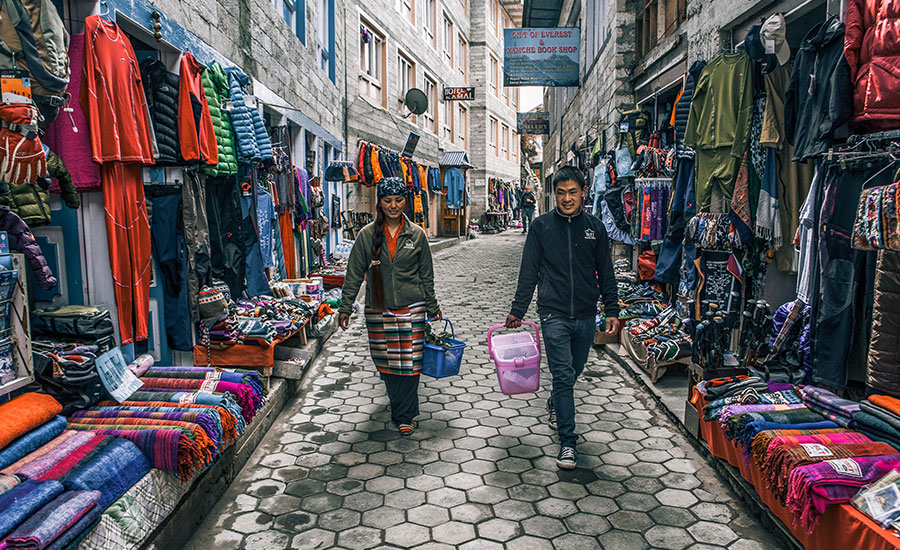
Today, the majority of Sherpas reside in Nepal, primarily in the Solukhumbu, Dolakha, Sankhuwasabha, and Ramechhap districts. According to the 2023 Nepal census, over 250,000 Sherpas live in the country, with the highest concentration found in Koshi and Bagmati provinces. The region surrounding Mount Everest, including villages like Namche Bazaar, Khumjung, and Pangboche, remains a central part of Sherpa life. Additionally, smaller Sherpa communities can be found in Sikkim and Darjeeling in India, as well as in parts of Bhutan. In recent decades, Sherpas have also migrated internationally, with significant communities established in New York City, Colorado, and the United Kingdom.
Sherpa Culture and Spiritual Beliefs
Sherpa culture is deeply spiritual and closely tied to Tibetan Buddhism. Most Sherpas follow the Nyingma school, the oldest tradition of Tibetan Buddhism. Their spiritual practices incorporate ancient Bon and animist elements, blending rituals, mantras, and a strong reverence for nature. Monasteries, known as gompas, are central to Sherpa life and often serve as both religious and cultural hubs. The Sherpas consider the mountains sacred, with Everest itself called “Chomolungma,” meaning “Goddess Mother of the World.” Before any expedition, Sherpas conduct purification rituals and offerings to appease mountain deities, reflecting a belief that human activity must respect the spiritual forces residing in the natural world.
Daily Life and Traditional Customs
Life in traditional Sherpa communities revolves around agriculture, yak herding, and trade. Families grow potatoes, barley, and vegetables, while yaks provide milk, meat, wool, and transportation. Houses are typically made of stone and timber, with flat roofs to withstand heavy snowfall and small altars for daily Buddhist offerings. Clothing varies by season and occasion; men often wear woolen chubas, while women don brightly colored dresses with striped aprons called pangden. Meals consist largely of carbohydrates and dairy, including butter tea (suja), tsampa (roasted barley flour), and thukpa (noodle soup). Sherpa social life is communal and vibrant, with celebrations like Losar (Tibetan New Year) and Dumje featuring traditional dances, chants, and feasting.
Genetic Adaptation to High Altitude
What truly distinguishes the Sherpa people is their extraordinary ability to perform strenuous labor at extreme altitudes. Decades of scientific research have revealed unique genetic adaptations among Sherpas that allow them to thrive where oxygen levels are dangerously low. Sherpas possess a variant of the EPAS1 gene, inherited from an ancient human ancestor known as the Denisovans. This gene helps regulate red blood cell production and oxygen efficiency, enabling Sherpas to maintain energy without developing thick blood or hypertension like many lowland climbers do. Their bodies also produce more nitric oxide, which improves blood flow and oxygen delivery to vital organs. These adaptations explain how Sherpas can carry heavy loads, climb steep icefalls, and remain resilient in the thin air of the Himalayas.
Sherpa Legacy in Mountaineering History
The Sherpa people became widely known in the early 20th century during British expeditions to Mount Everest. Their strength, stamina, and familiarity with the terrain made them indispensable members of every climbing team. However, it was the 1953 expedition led by Sir John Hunt that brought them international fame. On May 29, 1953, Sherpa Tenzing Norgay and New Zealand climber Sir Edmund Hillary reached the summit of Mount Everest for the first confirmed time in history. This event forever linked the name Sherpa with heroism, leadership, and expertise in mountaineering. Since then, Sherpas have played crucial roles in expeditions across the Himalayas, guiding clients, fixing ropes, carrying supplies, and ensuring climber safety.
Tenzing Norgay and the 1953 Everest Ascent
Tenzing Norgay remains the most iconic Sherpa in mountaineering history. Born in the Khumbu region of Nepal or possibly in Tibet (historical records vary), Tenzing grew up in the shadows of the world’s tallest mountains. After years of working on Himalayan expeditions, he was selected to join the British Everest team in 1953. Alongside Hillary, he ascended the summit via the South Col route, marking a monumental human achievement. Their success was not only a testament to technical skill but also to the Sherpa ethos of teamwork, humility, and endurance. Tenzing became a national hero in both Nepal and India, receiving numerous awards and founding mountaineering schools to train future generations.
Modern Sherpa Legends and Record Holders
In the modern era, Sherpa climbers have broken nearly every record associated with Mount Everest. Kami Rita Sherpa currently holds the world record for the most Everest ascents, reaching the summit 31 times by May 2025. His career, spanning decades, reflects the extraordinary dedication Sherpas bring to their work. Pasang Dawa Sherpa follows closely with 29 summits. Lhakpa Sherpa holds the record for most Everest climbs by a woman, with 10 successful ascents. A rising star among younger climbers is Nima Rinji Sherpa, who at just 18 years old became the first Sherpa to summit all 14 of the world’s 8,000-meter peaks. These climbers represent a new generation of Sherpas who are not just supporting foreign clients but also pursuing their own goals as elite athletes.
The Dangers Sherpas Face on Everest
While Sherpas are often praised for their skill and resilience, they also face immense danger in their work. The Khumbu Icefall, located just above Everest Base Camp, is one of the most treacherous sections of the mountain. Sherpas frequently cross it multiple times per season, transporting gear and preparing camps long before clients arrive. Tragically, Sherpas account for nearly one-third of all Everest-related deaths. In 2014, an avalanche in the Icefall claimed the lives of 16 Sherpas, sparking protests and calls for better wages, insurance, and recognition. Despite improvements, Sherpas still take on the most physically demanding and hazardous roles on the mountain, often for limited financial compensation relative to the risks involved.
Sherpas and the Nepal Tourism Economy
Mountaineering and trekking are essential pillars of Nepal’s economy, and the Sherpa people are at the heart of this industry. Each year, thousands of tourists visit Nepal to trek to Everest Base Camp or attempt the summit itself. Sherpas serve as guides, porters, cooks, and organizers for these expeditions, ensuring safety and success. The income they earn supports not only their families but entire villages, helping fund schools, clinics, and infrastructure. However, the benefits are unevenly distributed, and many Sherpas still face economic hardship. Organizations such as the Tenzing Norgay Sherpa Foundation and The Juniper Fund are working to improve healthcare, education, and safety nets for Sherpa families affected by mountaineering accidents.
Cultural Preservation in a Changing World
As Nepal modernizes and tourism grows, the Sherpa community is grappling with how to preserve its heritage while embracing new opportunities. Younger Sherpas are increasingly pursuing higher education, learning foreign languages, and starting their own trekking agencies. At the same time, there is a strong push to maintain traditional customs, religious festivals, and the Sherpa language. Events such as Losar and Mani Rimdu continue to be celebrated with dance, music, and prayer, while monasteries remain centers of community life. Environmental awareness is also rising, with Sherpas taking the lead in sustainable tourism and mountain conservation efforts, ensuring that their sacred landscape is protected for future generations.
The enduring legacy of Sherpa people are much more than high-altitude guides. They are the cultural, spiritual, and logistical backbone of Himalayan mountaineering. Their resilience, shaped by centuries in one of the world’s harshest environments, has made them legendary in the climbing world. As Sherpas continue to set records and inspire climbers from every corner of the globe, their story is one of heritage, heroism, and hope. Understanding who the Sherpas are means seeing them not just as supporters of others’ dreams but as leaders of their own. Their legacy on Everest and beyond will endure for generations to come.