

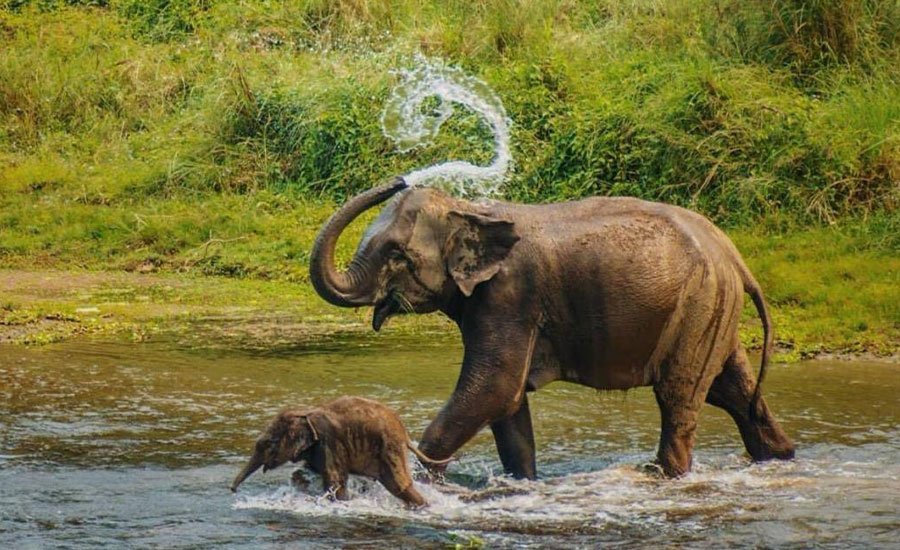
Chitwan National Park is one of the best places in Nepal to experience wildlife, subtropical nature and the culture of the Terai. Located in south-central Nepal, Chitwan offers a completely different side of the country from the Himalayan trekking regions.
Instead of high mountains and trekking trails, visitors explore forests, open grasslands, wetlands and river systems where greater one-horned rhinoceroses, deer, crocodiles, monkeys, wild elephants, numerous bird species and the elusive Bengal tiger live.
Established in 1973 as Nepal's first national park, Chitwan National Park was inscribed as a UNESCO World Heritage Site in 1984. Today, it is one of Nepal's most important protected areas and one of the country's most rewarding destinations for wildlife lovers, families, couples, photographers and travellers looking to combine nature with culture.
A typical Chitwan experience includes a jeep safari, canoe ride, guided nature activities, birdwatching and opportunities to learn about Tharu culture. Two or three nights are generally enough for first-time visitors, while wildlife photographers and dedicated nature lovers may prefer to stay longer.
This complete Chitwan National Park travel guide by Himalayan Dream Team explains where Chitwan is, how to get there, the best time to visit, weather, wildlife, safari activities, entrances, places to stay, what to pack and how to combine Chitwan with Kathmandu, Pokhara and other destinations in Nepal.
Chitwan National Park at a Glance
| Chitwan Travel Fact | Details |
|---|---|
| Location | South-central Nepal, in the subtropical Terai |
| Established | 1973 |
| UNESCO World Heritage Site | Since 1984 |
| National Park Area | 952.63 sq. km |
| Buffer Zone Area | 729.37 sq. km |
| Landscape | Sal forest, riverine forest, grasslands, wetlands and river systems |
| Major Rivers | Rapti, Narayani and Reu |
| Famous Wildlife | Greater one-horned rhinoceros, Bengal tiger, Asian elephant, sloth bear, gaur, deer and crocodiles |
| Reptiles | Gharial and mugger crocodiles among other species |
| Main Activities | Jeep safari, canoe ride, birdwatching, nature walks and cultural experiences |
| Popular Tourist Areas | Sauraha, Kasara and Meghauli |
| Nearest Airport | Bharatpur Airport |
| Best-known Travel Period | October to March, although Chitwan can be visited in other months |
| Recommended Stay | 2–3 nights for most first-time visitors |
| Suitable For | Families, couples, seniors, photographers, wildlife lovers, student groups and first-time Nepal visitors |
| High-Altitude Travel Required? | No |
| Popular Combination | Kathmandu + Pokhara + Chitwan |
Where Is Chitwan National Park?
Chitwan National Park lies in the subtropical lowlands of south-central Nepal, approximately southwest of Kathmandu.
The protected landscape extends across parts of Chitwan and neighbouring districts and includes forests, grasslands, wetlands and the floodplains of major river systems.
For travellers, Chitwan is particularly convenient because it can be included between Kathmandu and Pokhara, creating one of Nepal's most popular travel circuits:
Kathmandu → Pokhara → Chitwan → Kathmandu
or
Kathmandu → Chitwan → Pokhara → Kathmandu
This makes Chitwan an excellent addition to a Nepal holiday without requiring high-altitude trekking.
Travellers interested in combining Nepal's cultural heritage, Himalayan scenery and wildlife can also explore our Best of Nepal Tour – Kathmandu, Pokhara, Chitwan & Lumbini.
Why Is Chitwan National Park Famous?
Chitwan is famous primarily for its wildlife and its importance to conservation in Nepal.
The park protects one of the country's most important populations of the greater one-horned rhinoceros and also provides habitat for the Bengal tiger.
For most travellers, however, Chitwan is about much more than searching for one particular animal.
A visit may include:
- One-horned rhinoceros sightings
- Jeep safaris through forest and grassland
- Gharial and mugger crocodiles
- Canoe trips along the river
- Deer and monkeys
- Birdwatching
- Sal forests and tall grasslands
- Guided nature experiences
- Tharu villages and cultural traditions
- Beautiful sunsets beside the Rapti River
The combination of wildlife, landscape and local culture is what makes Chitwan different from Nepal's mountain destinations.
Wildlife in Chitwan National Park
Chitwan National Park protects a remarkably diverse subtropical ecosystem.
Although wildlife sightings can never be guaranteed, every safari offers an opportunity to observe animals and birds living within their natural habitat.
Major Mammals in Chitwan
| Wildlife | What Travellers Should Know |
|---|---|
| Greater One-Horned Rhinoceros | Chitwan's most famous large mammal and one of the main animals visitors hope to see. |
| Bengal Tiger | Lives within the park but is secretive and difficult to see. |
| Asian Elephant | Wild elephants may occur in and around the protected landscape. |
| Sloth Bear | Present in Chitwan, but sightings are unpredictable. |
| Gaur | A powerful wild bovine found within the park. |
| Spotted Deer | Frequently associated with Chitwan's forest and grassland habitats. |
| Sambar Deer | One of the larger deer species found in the region. |
| Wild Boar | Occurs throughout suitable habitat. |
| Monkeys | Different primates can be encountered around forest areas. |
Can You See Tigers in Chitwan National Park?
Yes, Bengal tigers live in Chitwan National Park, but travellers should have realistic expectations.
Tigers are naturally secretive, territorial and difficult to observe. Even during a well-planned safari, a tiger sighting cannot be guaranteed.
Tracks, alarm calls or other signs may sometimes indicate tiger activity, but the experience of Chitwan should never depend entirely on seeing a tiger.
For most first-time visitors, seeing a one-horned rhinoceros in its natural habitat is already an unforgettable experience.
One-Horned Rhinoceros in Chitwan
The greater one-horned rhinoceros is the animal most strongly associated with Chitwan National Park.
These impressive animals can be found around grasslands, forests, wetlands and riverine habitats.
Jeep safaris provide opportunities to search for rhinos while exploring a larger section of the protected landscape.
Always follow your naturalist's instructions and maintain a safe distance. Wild animals should never be approached for photographs.
Birds of Chitwan National Park
Chitwan is also one of Nepal's important birdwatching destinations.
Its combination of forests, rivers, wetlands and grasslands creates habitat for a wide variety of resident and migratory birds.
Birdwatchers may look for:
- Hornbills
- Kingfishers
- Egrets and herons
- Storks
- Eagles
- Woodpeckers
- Parakeets
- Bee-eaters
- Waterbirds
- Grassland species
- Raptors
Early mornings are particularly enjoyable for birdwatching because temperatures are cooler and bird activity can be high.
Travellers with a serious interest in birds should tell us in advance so that the Chitwan program can place greater emphasis on birdwatching.
Crocodiles in Chitwan
Chitwan's rivers support two particularly interesting crocodilian species:
| Species | Description |
|---|---|
| Gharial | A distinctive long, narrow-snouted crocodilian strongly associated with river habitats. |
| Mugger Crocodile | A broader-snouted crocodile found in freshwater habitats. |
A canoe ride provides one of the best opportunities to quietly observe riverbanks where crocodiles may be resting.
Sightings still depend on natural conditions and cannot be guaranteed.
Best Things to Do in Chitwan National Park
1. Jeep Safari in Chitwan
A jeep safari is one of the best-known activities in Chitwan National Park.
Travelling by 4WD allows visitors to cover a much larger area than would be possible on foot.
Depending on the safari route and current park arrangements, you may pass through:
- Sal forest
- Tall grasslands
- Riverine forest
- Wetlands
- Open clearings
- Riverbanks
During the safari, your guide and driver look for signs of wildlife and explain the surrounding ecosystem.
Possible sightings include rhinos, deer, monkeys, wild boar, crocodiles and numerous birds.
Bengal tigers and sloth bears also inhabit Chitwan, but sightings are much less predictable.
Half-Day or Full-Day Jeep Safari?
The available safari format can depend on season, park regulations, lodge location and current operating arrangements.
A longer safari generally allows more time to explore different habitats, while a shorter safari works well for travellers with limited time.
Himalayan Dream Team can arrange the Chitwan program according to your itinerary and travel style.
2. Canoe Ride on the Rapti River
A traditional canoe journey is one of the most peaceful ways to experience Chitwan.
Instead of travelling through the forest by vehicle, you move quietly along the water while watching the riverbanks.
Possible sightings include:
- Gharials
- Mugger crocodiles
- Kingfishers
- Herons
- Egrets
- Storks
- Other waterbirds
The exact canoe route and operating conditions depend on river levels, season, weather and local arrangements.
The experience is particularly beautiful in the morning when the river can be calm and the surrounding forest is becoming active.
3. Guided Nature Walk
Guided nature walks provide a completely different perspective from a jeep safari.
On foot, you become more aware of smaller details such as:
- Animal tracks
- Bird calls
- Insects
- Forest plants
- Tree species
- Signs of wildlife
- Changes between forest and grassland habitats
Nature walks must always be conducted according to current park regulations and with trained guides.
Safety instructions should be followed carefully because Chitwan is a genuine wildlife environment.
4. Birdwatching
Chitwan is excellent for travellers interested in birds, whether you are an experienced birdwatcher or simply enjoy nature.
Early morning birdwatching can be arranged around forest edges, river areas, wetlands and suitable buffer-zone habitats.
Bring binoculars if birdwatching is important to you.
5. Tharu Village Experience
The Tharu community has a long history in Nepal's Terai region.
A village visit provides an opportunity to learn about local architecture, agriculture, food, traditions and everyday life.
Rather than treating the community only as a tourist attraction, a good cultural visit should help travellers understand the relationship between local communities and the landscape surrounding Chitwan National Park.
6. Tharu Cultural Program
Many Chitwan itineraries include an evening cultural program featuring traditional Tharu music and dance.
This can be an enjoyable introduction to local culture after a day of wildlife activities.
Programs vary depending on the lodge, location and local schedule.
7. Rapti River Sunset
One of Chitwan's simplest experiences is also one of its most enjoyable.
The banks of the Rapti River are popular in the late afternoon when temperatures begin to cool and the sun sets across the Terai landscape.
After a full day of wildlife activities, it is a peaceful way to finish the day.
Chitwan National Park Safari Activities at a Glance
| Activity | Approximate Experience | Best For |
|---|---|---|
| Jeep Safari | Explore forest and grassland by vehicle | Wildlife viewing and photography |
| Canoe Ride | Quiet river journey | Crocodiles, birds and scenery |
| Nature Walk | Guided walking experience | Learning about forest ecology |
| Birdwatching | Usually best in quieter hours | Bird lovers and photographers |
| Tharu Village Visit | Cultural exploration | Culture and local life |
| Cultural Program | Traditional music and dance | Families and cultural travellers |
| Rapti Sunset | Relax beside the river | Couples, families and photographers |
Activity schedules vary by season, lodge, park regulations and weather.