

Planning the Perfect Kathmandu Tour: How Many Days to Spend?
How many days should you spend in Kathmandu? For most first-time visitors, 3 days in Kathmandu Valley is a good starting point. This gives you enough time to explore the major cultural and historical sites of Kathmandu, visit Patan and Bhaktapur, and experience the city without trying to fit everything into a single rushed day.
If you only have 1 or 2 days, you can still see several of Kathmandu's most important highlights. With 4 or 5 days, you can travel at a more relaxed pace and include additional temples, neighbourhoods or a nearby day trip. Travellers staying 6 days or longer can explore beyond the main sightseeing circuit and experience more of the Kathmandu Valley's villages, hills, food and everyday life.
For many travellers, Kathmandu is also the beginning and end of a longer Nepal journey. Whether you are visiting before an Everest, Annapurna, Langtang or Manaslu trek, travelling through Nepal on a cultural tour, or visiting Kathmandu as your main destination, choosing the right number of days will make your stay much more enjoyable.
How Many Days Are Enough for Kathmandu?
The ideal length of stay depends on your interests and the rest of your Nepal itinerary. If you mainly want to see the most important landmarks, two days can work. If you want to understand Kathmandu's history, religious traditions and surrounding heritage cities without rushing, three or four days is much better.
| Time Available | What You Can Experience | Best For |
|---|---|---|
| 1 Day | Selected major heritage sites such as Kathmandu Durbar Square, Swayambhunath, Boudhanath and/or Pashupatinath | Short stopovers and very limited time |
| 2 Days | Main Kathmandu sites plus Patan or Bhaktapur | Short Nepal visits |
| 3 Days | Kathmandu highlights plus Patan and Bhaktapur | Most first-time visitors |
| 4–5 Days | Major heritage sites at a relaxed pace plus additional neighbourhoods or a nearby excursion | Culture, photography and slower travel |
| 6+ Days | Kathmandu Valley plus hiking, villages, food experiences and nearby destinations | Travellers wanting a deeper experience |
Our general recommendation: if your Nepal itinerary allows it, plan around 3 days for Kathmandu and the Kathmandu Valley. This provides a good balance between sightseeing and having enough time to appreciate each place.
Kathmandu City vs Kathmandu Valley: What Is the Difference?
When travellers talk about a "Kathmandu tour," they often mean more than Kathmandu city itself.
Kathmandu Valley includes the historic cities of Kathmandu, Patan (Lalitpur) and Bhaktapur, together with important religious monuments, traditional settlements and surrounding hills.
This is why a complete Kathmandu sightseeing itinerary often includes places outside Kathmandu city's administrative boundaries.
| Area | Major Highlights |
|---|---|
| Kathmandu | Kathmandu Durbar Square, Swayambhunath, Pashupatinath, Boudhanath, Thamel and old neighbourhoods |
| Patan / Lalitpur | Patan Durbar Square, temples, courtyards, traditional arts and Newar heritage |
| Bhaktapur | Bhaktapur Durbar Square, traditional architecture, courtyards, temples and old streets |
| Wider Kathmandu Valley | Changu Narayan, traditional settlements, monasteries, hills and nearby hiking areas |
1 Day in Kathmandu – The Essential Highlights
If you have only one full day in Kathmandu, you will need to be selective. Trying to see every major heritage site in a few hours usually means spending too much time in traffic and too little time actually experiencing the places you came to visit.
A well-planned one-day Kathmandu tour can focus on three or four major sites.
Suggested 1-Day Kathmandu Itinerary
- Swayambhunath Stupa – begin with one of Kathmandu Valley's most recognizable Buddhist monuments and panoramic views across the valley.
- Kathmandu Durbar Square – explore the historic royal square, temples, courtyards and surrounding old-city streets.
- Pashupatinath Temple – experience one of Nepal's most sacred Hindu temple complexes on the banks of the Bagmati River.
- Boudhanath Stupa – finish around one of the most important centres of Tibetan Buddhist life in Kathmandu.
If you prefer a slower pace, choose three of these rather than rushing through all four.
In the evening, you can explore Thamel, enjoy a Nepali dinner or simply walk through some of the nearby streets and markets.
2 Days in Kathmandu – Culture Without Too Much Rushing
With 2 days in Kathmandu, you can divide the major sites more sensibly and add either Patan or Bhaktapur.
Day 1 – Kathmandu's Major Heritage Sites
Visit Swayambhunath, Kathmandu Durbar Square, Pashupatinath and Boudhanath, adjusting the order according to traffic, opening arrangements and the pace of your visit.
Day 2 – Patan or Bhaktapur
Spend the second day exploring one of Kathmandu Valley's other historic cities.
Patan is especially interesting for traditional arts, Newar architecture, temples and courtyards centred around Patan Durbar Square.
Bhaktapur offers a different atmosphere, with historic squares, traditional brick architecture, temples, courtyards and streets that reward slower exploration.
If you have only two days, trying to see Kathmandu, Patan and Bhaktapur together is possible but can feel rushed. Choosing quality over quantity usually produces a better experience.
3 Days in Kathmandu – Recommended for First-Time Visitors
For many first-time visitors, 3 days is an excellent amount of time for Kathmandu Valley.
You can experience the major UNESCO monument zones, spend meaningful time in the historic centres and avoid turning the visit into a checklist.
Day 1 – Kathmandu Heritage and Spiritual Sites
Explore Swayambhunath, Kathmandu Durbar Square, Pashupatinath and Boudhanath. These places introduce several different aspects of Kathmandu Valley's history, Hindu and Buddhist traditions, architecture and living religious culture.
Day 2 – Patan and Local Heritage
Travel to Patan (Lalitpur) and explore Patan Durbar Square and the surrounding old city.
Patan has a long association with metalwork, woodcarving, religious art and traditional craftsmanship. Allowing time to explore smaller courtyards and streets beyond the main square gives a much better impression of the city.
Day 3 – Bhaktapur
Spend the day in Bhaktapur, one of the historic cities of Kathmandu Valley.
Rather than visiting only the main square, take time to walk between its historic squares, temples, courtyards, pottery areas and residential streets.
With three days, Kathmandu, Patan and Bhaktapur each receive enough attention to feel like individual places rather than quick stops on a sightseeing route.
4–5 Days in Kathmandu – Explore at a Relaxed Pace
With 4 or 5 days, you can see the main heritage attractions while also adding experiences that reveal more of local life and the surrounding valley.
Your first three days can cover Kathmandu, Patan and Bhaktapur. Additional days can then be used for places such as:
- Changu Narayan and the surrounding area
- A walk through traditional neighbourhoods and local markets
- A food or cooking experience
- A Buddhist monastery visit
- Shivapuri Nagarjun National Park
- A short hike in the hills surrounding Kathmandu Valley
- Photography-focused exploration of old streets, temples and markets
This length of stay is particularly suitable for travellers interested in culture, history, religion, photography and local food.
6 Days or More – Discover More of Kathmandu Valley
With 6 days or longer, you no longer need to think of Kathmandu only as a sightseeing stop before a trek.
You can spend time exploring smaller settlements, walking in the surrounding hills, visiting monasteries, learning about traditional crafts or simply enjoying a slower day between sightseeing activities.
Possible experiences include:
- Hiking in or around Shivapuri Nagarjun National Park
- Visiting Changu Narayan
- Exploring traditional Newar settlements
- Taking a Nepali cooking class
- Joining a local food or market walk
- Visiting museums and galleries
- Spending additional time around Boudhanath and nearby monasteries
- Including yoga, meditation or wellness time
- Adding a nearby hill or cultural excursion
A longer stay also gives you flexibility if weather, traffic or other circumstances affect your original sightseeing plan.
Must-See Places in Kathmandu Valley
If you are deciding how many days you need, these are among the most important places to consider.
| Place | Why Visit? | Area |
|---|---|---|
| Kathmandu Durbar Square | Historic royal architecture, temples and old-city atmosphere | Kathmandu |
| Swayambhunath | Ancient Buddhist monument, religious atmosphere and valley views | Kathmandu |
| Boudhanath | Major Buddhist stupa and centre of Tibetan Buddhist culture | Kathmandu |
| Pashupatinath | One of Nepal's most sacred Hindu temple complexes | Kathmandu |
| Patan Durbar Square | Newar architecture, religious art and traditional craftsmanship | Lalitpur |
| Bhaktapur Durbar Square | Historic architecture, temples, squares and traditional streets | Bhaktapur |
| Changu Narayan | Ancient Hindu temple complex and historic setting | Bhaktapur District |
Kathmandu Valley UNESCO World Heritage Sites
Kathmandu Valley's UNESCO World Heritage property is particularly unusual because it is composed of seven Monument Zones representing the extraordinary cultural and architectural heritage of the valley.
They are:
- Kathmandu Durbar Square
- Patan Durbar Square
- Bhaktapur Durbar Square
- Swayambhunath Stupa
- Boudhanath Stupa
- Pashupatinath Temple
- Changu Narayan Temple
These sites represent both Hindu and Buddhist traditions as well as the distinctive architecture and craftsmanship of the Kathmandu Valley.
You do not need to visit all seven in one day. Spreading them over two or three days allows considerably more time to understand and appreciate each place.
Kathmandu Durbar Square
Located in the historic heart of Kathmandu, Kathmandu Durbar Square was associated with the city's former royal palace and is surrounded by temples, courtyards and traditional architecture.
The wider area is particularly rewarding when combined with a walk through the old streets and markets of central Kathmandu.
Rather than treating the square as a quick photo stop, allow time to observe the architecture and everyday life around the old city.
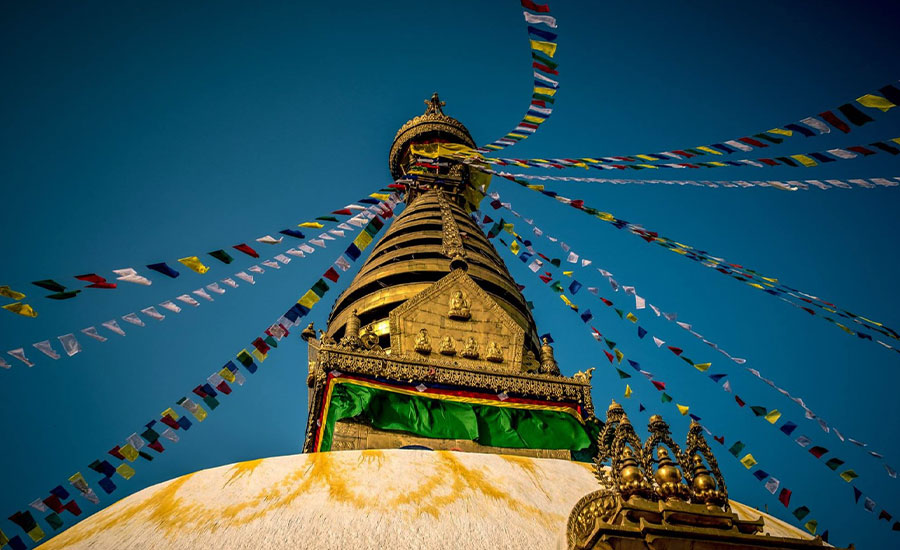
Swayambhunath Stupa
Swayambhunath, often known internationally as the Monkey Temple, stands on a hill overlooking Kathmandu Valley.
It is an important Buddhist pilgrimage site and also incorporates elements reflecting the close relationship between Hindu and Buddhist traditions in Nepal.
The hilltop setting provides broad views over Kathmandu, particularly when visibility is good.
Boudhanath Stupa
Boudhanath is one of Kathmandu's most important Buddhist sites and a major centre of Tibetan Buddhist life.
Monasteries, shops and restaurants surround the large stupa, while pilgrims and visitors walk clockwise around it throughout the day.
Boudhanath is particularly atmospheric when you have enough time to sit, observe and experience the surroundings rather than simply taking a photograph and leaving.
Pashupatinath Temple
Pashupatinath is one of the most sacred Hindu temple complexes dedicated to Lord Shiva and stands along the Bagmati River.
The wider complex contains temples, shrines, religious buildings and cremation ghats. It is an active place of worship rather than simply a tourist attraction, so visitors should behave respectfully.
Access to the main temple itself is restricted according to religious rules, but non-Hindu visitors can view and explore permitted areas of the wider complex.
Patan – Art and Architecture of the Kathmandu Valley
Patan, also known as Lalitpur, lies south of central Kathmandu and is particularly known for its artistic traditions.
Patan Durbar Square is the main historic attraction, but the surrounding old city contains numerous courtyards, shrines, workshops and smaller heritage sites.
If you are interested in traditional craftsmanship, Buddhist and Hindu heritage or architecture, Patan deserves at least half a day and can easily fill most of a day.
Bhaktapur – A Historic City Worth More Than a Quick Stop
Bhaktapur lies east of Kathmandu and is one of the three historic royal cities of the valley.
Its appeal is not limited to Bhaktapur Durbar Square. The old city includes additional squares, temples, courtyards, pottery areas and traditional residential streets.
Allowing several hours rather than making a very short visit gives you much more opportunity to experience the character of the city.
Best Day Trips from Kathmandu
If you have four or more days, a day outside the central sightseeing areas can add another dimension to your Kathmandu stay.
| Day Trip | Best For |
|---|---|
| Bhaktapur & Changu Narayan | History, architecture and culture |
| Shivapuri Nagarjun National Park | Hiking, forest and nature |
| Nagarkot | Hill scenery and Himalayan views when conditions are clear |
| Dhulikhel | Old town, hill landscapes and mountain views in clear weather |
| Namobuddha | Buddhist heritage, monastery and countryside |
| Traditional Valley Settlements | Local culture, architecture and slower exploration |
Mountain views from the Kathmandu Valley hills always depend on weather and visibility and should never be guaranteed.
Best Time to Visit Kathmandu
Kathmandu can be visited throughout the year. Unlike high-altitude trekking routes, the city's cultural sites do not close simply because it is winter or monsoon season.
However, each season creates a different experience.
| Season | General Conditions |
|---|---|
| Spring March–May | Generally warmer conditions; a popular period for combining Kathmandu with trekking |
| Summer/Monsoon June–September | Warm and humid with regular rainfall; cultural sightseeing remains possible, although rain can affect daily plans |
| Autumn October–November | Popular travel season and an excellent period for combining Kathmandu with Himalayan trekking |
| Winter December–February | Cooler mornings and evenings, with generally comfortable daytime sightseeing when conditions are favourable |
Festival dates can also strongly influence the experience. Kathmandu Valley hosts numerous Hindu and Buddhist festivals throughout the year, and travelling during one can provide a fascinating insight into local traditions. Festival dates often follow lunar or traditional calendars and therefore change from year to year.
Getting Around Kathmandu
Some parts of old Kathmandu are best explored on foot, particularly historic streets and market areas. However, the major heritage sites are spread across Kathmandu Valley and cannot all be comfortably reached by walking.
For sightseeing between places such as Swayambhunath, Pashupatinath, Boudhanath, Patan and Bhaktapur, using a private vehicle or taxi is generally more practical.
Kathmandu traffic can be unpredictable, so avoid planning too many distant sites within a very short period.
Himalayan Dream Team can arrange sightseeing by private vehicle with a professional local guide, allowing the daily program to be organized more efficiently.
Where to Stay in Kathmandu
The best area depends on what type of stay you prefer.
Thamel is the most familiar area for international travellers and has a large selection of hotels, restaurants, trekking shops and travel services.
Other parts of Kathmandu can provide quieter surroundings or easier access to particular areas of the city. Travellers particularly interested in Buddhist culture may also enjoy spending time around Boudhanath.
For most trekking travellers, staying somewhere with convenient road access and reliable hotel services is more important than being directly beside every sightseeing attraction.
What to Wear When Visiting Temples in Kathmandu
Kathmandu's religious monuments are active places of worship, so visitors should dress and behave respectfully.
- Choose modest clothing when visiting temples and monasteries.
- Follow signs concerning shoes and restricted areas.
- Walk around Buddhist stupas and mani structures clockwise where appropriate.
- Ask before photographing people closely.
- Respect restrictions on photography inside religious buildings.
- Do not interrupt ceremonies or private acts of worship.
- Follow your guide's advice regarding local customs.
How Many Days Should You Spend in Kathmandu Before a Trek?
If you are coming to Nepal primarily for trekking, avoid treating your international arrival and trek departure as if they are completely interchangeable days.
Many travellers benefit from having at least one full day in Kathmandu before beginning a major trek. Depending on the itinerary, this time can be used for sightseeing, meeting the guide, checking equipment, completing final preparations and recovering from the international journey.
For treks involving permits or special arrangements, the required preparation depends on the particular region and itinerary.
It is also sensible to consider some flexibility at the end of a trek, especially when your itinerary includes weather-dependent mountain flights or remote road journeys.
Rather than trying to fit Kathmandu sightseeing into the few hours immediately before an international departure, keeping dedicated sightseeing time normally creates a more relaxed Nepal journey.
Should You Visit Kathmandu Before or After Your Trek?
Both options work, and many travellers divide their Kathmandu sightseeing between the beginning and end of their Nepal trip.
Before trekking, sightseeing can help you settle into Nepal, recover from your international journey and learn more about the country's culture before travelling into the mountains.
After trekking, Kathmandu provides time to rest, shop, enjoy restaurants and explore cultural sites at a relaxed pace before flying home.
For a longer Nepal holiday, combining a few Kathmandu nights with Pokhara, Chitwan or other parts of Nepal can provide a much broader impression of the country.
Frequently Asked Questions About Visiting Kathmandu
1. How many days are enough for Kathmandu?
For most first-time visitors, 3 days provides a good introduction to Kathmandu Valley. It allows time for the major heritage sites in Kathmandu as well as Patan and Bhaktapur without making every day unnecessarily rushed.
2. Is one day enough for Kathmandu?
One day is enough to see several major highlights, but not the whole Kathmandu Valley. If you only have one day, concentrate on a small number of important sites rather than trying to see Kathmandu, Patan and Bhaktapur all at once.
3. Is 2 days enough for Kathmandu?
Yes. Two days can provide a good short introduction. Use one day for Kathmandu's major heritage and religious sites and the second for Patan or Bhaktapur.
4. Is 3 days enough for Kathmandu?
Yes. Three days is a good choice for many first-time visitors because you can dedicate time to Kathmandu, Patan and Bhaktapur and experience several of the valley's major UNESCO monument zones.
5. Is Kathmandu worth visiting before trekking?
Yes. Kathmandu is much more than an arrival point for the Himalayas. Its temples, stupas, historic royal squares, markets and living Hindu and Buddhist traditions provide important cultural context before travelling into Nepal's mountain regions.
6. Should I visit both Patan and Bhaktapur?
If you have three or more sightseeing days, visiting both is worthwhile. Although both are historic Newar cities, they have different architecture, layouts, monuments and atmospheres.
7. Can I visit Patan and Bhaktapur in one day?
It is possible with private transportation and an efficient itinerary, but the day can feel rushed. If you have sufficient time, visiting them separately allows a more relaxed experience.
8. What are the seven UNESCO Monument Zones in Kathmandu Valley?
They are Kathmandu Durbar Square, Patan Durbar Square, Bhaktapur Durbar Square, Swayambhunath, Boudhanath, Pashupatinath and Changu Narayan.
9. Is Kathmandu easy to explore on foot?
Individual neighbourhoods and old-city areas are enjoyable to explore on foot, but the major attractions are spread across the valley. Transportation is normally required when combining several heritage sites in one day.
10. Can I visit Kathmandu during the monsoon?
Yes. Kathmandu is a year-round cultural destination. During the monsoon, usually between June and September, expect warm, humid conditions and periods of rain. Keeping some flexibility in the sightseeing schedule is useful.
11. What are the best day trips from Kathmandu?
Popular options include Bhaktapur and Changu Narayan, Shivapuri Nagarjun National Park, Nagarkot, Dhulikhel and Namobuddha. The right choice depends on whether you are most interested in culture, hiking, Buddhism, countryside or mountain views.
12. Can Kathmandu be combined with Pokhara and Chitwan?
Yes. Kathmandu, Pokhara and Chitwan are commonly combined because they offer very different experiences: Kathmandu for culture and heritage, Pokhara for lakes and Himalayan scenery, and Chitwan for subtropical landscapes and wildlife.
Plan Your Kathmandu Tour with Himalayan Dream Team
Kathmandu deserves more than simply being treated as the airport city before or after a Himalayan trek. The Kathmandu Valley contains centuries of history, extraordinary architecture, sacred Hindu and Buddhist sites, traditional craftsmanship and communities whose cultural traditions remain part of everyday life.
If your schedule is very short, 1 or 2 days can provide a good introduction. For most first-time travellers, we recommend around 3 days to experience Kathmandu, Patan and Bhaktapur at a comfortable pace. With 4–5 days or longer, you can explore the valley more deeply and include nature, villages, food, photography or nearby excursions.
At Himalayan Dream Team Treks & Tours, we can arrange private Kathmandu sightseeing as a stand-alone cultural tour or combine it with trekking, Pokhara, Chitwan and other destinations throughout Nepal.
Tell us how many days you have in Nepal and what interests you most, and we can help you create a Kathmandu itinerary that fits naturally into your journey.