

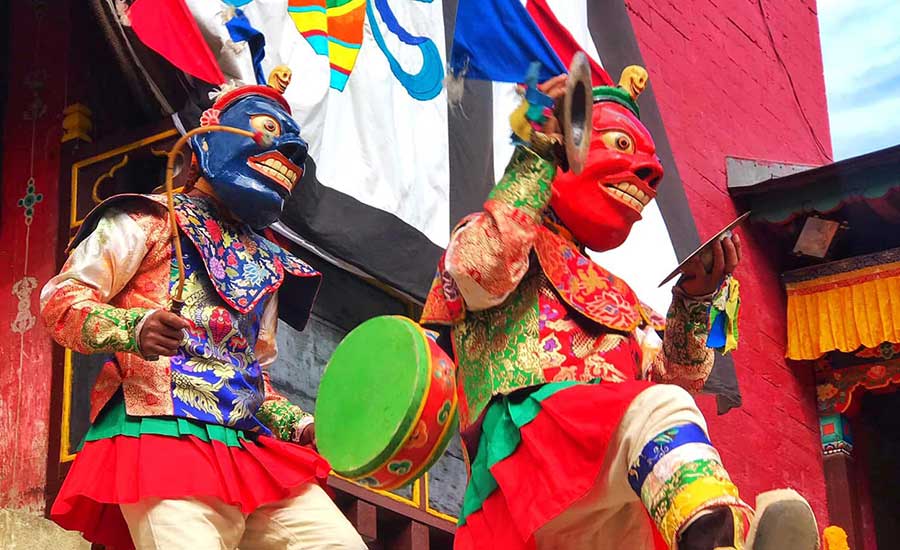
What is the Mani Rimdu Festival?
The Mani Rimdu Festival is one of Nepal's most spectacular Buddhist festivals and one of the most important cultural celebrations in the Everest region. Held annually at Tengboche Monastery, the spiritual center of the Khumbu region, the festival brings together Buddhist monks, Sherpa communities, pilgrims, and trekkers from around the world.
Set against the breathtaking backdrop of Mount Everest, Ama Dablam, Lhotse, and Nuptse, Mani Rimdu is a unique blend of sacred rituals, colorful masked dances, blessings, prayers, and centuries-old Buddhist traditions. For visitors trekking in the Everest region, attending the festival provides a rare opportunity to experience authentic Sherpa culture and Himalayan spirituality.
Unlike many festivals that have become largely commercialized, Mani Rimdu remains a living religious tradition. The ceremonies performed by the monks are deeply spiritual and continue to play an important role in preserving Buddhist teachings and Sherpa cultural heritage in the Himalayas.
Mani Rimdu Festival 2026 Dates
The Mani Rimdu Festival follows the Tibetan lunar calendar and includes both private monastic ceremonies and public celebrations. The complete ritual cycle lasts 19 days, while the final three days are open to visitors and trekkers.
Mani Rimdu Festival 2026 Schedule
| Event | Date |
|---|---|
| Public Festival Day 1 | 26 October 2026 |
| Public Festival Day 2 | 27 October 2026 |
| Public Festival Day 3 | 28 October 2026 |
| Festival Conclusion | 28 October 2026 |
The public celebrations on 26, 27, and 28 October 2026 are the most important dates for visitors. During these three days, the monastery courtyard comes alive with sacred masked dances, blessings, prayers, and traditional Buddhist ceremonies.
Where is the Mani Rimdu Festival Held?

The Mani Rimdu Festival takes place at Tengboche Monastery, the largest and most important Buddhist monastery in Nepal's Everest region.
Tengboche Monastery: The Spiritual Heart of the Khumbu
Located at an altitude of 3,867 meters (12,687 feet), Tengboche Monastery sits on a ridge overlooking the Dudh Koshi Valley and serves as the religious center of the Sherpa people. The monastery lies directly on the famous Everest Base Camp trekking route and is one of the most iconic landmarks in the Khumbu region.
Founded in 1916, Tengboche Monastery has become a symbol of Himalayan Buddhism and attracts thousands of pilgrims, trekkers, and cultural travelers every year.
Spectacular Himalayan Views
Visitors attending the festival can enjoy panoramic views of some of the world's most famous mountains:
Mount Everest (8,848.86 m)
Ama Dablam (6,812 m)
Lhotse (8,516 m)
Nuptse (7,861 m)
Thamserku (6,623 m)
Kangtega (6,782 m)
The combination of sacred Buddhist traditions and breathtaking Himalayan scenery makes Tengboche one of the most remarkable festival locations anywhere in the world.
History of the Mani Rimdu Festival
The origins of the Mani Rimdu Festival can be traced back to Tibet, where similar Buddhist ceremonies were practiced at Rongbuk Monastery near Mount Everest during the early twentieth century.
Origins in Tibetan Buddhism
The festival belongs to the Nyingma tradition, the oldest school of Tibetan Buddhism. It commemorates the teachings of Guru Rinpoche (Padmasambhava), who is credited with introducing Buddhism to Tibet and transforming the Himalayan region through his spiritual teachings.
The ceremonies represent the triumph of Buddhism over negative forces and celebrate compassion, wisdom, and spiritual awakening.
Introduction to Nepal
The Mani Rimdu tradition was brought to Nepal and established at Tengboche Monastery around 1938. Since then, it has become one of the most significant religious festivals in the Everest region.
Even after the monastery was destroyed by fire in 1989 and later rebuilt, the festival continued to be celebrated and remains one of the most cherished traditions among the Sherpa people today.
Why is Mani Rimdu Important to Sherpa Culture?
For the Sherpa community, Mani Rimdu is much more than a festival. It is an important expression of faith, identity, and cultural continuity.
Preserving Ancient Traditions
The festival helps preserve centuries-old Buddhist teachings and rituals that have been passed down through generations. Through dance, prayer, and ceremony, younger generations learn about their spiritual heritage and cultural values.
Strengthening Community Bonds
Families from villages throughout the Khumbu region gather during Mani Rimdu to celebrate together. The festival reinforces community relationships while providing opportunities for prayer, blessings, and social gatherings.
Spiritual Significance
The rituals symbolize the victory of wisdom over ignorance, compassion over hatred, and positive energy over harmful influences. For many Sherpas, participation in Mani Rimdu is an important act of devotion and spiritual renewal.
Main Rituals of the Mani Rimdu Festival
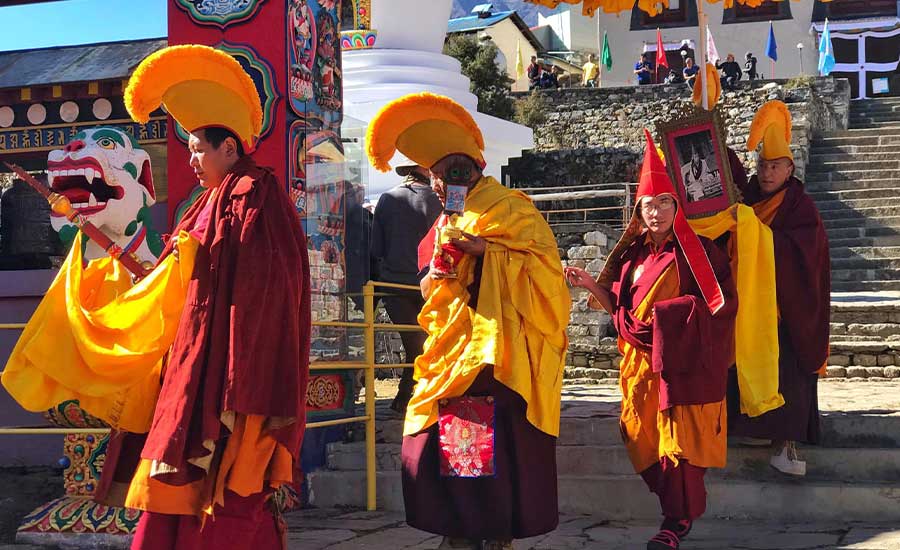
The Mani Rimdu Festival consists of several sacred ceremonies, each carrying deep religious meaning.
Sand Mandala Creation
Before the public celebrations begin, monks spend several days creating an elaborate sand mandala using colored sand.
The mandala represents a sacred Buddhist universe and serves as the spiritual center of the festival. After the celebrations conclude, the sand mandala is dismantled and returned to nature, symbolizing the impermanence of life.
Wong Blessing Ceremony
The Wong Ceremony marks the official opening of the public festival.
During this important ritual, senior monks distribute blessed pills known as Rilwu and Tshereel. These sacred blessings are believed to bring good health, protection, prosperity, and long life.
Cham Masked Dances
The Cham masked dances are the most famous part of the Mani Rimdu Festival.
Monks wear colorful costumes and elaborate masks representing deities, animals, protectors, and mythical beings. Accompanied by traditional horns, drums, and cymbals, the dances depict the victory of good over evil and wisdom over ignorance.
For visitors, the Cham dances provide an unforgettable cultural experience and some of the best photography opportunities in Nepal.
Ser-Kyem Offering Ceremony
The Ser-Kyem ritual involves ceremonial offerings to Buddhist teachers, protective deities, and spiritual guardians.
Tea or alcohol is traditionally poured into ornate vessels while prayers are recited for harmony, protection, and prosperity.
Jinsak Fire Puja
The Jinsak Fire Puja is performed on the final day of the festival.
Offerings are placed into a sacred fire to remove obstacles, purify negative influences, and invite blessings for the coming year. This powerful ceremony officially concludes the Mani Rimdu Festival.
Why Visit the Mani Rimdu Festival?
- Experience one of Nepal's most important and authentic Buddhist festivals in the heart of the Everest region.
- Witness the spectacular Cham masked dances performed by Buddhist monks in colorful traditional costumes.
- Visit the famous Tengboche Monastery, the spiritual center of the Sherpa community.
- Learn about ancient Tibetan Buddhist traditions, rituals, prayers, and blessings that have been preserved for generations.
- Immerse yourself in authentic Sherpa culture and gain a deeper understanding of local Himalayan life.
- Enjoy breathtaking views of Mount Everest, Ama Dablam, Lhotse, Nuptse, and other Himalayan giants.
- Combine a unique cultural experience with the world-famous Everest Base Camp Trek or Everest View Trek.
- Receive blessings from Buddhist monks during sacred ceremonies and religious gatherings.
- Capture incredible photographs of masked dances, monks, monasteries, and stunning mountain landscapes.
- Experience a rare spiritual event that attracts pilgrims, trekkers, and cultural travelers from around the world.
- Discover the rich history and traditions of the Khumbu region beyond its famous trekking routes.
- Enjoy clear autumn skies and some of the best trekking conditions of the year in the Everest region.
- Witness centuries-old rituals that symbolize the victory of wisdom, compassion, and good over evil.
- Meet local Sherpa families and experience the warm hospitality for which the Everest region is famous.
- Create unforgettable memories by combining adventure, culture, spirituality, and Himalayan scenery in one extraordinary journey.
How to Attend the Mani Rimdu Festival 2026
The easiest way to experience Mani Rimdu is by joining an Everest region trek.
Typical Route to Tengboche
Kathmandu → Lukla → Phakding → Namche Bazaar → Tengboche
Most trekkers require four to five days to reach Tengboche from Lukla while allowing proper acclimatization.
Best Arrival Date
Visitors should plan to arrive in Tengboche on or before 23 October 2026 to experience the full festival.
Because accommodation fills quickly during this period, early booking is highly recommended.
Everest Base Camp Trek with Mani Rimdu Festival

Combining the Everest Base Camp Trek with the Mani Rimdu Festival creates one of Nepal's most rewarding trekking experiences.
While the Everest Base Camp Trek is famous for its mountain scenery and high-altitude adventure, Mani Rimdu adds a unique cultural and spiritual dimension to the journey.
Highlights of Combining Everest Base Camp with Mani Rimdu
Attend the famous Tengboche Monastery Festival
Experience authentic Sherpa culture
Visit Everest Base Camp
Climb Kala Patthar viewpoint
Enjoy stunning Himalayan panoramas
Explore traditional Sherpa villages
Visit ancient monasteries and Buddhist landmarks
For many trekkers, witnessing Mani Rimdu becomes one of the most memorable moments of their entire Everest adventure.
Accommodation During the Mani Rimdu Festival
Accommodation around Tengboche is limited, particularly during the festival period.
Recommended Areas to Stay
Tengboche
Deboche
Namche Bazaar
Namche Bazaar offers the widest range of lodges and is often used as a base before or after attending the festival.
Because October is peak trekking season in Nepal, accommodation should be reserved well in advance.
Weather During the Mani Rimdu Festival
October is considered one of the best months for trekking in the Everest region.
Weather Conditions in October
| Condition | October |
|---|---|
| Day Temperature | 8°C to 15°C |
| Night Temperature | -2°C to 5°C |
| Rainfall | Very Low |
| Visibility | Excellent |
| Trekking Conditions | Outstanding |
Clear skies, dry weather, and exceptional mountain views make October the ideal month for both trekking and festival attendance.
Photography Tips for Mani Rimdu Festival
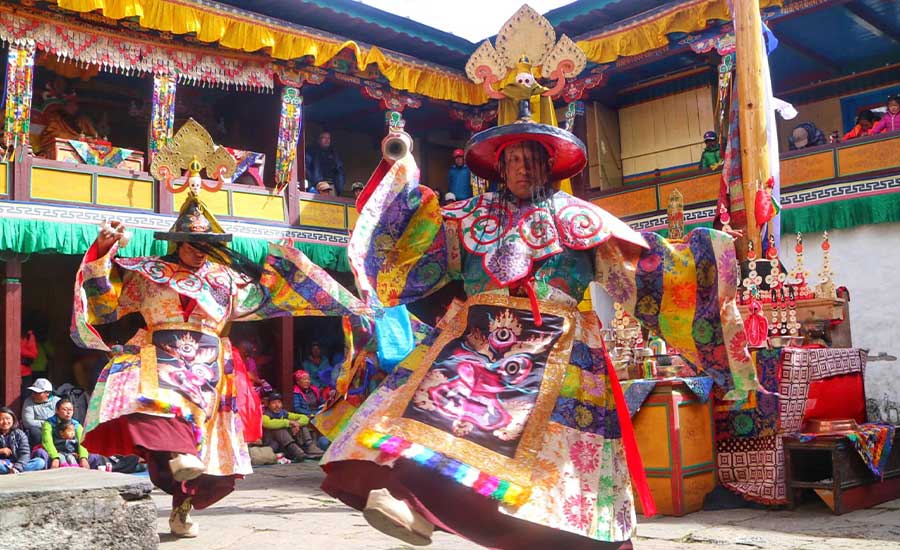
The Mani Rimdu Festival offers some of the best cultural photography opportunities in Nepal.
Best Subjects to Photograph
Cham masked dances
Buddhist monks
Tengboche Monastery
Prayer ceremonies
Himalayan landscapes
Sherpa people
Traditional costumes
Sunrise and sunset mountain views
Photography Etiquette
Always ask permission before taking close-up portraits of monks or local people. Avoid using flash photography during religious ceremonies and remain respectful of worshippers.
Monastery Etiquette and Responsible Tourism
Visitors are encouraged to respect local customs and religious traditions throughout the festival.
Important Guidelines
Dress modestly
Remove hats inside religious buildings
Ask permission before taking photographs
Remain quiet during ceremonies
Walk clockwise around stupas and prayer wheels
Follow instructions from monastery staff and monks
Practicing responsible tourism helps preserve the cultural and spiritual significance of the festival for future generations.
FAQs Mani Rimdu Festival
| Question | Quick Answer |
|---|---|
| What is the Mani Rimdu Festival? | A sacred Buddhist festival celebrated by the Sherpa community at Tengboche Monastery in the Everest region. |
| When is the Mani Rimdu Festival 2026? | 26, 27, and 28 October 2026. |
| Where is the Mani Rimdu Festival held? | Tengboche Monastery, Khumbu (Everest) Region, Nepal. |
| Can trekkers attend the Mani Rimdu Festival? | Yes, the public festival days are open to trekkers and visitors. |
| How many days does the festival last? | The full ritual cycle lasts 19 days, with 3 public festival days. |
| What are the Cham masked dances? | Sacred Buddhist dances performed by monks wearing colorful masks and costumes. |
| Do I need a special permit to attend? | No special festival permit is required, but Everest region trekking permits are needed. |
| What is the best trek to combine with Mani Rimdu? | The Everest Base Camp Trek is the most popular option. |
| Is Mani Rimdu Festival worth attending? | Yes, it offers a unique blend of Sherpa culture, Buddhism, and Himalayan scenery. |
| When should I arrive in Tengboche? | At least one day before the public celebrations begin. |
Final Thoughts from Himalayan Dream Team
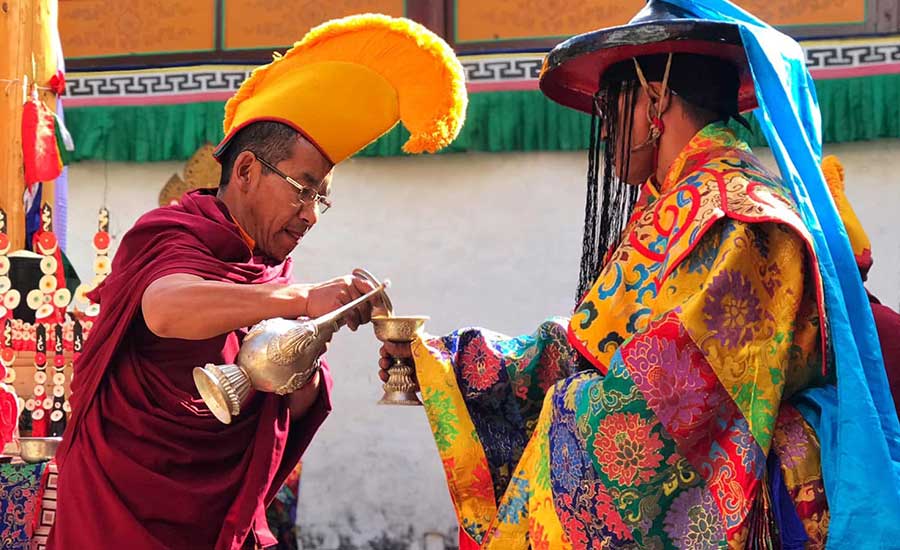
The Mani Rimdu Festival is far more than a cultural event. It is a living expression of Himalayan Buddhism, Sherpa heritage, and centuries-old spiritual traditions that continue to thrive in the Everest region today.
At Himalayan Dream Team, we believe attending the Mani Rimdu Festival is one of the most rewarding experiences available in Nepal. Whether you combine it with an Everest Base Camp Trek, an Everest View Trek, or a dedicated cultural journey, the festival offers a rare opportunity to witness authentic Buddhist ceremonies in one of the world's most spectacular mountain settings.
From the vibrant Cham masked dances and sacred blessings to the stunning Himalayan scenery surrounding Tengboche Monastery, Mani Rimdu Festival 2026 promises an unforgettable journey into the heart of Sherpa culture and the spiritual soul of the Everest region.