

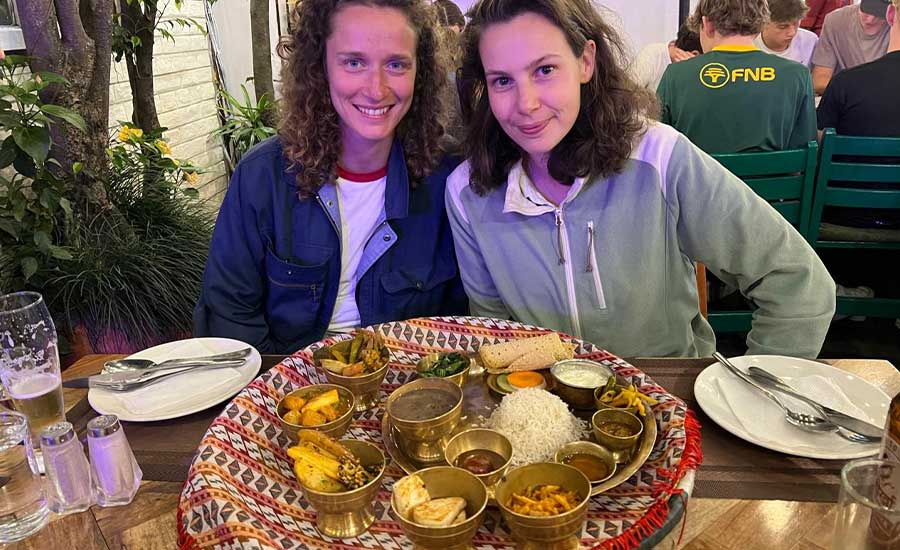
What is Dal Bhat?
If there is one meal that truly represents Nepal, it is Dal Bhat Tarkari. Found everywhere from the busy streets of Kathmandu to remote Himalayan villages, Dal Bhat is more than food—it is a way of life.
The name itself is simple:
- Dal = Lentil soup
- Bhat = Steamed rice
- Tarkari = Vegetable curry
- Achar = Pickles or chutneys
Together they create a balanced, nutritious, and delicious meal that millions of Nepalis eat every day.
Visitors trekking through the Himalayas quickly become familiar with the famous phrase:
“Dal Bhat Power, 24 Hour!”

There is a reason this slogan has become legendary among trekkers. Dal Bhat provides long-lasting energy, excellent nutrition, and unlimited refills in many mountain teahouses.
Dal Bhat Recipe
| Part | Ingredients | Short Preparation |
|---|---|---|
| Dal | Lentils, water, turmeric, salt, garlic, ginger, cumin, tomato, onion, ghee or oil | Boil lentils with turmeric and salt until soft. Prepare tempering with garlic, ginger, cumin, onion, tomato and ghee, then mix into the dal. |
| Bhat | Rice, water, salt | Wash the rice, cook with water until soft and fluffy, then let it rest before serving. |
| Tarkari | Seasonal vegetables, potato, cauliflower, beans, carrot, spices, oil | Cook vegetables with Nepali spices until tender. Serve as a side dish with dal and rice. |
| Achar | Tomato, chili, sesame, lemon, coriander, salt | Prepare a fresh or spicy pickle to add extra flavor to the meal. |
| Serving | Dal, bhat, tarkari, achar, optional papad or curd | Serve hot on a plate or thali. Pour dal over rice and enjoy with vegetables and pickle. |
Why Dal Bhat is Nepal’s National Dish

Dal Bhat is not reserved for special occasions. It is the foundation of daily life in Nepal.
Most Nepali families eat Dal Bhat at least once every day, while many households enjoy it twice daily.
The meal represents:
- Family togetherness
- Nepali hospitality
- Balanced nutrition
- Agricultural traditions
- Cultural identity
When guests visit a Nepali home, Dal Bhat is often the first meal offered as a sign of respect and welcome.
Dal Bhat Meaning Explained
The beauty of Dal Bhat lies in its simplicity.
A traditional plate typically contains:
| Component | Description |
|---|---|
| Dal | Lentil soup flavored with spices |
| Bhat | Steamed rice |
| Tarkari | Seasonal vegetable curry |
| Achar | Spicy pickles |
| Saag | Leafy green vegetables |
| Meat Curry | Optional chicken, buffalo, mutton, or fish |
| Papad | Crispy lentil cracker |
Every region adds its own unique touch, making each Dal Bhat experience slightly different.
Ingredients for Authentic Nepali Dal Bhat Recipe
For the Dal (Lentil Soup)
- 1 cup lentils (red, black, moong, or pigeon pea)
- 4 cups water
- ½ teaspoon turmeric powder
- Salt to taste
- 1 medium onion, chopped
- 1 tomato, chopped
- 1–2 green chilies
- 1 teaspoon ginger-garlic paste
- 1 teaspoon cumin seeds
- 2 tablespoons ghee or oil
- Fresh coriander leaves
For the Rice (Bhat)
- 1 cup rice
- 2 cups water
For the Tarkari
- Potatoes
- Cauliflower
- Green beans
- Carrots
- Seasonal vegetables
- Turmeric
- Cumin
- Coriander powder
- Salt
Types of Dal Used in Nepal
Nepal offers several varieties of lentils, each creating a unique flavor.
| Type of Dal | Nepali Name | Flavor Profile |
|---|---|---|
| Red Lentils | Masoor Dal | Mild and smooth |
| Black Lentils | Maas Dal | Rich and earthy |
| Split Mung Beans | Moong Dal | Light and nutritious |
| Pigeon Pea | Toor Dal | Slightly nutty |
| Bengal Gram | Chana Dal | Thick and hearty |
| Kidney Beans | Rajma | Rich and filling |
Many Nepali families switch between different lentils depending on the season and region.
Step-by-Step Nepali Dal Recipe
Step 1: Wash the Lentils
Rinse the lentils thoroughly under clean water until the water runs clear.
Step 2: Boil the Lentils
Add lentils, water, turmeric, and salt to a pot.
Cook for approximately 20–30 minutes until soft.
Step 3: Add Vegetables
Mix in tomatoes, onions, and green chilies.
Allow them to cook until tender.
Step 4: Prepare the Tadka (Tempering)
Heat oil or ghee in a small pan.
Add:
- Cumin seeds
- Garlic
- Ginger
- Dry red chilies
Cook until fragrant.
Step 5: Combine Everything
Pour the tempering into the cooked lentils.
Stir well and simmer for 5 minutes.
Step 6: Garnish
Top with fresh coriander leaves.
Serve hot.
How to Cook Perfect Nepali Rice (Bhat)
- Wash rice thoroughly.
- Bring water to a boil.
- Add rice.
- Reduce heat and cover.
- Cook for 15–20 minutes.
- Allow to rest for 5 minutes before serving.
The rice should be fluffy and light, perfect for soaking up the flavorful dal.
What is Tarkari?
Tarkari simply means vegetable curry.
In Nepal, tarkari changes daily depending on what vegetables are available.
Popular vegetables include:
- Potatoes
- Cauliflower
- Spinach
- Mustard greens
- Pumpkin
- Green beans
- Radish
Many Nepalis also enjoy:
- Chicken Tarkari
- Buffalo Tarkari
- Mutton Tarkari
- Fish Curry
alongside their Dal Bhat.
Traditional Nepali Dal Bhat Serving Style
Traditionally, Dal Bhat is served on a large metal plate known as a Thali.
Rice sits in the center while side dishes surround it.
Many Nepalis still eat Dal Bhat with their right hand rather than using utensils. This traditional method enhances the dining experience and reflects centuries of cultural tradition.
Nutrition Benefits of Dal Bhat
Dal Bhat is considered one of the most balanced meals in South Asia.
Nutritional Highlights
| Nutrient | Benefit |
|---|---|
| Protein | Muscle repair and energy |
| Fiber | Healthy digestion |
| Carbohydrates | Sustained energy |
| Iron | Improved blood health |
| Vitamins | Immune support |
| Minerals | Overall wellness |
A typical serving provides approximately 350–500 calories, depending on portion size and side dishes.
Why Trekkers Love Dal Bhat
Whether you are trekking to Everest Base Camp, Annapurna Base Camp, Langtang Valley, or Manaslu Circuit, Dal Bhat is the fuel of choice.
Reasons Trekkers Choose Dal Bhat
- High energy
- Easy digestion
- Excellent nutrition
- Widely available
- Budget-friendly
- Unlimited refills in many lodges
After a long day on the trail, few meals are as satisfying as a steaming plate of Dal Bhat.
Regional Variations of Dal Bhat in Nepal
Thakali Dal Bhat
Perhaps the most famous version.
Features:
- Multiple vegetable curries
- Pickles
- Ghee
- Meat options
- Beautiful presentation
Newari Dal Bhat
Known for:
- Strong spices
- Buffalo meat
- Traditional Newari side dishes
Himalayan Village Dal Bhat
Simple but incredibly flavorful.
Often cooked over wood fires using vegetables grown in local gardens.
Best Places to Eat Dal Bhat in Nepal

Kathmandu
Traditional Thakali restaurants offer some of the finest Dal Bhat experiences in Nepal.
Pokhara
Lakeside restaurants serve excellent Dal Bhat with beautiful mountain views.
Bhaktapur
A fantastic place to combine Newari culture with traditional Nepali cuisine.
Himalayan Trekking Routes
Many trekkers agree that the best Dal Bhat is found in mountain teahouses where ingredients are fresh and recipes are passed down through generations.
Frequently Asked Questions
Is Dal Bhat vegetarian?
Traditionally yes, but meat curries are often served as optional side dishes.
Is Dal Bhat healthy?
Absolutely. It contains a balanced combination of protein, carbohydrates, fiber, vitamins, and minerals.
Why do trekkers eat Dal Bhat?
Because it provides long-lasting energy and excellent nutrition at high altitude.
Can I make Dal Bhat at home?
Yes. The ingredients are simple, affordable, and widely available worldwide.
Final Thoughts
Dal Bhat is much more than Nepal’s national dish. It is a symbol of Nepali culture, hospitality, and everyday life. Whether you enjoy it in a traditional family home, a bustling Kathmandu restaurant, or a remote Himalayan teahouse, Dal Bhat offers a genuine taste of Nepal.
At Himalayan Dream Team, we believe that experiencing authentic Nepali food is an essential part of every journey. While exploring Nepal’s mountains, villages, and cultural treasures, take time to sit down and enjoy a warm plate of Dal Bhat—the meal that fuels a nation and welcomes visitors like family.