

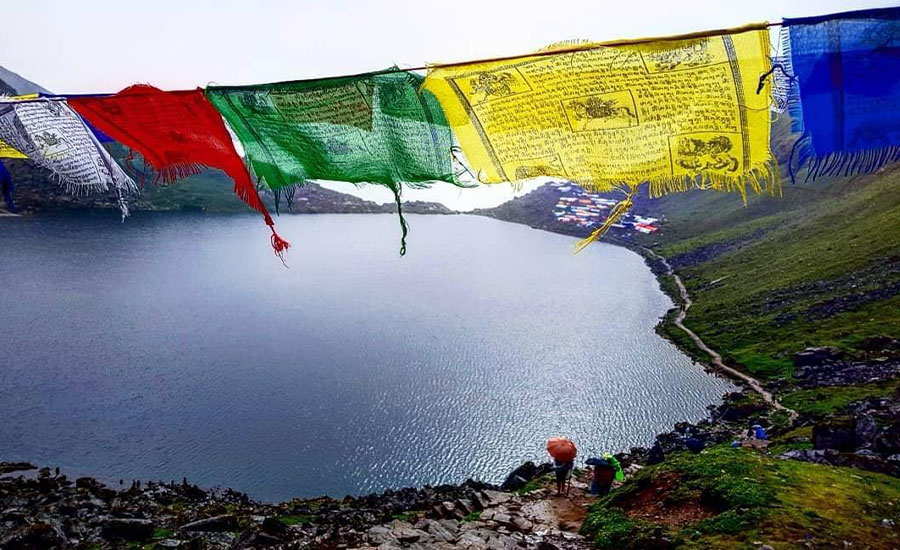
Gosainkunda Lake Nepal is one of the country's most beautiful and sacred high-altitude lakes. Located at 4,380 metres (14,370 feet) in Langtang National Park, Rasuwa District, Gosainkunda attracts Hindu and Buddhist pilgrims, Himalayan trekkers, photographers and nature lovers throughout the year.
Surrounded by rugged Himalayan peaks, rocky landscapes and several smaller alpine lakes, Gosainkunda combines spectacular natural scenery with centuries-old religious traditions. According to Hindu mythology, Lord Shiva created the lake after consuming poison to protect the universe.
The Gosainkunda Lake Trek is one of the most rewarding shorter high-altitude trekking experiences near Kathmandu. Travellers can reach the lake through the classic Dhunche route or combine it with the beautiful Langtang Valley and Helambu trekking regions.
This complete Gosainkunda travel guide covers the lake's location, history, religious significance, trekking routes, itineraries, altitude, accommodation, permits, weather, packing requirements and practical advice for planning your journey.
Gosainkunda Lake at a Glance
| Travel Information | Details |
|---|---|
| Destination | Gosainkunda Lake, Nepal |
| Also Known As | Gosaikunda, Gosain Kunda |
| Location | Rasuwa District, Bagmati Province |
| National Park | Langtang National Park |
| Altitude | 4,380 m / 14,370 ft |
| Highest Pass on Extended Route | Laurebina La, approximately 4,610 m |
| Starting Point | Dhunche or Syabrubesi |
| Typical Trek Duration | 6–8 days for a short trek; longer for combined routes |
| Difficulty | Moderate to Challenging |
| Accommodation | Mountain lodges and teahouses |
| Best Time | March–May and September–November |
| Major Festival | Janai Purnima, generally in August |
Where Is Gosainkunda Lake Located?
Gosainkunda Lake lies in the central Himalayas of Nepal, inside Langtang National Park in Rasuwa District. The lake is situated north of Kathmandu and forms part of a remarkable network of sacred alpine lakes.
Most visitors begin their journey with a scenic drive from Kathmandu to Dhunche. From there, the trail ascends through rhododendron forests, traditional mountain settlements and alpine landscapes towards Chandanbari, Cholangpati, Laurebina and Gosainkunda.
The Gosainkunda and Associated Lakes complex is recognised as a Ramsar wetland of international importance, reflecting its ecological and environmental significance.
The Sacred Legend of Gosainkunda Lake
Gosainkunda holds an important place in Hindu mythology and is closely associated with Lord Shiva.
According to the story of Samudra Manthan, gods and demons churned the cosmic ocean in search of Amrit, the nectar of immortality. During this process, a deadly poison called Halahal emerged and threatened the universe.
To protect creation, Lord Shiva consumed the poison. His throat turned blue, giving him the name Nilkantha, meaning the Blue-Throated One.
According to local tradition, Shiva travelled to the Himalayas seeking relief and struck the mountainside with his trident, creating a source of cold water that became Gosainkunda Lake.
Today, Hindu devotees consider Gosainkunda a sacred pilgrimage destination. Many believe that bathing in its waters during religious festivals brings spiritual blessings and purification.
The lake also holds religious significance for Buddhist communities, reflecting the shared spiritual traditions of the Himalayan region.
Why Is Gosainkunda Lake Famous?
- One of Nepal's most sacred Hindu pilgrimage destinations.
- Associated with Lord Shiva and the legend of Samudra Manthan.
- Major pilgrimage site during Janai Purnima.
- Beautiful high-altitude lake at 4,380 metres.
- Located within Langtang National Park.
- Part of an internationally recognised Ramsar wetland.
- Popular destination for Himalayan trekking and photography.
- Can be combined with Langtang Valley and Helambu trekking routes.
How to Reach Gosainkunda Lake from Kathmandu
There is no regular road directly to Gosainkunda Lake. Travellers normally drive from Kathmandu to Dhunche or Syabrubesi before continuing on foot.
The drive from Kathmandu to Dhunche generally takes approximately 6–8 hours or longer, depending on road and traffic conditions.
From Dhunche, the trekking route passes through forests and mountain settlements before reaching the sacred lake.
Popular Trekking Routes to Gosainkunda
Route 1: Dhunche – Sing Gompa – Gosainkunda
The classic Dhunche to Gosainkunda Trek is the most direct route to the lake. The trail climbs through beautiful forests towards Chandanbari, also known as Sing Gompa, before continuing through Cholangpati and Laurebina.
The route offers spectacular Himalayan scenery and opportunities to experience traditional mountain hospitality.
Route: Kathmandu – Dhunche – Chandanbari – Cholangpati – Laurebina – Gosainkunda – Dhunche – Kathmandu.
Recommended duration: Approximately 6–8 days with appropriate acclimatisation.
Route 2: Langtang Valley and Gosainkunda Trek
The Langtang Valley and Gosainkunda Trek combines beautiful Himalayan landscapes, traditional Tamang villages, Buddhist monasteries and the sacred lake.
The trek normally begins at Syabrubesi and continues through Lama Hotel, Langtang Village and Kyanjin Gompa before connecting with the Gosainkunda route.
Some itineraries continue across Laurebina La Pass towards Helambu.
Route: Kathmandu – Syabrubesi – Langtang Valley – Kyanjin Gompa – Thulo Syabru – Sing Gompa – Gosainkunda – Helambu.
Recommended duration: Approximately 13–16 days or longer.
Explore our Langtang Gosainkunda Lake Trek.
Route 3: Helambu – Gosainkunda Trek
The Helambu route offers an extended trekking experience through traditional villages, forested ridges and high-altitude landscapes.
Depending on the itinerary, trekkers may begin near Sundarijal and continue through Chisapani, Kutumsang, Tharepati and Ghopte before crossing Laurebina La Pass towards Gosainkunda.
This route requires good fitness, proper acclimatisation and suitable weather conditions.
Read more about our Helambu Trek.
Sample Gosainkunda Lake Trek Itinerary – 7 Days
| Day | Itinerary | Overnight |
|---|---|---|
| Day 1 | Drive from Kathmandu to Dhunche. | Dhunche, approximately 2,030 m |
| Day 2 | Trek from Dhunche to Chandanbari (Sing Gompa). | Chandanbari, approximately 3,250 m |
| Day 3 | Short trek to Cholangpati and acclimatisation. | Cholangpati, approximately 3,650 m |
| Day 4 | Trek via Laurebina to Gosainkunda Lake. | Gosainkunda, 4,380 m |
| Day 5 | Explore the lake surroundings and descend to Chandanbari. | Chandanbari |
| Day 6 | Descend from Chandanbari to Dhunche. | Dhunche |
| Day 7 | Drive from Dhunche to Kathmandu. | Kathmandu |
Important: This is a sample itinerary, not a guaranteed acclimatisation plan for every traveller. The altitude gains are significant, and some trekkers may require additional nights or a modified route.
Main Attractions Around Gosainkunda Lake
Gosainkunda Lake – 4,380 m
The sacred alpine lake is the main attraction, surrounded by rocky peaks, prayer flags and dramatic mountain scenery.
Bhairab Kunda
Bhairab Kunda is a neighbouring sacred lake associated with Bhairab, a fierce manifestation of Lord Shiva.
Saraswati Kunda
Saraswati Kunda is another beautiful lake in the Gosainkunda area, named after the Hindu goddess Saraswati.
Surya Kunda
Surya Kunda lies in the wider high-altitude lake region and can be visited on suitable extended trekking routes.
Laurebina La Pass – 4,610 m
Laurebina La is a high mountain pass connecting the Gosainkunda area with the Helambu trekking region. Snow and ice can make the crossing challenging or unsafe.
Langtang National Park
Langtang National Park protects important Himalayan ecosystems, forests, mountain valleys and wildlife habitats.
Best Time to Visit Gosainkunda Lake
| Season | Months | Conditions |
|---|---|---|
| Spring | March–May | Blooming rhododendrons, improving temperatures and possible snow at higher elevations. |
| Monsoon | June–August | Frequent rainfall, slippery trails, cloudy weather and Janai Purnima pilgrimage. |
| Autumn | September–November | Generally clearer skies, good mountain views and cold nights. |
| Winter | December–February | Freezing temperatures, possible heavy snowfall and icy trails. |
Read our Best Time to Trek Langtang and Gosainkunda guide.
Gosainkunda During Janai Purnima Festival
Janai Purnima is the most important annual religious festival associated with Gosainkunda Lake.
Generally celebrated in August, the festival attracts Hindu pilgrims who travel to the lake to worship Lord Shiva and perform sacred bathing rituals.
The exact date changes each year according to the lunar calendar.
Travellers visiting during the festival should expect busy trails, limited accommodation and possible monsoon rainfall.
Accommodation and Food on the Gosainkunda Trek
Accommodation along the route is provided mainly by local teahouses and mountain lodges.
Popular overnight locations include Dhunche, Chandanbari, Cholangpati, Laurebina and Gosainkunda.
Facilities become simpler at higher elevations. Rooms may be unheated, bathrooms may be shared and hot showers or charging services may cost extra.
Common meals include dal bhat, noodles, rice, potatoes, soups, eggs, porridge and tea.
Altitude Sickness and Acclimatisation
Gosainkunda Lake lies above 4,000 metres, making altitude sickness an important consideration.
Symptoms may include headache, nausea, dizziness, unusual fatigue and loss of appetite.
- Ascend gradually and allow appropriate acclimatisation time.
- Walk at a comfortable pace.
- Maintain adequate hydration and eat regular meals.
- Inform your guide immediately if symptoms develop.
- Do not ascend higher while experiencing altitude sickness symptoms.
- Descend promptly if symptoms worsen.
- Seek urgent medical assistance for severe symptoms.
Warning: Confusion, difficulty walking straight or severe breathlessness at rest can indicate life-threatening altitude illness requiring urgent descent and medical attention.
Permits Required for Gosainkunda Trek
| Permit | Purpose | Requirement |
|---|---|---|
| Langtang National Park Entry Permit | Entry into the protected national park. | Required |
| TIMS Card | Trekking registration and information management. | Confirm current applicability for your itinerary. |
Permit fees and trekking regulations may change. Himalayan Dream Team can arrange the applicable permits for organised trekking programmes.
Gosainkunda Trek Packing List
| Equipment | Recommendation |
|---|---|
| Base Layers | Thermal, moisture-wicking clothing |
| Warm Jacket | Down or insulated jacket |
| Waterproof Clothing | Rain jacket and trousers |
| Trekking Boots | Well-fitting boots with good traction |
| Gloves and Hat | Warm insulated accessories |
| Sleeping Bag | Suitable for freezing temperatures |
| Daypack | 20–35 litres |
| Trekking Poles | Recommended for steep trails |
| Water Bottle | Reusable bottle with purification method |
| Headlamp | With spare batteries |
| Personal Medicines | Regular medication and basic first aid |
| Sun Protection | Sunglasses, sunscreen and sun hat |
Wildlife and Nature in Langtang National Park
The wider Langtang region supports diverse Himalayan wildlife, including red pandas, Himalayan black bears, musk deer, Himalayan tahr, langur monkeys and numerous bird species.
Rare animals are difficult to observe, and sightings cannot be guaranteed.
Trekkers should remain on established trails, avoid disturbing wildlife and follow national park regulations.
Responsible Trekking at Gosainkunda
- Carry reusable water bottles.
- Do not leave rubbish along the trail.
- Never use soap or detergents in the sacred lake.
- Respect local religious traditions.
- Ask permission before photographing pilgrims.
- Support local teahouses and communities.
- Follow national park conservation regulations.
Frequently Asked Questions About Gosainkunda Lake
How high is Gosainkunda Lake?
Gosainkunda Lake is situated at approximately 4,380 metres (14,370 feet) above sea level.
How many days does it take to trek to Gosainkunda?
A short Gosainkunda Trek generally takes six to eight days including road transfers and suitable acclimatisation. Longer Langtang and Helambu routes require additional time.
Is Gosainkunda suitable for beginners?
Some reasonably fit beginners can complete the trek with appropriate preparation and acclimatisation. However, the high altitude makes it unsuitable for rushed itineraries.
Why is Gosainkunda important to Hindus?
According to Hindu mythology, Lord Shiva created the lake after consuming poison during Samudra Manthan. It is therefore considered a sacred place of worship and purification.
Can I combine Gosainkunda with Langtang Valley?
Yes. The Langtang Gosainkunda Trek combines Kyanjin Gompa, traditional Tamang villages, mountain landscapes and the sacred lake.
What is the best month to visit Gosainkunda?
October is generally one of the most popular months because of favourable post-monsoon trekking conditions. April and May are also popular.
Does Gosainkunda freeze in winter?
Yes. The lake can freeze during winter, and surrounding trails may become covered with snow and ice.
Can I visit Gosainkunda during Janai Purnima?
Yes. Visitors can experience the pilgrimage atmosphere, but should prepare for crowded trails, basic accommodation and monsoon weather.
Are there teahouses at Gosainkunda?
Yes. Basic mountain lodges and teahouses operate in the area, although availability and facilities are limited.
Do I need a guide for Gosainkunda?
Guide requirements should be confirmed under current trekking regulations. An experienced guide is recommended for high-altitude safety and local logistics.
Is altitude sickness a risk?
Yes. The lake is above 4,000 metres, and altitude sickness can affect anyone. Proper acclimatisation and early response to symptoms are essential.
Can I visit Gosainkunda by helicopter?
Helicopter excursions may be available through licensed operators, subject to weather, aircraft performance, aviation regulations and landing permissions.
What should I pack for Gosainkunda?
Bring warm layers, waterproof clothing, trekking boots, gloves, a sleeping bag, trekking poles, sun protection and a reliable water purification method.
Is Gosainkunda a Ramsar site?
Yes. Gosainkunda and Associated Lakes is recognised as a wetland of international importance under the Ramsar Convention.
Related Gosainkunda Treks and Travel Guides
- Langtang Gosainkunda Lake Trek
- Langtang Gosainkunda Helicopter Tour
- Helambu Trek
- Best Time to Trek Langtang and Gosainkunda
- Trekking in Nepal
Plan Your Gosainkunda Lake Trek with Himalayan Dream Team
Gosainkunda Lake Nepal is a remarkable destination where sacred religious traditions, alpine landscapes and Himalayan trekking come together.
Whether you want to visit the lake on a shorter pilgrimage trek or combine it with Langtang Valley and Helambu, careful preparation and appropriate acclimatisation are essential.
At Himalayan Dream Team Treks & Tours Pvt. Ltd., our Kathmandu-based team can help arrange suitable itineraries, local trekking guides, accommodation, transportation and permits.
Explore our Langtang Gosainkunda Lake Trek or contact Himalayan Dream Team for a customised trekking programme.