Featured 4% Off

The Nar Phu Valley Trek is one of Nepal's most spectacular off-the-beaten-path trekking adventures, leading you into a hidden Himalayan valley where ancient Tibetan villages, centuries-old monasteries, dramatic canyons, high mountain passes, and breathtaking alpine landscapes remain beautifully preserved. Located in the restricted Manang region near the Tibetan border, Nar and Phu were closed to foreign visitors until 2002, making this one of Nepal's most authentic trekking destinations.
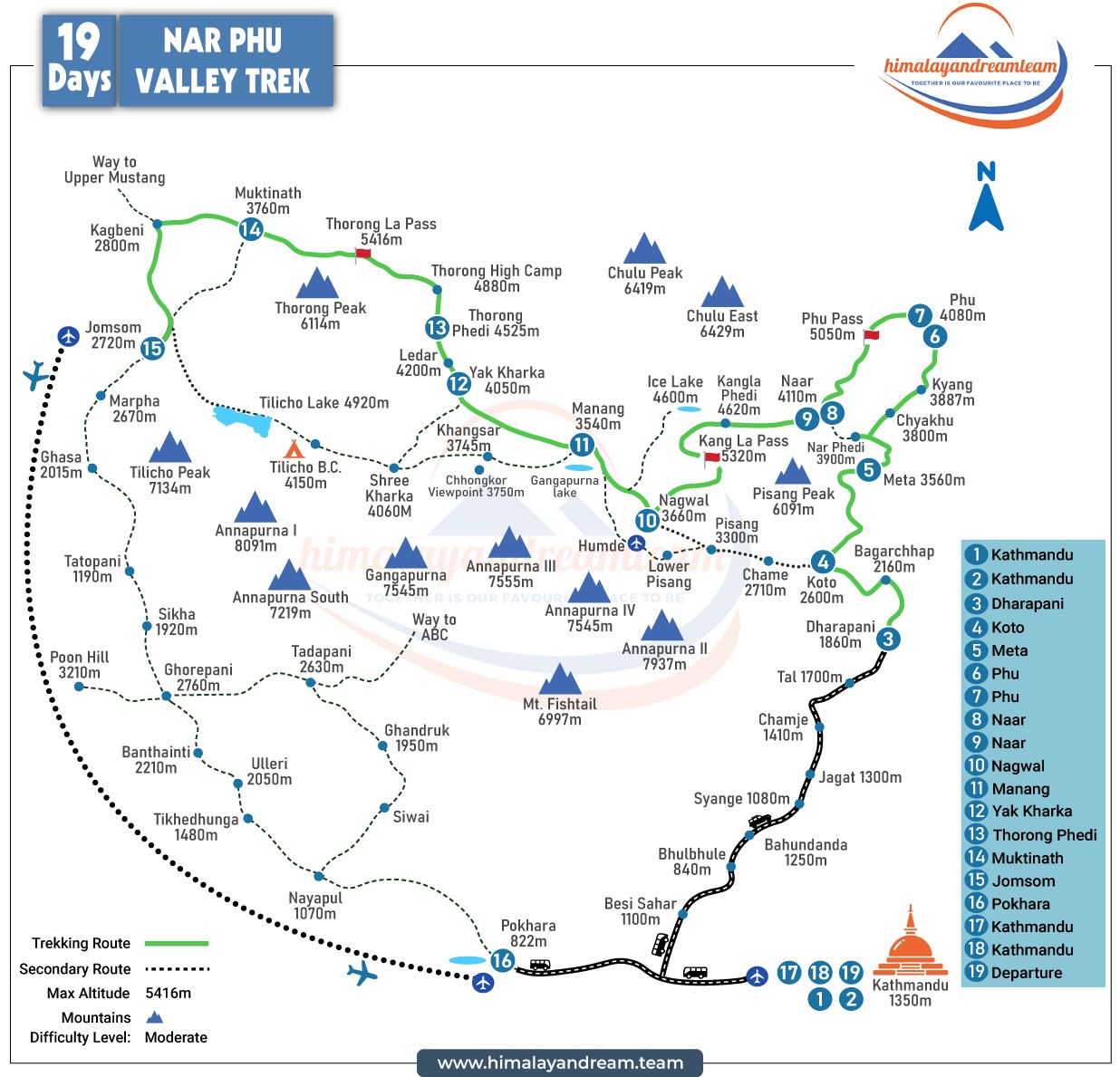
This carefully designed 19-day Nar Phu Valley Trek combines the remote beauty of Nar Village and Phu Gaon with the legendary Annapurna Circuit Trek. Along the way, you'll cross two spectacular Himalayan passes—Kang La Pass (5,320 m) and Thorong La Pass (5,416 m)—while enjoying panoramic views of Annapurna II, Gangapurna, Tilicho Peak, Chulu East, Pisang Peak, Kang Guru and other snow-capped Himalayan peaks.
Unlike Nepal's busier trekking routes, the Nar Phu Valley Trek offers peaceful trails through pine forests, deep river gorges, alpine meadows, yak pastures, and traditional stone villages rich in Tibetan Buddhist culture. Explore ancient monasteries, colourful prayer flags, mani walls, and chortens while experiencing the warm hospitality and unique traditions of the local communities.
The journey continues through Ngawal, Manang, Yak Kharka, Thorong Phedi, Muktinath, Jomsom, and Pokhara, creating a diverse trekking experience that perfectly combines adventure, culture, and spectacular Himalayan scenery. Along the route, you may also spot wildlife such as blue sheep, Himalayan tahr, Himalayan griffons, and other native species living within the Annapurna Conservation Area.
With carefully planned acclimatisation days, experienced government-licensed trekking guides, comfortable family-run teahouses, and all required trekking permits arranged by Himalayan Dream Team, this trek is ideal for adventurous hikers seeking a genuine Himalayan experience beyond the crowds. If you're looking for one of the best restricted area treks in Nepal, the Nar Phu Valley Trek offers an unforgettable journey through one of the Himalayas' last hidden valleys.
| Day | Program | Accommodation |
|---|---|---|
| Day 01 | Arrival in Kathmandu • Airport Transfer • Welcome Dinner | Kathmandu |
| Day 02 | Kathmandu UNESCO World Heritage Sightseeing | Kathmandu |
| Day 03 | Drive Kathmandu to Dharapani | Dharapani |
| Day 04 | Trek Dharapani to Koto | Koto |
| Day 05 | Trek Koto to Meta | Meta |
| Day 06 | Trek Meta to Phu Gaon | Phu Gaon |
| Day 07 | Acclimatization & Exploration Day in Phu Gaon | Phu Gaon |
| Day 08 | Trek Phu Gaon to Nar Village | Nar Village |
| Day 09 | Acclimatization & Exploration Day in Nar Village | Nar Village |
| Day 10 | Trek Nar Village to Ngawal via Kang La Pass (5,320 m) | Ngawal |
| Day 11 | Trek Ngawal to Manang | Manang |
| Day 12 | Trek Manang to Yak Kharka | Yak Kharka |
| Day 13 | Trek Yak Kharka to Thorong Phedi | Thorong Phedi |
| Day 14 | Trek to Muktinath via Thorong La Pass (5,416 m) | Muktinath |
| Day 15 | Trek Muktinath to Jomsom via Kagbeni | Jomsom |
| Day 16 | Fly Jomsom to Pokhara • Leisure Time | Pokhara |
| Day 17 | Drive Pokhara to Kathmandu by Tourist Bus | Kathmandu |
| Day 18 | Leisure & Buffer Day in Kathmandu | Kathmandu |
| Day 19 | Final Departure • Airport Transfer | — |
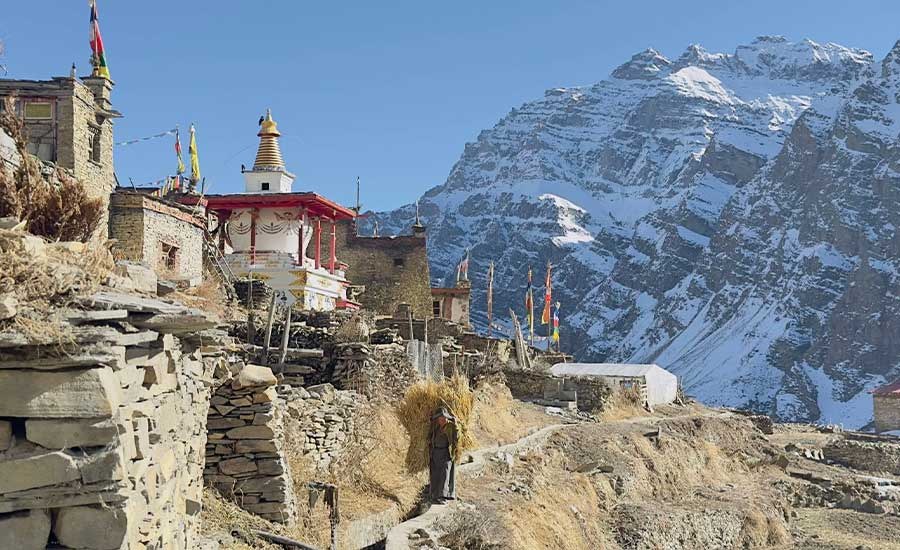
The Nar Phu Valley Trek is ideal for adventurous trekkers seeking a remote, off-the-beaten-path trek in Nepal. Located in the restricted Manang region, the route offers peaceful trails, ancient Tibetan Buddhist culture, and the traditional villages of Nar and Phu Gaon.
This 19-day Nar Phu Valley Trek with Annapurna Circuit crosses two spectacular high passes—Kang La Pass (5,320 m) and Thorong La Pass (5,416 m) with panoramic views of Annapurna II, Gangapurna, Tilicho Peak, Pisang Peak, Chulu East and Kang Guru.
The journey combines remote Himalayan valleys with the classic Annapurna Circuit, continuing through Ngawal, Manang, Muktinath, Kagbeni and Jomsom. With ancient monasteries, high-altitude landscapes, traditional villages, and fewer trekkers, Nar Phu offers a rewarding combination of adventure, culture and Himalayan wilderness.
| Factor | Details |
|---|---|
| Difficulty | Strenuous |
| Duration | 19 Days |
| Maximum Elevation | Thorong La Pass – 5,416 m |
| High Passes | Kang La (5,320 m) & Thorong La (5,416 m) |
| Daily Walking | Approx. 3–8 hours |
| Terrain | Forest trails, rocky paths & high alpine terrain |
| Technical Climbing | Not required |
| Acclimatization | Phu Gaon (4,080 m) & Nar Village (4,110 m) |
| Experience | Previous high-altitude trekking helpful, but not essential |
| Fitness | Good fitness and endurance required |
The Nar Phu Valley Trek is a strenuous high-altitude trek with two major challenges: Kang La Pass (5,320 m) and Thorong La Pass (5,416 m). No technical climbing experience is required, but trekkers should have good fitness, stamina, and be comfortable walking for several hours in remote mountain terrain.
The itinerary includes acclimatization days in Phu Gaon and Nar Village to help your body adjust to the altitude. With proper preparation, a steady pace, suitable trekking gear, and guidance from an experienced local guide, the trek is achievable for fit and well-prepared hikers.
The best time for the Nar Phu Valley Trek is spring (March–May) and autumn (September–November), offering generally stable weather, clear mountain views, and better conditions for crossing Kang La Pass (5,320 m) and Thorong La Pass (5,416 m).
Summer trekking is possible because Nar Phu lies partly in the Himalayan rain-shadow, although lower sections can be wet. Winter is much colder, with snow potentially making the high passes difficult or impassable.
| Season | Months | Conditions | Recommendation |
|---|---|---|---|
| Spring | March–May | Mild temperatures, clear mountain views & blooming landscapes | Excellent |
| Summer / Monsoon | June–August | Rain-shadow conditions in Nar Phu, but wetter lower trails | Possible |
| Autumn | September–November | Stable weather, clear skies & excellent Himalayan views | Excellent |
| Winter | December–February | Very cold with possible snow and high-pass closures | Challenging |
The Nar Phu Valley Trek requires special trekking permits because Nar and Phu lie within a restricted area of Nepal. The main permits are the Nar Phu Restricted Area Permit (RAP) and the Annapurna Conservation Area Permit (ACAP). Restricted-area permits must be processed through a registered trekking agency.
| Permit | Details |
|---|---|
| Nar Phu Restricted Area Permit (RAP) | Mandatory for entering the restricted Nar Phu region |
| RAP Fee: Sep–Nov | USD 100 per person for the first 7 days; USD 15 per additional day |
| RAP Fee: Dec–Aug | USD 75 per person for the first 7 days; USD 15 per additional day |
| Annapurna Conservation Area Permit (ACAP) | Required for trekking through the Annapurna Conservation Area |
| Permit Arrangement | Arranged by Himalayan Dream Team before the trek |
| Included in Package | Yes |
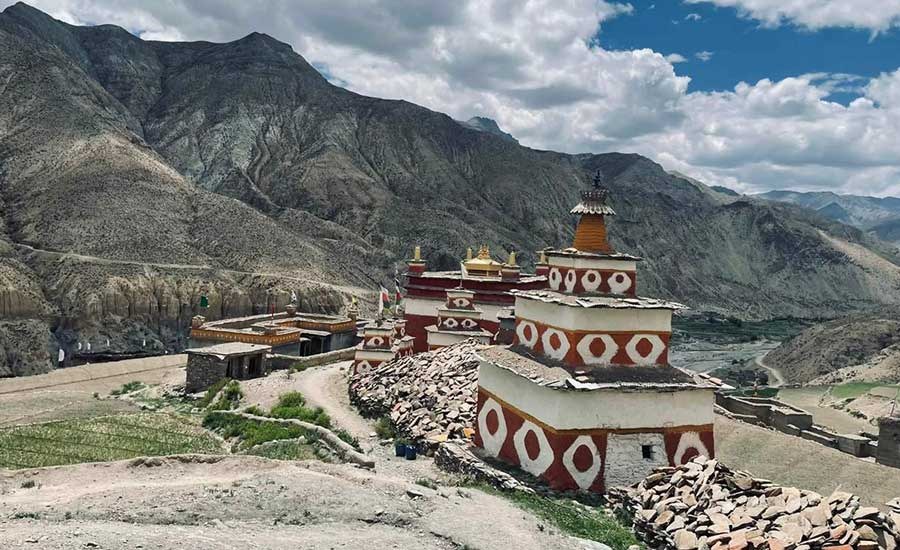
The Nar Phu Valley Trek is a high-altitude trek in Nepal, crossing Kang La Pass (5,320 m) and Thorong La Pass (5,416 m), the highest point of the 19-day trek. Proper acclimatization is essential, as several days are spent above 4,000 metres.
The itinerary includes dedicated acclimatization days in Phu Gaon (4,080 m) and Nar Village (4,110 m) before crossing Kang La. The route then continues through Manang, Yak Kharka and Thorong Phedi, allowing further gradual adjustment before the Thorong La crossing.
Our experienced trekking guides monitor your condition throughout the journey. A steady pace, good hydration, sufficient rest and early reporting of any altitude sickness (AMS) symptoms are important for a safer and more comfortable high-altitude trek.
Key Altitudes on the Nar Phu Valley Trek
| Location | Elevation | Importance |
|---|---|---|
| Phu Gaon | 4,080 m | Acclimatization day |
| Nar Village | 4,110 m | Acclimatization day |
| Kang La Pass | 5,320 m | First major high pass |
| Manang | 3,540 m | Rejoins the Annapurna Circuit |
| Yak Kharka | 4,050 m | Gradual ascent towards Thorong La |
| Thorong Phedi | 4,525 m | Final overnight stop before the pass |
| Thorong La Pass | 5,416 m | Highest point of the trek |
Accommodation on the 19-day Nar Phu Valley Trek includes comfortable hotels in Kathmandu and Pokhara and locally run teahouses or mountain lodges during the trek. In Nar Phu's remote villages, facilities are simple but provide a warm and authentic Himalayan experience.
Rooms are generally twin-sharing with basic beds, mattresses, pillows and blankets. Lower-altitude villages may offer private bathrooms, while Phu Gaon, Nar Village and higher-altitude settlements usually have shared facilities. Hot showers, Wi-Fi and battery charging may be available at some teahouses for an additional fee, but services become more limited at higher elevations.
Accommodation at a Glance
| Location | Accommodation |
|---|---|
| Kathmandu | Comfortable 3-star hotel with breakfast |
| Nar Phu Valley & Annapurna Trek | Best available local teahouses / mountain lodges |
| Jomsom | Comfortable local hotel / guesthouse |
| Pokhara | Comfortable 3-star hotel with breakfast |
| Room Type | Twin-sharing; single rooms subject to availability and supplement |
| Facilities | Private or shared bathrooms depending on location; hot showers, Wi-Fi & charging may cost extra |
During the Nar Phu Valley Trek, breakfast, lunch and dinner are included throughout the trekking days. Meals are served in local teahouses and typically include dal bhat, noodles, soups, rice, pasta, potatoes, momos, eggs and seasonal vegetables. Food choices become simpler as you travel deeper into the remote Nar Phu Valley.
In Kathmandu and Pokhara, breakfast is included at your hotel, along with a traditional Nepali welcome dinner in Kathmandu. Vegetarian meals are widely available, while vegan and other dietary requirements can usually be accommodated with advance notice.
Meals at a Glance
| Location | Meals Included |
|---|---|
| Kathmandu | Breakfast & traditional Nepali welcome dinner |
| During the Trek | Breakfast, lunch & dinner daily |
| Jomsom | Breakfast, lunch & dinner |
| Pokhara | Breakfast |
| Dietary Requirements | Vegetarian, vegan & other dietary needs available with advance notice |
| Drinking Water | Filtered or purified drinking water available during the trek |
All transportation for the Nar Phu Valley Trek is arranged by Himalayan Dream Team, including airport transfers and the main overland and domestic flight connections required by the itinerary.
The journey begins with a private drive from Kathmandu to Dharapani, where the trek starts. After completing the trek in Jomsom, take a scenic mountain flight from Jomsom to Pokhara, followed by a tourist bus from Pokhara to Kathmandu. Flight schedules are weather-dependent, particularly in Jomsom.
Transportation at a Glance
| Route | Transportation | Approx. Duration |
|---|---|---|
| Kathmandu Airport ↔ Hotel | Private Vehicle | 30–45 minutes |
| Kathmandu → Dharapani | Private Vehicle | 8–9 hours |
| Jomsom → Pokhara | Domestic Mountain Flight | Approx. 20–25 minutes |
| Pokhara Airport → Hotel | Private Transfer | Approx. 20–30 minutes |
| Pokhara → Kathmandu | Tourist Bus | Approx. 6–8 hours |
| Kathmandu Hotel → Airport | Private Vehicle | 30–45 minutes |
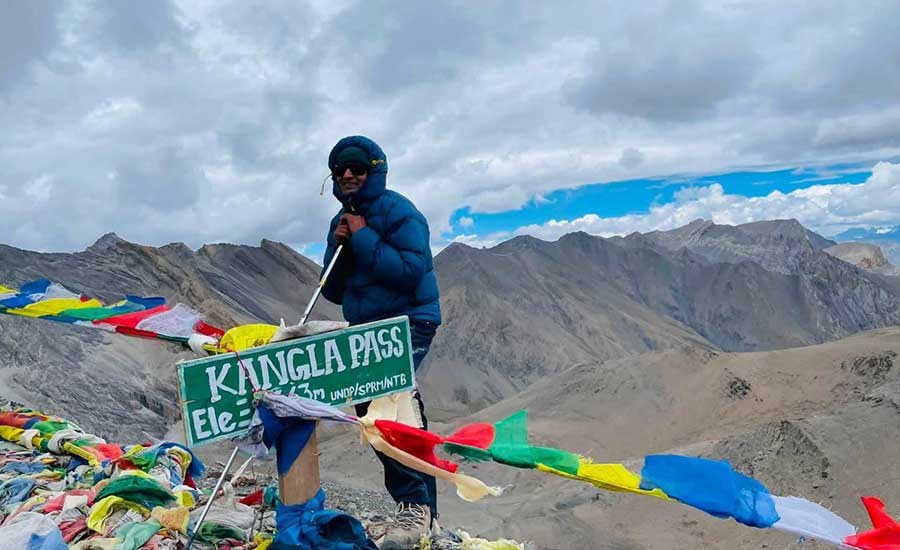
The Nar Phu Valley Trek is in a restricted area of Nepal, and trekking must be arranged according to current restricted-area regulations. Himalayan Dream Team provides an experienced, government-licensed, first-aid-trained English-speaking trekking guide throughout the journey.
Porter service is included, with one porter shared between two trekkers and a maximum luggage load of 22 kg per porter. Our trekking staff are provided with appropriate wages, meals, accommodation, equipment, and insurance.
Welcome to Nepal! Upon arrival at Tribhuvan International Airport, a Himalayan Dream Team representative will welcome you and transfer you by private vehicle to your hotel in Kathmandu.
After check-in, relax after your journey or explore the lively streets of Thamel, known for its cafés, restaurants, handicraft shops, and trekking stores.
In the evening, enjoy a traditional Nepali welcome dinner and meet your trekking guide for a briefing about the Nar Phu Valley Trek, including the itinerary, permits, altitude, weather, equipment, and safety.
After breakfast at your hotel, your experienced city guide will take you on a full-day cultural tour of the Kathmandu Valley, visiting some of Nepal's most important UNESCO World Heritage Sites.
Swayambhunath Stupa (Monkey Temple)
Begin at the ancient Swayambhunath Stupa, perched on a hill overlooking the Kathmandu Valley. One of Nepal's oldest Buddhist sites, it is known for its iconic Buddha eyes, colourful prayer flags, sacred shrines, and panoramic views across Kathmandu.
Pashupatinath Temple
Continue to Pashupatinath Temple, Nepal's most sacred Hindu pilgrimage site, situated along the holy Bagmati River. Although the main temple is open only to Hindus, visitors can observe its traditional architecture, riverside ghats, cremation ceremonies, and Hindu sadhus, offering fascinating insight into Nepal's spiritual traditions.
Kathmandu Durbar Square
Visit historic Kathmandu Durbar Square, once the royal palace complex of the Malla Kings. Explore ancient temples, courtyards, intricately carved wooden buildings, shrines, and beautiful Newari architecture that reflect the artistic and cultural heritage of the Kathmandu Valley.
Local Market Experience
Finish the day with a walk through one of Kathmandu's lively local markets, where stalls selling spices, vegetables, textiles, handicrafts, and everyday goods provide an authentic glimpse into local life before your Nar Phu Valley Trek begins.
After an early breakfast, drive from Kathmandu to Dharapani, following the Prithvi Highway through river valleys, terraced farmland, traditional villages, and the scenic Nepalese countryside.
Passing Besisahar, the gateway to the Annapurna Circuit, continue through the Marsyangdi Valley along increasingly mountainous roads. Waterfalls, forested hills, deep valleys, and traditional settlements accompany the journey towards Dharapani.
Arrive in Dharapani (1,860 m), where the trekking section of your Nar Phu Valley adventure begins.
After breakfast, begin your first trekking day along the Annapurna Circuit trail, following the Marsyangdi River through pine and fir forests, traditional villages, and cultivated hillsides.
The trail passes Bagarchhap, Danaque, Timang, and Thanchowk, crossing suspension bridges and offering impressive views of Annapurna II, Manaslu, and Lamjung Himal. Buddhist chortens, prayer wheels, and traditional stone houses provide an introduction to the culture of the Annapurna region.
Arrive at Koto, the gateway to the restricted Nar Phu Valley. Your Nar Phu Restricted Area Permit is checked here before you enter the remote valley the following day.
Today you leave the main Annapurna Circuit and enter the restricted Nar Phu Valley, where the trail becomes quieter and more remote.
Following the Nar Khola, trek through pine forests, narrow canyons, rocky cliffs, waterfalls, and across suspension bridges. As you gain altitude, the dense forest gradually gives way to juniper and open alpine terrain. Along the route, mani walls, chortens, and seasonal settlements reflect the valley's strong Tibetan Buddhist heritage.
After a steady ascent, reach Meta (3,560 m), surrounded by rugged mountains and open high-altitude landscapes. This is an important stage as you gradually acclimatize before continuing towards Phu Gaon.
Continue deeper into the Nar Phu Valley, trekking through increasingly remote alpine terrain. The route passes dramatic rock formations, glacial streams, seasonal yak pastures, mani walls, chortens, and traditional herders' shelters.
Following the Phu Khola, cross several bridges as the valley gradually opens towards Phu Gaon. The dry, rugged landscape reflects the Himalayan rain-shadow and the region's close cultural connection with Tibet.
Arrive at Phu Gaon (4,080 m), a remarkable traditional settlement of stone houses built into the mountainside. Spend the remainder of the day exploring the village and experiencing its preserved Tibetan Buddhist culture before tomorrow's acclimatization day.
Today is an important acclimatization day in Phu Gaon, allowing your body to adjust to the altitude before continuing towards Nar Village and the challenging Kang La Pass (5,320 m).
After breakfast, take a gentle acclimatization hike to Tashi Lhakhang Monastery (approx. 4,150 m), located above Phu Gaon. Explore this peaceful Buddhist site while enjoying beautiful views across the Phu Valley and surrounding Himalayan landscape.
Return to the village and spend the afternoon exploring its traditional stone houses, narrow lanes, mani walls, prayer flags, and local Buddhist culture, or simply relax and prepare for the next stage of your Nar Phu Valley Trek.
After breakfast, leave Phu Gaon and retrace part of the trail before turning towards Nar Village. The route crosses rugged mountain slopes and streams through the remote alpine landscapes of the Nar Phu Valley, with Buddhist chortens, mani walls, prayer flags, and seasonal yak pastures along the way.
As you approach Nar Village, the valley opens into a beautiful high-altitude landscape surrounded by Himalayan peaks. Nar is known for its traditional stone houses, Buddhist monasteries, and well-preserved Tibetan-influenced culture.
Spend the evening exploring the village or relaxing before tomorrow's acclimatization day, an important preparation for crossing Kang La Pass (5,320 m).
Today is an important acclimatization day before crossing Kang La Pass (5,320 m) tomorrow. After breakfast, take an optional hike to the ridges and viewpoints above Nar Village, helping your body adjust to the higher altitude.
From the surrounding hills, enjoy panoramic views towards Kang La Pass, Pisang Peak, Chulu East, Kang Guru, and Annapurna II. Afterwards, return to Nar and explore its traditional stone lanes, monastery, Buddhist monuments, and everyday village life.
The remainder of the day is for rest and preparation. Your guide will brief you on the weather, trail conditions, and early departure for tomorrow's Kang La crossing.
Today is one of the most challenging and rewarding days of the Nar Phu Valley Trek. Start early and climb steadily through rocky alpine terrain towards Kang La Pass (5,320 m).
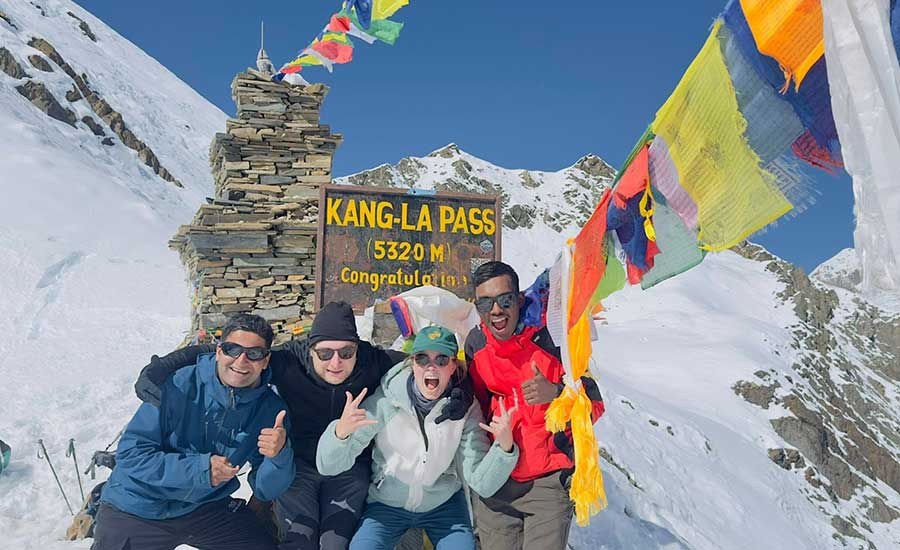
From the pass, enjoy spectacular views across the Annapurna Massif, including Annapurna II, Gangapurna, Tilicho Peak, Chulu East, Pisang Peak, and Kang Guru. Prayer flags mark the pass and provide a memorable place to pause before beginning the long descent.
Descend through rugged high-altitude terrain and alpine meadows to Ngawal (3,660 m), where the Nar Phu route reconnects with the Annapurna Circuit Trek. After successfully crossing Kang La, settle into your teahouse and enjoy a well-earned rest.
After breakfast, enjoy a relatively easy trek from Ngawal to Manang, giving your body time to recover after crossing Kang La Pass. The trail follows the upper Marsyangdi Valley, passing Buddhist monasteries, mani walls, traditional villages, and cultivated fields.
Along the way, enjoy excellent views of Annapurna II, Annapurna III, Gangapurna, Tilicho Peak, Chulu East, and Pisang Peak before reaching Manang, one of the main mountain villages on the Annapurna Circuit Trek.
Spend the afternoon exploring Manang, visiting the local monastery, relaxing at a café or bakery, or simply resting before continuing towards Thorong La.
Leave Manang and gradually ascend into the high-altitude landscapes of the Annapurna Conservation Area. The trail passes through juniper shrubs, alpine meadows, and open grazing pastures where yaks and blue sheep may occasionally be seen.
As you climb, enjoy impressive views of Annapurna III, Gangapurna, Tilicho Peak, Chulu East, and Chulu West. The shorter walking day allows for gradual acclimatization as you move above 4,000 metres.
Arrive at Yak Kharka (4,050 m), a small high-altitude settlement surrounded by open alpine terrain. Spend the afternoon resting, staying hydrated, and preparing for the ascent to Thorong Phedi.
After breakfast, continue your gradual ascent towards Thorong Phedi, the final overnight stop before crossing Thorong La Pass (5,416 m). At this altitude, maintaining a slow and steady pace is especially important.
The trail follows the upper Jarsang Khola, crossing a suspension bridge before climbing through increasingly barren and rocky alpine terrain. Continue carefully towards Thorong Phedi as the landscape becomes more remote and dramatic.
Arrive at Thorong Phedi (4,525 m) and spend the afternoon resting and preparing for tomorrow's early start. Your guide will brief you on the weather, trail conditions, altitude awareness, and plans for crossing Thorong La Pass.
Start before sunrise for one of the most challenging and rewarding days of the Nar Phu Valley Trek. Climb steadily from Thorong Phedi towards Thorong La Pass (5,416 m), the highest point of your 19-day journey.
From the pass, enjoy spectacular panoramic views of the Annapurna and Dhaulagiri ranges, including Nilgiri, Tilicho Peak, and surrounding Himalayan peaks. Colourful prayer flags mark the summit before you begin the long descent towards Muktinath.
Arrive at Muktinath (3,760 m), a sacred pilgrimage destination for both Hindus and Buddhists. Visit the famous Muktinath Temple, known for its 108 water spouts and sacred natural flame, before enjoying a well-earned rest.
After breakfast, begin your final trekking day through the distinctive landscapes of Lower Mustang. Descend along the ancient trade route towards Kagbeni, passing Buddhist chortens, traditional villages, apple orchards, and the dry, colourful landscapes of the Himalayan rain shadow.
Explore Kagbeni, a historic village at the gateway to Upper Mustang, known for its narrow lanes, traditional mud-brick houses, Tibetan-influenced culture, and ancient monastery.
Continue through Eklobhatti and along the Kali Gandaki Valley to Jomsom (2,720 m), with views towards the Annapurna and Dhaulagiri ranges. On arrival, celebrate the completion of the trekking section of your Nar Phu Valley adventure.
After an early breakfast, transfer to Jomsom Airport for the short mountain flight to Pokhara (25 minutes) . Weather permitting, the flight offers spectacular aerial views of the Annapurna and Dhaulagiri ranges, Kali Gandaki Valley, and Mustang region.
Upon arrival in Pokhara, transfer to your hotel and enjoy the rest of the day at leisure. Relax beside Phewa Lake, explore the popular Lakeside area, or enjoy one of Pokhara's cafés and restaurants after completing your trek.
Optional activities such as boating on Phewa Lake, visiting the International Mountain Museum, Davis Falls, or Gupteshwor Cave, or enjoying a spa or massage can be arranged at additional cost.
After breakfast, depart Pokhara by comfortable tourist bus for the scenic journey back to Kathmandu. The drive follows the Prithvi Highway, passing river valleys, terraced farmland, forested hills, and traditional villages.
Several stops are made along the way for refreshments and lunch. Upon arrival in Kathmandu, transfer to your hotel and enjoy the evening at leisure. You may explore Thamel, shop for souvenirs, enjoy dinner, or simply relax after your Nar Phu Valley Trek.
After completing your Nar Phu Valley Trek, enjoy a free day in Kathmandu to relax, explore, or do some last-minute shopping. Wander through Thamel, visit local cafés and restaurants, shop for handicrafts and souvenirs, or simply enjoy a relaxing day at your hotel.
If you would like to explore more of Kathmandu, optional visits can be arranged to Boudhanath Stupa, Patan Durbar Square or the Garden of Dreams. A spa or traditional massage is another relaxing way to spend your final full day in Nepal.
Importantly, this day also serves as a buffer day in case of weather-related flight delays between Jomsom and Pokhara, providing extra flexibility before your international departure.
After breakfast, enjoy some free time depending on your international flight schedule. A Himalayan Dream Team representative will transfer you by private vehicle to Tribhuvan International Airport approximately three hours before your scheduled departure.
Your 19-day Nar Phu Valley Trek comes to an end with unforgettable memories of Nepal's remote Himalayan valleys, traditional mountain communities, and spectacular high-altitude landscapes. We wish you a safe journey home and hope to welcome you back to Nepal for another adventure.
The Nar Phu Valley Trek is a strenuous high-altitude trek suitable for fit and well-prepared hikers. The main challenges are long trekking days, remote terrain, and crossing Kang La Pass (5,320 m) and Thorong La Pass (5,416 m). No technical climbing experience is required.
The highest point of this 19-day itinerary is Thorong La Pass at 5,416 m. You will also cross Kang La Pass at 5,320 m, making proper acclimatization especially important.
Yes. The trek requires a Nar Phu Restricted Area Permit (RAP), an Annapurna Conservation Area Permit (ACAP) and, for this Nar Phu–Annapurna Circuit itinerary, a trekking-agency-issued TIMS Card under current Nepal Tourism Board regulations. Himalayan Dream Team arranges the required permits before the trek.
No. Nar Phu is a restricted trekking area, and this route must be arranged according to Nepal's restricted-area and trekking regulations. The Nepal Tourism Board currently lists the Nar Phu Annapurna Circuit Trek among routes requiring a licensed trekking guide and agency-issued TIMS Card.
Yes. A licensed trekking guide is required for this route under current trekking regulations. Himalayan Dream Team provides an experienced, government-licensed, first-aid-trained English-speaking guide throughout the journey.
The best seasons are generally spring (March–May) and autumn (September–November), when conditions are more favourable for high-altitude trekking and crossing Kang La and Thorong La. Summer trekking is possible because Nar Phu lies partly in the Himalayan rain-shadow, while winter can bring extreme cold and snow on the high passes.
Most trekking days involve approximately 3–8 hours of walking. The longer and more demanding days are the crossings of Kang La Pass and Thorong La Pass, which normally require around 7–8 hours depending on weather, trail conditions and individual pace.
Yes. The trek spends several days above 4,000 m and reaches 5,416 m, so Acute Mountain Sickness (AMS) is a genuine concern. The itinerary includes acclimatization days in Phu Gaon (4,080 m) and Nar Village (4,110 m) to support gradual adjustment.
Accommodation is provided in locally run teahouses and mountain lodges. Rooms are generally simple and twin-sharing, with shared bathrooms common in remote and high-altitude villages. Kathmandu and Pokhara accommodation is provided in comfortable hotels.
Teahouses normally serve meals such as dal bhat, rice, noodles, soups, potatoes, pasta, momos, eggs and seasonal vegetables. Breakfast, lunch and dinner are included during the trekking days. Vegetarian meals are widely available, and other dietary requirements can usually be accommodated with advance notice.
i-Fi and charging are available at some teahouses, particularly in larger settlements, but services become more limited as you travel into remote Nar Phu and higher-altitude areas. Additional charges may apply, so carrying a power bank is recommended.
Yes. You should have comprehensive travel insurance covering high-altitude trekking up to at least 5,500 m, medical treatment and emergency helicopter evacuation. Himalayan Dream Team can assist with rescue arrangements if necessary, but evacuation and medical costs are the traveller's responsibility or must be covered by insurance.
Essential trekking gear includes sturdy trekking boots, warm layers, a waterproof jacket, down jacket, gloves, warm hat, sunglasses, sunscreen, trekking poles, sleeping bag, reusable water bottle, and personal medication. Warm clothing is especially important for crossing Kang La Pass (5,320 m) and Thorong La Pass (5,416 m).
After booking, Himalayan Dream Team will provide you with a detailed Nar Phu Valley Trek packing list to help you prepare properly for the trek.
Yes. Solo travellers are welcome, but the Nar Phu Valley is a restricted trekking area and requires a minimum of two trekkers for the Restricted Area Permit. The trek must also be arranged through a registered trekking agency with a licensed guide.
If you are travelling alone, Himalayan Dream Team can help arrange a suitable group departure so you can meet the minimum two-person requirement and complete the trek according to current regulations.
No reviews yet. Traveled with us on this trip? Be the first to share your experience.
Enjoy the popular trekking and tour packages in Nepal Himalayas. 2026.
© 2011 - 2026 All rights reserved. Himalayan Dream Team