Mardi Himal Trek – 11 Days
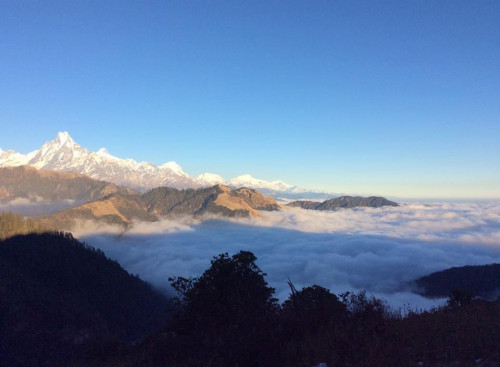
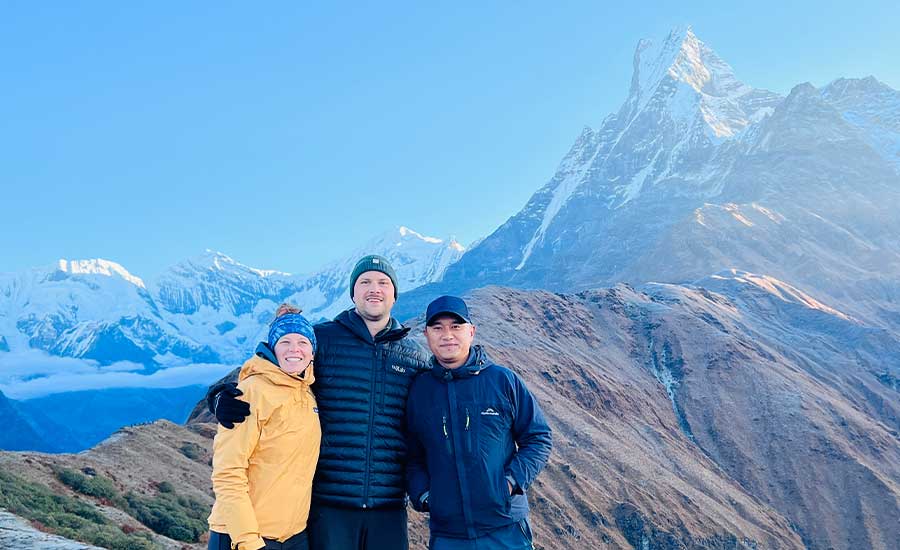
The Mardi Himal Trek is a scenic short trek in Nepal's Annapurna region, combining peaceful forest trails, dramatic mountain ridges and spectacular views of Machhapuchhre (Fishtail), Mardi Himal, Annapurna South and Hiunchuli. The trail climbs through rhododendron forests and alpine landscapes from Kande to High Camp (3,550 m), with comfortable teahouse accommodation along the route.
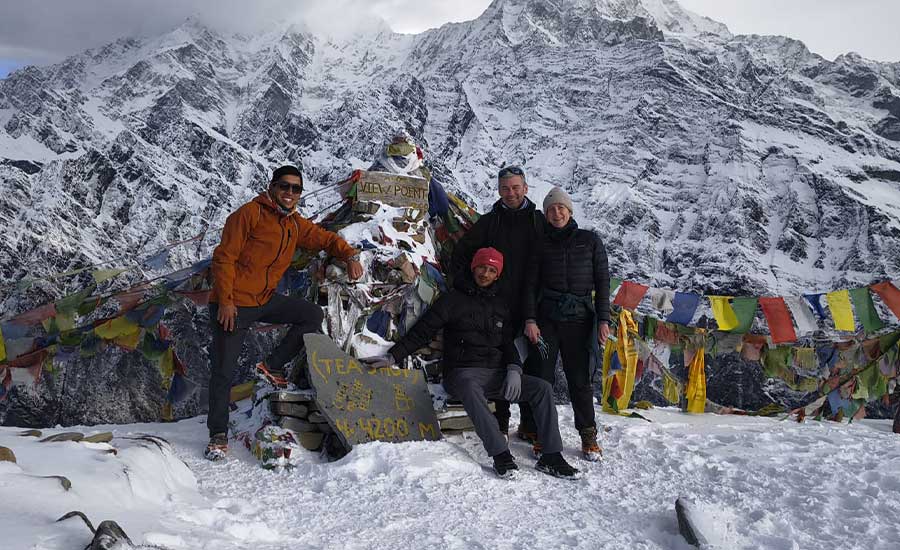
The highlight is the early-morning hike to Mardi Himal Viewpoint (4,200 m), with the option to continue towards Mardi Himal Base Camp (4,500 m) when weather, trail conditions and acclimatization allow. Compared with some of Nepal's busier trekking routes, Mardi Himal offers a quieter Himalayan experience without requiring technical climbing.
Our 11-day Mardi Himal Trek itinerary also continues through Lwang Village and Dhampus, adding Gurung culture, tea gardens, terraced landscapes and rural mountain life to the journey. With six trekking days plus time in Kathmandu and Pokhara, it is an excellent choice for active travellers looking for a shorter trek that combines Himalayan scenery, local culture and peaceful trails.
Mardi Himal Trek Highlights
- Explore Kathmandu's UNESCO World Heritage Sites, including Swayambhunath, Pashupatinath and Kathmandu Durbar Square.
- Discover Pokhara, Nepal's beautiful lakeside city and gateway to the Annapurna region.
- Trek through peaceful rhododendron and oak forests from Pitam Deurali towards the high Mardi Himal ridge.
- Walk above the forest line from Low Camp and Badal Danda to High Camp, surrounded by dramatic Himalayan scenery.
- Enjoy close-up views of Machhapuchhre (Fishtail), Mardi Himal, Annapurna South and Hiunchuli.
- Hike to Mardi Himal Viewpoint (approx. 4, 200 m) for one of the finest panoramas on the route.
- Continue towards Mardi Himal Base Camp (approx. 4, 500 m) when weather, trail conditions and your acclimatization allow.
- Experience quieter mountain trails compared with many of the Annapurna region's classic trekking routes.
- Stay in traditional teahouses and mountain lodges and enjoy freshly prepared meals during the trek.
- Descend through Lwang Village and experience Gurung culture, terraced farmland, tea gardens and rural mountain life.
- Walk through Dhampus with beautiful views across the Annapurna foothills before returning to Pokhara.
- Combine Himalayan trekking, local culture, Kathmandu heritage and Pokhara in one carefully planned 11-day journey.
Mardi Himal Trek – 11 Days Short Itinerary
| Day | Activity | Accommodation |
|---|
| Day 1 | Arrival in Kathmandu & transfer to hotel | Hotel |
| Day 2 | Kathmandu UNESCO World Heritage sightseeing & Mardi Himal Trek preparation | Hotel |
| Day 3 | Drive from Kathmandu to Pokhara | Hotel |
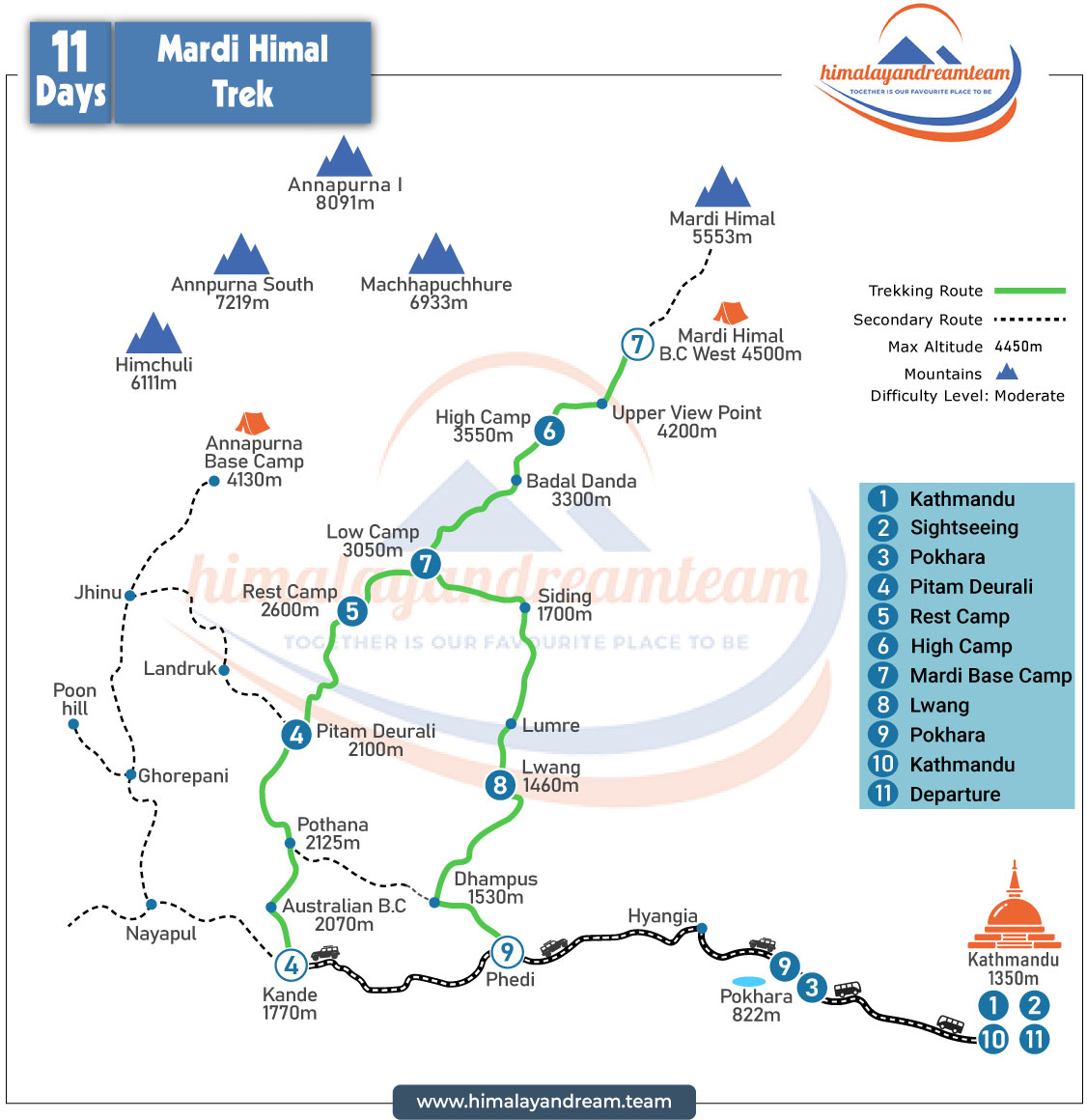
| Day 4 | Drive to Kande & trek to Pitam Deurali via Australian Camp and Pothana | Lodge |
| Day 5 | Trek from Pitam Deurali to Rest Camp via Forest Camp | Lodge |
| Day 6 | Trek from Rest Camp to High Camp via Low Camp | Lodge |
| Day 7 | Hike to Mardi Himal Viewpoint & optional Mardi Himal Base Camp; descend to Low Camp | Lodge |
| Day 8 | Trek from Low Camp to Lwang Village | Lodge |
| Day 9 | Trek from Lwang to Dhampus & Phedi; drive to Pokhara | Hotel |
| Day 10 | Drive from Pokhara to Kathmandu; optional flight | Hotel |
| Day 11 | Transfer to Kathmandu International Airport for final departure | — |
Mardi Himal Trek Difficulty
The Mardi Himal Trek is considered a moderate Himalayan trek. No technical climbing experience is required, but trekkers should be comfortable with several hours of walking, steep ascents and descents, and trekking at elevations above 3,500 m. The optional hike to Mardi Himal Base Camp (approx. 4,500 m) is the most demanding part of the trek.
Mardi Himal Trek Difficulty at a Glance
| Difficulty Factor | Details |
|---|
| Trip Grade | Moderate |
| Trip Duration | 11 Days |
| Maximum Altitude | Approx. 4,500 m (Mardi Himal Base Camp) |
| Highest Overnight Stay | High Camp (3,550 m) |
| Daily Trekking Time | 3–6 hours; approx. 6–8 hours on the Viewpoint/Base Camp day |
| Total Trekking Days | 6 Days |
| Trail Type | Forest trails, stone steps, steep ascents and descents, and high mountain ridges |
| Technical Climbing | Not required |
| Previous Trekking Experience | Helpful but not essential |
| Fitness Level | Reasonable fitness and endurance recommended |
| Altitude Sickness Risk | Possible above 3,500 m; careful pacing and altitude awareness are important |
| Suitable For | Active beginners and experienced trekkers in good health |
Most days involve 3–6 hours of trekking, while the hike from High Camp to Mardi Himal Viewpoint (approx. 4,200 m) and optional Mardi Himal Base Camp (approx. 4,500 m) is the longest and most challenging day.
The trail is non-technical but includes forest paths, stone steps, steep sections and exposed high ridges. With reasonable physical preparation, a steady walking pace and the support of an experienced licensed trekking guide, the Mardi Himal Trek is achievable for most active travellers.
Altitude & Acclimatization on the Mardi Himal Trek
The Mardi Himal Trek reaches approximately 4,500 m at Mardi Himal Base Camp, while the highest overnight stay is at High Camp (3,550 m). Because the trek gains altitude relatively quickly, proper pacing, hydration and awareness of altitude symptoms are important.
Our itinerary gradually climbs through Pitam Deurali (2,100 m), Rest Camp (2,600 m), Low Camp (3,050 m) and High Camp (3,550 m) before the early-morning hike to Mardi Himal Viewpoint (approx. 4,200 m) and optional Base Camp. After reaching the highest point, you descend to Low Camp the same day rather than sleeping at extreme altitude.
Mardi Himal Altitude at a Glance
| Location | Altitude |
|---|
| Pitam Deurali | 2,100 m |
| Rest Camp | 2,600 m |
| Low Camp | 3,050 m |
| Badal Danda | Approx. 3,250 m |
| High Camp | 3,550 m |
| Mardi Himal Viewpoint | Approx. 4,200 m |
| Mardi Himal Base Camp | Approx. 4,500 m |
Altitude sickness can affect anyone, regardless of age or fitness. Common early symptoms include headache, nausea, dizziness, loss of appetite and unusual fatigue. If symptoms develop, you should inform your guide immediately and avoid ascending further.
Reaching Mardi Himal Base Camp is optional. Your guide will consider your condition, weather and trail conditions before continuing beyond the viewpoint. Safety always takes priority over reaching the highest point.
Best Time for Mardi Himal Trek
The best time for the Mardi Himal Trek is during spring (March to May) and autumn (September to November), when the weather is generally more stable, mountain visibility is good, and trail conditions are favourable. Spring brings blooming rhododendron forests and pleasant trekking temperatures, while autumn is known for clear skies, crisp air and excellent views of Machhapuchhre, Annapurna South and Hiunchuli.
Winter offers quieter trails and beautiful mountain scenery, but temperatures at High Camp can be very cold and snowfall may affect the higher sections. During the summer monsoon, frequent rain can make the lower forest trails wet, muddy and slippery, with clouds often limiting mountain views.
Best Time to Trek at a Glance
| Season | Months | Conditions | Recommendation |
|---|
| Spring | March – May | Mild temperatures, blooming rhododendrons and generally good mountain views. | Excellent |
| Summer / Monsoon | June – August | Warm and humid with frequent rain, muddy trails, leeches and more cloud cover. | Fair |
| Autumn | September – November | Generally stable weather, clear skies and excellent Himalayan visibility. | Excellent |
| Winter | December – February | Cold at higher elevations with possible snow around High Camp and the Viewpoint. | Good |
Accommodation During the Mardi Himal Trek
During the Mardi Himal Trek, you'll stay in comfortable hotels in Kathmandu and Pokhara and in traditional Himalayan teahouses or lodges along the trekking route. These locally run lodges provide simple, comfortable accommodation and a welcoming place to rest after each day's walk.
Most trekking lodges offer twin-sharing rooms. Facilities become more basic as you climb towards Low Camp and High Camp, where bathrooms are generally shared. Hot showers, Wi-Fi and charging are available at some lodges for an additional cost, but services can be limited at higher elevations.
Accommodation at a Glance
| Location / Facility | Details |
|---|
| Kathmandu | Comfortable hotel |
| Pokhara | Comfortable hotel |
| During the Trek | Local teahouses and mountain lodges |
| Room Type | Twin-sharing rooms; single supplement available where possible |
| Bathroom | Private facilities may be available at lower elevations; mostly shared at higher camps |
| Hot Shower | Available at selected lodges; additional cost may apply |
| Wi-Fi & Charging | Available at some lodges; additional cost may apply |
| Heating | Dining areas may be heated; bedrooms are generally unheated |
Food & Meals During the Mardi Himal Trek
Good food and proper nutrition are important during the Mardi Himal Trek. Breakfast, lunch and dinner are included each day on the trekking route, while breakfast is included at your hotels in Kathmandu and Pokhara. You will also enjoy a traditional Nepali welcome dinner on your first evening in Kathmandu.
Teahouses and lodges along the Mardi Himal route serve a variety of freshly prepared meals, including Dal Bhat, noodles, fried rice, pasta, soups, potatoes, eggs, pancakes and momos. Vegetarian options are widely available, while vegan and other dietary requirements can usually be accommodated with advance notice. Boiled and purified drinking water is available along the trekking route.
Meals at a Glance
| Location / Meal | Details |
|---|
| Kathmandu | Breakfast & Traditional Nepali Welcome Dinner |
| During the Trek | Breakfast, Lunch & Dinner |
| Pokhara | Breakfast |
| Popular Dishes | Dal Bhat, Noodles, Fried Rice, Pasta, Soups, Eggs & Momos |
| Vegetarian Options | Widely Available |
| Vegan / Special Diets | Available on Request |
| Drinking Water | Boiled & Purified Water Available Along the Trek |
Mardi Himal Trek Permits
The Mardi Himal Trek requires two trekking permits: the Annapurna Conservation Area Permit (ACAP) and the TIMS Card. Both are included in our trekking package. Himalayan Dream Team arranges the required permits before the trek, so you do not need to handle the paperwork yourself.
Mardi Himal Trek Permits at a Glance
| Permit | Details |
|---|
| Annapurna Conservation Area Permit (ACAP) | Required for trekking within the Annapurna Conservation Area. |
| TIMS Card (Trekkers' Information Management System) | Required for the Mardi Himal trekking route under current trekking regulations. |
| Permit Arrangement | All necessary trekking permits are arranged by Himalayan Dream Team before the trek. |
| Included in Package | Yes |
Mardi Himal Trek Transportation
Transportation for the Mardi Himal Trek includes the main overland journeys between Kathmandu and Pokhara, road transfers to and from the trekking trail, and airport transfers in Kathmandu. The standard package uses a tourist bus between Kathmandu and Pokhara, with an optional domestic flight available for travellers who prefer a faster journey.
Mardi Himal Trek Transportation at a Glance
| Route / Transfer | Transportation & Approx. Time |
|---|
| Kathmandu Airport → Hotel | Private vehicle – approx. 30–45 minutes |
| Kathmandu → Pokhara | Tourist bus – approx. 6–8 hours |
| Pokhara → Kande | Private/local vehicle – approx. 1 hour |
| Phedi → Pokhara | Private/local vehicle – approx. 30–45 minutes |
| Pokhara → Kathmandu | Tourist bus – approx. 6–8 hours |
| Pokhara → Kathmandu Flight | Optional domestic flight – approx. 25–30 minutes |
| Kathmandu Hotel → Airport | Private vehicle – approx. 20–45 minutes |
Road journey times can vary depending on traffic, road conditions and weather. The optional Pokhara–Kathmandu flight can be arranged at an additional cost.
Mardi Himal Trek vs Annapurna Base Camp Trek
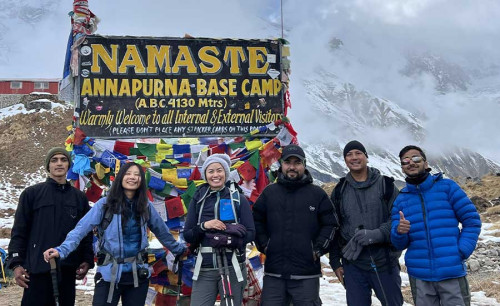
Both the Mardi Himal Trek and Annapurna Base Camp Trek offer spectacular trekking experiences in Nepal's Annapurna region, but they are quite different. Mardi Himal is generally shorter, quieter and known for its high ridgeline and close views of Machhapuchhre (Fishtail), while the Annapurna Base Camp Trek follows a longer route into the dramatic Annapurna Sanctuary, surrounded by some of the region's highest mountains.
For travellers with limited time who prefer peaceful trails and a shorter Himalayan trek, Mardi Himal is an excellent choice. Trekkers looking for a longer journey with more villages, varied landscapes and the classic experience of reaching Annapurna Base Camp may prefer the Annapurna Base Camp Trek.
Mardi Himal vs Annapurna Base Camp at a Glance
| Feature | Mardi Himal Trek | Annapurna Base Camp Trek |
|---|
| Maximum Altitude | Approx. 4,500 m – Mardi Himal Base Camp | 4,130 m – Annapurna Base Camp |
| Trekking Style | High ridges, forests & mountain viewpoints | River valleys, villages & Annapurna Sanctuary |
| Trail Traffic | Generally quieter | More popular and busier |
| Difficulty | Moderate | Moderate |
| Mountain Experience | Close views of Machhapuchhre, Mardi Himal, Annapurna South & Hiunchuli | Surrounded by Annapurna I, Machhapuchhre, Annapurna South, Hiunchuli & other peaks |
| Cultural Experience | Gurung villages including Lwang & Dhampus on our itinerary | Traditional Gurung villages along the Annapurna route |
| Accommodation | Teahouses / mountain lodges | Teahouses / mountain lodges |
| Best Seasons | March–May & September–November | March–May & September–November |
| Best For | Shorter trek, quieter trails & dramatic ridge views | Classic base camp experience & Annapurna Sanctuary scenery |
Which Trek Should You Choose?
Choose the Mardi Himal Trek if you want a relatively short trek with quieter trails, beautiful forests, dramatic ridgeline walking and impressive close-up views of Machhapuchhre. Himalayan Dream Team's itinerary also continues through Lwang and Dhampus, adding a rewarding cultural experience after the high mountain section.
Choose the Annapurna Base Camp Trek if you have more trekking time and want to journey deep into the Annapurna Sanctuary, eventually reaching the natural amphitheatre at Annapurna Base Camp. Both treks are excellent choices, and the better option depends on your available time, preferred scenery and trekking style.
Why Trek Mardi Himal with Himalayan Dream Team?
Choosing the right trekking company is an important part of your Himalayan journey. Himalayan Dream Team is a local, women-led trekking company based in Kathmandu, combining experienced local guides, carefully planned itineraries and personal support from your arrival in Nepal until your final departure.
Our 11-day Mardi Himal Trek goes beyond the standard mountain route by continuing through Lwang Village and Dhampus, combining the spectacular Mardi Himal ridge with Gurung culture and rural life in the Annapurna foothills.
Why Choose Himalayan Dream Team?
| Why Choose Us | What You Can Expect |
|---|
| Local Women-Led Company | Travel with a Nepal-based trekking company led by local women with firsthand knowledge of Nepal and the Himalayas. |
| Experienced Licensed Guides | Trek with professional local guides who understand the route, mountain conditions, altitude and local culture. |
| Carefully Planned Itinerary | A well-paced route through Pitam Deurali, Rest Camp, Low Camp and High Camp before the optional hike to Mardi Himal Base Camp. |
| More Than the Standard Mardi Route | Continue through Lwang Village and Dhampus for an additional cultural experience in the Annapurna foothills. |
| Small Groups & Private Trips | Small-group and private departures allow more personal attention and flexibility during the journey. |
| Complete Trek Arrangements | We arrange accommodation, meals during the trek, permits, transportation, guides and porter services. |
| Safety & Altitude Awareness | Our guides maintain a sensible trekking pace, monitor how you are adapting to altitude and put safety before reaching the highest point. |
| Fair Treatment of Guides & Porters | Our trekking staff are properly supported with wages, meals, accommodation, insurance and necessary equipment. |
| Responsible Local Travel | We use locally operated lodges and services wherever practical and encourage respectful travel in mountain communities. |
| Personal Support in Nepal | Our Kathmandu team remains available before, during and after your trek to assist with your travel arrangements. |
By choosing Himalayan Dream Team, you trek with a local team that knows Nepal personally while supporting local employment, responsible tourism and a women-led Nepali travel company.