
Find Your Tour

Nepal Photography Tour

Based On 4 ReviewsDuration:11 DaysActivities:Photography Tour in NepalEasy / Comfortable

Trip Facts

Destination:Nepal

Group Size:2–10 Persons

Region:Kathmandu Valley, Central Hills, Pokhara & Chitwan

Trip Duration:11 Days

Activities:Photography, Sightseeing, Cultural Exploration & Wildlife Safari

Culture:Newar, Gurung, Magar & Tharu

Meals:Breakfast; Full Board in Chitwan

Accommodation:Comfortable Hotels & Jungle Resort

Max Elevation:1,600 m

Best Month:October–April

Trip Grade:Easy / Comfortable

Trip Starts / Ends:Kathmandu

Transportation:Private Vehicle & Domestic Flight

Overview

Nepal Photography Tour – 11 Days

Discover Nepal through your lens on an 11-day photography journey combining Himalayan landscapes, UNESCO World Heritage Sites, historic towns, traditional communities and the wildlife of Chitwan National Park. From the ancient streets and sacred sites of the Kathmandu Valley to the hill towns of Gorkha and Bandipur, the Annapurna panoramas of Pokhara and the subtropical forests of Chitwan, this itinerary brings together some of Nepal's most rewarding photographic experiences.

Designed for beginners, photography enthusiasts and experienced photographers, the Nepal Photography Tour offers opportunities for landscape, street, cultural, portrait, architectural and wildlife photography. Photograph temples and traditional Newari architecture in Kathmandu, Patan and Bhaktapur, capture local life and heritage in Gorkha and Bandipur and experience the changing Himalayan light during sunrise at Sarangkot and around Phewa Lake in Pokhara.

The journey continues to Chitwan, where canoe excursions and a jeep safari provide opportunities for nature and wildlife photography, including greater one-horned rhinoceroses, crocodiles, deer, monkeys and numerous bird species. Wildlife sightings are always dependent on natural conditions, making every encounter a genuine part of the experience.

Unlike a standard sightseeing itinerary, this journey is planned with photographers in mind. Where conditions allow, our local team considers the quality of light, sunrise and sunset timing, interesting viewpoints and the time needed to observe and photograph a place rather than simply moving quickly from one attraction to the next. We also encourage respectful photography, particularly when photographing local people, religious traditions and wildlife.

With Himalayan Dream Team's experienced local team, small-group approach and flexible private-tour options, you can experience Nepal at a comfortable pace while developing a diverse photographic story of its mountains, people, culture, heritage and nature. Whether you travel with a professional camera, compact camera or smartphone, this Nepal Photography Tour is about being in the right places, taking the time to observe and returning home with meaningful images and memorable experiences.

Nepal Photography Tour Highlights:

  • Photograph Nepal's remarkable diversity, from Himalayan landscapes and ancient cities to traditional villages and subtropical wildlife.
  • Explore the UNESCO World Heritage Sites of Kathmandu Valley, including Swayambhunath, Pashupatinath, Boudhanath, Patan and Bhaktapur.
  • Capture atmospheric street scenes, sacred rituals, traditional Newari architecture, local markets, artisans and everyday life.
  • Discover the historic hill towns of Gorkha and Bandipur, with opportunities for village, heritage, landscape and portrait photography.
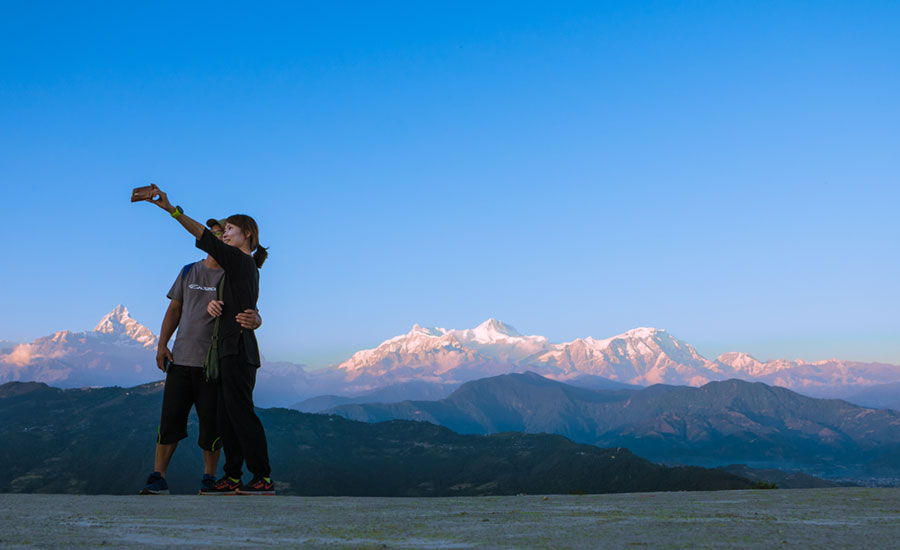
  • Photograph sunrise over the Annapurna Himalayas from Sarangkot, with spectacular views of Machhapuchhre and surrounding peaks when weather conditions are clear.
  • Capture Phewa Lake, colourful boats, mountain reflections and changing evening light in Pokhara.
  • Experience wildlife and nature photography in Chitwan National Park during a canoe excursion and jeep safari, with opportunities to photograph rhinos, crocodiles, deer, monkeys and diverse birdlife.
  • Photograph Tharu culture, village life and sunset along the Rapti River in Chitwan.
  • Travel in a small group with photography-friendly pacing, allowing more time for observation, composition and the best available natural light.
  • Suitable for beginners, photography enthusiasts and experienced photographers, with private and customized departures available.

Nepal Photography Tour Short Itinerary

DayActivityAccommodation
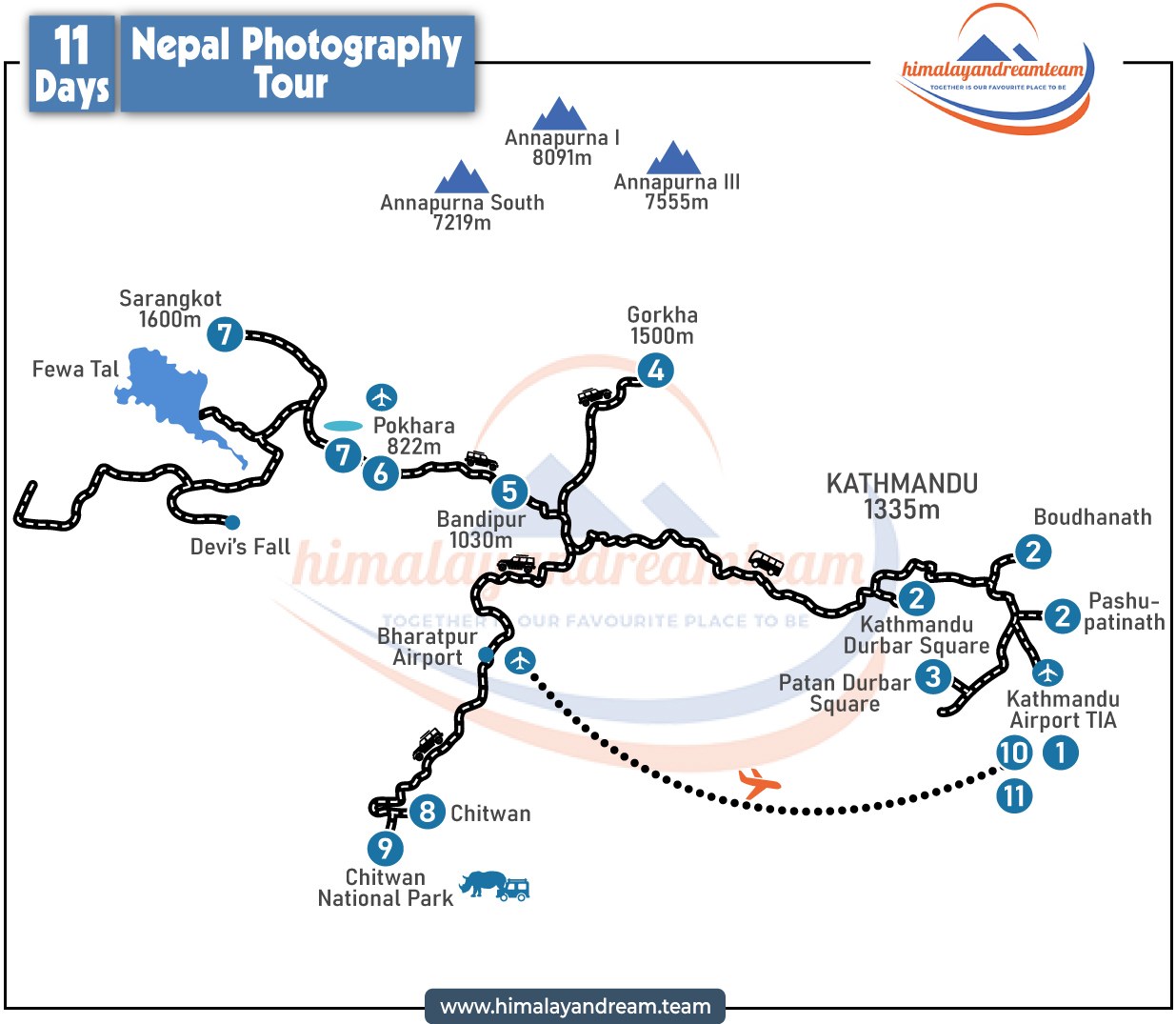
Day 1Arrival in Kathmandu, airport transfer and welcome dinnerHotel
Day 2Kathmandu photography tour – Swayambhunath, Old City, Pashupatinath and BoudhanathHotel
Day 3Patan and Bhaktapur – heritage, artisans, architecture and street photographyHotel
Day 4Drive to Gorkha – heritage, rural life and sunset photographyHotel
Day 5Drive to Bandipur – village life, Newari architecture and golden-hour photographyHotel
Day 6Bandipur morning photography, drive to Pokhara and Phewa Lake sunsetHotel
Day 7Sarangkot sunrise and Pokhara landscape, cultural and lakeside photographyHotel 
Day 8Drive to Chitwan – Tharu village photography and Rapti River sunsetJungle Resort
Day 9Chitwan wildlife photography – canoe ride, nature activities and jeep safariJungle Resort
Day 10Fly from Bharatpur to Kathmandu and free time for photographyHotel 
Day 11Final departure and transfer to Kathmandu International Airport

What Will You Photograph on This Nepal Photography Tour?

This 11-day Nepal Photography Tour offers a wide variety of photographic subjects, from Himalayan landscapes and ancient architecture to traditional communities, street life and wildlife. Each destination provides a different perspective on Nepal, allowing you to build a diverse collection of travel photographs throughout the journey.

Photography FocusWhere & What You Can Photograph
Himalayan LandscapesPhotograph the Annapurna, Machhapuchhre and surrounding Himalayan peaks from Sarangkot, Pokhara, Bandipur and Gorkha when weather conditions are clear.
Cultural PhotographyCapture temples, monasteries, religious traditions, local festivals and everyday life throughout the Kathmandu Valley and other destinations.
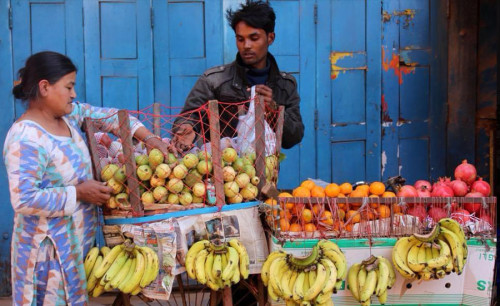
Street PhotographyExplore historic streets, traditional neighbourhoods, local markets, courtyards and daily life in Kathmandu, Patan and Bhaktapur.
Architecture & HeritagePhotograph UNESCO World Heritage Sites, Newari architecture, ancient temples, palaces, monasteries and traditional buildings.
Portrait PhotographyPhotograph local people, artisans and communities respectfully, with permission where appropriate.
Traditional CraftsCapture potters at work in Bhaktapur, skilled artisans in Patan and traditional craftsmanship encountered during the journey.
Sunrise & SunsetExperience Himalayan sunrise photography from Sarangkot, golden-hour scenes in Gorkha and Bandipur, sunset around Phewa Lake and evening light along the Rapti River.
Lake & Reflection PhotographyPhotograph Phewa Lake, colourful boats, lakeside life and Himalayan reflections when weather and water conditions are favourable.
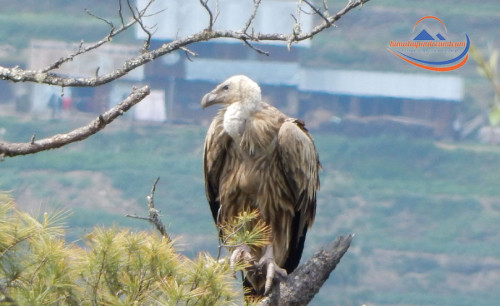
Wildlife & Bird PhotographyLook for rhinos, crocodiles, deer, monkeys, birds and other wildlife during nature activities and jeep safaris in Chitwan National Park.
Village & Rural LifeCapture traditional settlements, farmland, hill landscapes and everyday rural life around Gorkha, Bandipur and Chitwan.

Best Time for a Photography Tour in Nepal

The best time for a Nepal Photography Tour is generally from October to April, when the weather is more stable and Himalayan visibility is usually at its best. For this itinerary, October–November and March–April offer the best overall combination of mountain views, cultural photography, comfortable temperatures and wildlife experiences.

SeasonPhotography ConditionsBest For
October–NovemberGenerally clear skies, excellent mountain visibility and comfortable temperatures.Himalayan landscapes, sunrise, culture and street photography
December–FebruaryCooler weather, crisp mornings and often excellent Himalayan views.Landscapes, architecture, cultural sites and quieter travel
March–AprilPleasant spring weather, greener landscapes and good wildlife activity.Landscape, wildlife, birds, culture and nature photography
May–SeptemberGreener scenery and dramatic monsoon skies, but mountain views are less predictable.Rural life, festivals, agriculture and creative monsoon photography

For the best overall photography experience, Himalayan Dream Team recommends October–November or March–April. Private departures can also be customized around festivals, seasonal landscapes or specific photography interests.

Photography Equipment & What to Bring

You do not need professional camera equipment to join this Nepal Photography Tour. DSLR and mirrorless cameras, compact cameras and smartphones are all welcome. Bring equipment you are comfortable carrying and using throughout the journey.

EquipmentRecommendation
CameraDSLR, mirrorless, compact camera or a good-quality smartphone.
Wide-Angle LensUseful for Himalayan landscapes, temples, architecture and narrow streets.
Standard Zoom LensA versatile choice for street, cultural, portrait and general travel photography.
Telephoto LensHighly recommended for wildlife and bird photography in Chitwan National Park.
TripodA lightweight tripod is useful for sunrise, sunset, low-light and long-exposure photography.
Spare Batteries & Memory CardsCarry sufficient batteries and memory cards, especially for long photography days and wildlife safaris.
FiltersA polarizing filter can be useful for landscapes and reflections; ND filters are optional for creative long exposures.
Camera ProtectionBring a protective camera bag, lens-cleaning kit and simple rain or dust protection.

A laptop, tablet or portable storage device can also be useful for backing up photographs during the tour. Keep your equipment as light and practical as possible, as you will frequently move between photography locations.

Transportation & Domestic Flight

Transportation throughout the Nepal Photography Tour is arranged to provide comfortable travel and flexibility between photography locations. Private vehicles are used for sightseeing and overland journeys, while the return from Chitwan to Kathmandu includes a domestic flight from Bharatpur.

Route / ServiceTransportation
Kathmandu SightseeingPrivate vehicle with driver and guide
Kathmandu – GorkhaPrivate vehicle
Gorkha – BandipurPrivate vehicle
Bandipur – PokharaPrivate vehicle
Pokhara – ChitwanPrivate vehicle
Chitwan – Bharatpur AirportPrivate transfer
Bharatpur – KathmanduDomestic flight
Airport TransfersPrivate vehicle

Road travel times in Nepal can vary due to traffic, road conditions and weather. The Bharatpur–Kathmandu domestic flight is also subject to weather and operational conditions. If a flight is cancelled or significantly disrupted, alternative road transportation may be arranged when necessary.

Day to Day Itinerary

Food/Meals

Welcome Dinner

Accommodation

Hotel

Max Elevation

1,335 m

Drive Time

30-45 minutes

Upon arrival at Tribhuvan International Airport in Kathmandu, a Himalayan Dream Team representative will meet you and transfer you by private vehicle to your hotel. After check-in, you can rest after your journey or take a short walk around the surrounding streets for your first introduction to Nepal.

Depending on your arrival time, this can also be a good opportunity to become familiar with the changing light, colours and everyday street life of Kathmandu before the photography program begins.

In the evening, you will meet your guide and fellow travelers for a welcome dinner and tour briefing. We will discuss the journey ahead, photography interests, local etiquette and practical arrangements for the coming days.


Food/Meals

Breakfast

Accommodation

Hotel

Max Elevation

1,400 m

Drive Time

60-90 minutes

Activity Duration

5-6 hrs

Photography Focus: Street, architecture, portraits, spirituality and cultural life

After breakfast, we begin a full day of photography in the Kathmandu Valley, combining ancient religious sites, traditional neighbourhoods, local street life and some of the city's most atmospheric locations.

Our first stop is Swayambhunath, the ancient Buddhist stupa overlooking Kathmandu. Prayer flags, prayer wheels, shrines, pilgrims and the panoramic view across the valley provide excellent subjects for cultural, architectural and wide-angle photography. The morning light can be particularly rewarding when visibility is clear.

From Swayambhunath, we continue into old Kathmandu, where we explore traditional streets, courtyards and local market areas. Rather than rushing between monuments, we allow time to observe everyday life and look for natural street-photography moments among shops, vendors, temples and historic buildings.

Later, we drive to Pashupatinath, Nepal's most important Hindu temple complex, situated beside the sacred Bagmati River. From permitted areas, you can photograph temples, pilgrims, Sadhus and religious traditions. Photography around cremation areas and grieving families requires particular sensitivity, and your guide will advise you when and where photography is appropriate.

Our final major photography location is Boudhanath Stupa, one of Kathmandu's most atmospheric Buddhist sites. Monks, pilgrims, prayer wheels, butter lamps, monasteries and colourful prayer flags create wonderful photographic opportunities. When timing and conditions allow, we stay into the late afternoon to experience the softer light and changing atmosphere around the stupa.

After completing the day's photography, we return to the hotel by private vehicle.

Driving and activity times are approximate and may vary depending on Kathmandu traffic, photography stops and the amount of time spent at each location.

Food/Meals

Breakfast

Accommodation

Hotel

Max Elevation

1,400 m

Drive Time

1.5 - 2 hrs

Activity Duration

5-6 hrs

Photography Focus: Newari architecture, traditional crafts, street life and cultural details

After breakfast, we drive to Patan, historically known as Lalitpur and one of the great centres of Newari art and architecture in the Kathmandu Valley.

Our photography begins around Patan Durbar Square, where temples, palace courtyards, stone sculptures, carved wooden windows and traditional brick buildings provide excellent opportunities for architectural and detail photography. Rather than concentrating only on the major monuments, we also explore some of the surrounding lanes and courtyards, where everyday life unfolds among centuries-old buildings.

We visit the Golden Temple (Hiranya Varna Mahavihar) and explore traditional neighbourhoods where metalworkers and other artisans continue crafts for which Patan has long been famous. Photography inside individual monuments may be restricted, and your guide will advise you accordingly.

Later, we drive to Bhaktapur, another UNESCO World Heritage city and one of the most rewarding locations in Nepal for cultural and street photography. We explore Bhaktapur Durbar Square, old lanes, temple courtyards and traditional neighbourhoods before continuing to Pottery Square, where potters can often be seen shaping and drying clay products.

The slower pace allows time to photograph architectural details, local residents, artisans and everyday scenes rather than simply moving from one monument to another.

After completing our photography in Bhaktapur, we return to Kathmandu.

Food/Meals

Breakfast

Accommodation

Hotel

Max Elevation

1,500 m

Drive Time

4-5 hrs

Activity Duration

2-3 hrs

Photography Focus: Heritage, rural landscapes, local life and golden-hour photography

After breakfast, we leave Kathmandu and travel west by private vehicle toward Gorkha. The journey follows highways through river valleys, terraced hillsides, farming communities and small settlements. Where conditions and road safety allow, we can make occasional photography stops along the way.

Gorkha holds an important place in Nepalese history as the ancestral home of King Prithvi Narayan Shah, who began the political unification of modern Nepal in the 18th century.

After arriving and checking into the hotel, we explore the historic town and make our way toward Gorkha Durbar, the former royal palace and temple complex situated high above the surrounding valleys. Reaching the complex involves climbing a considerable number of stone steps, but the elevated location provides rewarding views over Gorkha, terraced farmland and the surrounding hills.

When the weather is clear, distant Himalayan peaks can also be visible from the area.

Late afternoon is particularly rewarding for photography as warmer light falls across the hills and countryside. After our photography session, we return to the hotel for the night.

Food/Meals

Breakfast

Accommodation

Hotel

Max Elevation

1,030 m

Drive Time

3-4 hrs

Activity Duration

2-3 hrs

Photography Focus: Newari architecture, village life, portraits and golden-hour landscapes
After breakfast, we leave Gorkha and continue by private vehicle to Bandipur, a beautifully preserved hill town overlooking the surrounding valleys.

Once an important trading centre, Bandipur still retains much of its traditional character. Its pedestrian-friendly old bazaar is lined with Newari houses featuring wooden balconies, shuttered windows and traditional façades, while temples, small squares and stone-paved lanes create an atmospheric setting for photography.

After checking into the hotel, we explore the old bazaar and surrounding neighbourhoods on foot. The slower pace of Bandipur makes it particularly suitable for street and travel photography, allowing time to observe local life, architectural details and everyday activities.

Towards late afternoon, we take advantage of the warmer golden-hour light. Depending on weather and visibility, viewpoints around Bandipur can reveal beautiful layers of foothills with Himalayan peaks in the distance.

Overnight in Bandipur.

Food/Meals

Breakfast

Accommodation

Hotel

Max Elevation

1,030 m

Drive Time

3-4 hrs

Activity Duration

2-3 hrs

Photography Focus: Morning village life, landscapes, Phewa Lake and sunset

If conditions are favourable, we begin the day with an optional early-morning photography walk in Bandipur. The quiet streets, traditional houses, local morning activity and soft light provide a different atmosphere from the previous evening. On a clear morning, distant Himalayan views may add another dimension to the landscape.

After breakfast, we leave Bandipur and drive to Pokhara, Nepal's famous lakeside city and one of the country's finest bases for Himalayan landscape photography.

After checking into the hotel and taking some time to rest, we head towards Phewa Lake in the later afternoon.

Colourful wooden boats, lakeside activity, reflections and the surrounding hills offer a variety of photographic subjects. When visibility is clear, Machhapuchhre (Fishtail) and peaks of the Annapurna range provide a spectacular Himalayan backdrop.

We remain around the lake as the afternoon light changes towards sunset before returning to the hotel.

Food/Meals

Breakfast

Accommodation

Hotel

Max Elevation

1,600 m

Drive Time

2-3 hrs

Activity Duration

4-5 hrs

Photography Focus: Himalayan sunrise, panoramas, Phewa Lake, reflections and travel photography

We make an early start and drive to Sarangkot, one of Nepal's best-known Himalayan viewpoints. We aim to arrive before sunrise, allowing enough time to prepare cameras and choose compositions before the first light reaches the mountains.

On a clear morning, the panorama can include Dhaulagiri, the Annapurna range and Machhapuchhre, with the colours changing as sunlight reaches the snow-covered peaks. The layered foothills and Pokhara Valley below also provide excellent landscape compositions.

After sunrise, we return to Pokhara for breakfast and some time to rest.

Later, we visit the World Peace Pagoda area, which provides elevated views over Pokhara, Phewa Lake and the surrounding landscape.

We then enjoy a boating excursion on Phewa Lake, giving us another perspective for photographing colourful boats, lakeside activity and reflections. When the water is calm and the mountains are clear, the lake can produce beautiful Himalayan reflections.

We finish the day's photography around the lakeside before returning to the hotel.

Food/Meals

Breakfast, Lunch & Dinner

Accommodation

Hotel

Max Elevation

822 m

Drive Time

3-4 hrs

Activity Duration

3-4 hrs

Photography Focus: Rural landscapes, Tharu culture, local life and sunset

After breakfast, we leave Pokhara and drive south towards Chitwan. During the journey, the scenery gradually changes from Himalayan foothills and river valleys to the warmer subtropical landscapes of Nepal's southern plains.

Upon arrival, we check into our jungle resort and enjoy lunch.

Later in the afternoon, accompanied by a local guide, we explore a nearby Tharu community. This provides an opportunity to learn about the traditional homes, culture and everyday life of the Tharu people, one of the indigenous communities of Nepal's Terai region.

Photography of local residents is always approached respectfully, and permission should be requested before taking close-up portraits.

Towards evening, we make our way to the Rapti River. The river, grasslands, traditional boats, birds and changing evening light can provide excellent opportunities for landscape and nature photography.

We return to the resort for dinner and overnight.

Food/Meals

Breakfast, Lunch & Dinner

Accommodation

Hotel

Max Elevation

150 m.

Activity Duration

5-6 hrs

Photography Focus: Wildlife, birds, crocodiles, river landscapes and nature

Today is dedicated to the wildlife and natural landscapes of Chitwan National Park, a UNESCO World Heritage Site and one of Nepal's most important protected areas.

Depending on local conditions and the program arranged by the resort, we begin with a canoe excursion along one of the waterways near the national park. The quiet journey provides opportunities to photograph river landscapes, waterbirds and crocodiles from a safe distance.

A guided nature walk or birdwatching activity may also be included with an experienced local naturalist, providing a closer introduction to the plants, birds and smaller wildlife of the Chitwan ecosystem.

After lunch, we head out for a jeep safari through the national park or designated forest areas. Chitwan is particularly famous for the greater one-horned rhinoceros, while deer, monkeys, wild boar and numerous species of birds may also be encountered.

The park is also home to Bengal tigers, leopards and other rare wildlife, but sightings are never guaranteed. Wildlife photography depends entirely on natural conditions, patience and luck.

A telephoto lens is particularly useful today. Throughout the activities, we maintain a safe distance from wildlife and follow the instructions of the park authorities and our nature guide.

After completing the day's activities, we return to the resort for dinner and overnight.

Food/Meals

Breakfast

Accommodation

Hotel

Max Elevation

1,335 m

Drive Time

60 minutes

Photography Focus: Independent photography, shopping or personal exploration

After breakfast, we transfer from the resort to Bharatpur Airport for our short domestic flight back to Kathmandu.

The flight provides a convenient alternative to repeating the long overland journey and, when visibility is favourable, may also offer interesting aerial views of Nepal's hills and river valleys.

Upon arrival at Kathmandu airport, a Himalayan Dream Team representative will meet you and transfer you to the hotel.

The remainder of the day is free. You may revisit a favourite photography location, explore the streets and shops around Thamel, enjoy some last-minute street photography or simply relax after the journey. Photographers may also wish to use this time to review and back up the images collected during the tour.

Domestic flights in Nepal are subject to weather and operational conditions. If the Bharatpur–Kathmandu flight is cancelled or significantly disrupted, alternative road transportation may be arranged when necessary.

Food/Meals

Breakfast

Max Elevation

1,335 m

Drive Time

30-45 minutes

Your 11-day Nepal Photography Tour comes to an end today. After breakfast at the hotel, you will have some free time depending on the departure time of your international flight.

At the appropriate time, a Himalayan Dream Team representative will meet you at the hotel and transfer you by private vehicle to Tribhuvan International Airport for your onward journey. We normally arrange the transfer with sufficient time for international check-in while taking Kathmandu traffic conditions into consideration.

If your flight departs later in the day, you can leave your luggage at the hotel and enjoy some additional time for last-minute photography, shopping or sightseeing before your airport transfer.

For travellers who would like to extend their stay, Himalayan Dream Team can also arrange additional photography experiences in other Himalayan regions, cultural destinations and national parks, or customize a journey around one of Nepal's colourful festivals.

Services Included on Price

Service Includes

  • Airport pickup and drop-off for all scheduled international and domestic flights
  • Welcome dinner in Kathmandu on the first evening
  • 10 nights' accommodation in comfortable hotels and a jungle resort, including breakfast
  • Private vehicle for all airport transfers, sightseeing and overland journeys as mentioned in the itinerary
  • Experienced English-speaking cultural tour guide throughout the scheduled sightseeing and photography tour
  • All required monument and heritage-site entrance fees included in the itinerary
  • Bharatpur–Kathmandu domestic flight, including applicable airport taxes
  • Breakfast, lunch and dinner in Chitwan as specified in the itinerary
  • All scheduled Chitwan National Park activities, including canoe excursion, nature activities and jeep safari
  • Chitwan National Park entrance fees and experienced local nature guide
  • All applicable government taxes and service charges

Service Excludes

  • International airfare to and from Nepal
  • Nepal entry visa fee; travelers are responsible for obtaining the appropriate visa
  • Lunch and dinner in Kathmandu, Gorkha, Bandipur and Pokhara, except the welcome dinner in Kathmandu
  • Travel insurance covering medical treatment, trip interruption and emergency evacuation
  • Personal expenses such as laundry, telephone calls, beverages, room service and other services of a personal nature
  • Additional accommodation, transportation or other expenses resulting from flight delays, cancellations, weather, road conditions or circumstances beyond our control
  • Optional photography equipment, camera rental or professional photography services unless specifically included
  • Tips and gratuities for guides, drivers and other local staff
  • Any services, activities or expenses not specifically mentioned under “Service Includes”

Altitude Graph

Frequently Asked Questions for Nepal Photography Tour

A Nepal Photography Tour is a journey designed around photographing the country's Himalayan landscapes, historic cities, traditional communities, religious sites, wildlife and everyday life. Unlike a standard sightseeing tour, this 11-day itinerary allows additional time at selected locations for photography and considers sunrise, sunset, viewpoints and available natural light whenever possible.

Yes. This Photography Tour in Nepal is suitable for beginners, photography enthusiasts and experienced photographers. You do not need professional photography experience to participate. The tour is equally suitable for travelers who simply enjoy taking high-quality travel photographs.

No. You can join with a DSLR, mirrorless camera, compact camera or smartphone. The most important thing is to bring equipment you are comfortable using. Travelers interested in wildlife photography in Chitwan may benefit from bringing a camera with a telephoto lens.

The standard tour includes an experienced local guide with strong knowledge of the destinations, culture and itinerary. A professional photography instructor is not automatically included unless specifically stated in your booking.

For individuals or private groups wanting more specialized photographic guidance, Himalayan Dream Team can arrange a professional Nepalese photographer or photography mentor on request, subject to availability and additional cost.

This tour combines several styles of travel photography in Nepal, including Himalayan landscape photography, cultural photography, street photography, architecture, portraits, village life, sunrise and sunset photography, wildlife and bird photography.

Kathmandu, Patan and Bhaktapur are particularly rewarding for street, heritage and cultural photography; Gorkha and Bandipur for rural life and landscapes; Pokhara for Himalayan scenery; and Chitwan for wildlife and nature photography.

Some of the main photography locations include Swayambhunath, Pashupatinath, Boudhanath, Patan, Bhaktapur, Gorkha, Bandipur, Sarangkot, Phewa Lake and Chitwan National Park.

Together, these destinations provide a diverse photographic journey through Nepal's mountains, culture, architecture, people, villages and wildlife.

The best overall periods for a Nepal Photography Tour are generally October–November and March–April. These months usually provide a good combination of Himalayan visibility, comfortable temperatures, cultural experiences and photography conditions.

December to February can also offer crisp mountain views, while the monsoon months provide greener landscapes, dramatic skies and interesting rural scenes but less predictable Himalayan visibility.

Mount Everest is not normally visible on this itinerary, as the tour focuses on Kathmandu Valley, Gorkha, Bandipur, Pokhara and Chitwan.

If photographing or seeing Everest is important to you, Himalayan Dream Team can arrange an optional scenic mountain flight from Kathmandu, subject to weather and flight operations.

When visibility is clear, the Pokhara region offers spectacular views of the Annapurna range, Machhapuchhre (Fishtail), Dhaulagiri and surrounding Himalayan peaks.

Sarangkot is particularly famous for sunrise photography, while Phewa Lake can offer beautiful mountain reflections when the sky is clear and the water is calm.

There is no single lens required. A wide-angle lens is useful for landscapes, architecture and temples, while a standard zoom is practical for street, cultural and general travel photography.

For Chitwan wildlife photography, a telephoto lens is strongly recommended because animals should be photographed from a safe and respectful distance.

A tripod is not essential, but a lightweight travel tripod can be useful for sunrise, sunset, low-light photography and long exposures. If you prefer traveling light, modern cameras and smartphones can handle many situations without one.

Yes, but photography should always be respectful. For close-up portraits, it is good practice to ask permission before taking photographs, particularly in villages, religious areas and private settings.

Your local guide can help with communication and advice when photography may be inappropriate.

Photography is possible from many public and permitted areas of Pashupatinath, but this is an active Hindu religious and cremation site rather than simply a tourist attraction.

Particular sensitivity is required around funeral ceremonies, cremations and grieving families. Visitors should follow local rules and the guidance of their guide and should never intrude on private moments for the sake of a photograph.

Drone use in Nepal is regulated, and permissions may be required depending on the location, purpose and type of flight. Additional restrictions apply around airports, national parks, heritage sites, military or sensitive areas and other controlled locations.

Do not assume that a drone can be flown simply because you have brought one to Nepal. If drone photography is important to your trip, contact Himalayan Dream Team before traveling so the current requirements can be checked.

Chitwan National Park provides opportunities to photograph greater one-horned rhinoceroses, deer, monkeys, crocodiles, wild boar and a wide variety of birds.

The park is also home to Bengal tigers, leopards and other wildlife, but sightings of any particular species cannot be guaranteed. Wildlife encounters depend on natural conditions, season, location and luck.

Yes, particularly for travelers who want to combine wildlife photography in Nepal with Himalayan landscapes, culture and street photography. Chitwan adds a completely different photographic environment to the journey.

However, photographers whose main purpose is specialized wildlife photography may prefer a customized itinerary with additional nights and safari activities in Chitwan or another suitable national park.

Yes. This Nepal Photography Tour can be arranged privately and customized according to your photographic interests. Extra sunrise or sunset sessions, additional nights, specific cultural subjects, wildlife photography days or less-touristic locations can be incorporated where practical.

A customized itinerary is particularly useful for professional photographers, photography clubs and travelers working on specific photographic projects.

Yes. Nepal's festivals can provide exceptional opportunities for cultural and documentary photography. Depending on your travel dates, the itinerary may be customized around celebrations such as Tihar, Holi, Indra Jatra, Buddha Jayanti or other local festivals.

Festival dates vary according to Nepalese and lunar calendars, so the itinerary should be planned around confirmed dates whenever possible.

Yes. Himalayan Dream Team can organize the 11-day Nepal Photography Tour as a private journey for solo travelers, couples, families, friends and photography groups.

A private tour provides greater flexibility with photography stops, pacing and the amount of time spent at particular locations.

No. This is an easy and comfortable photography holiday in Nepal rather than a trekking expedition. Most activities involve sightseeing, photography walks, short climbs, vehicle transfers and wildlife activities.

There are steps and uneven surfaces at some heritage sites and viewpoints, particularly around Swayambhunath and Gorkha Durbar, but no high-altitude trekking is involved.

Client Reviews

Book Now Inquiry

Similar Packages

Enjoy the popular trekking and tour packages in Nepal Himalayas. 2026.