
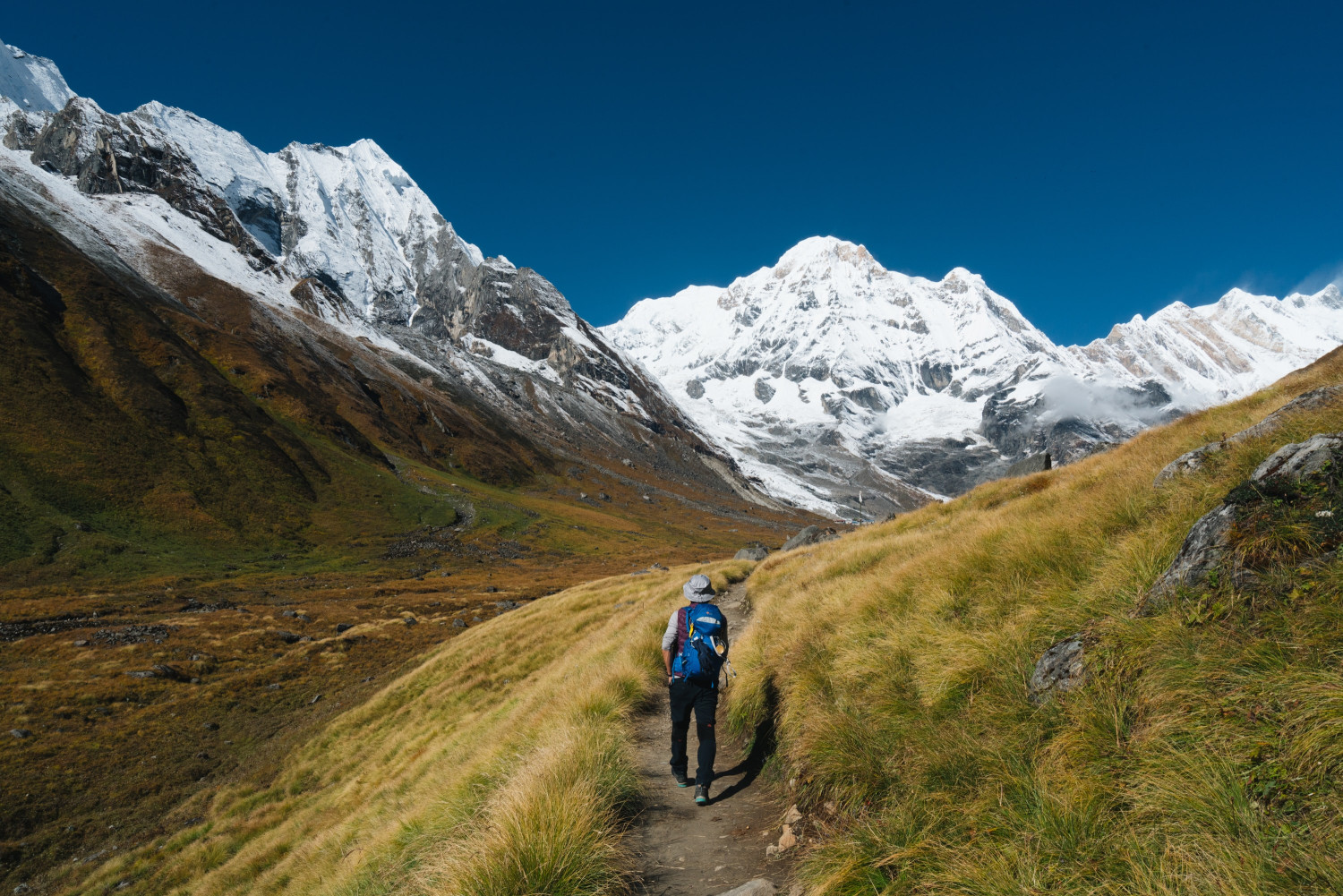
The Annapurna Base Camp Short Trek – 5 Days is a thrilling high-altitude adventure through the heart of Nepal's Annapurna region. Starting from the scenic lakeside city of Pokhara, this trek is a condensed version of the classic Annapurna Base Camp route, crafted for those with limited time but a strong desire to experience the majestic Himalayas. With towering peaks, terraced farmlands, dense rhododendron forests, and rich Gurung culture, the trail delivers an unforgettable journey.
This short trek kicks off with a drive to Jhinu Danda, followed by a scenic hike toward Chhomrong—a picturesque Gurung village. From there, you ascend through Bamboo, Deurali, and MBC (Machapuchare Base Camp) before finally reaching the awe-inspiring Annapurna Base Camp (4,130m). Surrounded by snow-capped giants like Annapurna I, Hiunchuli, and Machapuchare, the view from ABC is nothing short of surreal. The trek concludes with a descent back to Jhinu Danda, where trekkers can unwind in natural hot springs before returning to Pokhara.
Whether you're short on time or looking for a more intense trekking challenge, this five-day route offers a perfect balance of adventure, nature, and culture in the Himalayas.
Wondering how difficult is the Annapurna Base Camp Short Trek for first-time trekkers? Despite being short in duration, this trek is rated moderate to challenging due to rapid altitude gain and daily hiking of 6–8 hours. The trail includes steep ascents, stone steps, and occasional snow crossings during colder months.
Acclimatization is crucial, and though the itinerary is fast-paced, proper hydration, slow pace, and rest stops can help minimize risks. Use these best acclimatization strategies for high-altitude trekking: drink 3+ liters of water per day, avoid alcohol, and recognize early symptoms of altitude sickness such as headaches or nausea.
This trek is ideal for fit beginners, seasoned hikers, solo travelers, and those with tight schedules. While it’s not beginner-easy, it is doable for first-time trekkers with moderate fitness levels and a sense of adventure.
Photographers will love the panoramic sunrise scenes, while culture lovers will enjoy the homestays and traditional tea houses on the Annapurna Base Camp Short Trek. It’s also suitable for groups and couples, though families with young children may find the pace a bit intense.
Day 1: Drive Pokhara to Jhinu Danda, trek to Chhomrong (2,170m)
Day 2: Chhomrong to Himalaya (2,920m)
Day 3: Himalaya to Annapurna Base Camp (4,130m) via MBC
Day 4: ABC to Bamboo
Day 5: Bamboo to Jhinu Danda, drive to Pokhara
After breakfast, drive for 2.5 hours from Pokhara to Jhinu Danda, the trailhead. Begin your ascent through stone steps and terraced hillsides. Reach Chhomrong, a beautiful Gurung village with stunning views of Annapurna South and Machapuchare.
Descend the stone stairs to the river and climb uphill through Sinuwa and Bamboo. The trail winds through lush forests filled with bamboo and rhododendron. Overnight at Himalaya after 6-7 hours of trekking.
Ascend past Deurali and Machapuchare Base Camp (MBC) with increasingly dramatic mountain views. Reach ABC by afternoon and witness one of the most beautiful Himalayan amphitheaters as the sun sets.
Wake up early for sunrise over Annapurna. After breakfast, begin your descent past MBC and Deurali to Bamboo. The return trek is easier but long, taking 6–7 hours.
Descend to Jhinu Danda, where you can soak in the natural hot springs beside the Modi River. After lunch, drive back to Pokhara to conclude the trek.
The best time to do Annapurna Base Camp Short Trek for beginners is during spring (March–May) and autumn (September–November). Clear skies, blooming rhododendrons, and moderate temperatures make it perfect. Winter (December–February) is also scenic but colder, while monsoon (June–August) brings rain and leeches.
What to pack for Annapurna Base Camp Short Trek in different seasons:
Spring/Autumn: Lightweight jacket, trekking boots, layers, sunscreen
Winter: Down jacket, thermal layers, gloves, crampons
Essentials: Rain cover
, trekking poles, headlamp, reusable water bottleYou’ll stay in tea houses and lodges on the Annapurna Base Camp Short Trek, offering basic comfort with shared rooms and local food like dal bhat, noodles, and tea. While not luxurious, they provide a warm cultural experience.
What permits are required for the Annapurna Base Camp Short Trek and where to get them?
TIMS Card (Tourism Information Management System)
ACAP Permit (Annapurna Conservation Area Project)
Both are available in Pokhara or Kathmandu. Always carry your passport and 2 passport-sized photos.
Here’s the cost breakdown of Annapurna Base Camp Short Trek with permits and guides:
| Expense | Cost (USD) |
|---|---|
| TIMS Card | $20 |
| ACAP Permit | $30 |
| Guide (5 days) | $150 |
| Porter (optional) | $100 |
| Accommodation (4 nights) | $60 |
| Meals & Drinks | $80 |
| Transport (Pokhara–Jhinu–Return) | $50 |
| Miscellaneous | $40 |
| Total Estimated Cost | $530–600 |
Spring and autumn are the best seasons for beginners. You’ll enjoy clear weather, moderate temperatures, and safe trails.
It’s moderately difficult due to rapid altitude gain, but beginners with good fitness and preparation can complete it.
The trek starts at Jhinu, goes via Chhomrong, Himalaya, MBC, ABC, and returns to Pokhara in 5 days.
Expect to spend around $530–600, including permits, guide, accommodation, meals, and transport.
Pack warm layers, a down jacket in winter, rain gear in monsoon, and hiking essentials year-round.
Acclimatize properly, stay hydrated, avoid alcohol, and descend if symptoms worsen.
Yes, the route has cozy tea houses offering meals, beds, and stunning views.
Start 4–6 weeks ahead. Focus on cardio, stair climbing, and leg strength for endurance.
You need TIMS and ACAP permits, available in Kathmandu or Pokhara.
Interacting with the Gurung people, exploring local villages, and staying in traditional lodges enrich your experience.
Climb slowly, drink lots of water, and take rest days if needed. Diamox may help if prescribed.
Essentials: down jacket, trekking boots, water purifier, fleece, trekking poles, headlamp, rain cover.
Yes, try Khopra Danda Trek or Mardi Himal Trek for a quieter experience.
Total costs range from $530–$600, including hidden costs like showers, charging, and tips.
Solo trekking offers flexibility, but groups provide safety and shared costs for guides/porters.
No reviews yet. Traveled with us on this trip? Be the first to share your experience.
© 2011 - 2026 All rights reserved. Himalayan Dream Team