

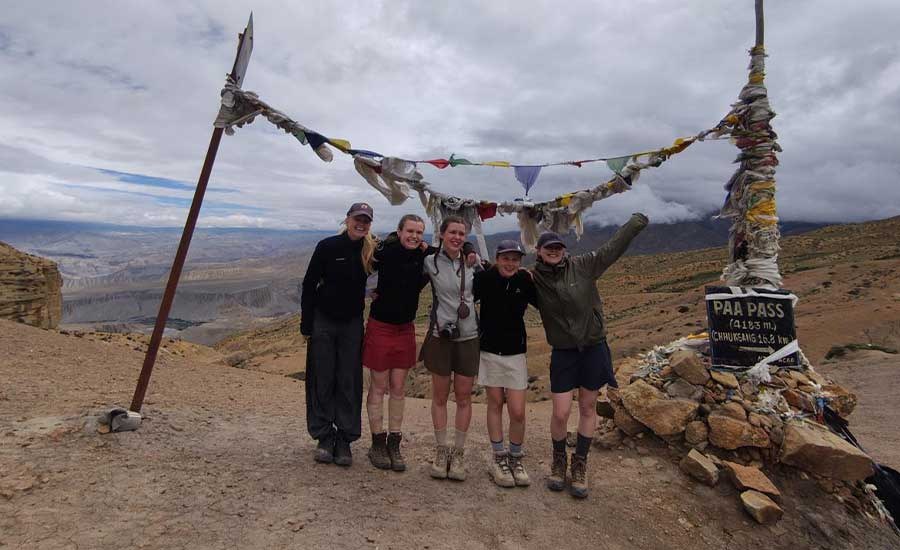
Looking for the best family treks in Nepal? Nepal is a wonderful destination for parents, children, teenagers and grandparents who want to enjoy the Himalayas together. You do not need to climb Mount Everest or complete a difficult high-altitude expedition to experience beautiful mountains, traditional villages, peaceful forests and Nepalese hospitality.
Some of Nepal's most rewarding family trekking routes are found in the Annapurna foothills, Kathmandu Valley and lower Everest region. These trails offer opportunities to walk through rhododendron forests, visit traditional mountain villages, enjoy Himalayan sunrise views and discover local culture at a comfortable pace.
However, not every trek in Nepal is suitable for every family. The right choice depends on the youngest child's age, previous hiking experience, physical fitness, altitude, daily walking hours and available holiday time.
At Himalayan Dream Team Treks & Tours, we help families choose trekking holidays that match their interests and abilities. Our Nepal-based team can arrange private family treks with experienced local guides, flexible walking schedules, suitable accommodation and time to enjoy the journey without unnecessary pressure.
In this complete family trekking guide for Nepal in 2027, we compare easy family hikes, classic Himalayan treks and more adventurous routes for experienced teenagers. You will also find practical information about altitude, trekking seasons, accommodation, meals, packing, permits, costs and traveling safely with children.
What Are the Best Family Treks in Nepal?
For most families planning their first Himalayan trekking holiday, the best choices are Ghandruk, Australian Camp, Dhampus and Ghorepani Poon Hill. These routes provide excellent mountain scenery without requiring an extended expedition.
Families with older children and previous hiking experience may consider Everest View, Mardi Himal, Khopra Ridge or Annapurna Base Camp, provided the itinerary includes suitable acclimatization and realistic walking days.
Our top recommendation for an active family's first multi-day Himalayan trek is the Ghorepani Poon Hill Trek, which combines sunrise views, Gurung and Magar villages, forests and comfortable teahouse accommodation.
Best Family Treks in Nepal – Quick Comparison
| Family Trek | Typical Walking Days | Highest Point | Family Suitability |
|---|---|---|---|
| Dhampus and Australian Camp | 1–3 days | Approx. 2,060 m | Excellent for younger children and beginners |
| Ghandruk Village Trek | 2–4 days | Approx. 1,940–2,010 m | Excellent for families wanting culture and mountain views |
| Kathmandu Valley Foothill Hikes | 1–4 days | Generally below 2,500 m | Excellent for easy family walking |
| Ghorepani Poon Hill Trek | 4–6 days | 3,210 m | Very good for active families |
| Everest View Trek | 5–7 days | Approx. 3,860–3,880 m | Older children and experienced families |
| Mardi Himal Trek | 5–7 days | 4,200 m viewpoint; optional 4,500 m base camp | Fit teenagers and experienced families |
| Khopra Ridge Trek | 7–10 days | 3,660 m ridge; optional 4,660 m lake | Experienced families with older teenagers |
| Annapurna Base Camp Trek | 7–11 days | 4,130 m | Experienced families with fit teenagers |
Important: The walking-day ranges above describe possible trekking sections, not necessarily the total duration of Himalayan Dream Team's published Kathmandu-to-Kathmandu packages. Family itineraries can be longer to include sightseeing, transportation, acclimatization and rest days.
The age and suitability descriptions in this guide are planning recommendations, not guarantees or official medical age limits. Every family should consider the child's health, hiking experience, ability to communicate symptoms and advice from a qualified healthcare professional.
1. Ghorepani Poon Hill Trek – Best Overall Family Trek in Nepal
Region: Annapurna
Highest point: Poon Hill, 3,210 m
Typical trekking duration: 4–6 days
Himalayan Dream Team package: 11 days
Difficulty: Easy to moderate, with steep stone steps
Best for: Active families and first-time Himalayan trekkers
The Ghorepani Poon Hill Trek is one of the best choices for families who want beautiful Himalayan scenery, traditional villages and a genuine trekking experience without spending several weeks in the mountains.
The route begins in the Annapurna foothills near Pokhara and passes through terraced farmland, forests and villages inhabited by Gurung and Magar communities.
One of the most memorable moments is the early-morning walk to Poon Hill (3,210 m). On a clear morning, families can watch the sunrise illuminate Annapurna South, Dhaulagiri, Machhapuchhre and other Himalayan peaks.
Why Families Love Poon Hill
- Beautiful sunrise views over the Annapurna and Dhaulagiri ranges.
- Traditional villages, including Ghorepani and Ghandruk.
- Comfortable teahouses along established trekking trails.
- Rhododendron forests, especially beautiful during spring.
- Opportunities to learn about Gurung and Magar culture.
- A flexible route that can be adapted to different walking abilities.
What Should Parents Know?
Although Poon Hill is often described as an easy trek, the route includes steep climbs and many stone steps, particularly around Ulleri. Younger children may find these sections tiring.
Ghorepani is approximately 2,860–2,875 m above sea level, while the sunrise viewpoint reaches 3,210 m. Altitude symptoms are possible even on this relatively short trek.
Families should allow plenty of time for rest, avoid rushing uphill and remember that the sunrise hike is optional. Children who are tired or unwell can remain at the lodge with an appropriate supervising adult.
Explore our complete 11-Day Ghorepani Poon Hill Trek.
2. Ghandruk Village Trek – Best Family Trek for Culture and Mountain Views
Region: Annapurna foothills
Highest main village: Approximately 1,940–2,010 m
Typical duration: 2–4 trekking days
Difficulty: Easy to moderate, depending on the approach
Best for: Families with younger children and grandparents
Ghandruk is one of the most beautiful traditional Gurung villages in Nepal. Located in the Annapurna foothills, the village offers impressive views of Annapurna South, Hiunchuli and Machhapuchhre on clear days.
A family trek to Ghandruk is particularly rewarding because the experience is not only about walking. Children can discover traditional village houses, terraced fields, local farming and the everyday lifestyle of mountain communities.
The trekking route can be arranged with shorter walking stages and suitable road transfers, depending on current road access and trail conditions.
Family Highlights in Ghandruk
- Discover a traditional Gurung mountain village.
- Enjoy beautiful Annapurna mountain views.
- Walk through terraced farmland and rural settlements.
- Learn about local culture, traditions and village life.
- Stay in a mountain lodge and enjoy local Nepali meals.
- Combine the visit with Pokhara sightseeing.
Ghandruk is an excellent choice for families who want a short Himalayan holiday without committing to higher-altitude trekking.
Himalayan Dream Team can arrange a private Ghandruk family itinerary or include Ghandruk as part of the Ghorepani Poon Hill Trek.
3. Dhampus and Australian Camp Trek – Best Easy Trek for Young Children
Region: Annapurna foothills near Pokhara
Highest point: Australian Camp, approximately 2,060 m
Typical duration: 1–3 trekking days
Difficulty: Easy to moderate, with some uphill sections
Best for: Families wanting their first short mountain hike
The Dhampus and Australian Camp route is one of the most enjoyable short trekking experiences near Pokhara.
The trail passes through forest, hillside villages and scenic viewpoints with beautiful views towards Machhapuchhre, Annapurna South and the surrounding mountains.
Australian Camp is especially popular for its peaceful surroundings and wide Himalayan panorama. Families can enjoy the mountain atmosphere without trekking to the higher elevations of Annapurna Base Camp or Mardi Himal Viewpoint.
Why This Trek Is Good for Families
- Short trekking duration with flexible walking hours.
- Easy access from Pokhara.
- Beautiful mountain views without very high altitude.
- Forest walks and traditional villages.
- Suitable for a first overnight trekking experience.
- Can be combined with sightseeing and relaxation in Pokhara.
The route is not completely flat, and some sections have stone steps or uneven paths. Families with toddlers should consider whether a suitable child carrier and experienced adult support are available.
Australian Camp and Dhampus are also part of the lower cultural route featured in our 11-Day Mardi Himal Trek. For younger children, we recommend arranging only the lower-altitude section rather than attempting the complete Mardi Himal trek.
4. Kathmandu Valley Foothill Hikes – Best Family Walking Holiday Near Kathmandu
Region: Kathmandu Valley and surrounding hills
Typical duration: Half-day hikes to 4-day walking holidays
Difficulty: Easy to moderate
Best for: Young children, beginners and multigenerational families
Families do not need to travel far from Kathmandu to enjoy peaceful nature walks, traditional villages and beautiful Himalayan views.
The hills surrounding Kathmandu offer walking routes through forests, farmland, village paths and scenic ridges. Depending on the itinerary, families can explore areas around Nagarkot, Changu Narayan, Dhulikhel, Namobuddha and other countryside destinations.
These walking holidays are especially suitable for families who want to combine gentle hiking with Nepal's cultural heritage.
Popular Family Hiking Experiences
- Nagarkot: Sunrise and mountain views on clear mornings.
- Changu Narayan: Historic temples, village paths and cultural heritage.
- Dhulikhel: Traditional settlements and countryside scenery.
- Namobuddha: Peaceful Buddhist surroundings and rural walking trails.
- Shivapuri foothills: Forest walks and nature experiences on suitable trails.
Families can stay in comfortable hotels and use private transport between selected walking routes, avoiding the need for a continuous high-altitude trek.
This is also an excellent option for grandparents traveling with children or families who prefer shorter activity days.
5. Everest View Trek – Best Family Trek to See Mount Everest
Region: Everest / Khumbu
Himalayan Dream Team duration: 7 days
Namche Bazaar: Approximately 3,440 m
Everest View Hotel area: Approximately 3,880 m
Difficulty: Moderate
Best for: Fit older children and experienced family hikers
For families dreaming of seeing Mount Everest, the Everest View Trek offers an exciting alternative to the much longer Everest Base Camp Trek.
The journey begins with a flight to Lukla, followed by trekking through the Dudh Koshi Valley, traditional Sherpa settlements and suspension bridges towards Namche Bazaar.
On clear days, trekkers can enjoy views of Mount Everest, Lhotse, Ama Dablam and other famous Himalayan peaks.
Our seven-day itinerary includes Phakding, Namche Bazaar, an acclimatization day, Tengboche and the return to Lukla.
Family Highlights
- Experience the famous Everest region.
- Walk through traditional Sherpa villages.
- Cross suspension bridges over the Dudh Koshi River.
- Visit Namche Bazaar and its mountain viewpoints.
- Explore Buddhist monasteries, including Tengboche.
- Enjoy views of Everest and Ama Dablam when the weather is clear.
Important Considerations for Families
The Everest View Trek should not be described as a low-altitude family trek. Flying directly to Lukla brings travelers to approximately 2,860 m, and the route climbs to Namche Bazaar at 3,440 m.
The trek includes steep ascents and several long walking days. Children are susceptible to altitude sickness, and the itinerary may need extra acclimatization time.
Families must also consider Lukla flight delays. During busy trekking seasons, flights may operate from Manthali Airport, requiring a lengthy road transfer from Kathmandu.
We recommend adding spare days before international departure and discussing the child's altitude suitability with a qualified healthcare professional.
Explore our 7-Day Everest View Trek.
6. Mardi Himal Trek – Best for Active Families with Teenagers
Region: Annapurna
Himalayan Dream Team duration: 11 days
Highest overnight stay: High Camp, approximately 3,550 m
Main viewpoint: Approximately 4,200 m
Optional base camp: Approximately 4,500 m
Difficulty: Moderate, with challenging higher sections
Best for: Fit teenagers with previous hiking experience
The Mardi Himal Trek is a beautiful Himalayan adventure featuring forest trails, dramatic ridges and spectacular close-up views of Machhapuchhre, Annapurna South and Hiunchuli.
Our 11-Day Mardi Himal Trek also includes cultural experiences in Lwang Village and Dhampus, making the journey more varied than a simple high-ridge trek.
Families begin in the Annapurna foothills and gradually ascend through forest towards Low Camp and High Camp. The higher route leads towards Mardi Himal Viewpoint, with the possibility of continuing towards Base Camp when conditions permit.
Why Teenagers May Enjoy Mardi Himal
- Adventure through changing forest and alpine landscapes.
- Spectacular views of Machhapuchhre and Annapurna South.
- Quieter trails compared with some classic Annapurna routes.
- Traditional Gurung villages and cultural experiences.
- A challenging mountain objective for experienced young hikers.
Is Mardi Himal Suitable for Younger Children?
The complete high-altitude trek is generally not our first recommendation for younger children. The ascent towards High Camp is steep, the ridge is exposed in places, and the route reaches elevations where altitude illness is a concern.
Families with younger children can instead choose the lower Mardi Himal foothill section around Australian Camp, Pothana, Dhampus or nearby villages.
For experienced families with older teenagers, the full route may be considered after reviewing fitness, acclimatization, weather and trail conditions.
The optional 4,500 m base camp excursion is not a necessary part of a family trekking holiday.
7. Khopra Danda Trek – Best Quiet Himalayan Trek for Experienced Families
Region: Annapurna
Himalayan Dream Team duration: 14 days
Khopra Danda: Approximately 3,660 m
Muldai Viewpoint: Approximately 3,637 m
Optional Khayer Lake: Approximately 4,660 m
Difficulty: Moderate, with demanding optional excursions
Best for: Experienced families with fit older teenagers
The Khopra Danda Trek is a wonderful choice for families who prefer quieter trails and traditional villages rather than the busiest trekking routes.
Our 14-day journey combines Ghandruk, Tadapani, Dobato, Muldai Viewpoint, Khopra Danda, Swanta Village, Ghorepani and Poon Hill.
Along the way, trekkers enjoy panoramic views of Dhaulagiri, Annapurna South, Nilgiri, Hiunchuli and Machhapuchhre.
Highlights of the Khopra Ridge Trek
- Beautiful sunrise views from Muldai Viewpoint.
- Mountain panoramas from Khopra Danda.
- Traditional Gurung and Magar villages.
- Quieter trails and peaceful forest scenery.
- Optional Khayer Lake excursion for experienced trekkers.
- Classic Poon Hill sunrise during the return journey.
Important Family Advice
Although the Khopra Ridge route can be customized, it should not be treated as an easy trek for young children.
The high sections involve significant altitude, remote accommodation and long walking days. The optional Khayer Lake excursion reaches approximately 4,660 m and is a demanding hike that may be unsuitable for many families.
Families with younger children may prefer a shortened route focusing on Ghandruk, Tadapani or Ghorepani rather than the full high-altitude itinerary.
Explore our 14-Day Khopra Danda Trek.
8. Annapurna Base Camp Trek – Best for Experienced Families with Older Teenagers
Region: Annapurna Sanctuary
Himalayan Dream Team duration: 14 days
Highest point and overnight stay: Annapurna Base Camp, 4,130 m
Difficulty: Moderate to challenging
Best for: Experienced families with fit older teenagers
The Annapurna Base Camp Trek is one of Nepal's most famous Himalayan journeys. It takes trekkers into the spectacular Annapurna Sanctuary, surrounded by some of the most impressive mountains in the country.
Our 14-day itinerary combines the classic Ghorepani Poon Hill route with the journey through Chhomrong, Bamboo, Dovan, Himalaya and Machhapuchhre Base Camp before reaching Annapurna Base Camp.
The mountain scenery is extraordinary, with close views of Annapurna I, Annapurna South, Hiunchuli, Gangapurna and Machhapuchhre.
Why Experienced Families Choose Annapurna Base Camp
- Walk into the beautiful Annapurna Sanctuary.
- Enjoy close views of Annapurna I (8,091 m).
- Experience traditional mountain villages and forests.
- Visit Poon Hill for a sunrise panorama.
- Stay at Annapurna Base Camp, surrounded by Himalayan peaks.
Is Annapurna Base Camp Suitable for Children?
Annapurna Base Camp is not an easy family trek. The route includes repeated steep ascents and descents, long walking days and an overnight stay at 4,130 m.
There are also seasonal avalanche and snow hazards on sections of the approach to the Sanctuary.
We generally recommend this route only for experienced family hikers with fit older teenagers, after appropriate medical advice and careful itinerary planning.
Families wanting a gentler Annapurna experience should consider Ghorepani Poon Hill or Ghandruk instead.
Explore our 14-Day Annapurna Base Camp Trek.
Which Family Trek in Nepal Is Best for Your Children's Age?
Age alone does not determine whether a child is ready for trekking. Previous hiking experience, stamina, interest in walking, health, altitude exposure and the ability to explain symptoms are equally important.
The following table offers conservative planning suggestions rather than fixed minimum ages.
| Family Group | Recommended Trekking Style | Suggested Destinations |
|---|---|---|
| Families with toddlers | Short low-altitude walks, suitable transport and frequent breaks | Kathmandu Valley countryside and accessible Pokhara foothills |
| Children around 5–7 | Short walks and village stays, according to individual ability | Dhampus, Australian Camp and Ghandruk |
| Children around 8–11 | Gradual multi-day hikes with flexible walking hours | Ghandruk and selected Poon Hill itineraries |
| Young teenagers around 12–14 | Longer treks with careful altitude planning | Poon Hill and selected higher routes after individual assessment |
| Older teenagers around 15–17 | Moderate to challenging trekking if experienced and medically suitable | Everest View, Mardi Himal, Khopra Ridge or Annapurna Base Camp |
| Families with grandparents | Comfortable village walks and flexible hotel-based hiking | Kathmandu Valley, Dhampus, Ghandruk and selected Poon Hill routes |
For infants and very young children, remote high-altitude trekking deserves particular caution. A shorter, lower-altitude family holiday is generally the more practical choice.
Best Time for Family Trekking in Nepal
The best months for most family treks in Nepal are March, April, October and November. These months generally offer pleasant walking conditions and good opportunities for Himalayan views.
Lower-altitude routes can also be enjoyable during selected winter months, while higher treks require more caution because of cold weather and snow.
Family Trekking in Nepal – Month-by-Month Guide
| Month | Typical Conditions | Family Trekking Advice |
|---|---|---|
| January | Cold mornings, clearer winter skies at times, snow possible at higher elevations | Choose lower-altitude village walks |
| February | Cool weather with improving spring conditions towards the end | Good for selected lower routes |
| March | Spring begins, warmer days and flowering forests | Excellent for many family treks |
| April | Comfortable trekking conditions and rhododendron blossoms | One of the best family trekking months |
| May | Warmer weather, increasing afternoon clouds and showers | Good, particularly early in the month |
| June | Monsoon begins; wetter trails and increasing cloud cover | Prefer flexible low-altitude activities |
| July | Heavy rainfall, slippery trails and possible landslides | Generally avoid longer family treks |
| August | Continued monsoon rainfall and reduced mountain visibility | Choose flexible cultural holidays |
| September | Rain gradually decreases, especially later in the month | Late September can be rewarding |
| October | Often clear skies and favorable trekking weather | Excellent family trekking month |
| November | Often clear mountain views, cooler mornings and evenings | Excellent, especially early November |
| December | Cold nights and increasing snow risk at higher elevations | Good for selected lower-altitude walks |
Weather conditions vary by altitude, region and year. Even during the main trekking season, families should prepare for rain, snow, cold temperatures and possible transportation delays.
How Many Hours Should Children Walk Each Day?
For a successful family trekking holiday, daily walking hours should be planned around the youngest or least experienced member of the group.
As a general planning approach, families with younger children may prefer walking days of approximately 2–4 hours, while active older children and teenagers may be comfortable with 4–6 hours or more depending on the terrain.
These are not fixed limits. A steep four-hour mountain walk can be more demanding than a longer walk on gentle terrain.
Families should allow extra time for snacks, photographs, nature observation, village visits and rest breaks.
Himalayan Dream Team can adjust daily walking stages where the trail and accommodation options allow.
Altitude Sickness and Family Trekking in Nepal
Altitude is one of the most important considerations when trekking in Nepal with children.
Children can develop acute mountain sickness just as adults can. Younger children may have difficulty explaining symptoms such as headache, nausea or dizziness.
Parents should watch for unusual tiredness, irritability, poor appetite, vomiting, changes in sleep or reduced interest in activities after ascending to higher elevations.
Important Altitude Safety Tips for Families
- Choose an itinerary with a gradual increase in sleeping altitude.
- Avoid rushing from low altitude to high mountain lodges.
- Allow acclimatization days when required.
- Monitor children for unusual behavior or illness.
- Never force a child to continue towards a viewpoint or base camp.
- Do not ascend to sleep higher when altitude sickness symptoms are present.
- Arrange prompt descent and medical assistance if symptoms worsen.
- Seek urgent help for confusion, loss of coordination or breathlessness at rest.
For itineraries above 3,000 m, widely used acclimatization guidance recommends limiting increases in sleeping altitude to approximately 500 m per day and adding an acclimatization night for each 1,000 m gained. Individual circumstances may require an even slower approach.
Families should discuss high-altitude travel with a qualified medical professional, particularly when children are young or have existing medical conditions.
For reliable medical guidance, see the CDC guidance on traveling safely with children and its high-altitude travel recommendations.
Accommodation During Family Treks in Nepal
Most established family trekking routes use locally operated teahouses and mountain lodges.
Accommodation is generally comfortable but simple. Rooms commonly have twin beds, mattresses, pillows and blankets. Facilities vary significantly between villages and trekking regions.
In lower Annapurna villages, families may find lodges with private bathrooms and additional amenities. At higher elevations, shared bathrooms, unheated bedrooms and limited hot water are more common.
Parents should not assume that connecting rooms, family suites, heating or private bathrooms are available at every trekking stop.
For families who prefer more comfort, we recommend shorter treks combined with hotel stays in Kathmandu or Pokhara.
Food and Drinking Water for Children During Trekking
Teahouses usually serve freshly prepared Nepali and simple international meals.
Common dishes include dal bhat, rice, vegetable curry, potatoes, noodles, pasta, soup, eggs, pancakes and porridge.
Families should inform Himalayan Dream Team in advance about allergies, dietary restrictions or particular food requirements.
For drinking water, use properly boiled, filtered or otherwise treated water. Untreated stream or tap water should not be assumed safe.
Parents may also wish to carry familiar snacks, oral rehydration supplies and other items recommended by their child's healthcare professional.
What Should Families Pack for Trekking in Nepal?
Packing carefully makes a family trek more comfortable, especially when the weather changes between lower valleys and mountain viewpoints.
Essential Family Trekking Packing List
- Comfortable hiking shoes or trekking boots.
- Lightweight daypacks appropriate for each child.
- Warm fleece jackets and thermal layers.
- Waterproof jackets and rain protection.
- Warm hats, gloves and suitable trekking socks.
- Sun hats, sunglasses and sunscreen.
- Reusable water bottles and safe water-treatment supplies.
- Personal medicines and a family first-aid kit.
- Child-appropriate snacks and electrolyte supplies.
- Headlamps and power banks.
- Comfortable clothes for evenings in mountain lodges.
- Books, cards or small games for quiet evenings.
- Travel insurance documents and passport copies.
- Any child carrier or specialized equipment required for younger children.
For higher-altitude treks, additional insulated clothing and suitable sleeping bags may be necessary.
Do Families Need Trekking Permits in Nepal?
Permit requirements depend on the trekking region and route.
| Trekking Region | Common Permit Requirements |
|---|---|
| Annapurna | Annapurna Conservation Area Permit (ACAP) and applicable TIMS requirements |
| Everest | Sagarmatha National Park permit and Khumbu Pasang Lhamu local entry fee |
| Kathmandu Valley | Park or heritage entry fees where applicable |
Requirements for licensed guides, TIMS cards, children and conservation-area entry can change. Himalayan Dream Team confirms the permits applicable to the final itinerary before travel.
For official information, visit the Nepal Tourism Board.
How Much Does a Family Trek in Nepal Cost?
The price of a family trekking holiday depends on the route, trip duration, group size, accommodation, transportation, guide and porter arrangements, permits and additional sightseeing activities.
A short Ghandruk or Australian Camp trek usually requires fewer trekking days and less transportation than a complete Everest View or Annapurna Base Camp itinerary.
Families should check what is included in the quotation, especially accommodation, meals, private transport, domestic flights, guide services, porter arrangements, permits and emergency support.
Children's discounts, room-sharing arrangements and transport costs depend on age, hotel policies, airline rules and the selected itinerary. They should be confirmed individually rather than assumed.
Himalayan Dream Team can prepare a personalized quotation based on your family's travel dates, number of adults and children, children's ages and preferred level of comfort.
Can We Combine a Family Trek with Other Activities in Nepal?
Yes. Combining a short trek with sightseeing, nature and cultural activities is often one of the best ways to create a balanced family holiday in Nepal.
Popular Family Holiday Combinations
- Kathmandu: Explore historic temples, traditional markets and UNESCO World Heritage Sites.
- Pokhara: Enjoy Phewa Lake, lakeside walks, mountain views and relaxing hotel stays.
- Chitwan National Park: Discover wildlife and nature through suitable guided activities.
- Ghandruk or Poon Hill: Add a few days of Himalayan trekking to a cultural holiday.
- Traditional villages: Experience local farming, food and community life.
- Nepali cooking classes: Learn to prepare traditional dishes together as a family.
For families with younger children, a combination of Kathmandu, Pokhara, a short Annapurna foothill trek and Chitwan can offer a wonderful balance of adventure and relaxation.
Sample 12-Day Nepal Family Holiday with Poon Hill
The following is an example of a customizable family holiday. It is not a replacement for the published Himalayan Dream Team trekking itinerary.
| Day | Activity |
|---|---|
| 1 | Arrival in Kathmandu and hotel transfer |
| 2 | Family-friendly Kathmandu sightseeing |
| 3 | Travel to Pokhara and relax by Phewa Lake |
| 4 | Drive to the trekking area and begin the Poon Hill route |
| 5 | Trek through Annapurna foothill villages and forests |
| 6 | Continue towards Ghorepani at a comfortable pace |
| 7 | Optional sunrise hike to Poon Hill and begin descent |
| 8 | Continue through mountain villages |
| 9 | Finish trekking and return to Pokhara |
| 10 | Relaxation and family activities in Pokhara |
| 11 | Return to Kathmandu |
| 12 | International departure |
The exact trekking stages and overnight locations should be finalized according to the youngest family member's ability, available lodges, road access and appropriate altitude gain.
Family Trekking in Nepal – Frequently Asked Questions
1. Is Nepal good for family trekking?
Yes. Nepal offers a wide range of family-friendly trekking experiences, from short village walks to longer Himalayan adventures. The best choice depends on children's ages, hiking experience, altitude and the family's preferred comfort level.
2. What is the best trek in Nepal for families with children?
For active first-time trekking families, Ghorepani Poon Hill is an excellent option. Families with younger children may prefer Ghandruk, Dhampus or Australian Camp because these routes can be arranged at lower elevations with shorter walking days.
3. What is the easiest family trek in Nepal?
Short walks around Dhampus, Australian Camp, Ghandruk and the Kathmandu Valley foothills are among the easier options. However, all mountain trails can include steps, uneven ground and uphill walking.
4. Can children trek to Poon Hill?
Many active children can enjoy a carefully planned Poon Hill trek. Parents should consider the steep stone steps, walking duration, weather and altitude before choosing the itinerary.
5. Can a five-year-old child go trekking in Nepal?
Some five-year-olds may enjoy short, lower-altitude village walks with frequent breaks and suitable adult support. A child's age alone does not establish readiness, and remote high-altitude routes are not recommended simply because a child enjoys walking.
6. Is Everest View Trek suitable for families?
Everest View can suit experienced families with fit older children or teenagers. It involves flying to Lukla, ascending to Namche Bazaar and trekking at elevations where altitude sickness is possible. Extra acclimatization and individual medical advice are important.
7. Is Annapurna Base Camp suitable for children?
Annapurna Base Camp is better suited to experienced families with fit older teenagers. The trek reaches 4,130 m and involves long walking days, steep trails and potential snow or avalanche hazards.
8. Is Mardi Himal Trek suitable for teenagers?
Yes, for some fit teenagers with previous hiking experience and appropriate acclimatization. The full high-altitude route is more demanding than the lower Annapurna foothill walks. Mardi Himal Viewpoint and Base Camp should remain optional according to conditions.
9. Can grandparents join a family trek in Nepal?
Yes. Many multigenerational families enjoy gentle walks around Kathmandu Valley, Pokhara, Dhampus and Ghandruk. The itinerary should reflect everyone's health, walking ability and preferred level of comfort.
10. What is the best month for family trekking in Nepal?
March, April, October and November are generally excellent months. Spring offers warmer conditions and flowering forests, while autumn is popular for clearer mountain views. Actual conditions can vary.
11. Can we trek in Nepal during the school holidays?
Yes. Families can plan trips during school holidays, although the best route depends on the season. Winter holidays may suit lower-altitude walking, while monsoon holidays require more flexible plans because of rainfall and possible landslides.
12. How many hours should children trek each day?
Many families prefer shorter walking days of approximately 2–4 hours for younger children. Older, experienced children may manage longer days. Terrain, altitude and individual fitness matter more than a fixed number of hours.
13. Can we arrange a private family trek?
Yes. Himalayan Dream Team can arrange private trekking itineraries for families, allowing greater flexibility with walking pace, accommodation and sightseeing.
14. Are family rooms available in trekking lodges?
Some lower-altitude lodges offer larger rooms or attached bathrooms, but facilities vary. In remote areas, twin rooms and shared bathrooms are common. Room arrangements should be confirmed before departure.
15. What food is available for children?
Common trekking meals include rice, dal bhat, noodles, potatoes, soups, eggs, porridge and pancakes. Parents should inform the trekking company in advance about allergies or special dietary needs.
16. Do children need trekking permits?
Permit rules and age-related exemptions vary by conservation area, national park and local authority. Himalayan Dream Team checks the applicable requirements for each child before arranging the trek.
17. Can children get altitude sickness?
Yes. Children are susceptible to altitude illness just as adults are. Parents should monitor symptoms carefully and seek medical advice before undertaking higher-altitude routes.
18. Do we need travel insurance for a family trek?
Comprehensive travel insurance is strongly recommended for every family member. Check that the policy covers the planned trekking altitude, medical treatment, emergency evacuation and any applicable adventure activities.
19. Can we hire a porter for family trekking?
Yes. Himalayan Dream Team can arrange porter services according to the itinerary. Porter weight limits, luggage arrangements and any special child-carrying needs should be agreed upon before travel.
20. Can we combine family trekking with Chitwan National Park?
Yes. A short Annapurna trek followed by a wildlife holiday in Chitwan can be a wonderful family itinerary. It combines Himalayan scenery with nature, cultural experiences and time to relax.
21. Is trekking in Nepal safe for families?
Family trekking can be rewarding when the route is chosen carefully and the group is prepared. Risks include altitude illness, changing weather, slippery trails, transportation delays and limited medical facilities in remote areas. Experienced guides, suitable equipment and realistic itineraries are important.
22. Can Himalayan Dream Team customize our family trekking holiday?
Yes. Himalayan Dream Team can adapt the itinerary to your travel dates, children's ages, fitness, accommodation preferences and interests. We can also combine trekking with Kathmandu sightseeing, Pokhara, village experiences and wildlife activities.
Why Choose Himalayan Dream Team for Your Family Trek in Nepal?
Himalayan Dream Team Treks & Tours Pvt. Ltd. is a Kathmandu-based, women-led trekking and tour company organizing personalized travel experiences throughout Nepal.
We understand that a family holiday is different from a standard trekking expedition. Children may need more rest, grandparents may prefer shorter walking stages, and parents often want comfortable accommodation and flexibility.
Our team can help families with:
- Choosing suitable trekking routes based on age, experience and fitness.
- Private family itineraries with flexible walking schedules.
- Experienced local trekking guides.
- Hotel and teahouse accommodation arrangements.
- Private transportation and domestic flights where applicable.
- Trekking permits and local logistics.
- Guide and porter services.
- Combining trekking with cultural sightseeing and wildlife experiences.
- Planning appropriate acclimatization and rest days.
- Local support before and during the journey.
We encourage families to enjoy Nepal at their own pace. A successful family trekking holiday is not about reaching the highest possible point. It is about spending meaningful time together, discovering new places and returning home with wonderful memories.
Explore Our Family-Suitable Trekking Packages in Nepal
These Himalayan Dream Team trekking packages can be considered for different family groups, depending on experience and altitude suitability.
- Ghorepani Poon Hill Trek – 11 Days – a classic Annapurna experience for active families.
- Everest View Trek – 7 Days – for experienced families wanting to see Everest.
- Mardi Himal Trek – 11 Days – for active families with older teenagers.
- Khopra Danda Trek – 14 Days – for experienced families seeking quieter Annapurna trails.
- Annapurna Base Camp Trek – 14 Days – for fit, experienced families with older teenagers.
For families with younger children, we recommend requesting a customized lower-altitude itinerary around Ghandruk, Dhampus, Australian Camp or Kathmandu Valley instead of automatically booking a high-altitude package.
You can also explore our Best Treks in Nepal 2027 guide for a wider selection of Himalayan trekking experiences.
Final Thoughts: Choosing the Best Family Trek in Nepal
The best family trek in Nepal is not necessarily the highest, longest or most challenging route. It is the journey that allows every family member to enjoy the Himalayas comfortably and safely.
For families with younger children, the villages and foothills around Ghandruk, Dhampus, Australian Camp and Kathmandu Valley are wonderful choices.
For active families looking for a classic Himalayan adventure, Ghorepani Poon Hill offers an excellent combination of mountain views, culture and manageable trekking duration.
Families with older teenagers and previous hiking experience may enjoy Everest View, Mardi Himal, Khopra Ridge or Annapurna Base Camp, provided altitude, fitness and weather conditions are carefully considered.
Whatever route you choose, Nepal offers a special opportunity to discover beautiful landscapes, meet welcoming communities and spend time together away from everyday routines.
Plan Your Nepal Family Trek with Himalayan Dream Team
Are you planning a family holiday in Nepal in 2027?
Tell us your children's ages, travel dates, available holiday time and preferred activities. Our team will help you choose a suitable route and prepare a personalized itinerary.
Whether you prefer a gentle village walk, a classic Annapurna trek or a more adventurous Himalayan journey with older teenagers, Himalayan Dream Team can help organize your holiday with local knowledge and personal attention.
Contact Himalayan Dream Team Treks & Tours Pvt. Ltd. to plan your family trekking adventure in Nepal.
Himalayan Dream Team Treks & Tours Pvt. Ltd.
Kathmandu, Nepal