

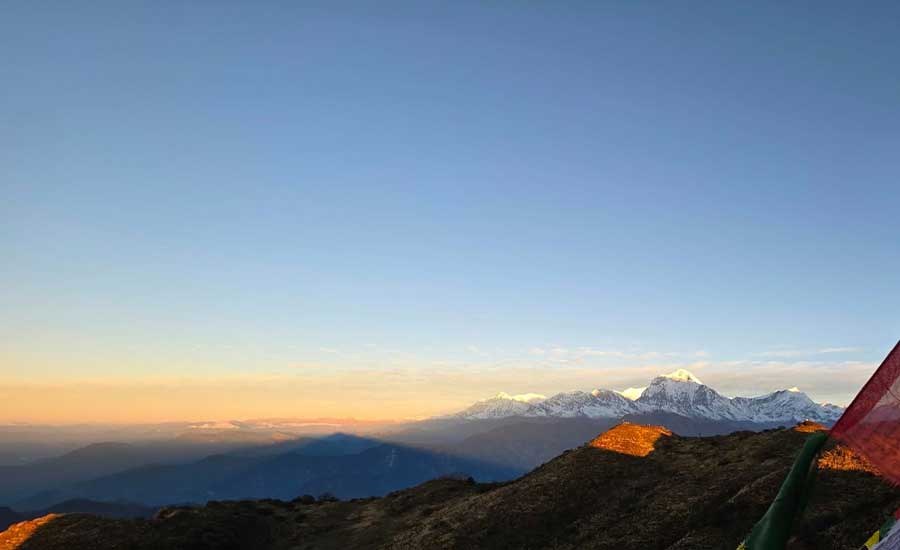
The Khopra Ridge Trek, also known as the Khopra Danda Trek, is one of the most beautiful and less-crowded trekking routes in Nepal's Annapurna region. Famous for its spectacular Himalayan viewpoints, traditional Gurung and Magar villages, rhododendron forests and sacred Khayer Lake, the trek offers a wonderful alternative to the busier Annapurna trekking trails.
Located above the green valleys of the Annapurna foothills, Khopra Danda (3,660 m) offers impressive views of Dhaulagiri (8,167 m), Annapurna South, Nilgiri, Hiunchuli and surrounding Himalayan peaks. Unlike many popular viewpoints reached by a short morning walk, Khopra Ridge offers the opportunity to stay overnight in a remarkable mountain setting and enjoy the changing light over the Himalayas.
Another highlight is the optional hike to Khayer Lake (approximately 4,660 m), a sacred high-altitude lake beneath the Annapurna range. This challenging excursion adds a very different experience to the trek, taking travelers beyond the grassy ridge into rugged alpine terrain.
Himalayan Dream Team's 14-Day Khopra Danda Trek combines four outstanding mountain destinations: Muldai Viewpoint, Khopra Ridge, Khayer Lake and Poon Hill. Along the way, the route passes through Ghandruk, Tadapani, Dobato, Bayeli Kharka, Swanta and Ghorepani, providing a beautiful mixture of mountain scenery, local culture and peaceful trekking trails.
In this complete Khopra Ridge Trek Guide 2027, we explain the trekking route, 14-day itinerary, Khayer Lake, important viewpoints, monthly weather conditions from January to December, permits, difficulty, accommodation, transportation, packing list, safety and practical travel information.
Khopra Ridge Trek – Quick Facts
| Trip Information | Details |
|---|---|
| Trek Name | Khopra Ridge Trek / Khopra Danda Trek |
| Region | Annapurna Conservation Area, Gandaki Province, Nepal |
| Himalayan Dream Team Duration | 14 Days |
| Main Trekking Duration | Approximately 9 days, including the optional lake excursion |
| Highest Overnight Location | Khopra Danda – approximately 3,660 m |
| Maximum Optional Elevation | Khayer Lake – approximately 4,660 m |
| Difficulty | Moderate; challenging for the Khayer Lake excursion |
| Daily Trekking | Approximately 3–7 hours on most days; longer for Khayer Lake |
| Best Months | March–May and September–November |
| Accommodation | Hotels, mountain teahouses and community lodges |
| Required Permits | ACAP and applicable TIMS card |
| Main Viewpoints | Muldai Viewpoint, Khopra Danda and Poon Hill |
| Main Lake Excursion | Khayer Lake |
| Start and Finish | Kathmandu, via Pokhara |
Where Is Khopra Ridge Located in Nepal?
Khopra Ridge is located in the Annapurna region of central Nepal, above the valleys and forests west of the main Annapurna Sanctuary trekking corridor. It lies within the protected Annapurna Conservation Area, which is managed by the National Trust for Nature Conservation.
The ridge is reached by trekking from the Pokhara side of the Annapurna foothills. Popular approaches include Ghandruk, Tadapani and Dobato, or routes through Ghorepani, Swanta and Chistibung.
The exact route depends on the chosen itinerary. Himalayan Dream Team's 14-day journey follows Ghandruk, Tadapani, Dobato, Bayeli Kharka and Khopra Danda before returning through Swanta, Ghorepani and Poon Hill.
This combination is particularly rewarding because travelers experience the forested Annapurna foothills, quieter community-lodge trekking sections, dramatic mountain ridges and the famous Poon Hill sunrise in one journey.
Why Is the Khopra Ridge Trek Special?
The Khopra Ridge Trek stands out because it combines close Himalayan views with quieter trails and a strong connection to traditional mountain communities.
While the classic Ghorepani Poon Hill Trek is famous for its sunrise panorama, Khopra takes travelers higher into the mountains and offers a more extended trekking experience.
The route is also associated with community-based tourism. Some mountain lodges on the Khopra trekking network were developed to help support local communities and education initiatives. Staying in these lodges contributes to local tourism income.
Main Highlights of the Khopra Danda Trek
- Enjoy spectacular mountain views from Khopra Danda (3,660 m).
- Visit the sacred Khayer Lake (approximately 4,660 m), subject to weather and fitness.
- Watch sunrise from Muldai Viewpoint (3,637 m).
- Experience the famous Poon Hill sunrise (3,210 m).
- Discover traditional Gurung culture in Ghandruk.
- Walk through rhododendron and oak forests around Tadapani and Dobato.
- Stay in remote community lodges near Bayeli Kharka and Khopra Ridge.
- Enjoy mountain views of Dhaulagiri, Annapurna South, Nilgiri, Hiunchuli and Machhapuchhre.
- Explore the peaceful Magar village of Swanta.
- Experience the Annapurna region away from its busiest trekking routes.
Khopra Ridge Trek Route – Villages, Lakes and Viewpoints
The Khopra trekking route includes a variety of natural and cultural attractions. Understanding each destination helps travelers appreciate the journey beyond the main ridge.
1. Pokhara and Phewa Lake
Pokhara is the main gateway to the Annapurna region and the starting point for road transportation towards the trekking trailhead.
The city is famous for Phewa Lake, a beautiful freshwater lake surrounded by green hills. On clear days, the Annapurna range and Machhapuchhre can be seen beyond the Pokhara Valley.
Before or after the trek, travelers can enjoy a lakeside walk, boating on Phewa Lake, local restaurants or optional sightseeing around Pokhara.
Important: Phewa Lake is in Pokhara, not on the mountain trekking trail. It is included here because Pokhara forms part of the complete 14-day journey.
2. Ghandruk Village (1,940 m)
Ghandruk is one of the most beautiful traditional Gurung villages in the Annapurna foothills. It is known for its stone houses, narrow village paths, cultural heritage and mountain views.
On a clear day, travelers can enjoy views of Annapurna South, Hiunchuli and Machhapuchhre.
The village also provides an opportunity to learn about Gurung traditions, local agriculture and the history of mountain communities.
3. Tadapani (Approximately 2,630 m)
Tadapani is a peaceful mountain settlement surrounded by rhododendron and oak forests. It is a popular stop on several Annapurna trekking routes.
The village offers impressive views of Annapurna South, Hiunchuli and Machhapuchhre when the weather is clear.
From Tadapani, the Khopra trekking route branches towards quieter forest trails leading to Dobato.
4. Dobato (Approximately 3,420 m)
Dobato is a small mountain lodge settlement surrounded by forest and high ridges. It serves as the main overnight base for the early-morning hike to Muldai Viewpoint.
The forest trails around Dobato are particularly beautiful in spring, when rhododendrons bloom in suitable elevations.
5. Muldai Viewpoint (3,637 m)
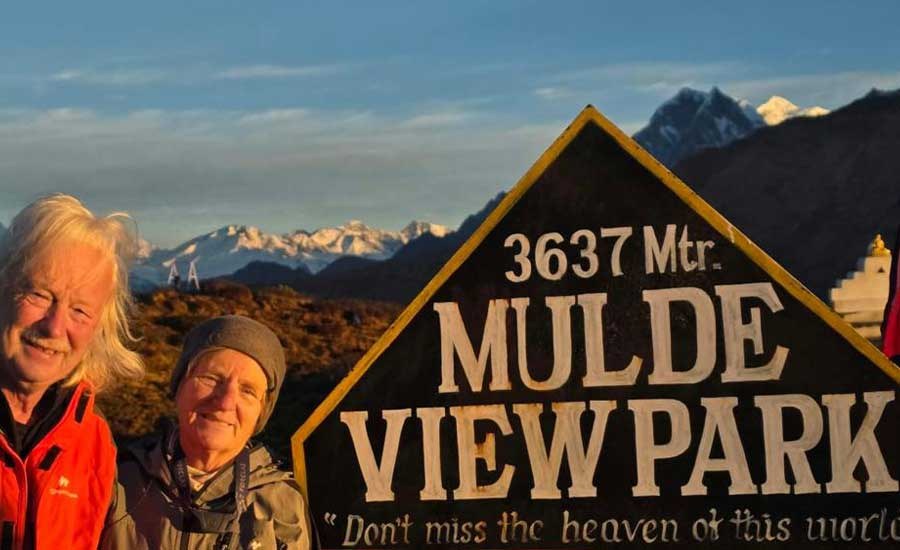
Muldai Viewpoint, also written as Mulde Viewpoint or Mulde Peak, is one of the finest viewpoints in the Annapurna region.
Located above Dobato, the viewpoint offers a spectacular Himalayan panorama, often with fewer visitors than Poon Hill.
On clear mornings, trekkers can enjoy views towards Dhaulagiri, Annapurna South, Nilgiri, Hiunchuli, Machhapuchhre and other surrounding peaks.
The early-morning hike from Dobato is particularly rewarding because the first sunlight gradually illuminates the mountains.
Elevation: Approximately 3,637 m.
Best time: Early morning, weather permitting.
Main attraction: Wide Himalayan panorama and sunrise photography.
6. Bayeli Kharka (Approximately 3,450 m)
Bayeli Kharka is a quiet mountain settlement on the route between Dobato and Khopra Danda.
The name kharka commonly refers to a seasonal grazing area or pasture. The surrounding landscape includes open hillsides, forest sections and mountain ridges.
Accommodation is simple, and the peaceful atmosphere makes this an interesting stop before reaching Khopra Ridge.
7. Khopra Danda / Khopra Ridge (3,660 m)
Khopra Danda is the main destination of the trek. Situated on a high ridge above deep valleys, it provides dramatic views of the Annapurna and Dhaulagiri mountain ranges.
On a clear day, Dhaulagiri dominates the western skyline, while Annapurna South, Nilgiri, Hiunchuli and other Himalayan peaks rise across the surrounding valleys.
One of the greatest advantages of Khopra Ridge is the opportunity to enjoy mountain scenery from the lodge area itself, without needing to climb to a separate viewpoint before sunrise.
Both sunrise and sunset can be beautiful, depending on the weather and cloud conditions.
Elevation: Approximately 3,660 m.
Main attraction: Close Himalayan views, sunrise, sunset and peaceful ridge scenery.
Accommodation: Simple mountain and community lodges.
8. Khayer Lake / Khayar Lake (Approximately 4,660 m)
Khayer Lake, also spelled Khayar Lake or Khayar Tal, is a sacred high-altitude lake located above Khopra Ridge beneath the Annapurna mountain range.
The lake is surrounded by rugged alpine terrain and is an important destination for local religious pilgrimage.
Many local Hindu devotees visit the lake during the annual Janai Purnima period, although the exact festival date changes according to the lunar calendar.
The excursion from Khopra Danda involves a substantial climb of approximately 1,000 vertical meters and a return along the same route.
The trail can be steep, rocky and exposed, and snow or ice may make sections difficult or unsafe.
Elevation: Approximately 4,660 m in Himalayan Dream Team's itinerary. Published maps and trekking sources report varying elevations.
Walking time: Approximately 7–9 hours or longer, depending on conditions and pace.
Difficulty: Challenging.
Accommodation: No regular trekking lodge at the lake; return to Khopra Danda.
Important: The excursion is optional and must be assessed according to weather, trail conditions and acclimatization.
9. Khayer Baraha – Religious Significance
Khayer Lake is associated with Khayer Baraha, a sacred religious site connected with local Hindu traditions.
The lake and its surrounding landscape hold spiritual significance for pilgrims, particularly during Janai Purnima.
Visitors should respect religious activities, avoid leaving rubbish and refrain from disturbing the natural environment.
10. Chistibung / Chhistibung – Alternative Route
Chistibung is an important lodge settlement on another commonly used approach to Khopra Ridge, particularly for travelers ascending from Swanta.
It is surrounded by forest and grazing landscapes and provides a useful intermediate stop before the final ascent to Khopra.
Route note: Chistibung is not an overnight stop on Himalayan Dream Team's published 14-day itinerary, which approaches Khopra via Dobato and Bayeli Kharka. It is described here because travelers researching Khopra Ridge will frequently encounter this alternative route.
11. Swanta Village (Approximately 2,200 m)
Swanta is a traditional Magar village surrounded by terraced farmland and forest.
After spending time on the exposed high ridge, the descent to Swanta brings travelers back into a greener landscape with traditional houses and agricultural fields.
The village is an important stop between Khopra Ridge and Ghorepani.
12. Ghorepani (Approximately 2,874 m)
Ghorepani is one of the best-known trekking villages in the Annapurna region. It is surrounded by rhododendron forests and serves as the starting point for the sunrise hike to Poon Hill.
The village has a wider selection of teahouses and facilities than the remote Khopra Ridge section.
Travelers who want a shorter Annapurna trekking holiday can also explore our Ghorepani Poon Hill Trek.
13. Poon Hill (3,210 m)
Poon Hill is one of Nepal's most famous sunrise viewpoints.
Located above Ghorepani, it offers panoramic views of the Annapurna and Dhaulagiri mountain ranges, including Dhaulagiri, Annapurna South, Hiunchuli, Nilgiri and Machhapuchhre.
The early-morning climb from Ghorepani normally takes approximately 45–75 minutes, depending on walking pace and trail conditions.
The combination of Muldai Viewpoint, Khopra Danda and Poon Hill makes the Khopra trek particularly attractive for mountain photography.
Best Viewpoints on the Khopra Ridge Trek
| Viewpoint | Elevation | Main Highlights |
|---|---|---|
| Muldai Viewpoint | 3,637 m | Sunrise and panoramic Annapurna–Dhaulagiri views |
| Khopra Danda | 3,660 m | Close views of Dhaulagiri, Annapurna South, Nilgiri and surrounding valleys |
| Khayer Lake | Approx. 4,660 m | Sacred alpine lake, rugged mountain scenery and a challenging day hike |
| Poon Hill | 3,210 m | Classic Himalayan sunrise over the Annapurna and Dhaulagiri ranges |
| Ghandruk | 1,940 m | Traditional village scenery with Annapurna South, Hiunchuli and Machhapuchhre views |
| Tadapani | Approx. 2,630 m | Mountain views framed by beautiful forest landscapes |
Lakes on the Khopra Ridge Trek
Travelers often search for lakes along the Khopra Danda route. It is important to distinguish between lakes visited during the trekking section and lakes found in the wider Annapurna region.
| Lake | Location | Included in the Journey? |
|---|---|---|
| Khayer Lake / Khayar Lake | Above Khopra Ridge | Optional high-altitude day hike in the 14-day itinerary |
| Phewa Lake | Pokhara | Accessible during the Pokhara hotel stay |
| Tilicho Lake | Manang, Annapurna region | Not on the Khopra route; requires a separate itinerary |
Khayer Lake is the principal alpine lake excursion on the Khopra Ridge Trek. Tilicho Lake, although also located in the wider Annapurna region, is not part of this trekking route.
Khopra Ridge Trek Itinerary – 14 Days
Himalayan Dream Team's 14-day itinerary includes Kathmandu, Pokhara, Ghandruk, Tadapani, Dobato, Muldai Viewpoint, Bayeli Kharka, Khopra Danda, Khayer Lake, Swanta, Ghorepani and Poon Hill.
| Day | Itinerary | Overnight |
|---|---|---|
| 1 | Arrival in Kathmandu (1,335 m) and hotel transfer | Kathmandu |
| 2 | Drive from Kathmandu to Pokhara (822 m) | Pokhara |
| 3 | Drive to Syauli Bazaar and trek to Ghandruk (1,940 m) | Ghandruk |
| 4 | Trek from Ghandruk to Tadapani (2,630 m) | Tadapani |
| 5 | Trek from Tadapani to Dobato (3,420 m) | Dobato |
| 6 | Muldai Viewpoint (3,637 m) sunrise hike and trek to Bayeli Kharka (3,450 m) | Bayeli Kharka |
| 7 | Trek from Bayeli Kharka to Khopra Danda (3,660 m) | Khopra Danda |
| 8 | Optional day hike to Khayer Lake (4,660 m) and return | Khopra Danda |
| 9 | Trek from Khopra Danda to Swanta Village (2,200 m) | Swanta |
| 10 | Trek from Swanta to Ghorepani (2,874 m) | Ghorepani |
| 11 | Poon Hill sunrise hike (3,210 m), descend to the accessible roadhead and drive to Pokhara | Pokhara |
| 12 | Drive from Pokhara to Kathmandu | Kathmandu |
| 13 | Free day in Kathmandu; optional sightseeing | Kathmandu |
| 14 | Transfer to Kathmandu International Airport for departure | Departure |
Note: This itinerary follows Himalayan Dream Team's published 14-day package. The Khayer Lake hike is optional. Transportation, walking hours and trailheads may change depending on road conditions, weather and the final trekking arrangements.
For the complete day-by-day itinerary and latest package information, visit our Khopra Danda Trek – 14 Days.
Best Time for the Khopra Ridge Trek
The best time for the Khopra Ridge Trek is generally spring (March to May) and autumn (September to November).
Spring brings beautiful rhododendron forests and warmer daytime temperatures, while autumn is famous for clear Himalayan views and pleasant trekking conditions.
Winter trekking is possible on some lower sections, but snow and ice can make the higher trails difficult. The Khayer Lake excursion is particularly sensitive to winter and early-spring conditions.
The summer monsoon brings rainfall, cloud cover, slippery forest trails and possible road disruptions.
Khopra Ridge Trek Month by Month – January to December
The following table explains the typical trekking conditions in every month. These are general seasonal patterns rather than a forecast for a specific 2027 departure.
| Month | Weather and Trail Conditions | Recommendation |
|---|---|---|
| January | Very cold at higher elevations; snow and ice possible around Khopra and Khayer Lake | Winter trekking only with careful planning; lake hike often unsuitable |
| February | Cold mornings and nights; possible snow-covered higher trails | Possible on selected routes; assess upper trails carefully |
| March | Spring begins; rhododendrons start blooming at suitable elevations; lingering high snow possible | Good, especially later in the month |
| April | Beautiful rhododendron forests, generally favorable trekking weather and good mountain views | Excellent |
| May | Warmer days; increasing cloud and afternoon showers later in the month | Very good, especially early May |
| June | Monsoon begins; wet trails and more frequent cloud cover | Less recommended |
| July | Heavy rainfall, leeches in forest areas, slippery paths and limited mountain visibility | Generally not recommended |
| August | Continued monsoon rainfall, possible landslides and difficult trail conditions | Generally not recommended |
| September | Rain gradually decreases; clearer views often return later in the month | Good later in September |
| October | Often clear skies, pleasant trekking conditions and excellent Himalayan visibility | Excellent |
| November | Often clear and dry, with increasingly cold mornings and nights | Excellent, especially early November |
| December | Cold conditions, possible snow and ice around the ridge and lake trail | Possible with preparation; lake excursion often unsuitable |
Khopra Ridge Trek in January
January is one of the coldest months in the Annapurna region. Lower villages may remain accessible, but Khopra Ridge can experience freezing temperatures, snow and icy trails. The Khayer Lake hike is often unsafe or inaccessible. Travelers should only consider winter trekking after checking current conditions and accommodation availability.
Khopra Ridge Trek in February
February remains cold, especially above 3,000 meters. Some lower forest trails may be suitable, but snow can remain around Dobato, Bayeli Kharka and Khopra Danda. The Khayer Lake excursion requires particular caution.
Khopra Ridge Trek in March
March is the beginning of spring trekking season. Temperatures gradually improve, and rhododendrons begin flowering at suitable elevations. Late March can be a beautiful time to visit, although snow may still affect the highest trails.
Khopra Ridge Trek in April
April is one of the best months for the Khopra Ridge Trek. Rhododendron forests around Tadapani and Dobato can be particularly colorful, and the weather is generally favorable for trekking and mountain photography. The Khayer Lake trail must still be checked for snow.
Khopra Ridge Trek in May
May offers warmer trekking conditions and beautiful green landscapes. Early May is often very pleasant, while cloud buildup and afternoon rain become more common later in the month. Early starts are recommended for the best mountain views.
Khopra Ridge Trek in June
June marks the beginning of the monsoon season. Rainfall increases, forest trails become slippery and clouds can obscure the mountains. Trekking remains possible in some conditions, but it is not among the preferred months.
Khopra Ridge Trek in July
July is usually one of the wettest months. Heavy rainfall, muddy trails, leeches and possible landslides can make trekking uncomfortable or unsafe. Himalayan visibility is often limited.
Khopra Ridge Trek in August
August continues the monsoon pattern. The forests and farmland are beautifully green, but rain and slippery paths remain significant concerns. Some roads and trails may be affected by landslides.
Khopra Ridge Trek in September
September is a transitional month. Early September can still be wet, while later weeks often bring improving weather and clearer Himalayan views. Trail conditions should be checked after the monsoon.
Khopra Ridge Trek in October
October is one of the most popular months for trekking to Khopra Danda. Post-monsoon weather often brings excellent mountain visibility, comfortable walking conditions and beautiful sunrise views. Nevertheless, unexpected storms or heavy rain can still occur.
Khopra Ridge Trek in November
November is another excellent trekking month, particularly during the first half. Clear mornings and mountain views are common, although temperatures become colder at higher elevations. Snowfall becomes more likely later in the season.
Khopra Ridge Trek in December
December brings colder weather and increasing snow risk. Lower trails may remain accessible, but the higher route to Khopra Ridge and especially Khayer Lake can be affected by snow and ice. A flexible itinerary is important.
Which Month Is Best for Khopra Ridge and Khayer Lake?
For the complete Khopra Ridge Trek, April, October and early November are particularly attractive choices.
For travelers interested in rhododendron forests, March and April are especially beautiful. For mountain photography and clear post-monsoon views, October and November are popular.
The Khayer Lake hike requires a separate assessment. Even during the main trekking seasons, snow, wind, altitude and trail conditions can make the excursion unsuitable.
How Difficult Is the Khopra Ridge Trek?
The Khopra Ridge Trek is generally considered moderate, with several consecutive days of uphill and downhill walking.
The main route includes forest trails, stone steps, mountain ridges and uneven paths. Most trekking days involve approximately 3–7 hours of walking.
The optional Khayer Lake hike is significantly more challenging because it climbs from approximately 3,660 meters to around 4,660 meters before returning to Khopra Danda.
| Difficulty Factor | What to Expect |
|---|---|
| Main Trek | Moderate |
| Khayer Lake Excursion | Challenging |
| Highest Overnight Altitude | 3,660 m at Khopra Danda |
| Highest Optional Point | Approximately 4,660 m at Khayer Lake |
| Typical Daily Walking | 3–7 hours, depending on the day |
| Lake Excursion | Approximately 7–9 hours or longer |
| Technical Climbing | Not normally required on the standard route |
| Fitness | Good general fitness and hiking preparation recommended |
Can Beginners Do the Khopra Danda Trek?
Active beginners with good fitness and suitable preparation can often complete the main Khopra Danda trekking route.
However, beginners should not underestimate the elevation gain, long walking days and basic mountain accommodation.
The Khayer Lake excursion is more demanding and should be attempted only if the guide considers the trekker's fitness, acclimatization and trail conditions suitable.
Travelers seeking a shorter and easier Himalayan trekking experience may prefer the Ghorepani Poon Hill Trek.
Altitude Sickness on the Khopra Ridge Trek
Altitude sickness is possible on the Khopra Ridge Trek, particularly when sleeping above 3,000 meters or attempting the Khayer Lake excursion.
Symptoms may include headache, nausea, dizziness, unusual tiredness and loss of appetite.
Trekkers should maintain a comfortable pace, allow sufficient time for acclimatization and inform their guide immediately if symptoms develop.
Do not continue ascending to sleep at a higher elevation while experiencing symptoms of altitude sickness. Severe symptoms, including confusion, difficulty walking straight or breathlessness at rest, require urgent medical attention and descent when feasible.
Because the Khayer Lake hike gains approximately 1,000 meters from Khopra Danda in a single day, it should not be treated as an ordinary sightseeing walk.
Khopra Ridge Trek Permits for 2027
The Khopra Ridge Trek lies within the Annapurna Conservation Area. Foreign trekkers require the applicable conservation-area and trekking documentation.
| Permit | Purpose | Published Fee |
|---|---|---|
| Annapurna Conservation Area Permit (ACAP) | Entry to the Annapurna Conservation Area | NPR 3,000 for most foreign nationals; NPR 1,000 for SAARC nationals |
| TIMS Card | Trekker registration under the applicable guided-trekking system | NPR 2,000 for non-SAARC foreign trekkers; NPR 1,000 for SAARC trekkers |
| Licensed Trekking Guide | Required under Nepal Tourism Board's revised provisions for the Khopra route | According to the trekking package |
These are currently published fees and should be reconfirmed for 2027.
Himalayan Dream Team arranges the required trekking permits and licensed guide services for its organized Khopra Danda Trek.
Official information: NTNC Conservation Area Permit and Nepal Tourism Board TIMS Information.
Khopra Ridge Trek Cost in 2027
The total cost of the Khopra Ridge Trek depends on the itinerary duration, group size, transportation, accommodation, guide and porter services, permits and included meals.
Himalayan Dream Team's published 14-day Khopra Danda Trek currently lists a starting package price of USD 1,175 per person, subject to the confirmed travel dates, group arrangements and inclusions.
Travelers should compare the complete package rather than only the advertised price.
What Should Be Included in a Khopra Trek Package?
- Airport transfers where included in the itinerary.
- Hotels in Kathmandu and Pokhara.
- Required transportation to and from the trekking trailhead.
- Mountain lodge accommodation during the trek.
- Meals according to the confirmed itinerary.
- Licensed trekking guide.
- Porter service where included.
- Required trekking permits.
- Staff wages, meals, accommodation and insurance.
- Applicable taxes and organized trekking support.
International flights, Nepal visa fees, travel insurance, personal equipment, drinks, tips and optional activities are generally separate unless specifically included in the quotation.
For updated prices, see the Khopra Danda Trek package.
Accommodation on the Khopra Ridge Trek
Accommodation varies along the route. Ghandruk, Tadapani and Ghorepani generally have a wider selection of teahouses, while Dobato, Bayeli Kharka and Khopra Danda have simpler mountain lodges.
Some accommodation on the quieter Khopra route is associated with community-based tourism initiatives.
| Location | Accommodation | Facilities |
|---|---|---|
| Kathmandu | Hotel | Comfortable hotel facilities |
| Pokhara | Hotel | Comfortable hotel facilities |
| Ghandruk | Teahouse / Lodge | Basic to comfortable mountain facilities |
| Tadapani | Teahouse / Lodge | Simple rooms and dining area |
| Dobato | Mountain Lodge | Basic accommodation |
| Bayeli Kharka | Mountain / Community Lodge | Simple facilities |
| Khopra Danda | Mountain / Community Lodge | Basic rooms, limited facilities |
| Swanta | Village Lodge | Simple local accommodation |
| Ghorepani | Teahouse / Lodge | Wider range of mountain lodges |
Hot showers, charging facilities, Wi-Fi and attached bathrooms cannot be guaranteed at all overnight stops.
Food and Drinking Water on the Khopra Trek
Teahouses along the route generally serve simple Nepali and international-style meals.
- Dal bhat with rice, lentils and vegetables.
- Vegetable noodles and noodle soups.
- Potatoes, fried rice and simple curries.
- Eggs and porridge where available.
- Tibetan bread and chapati.
- Tea, coffee and seasonal snacks.
Vegetarian meals are commonly available. Food choices become more limited in the smaller mountain lodges.
Trekkers should carry reusable water bottles and use properly boiled, filtered or treated drinking water. Additional snacks and sufficient drinking water are particularly important for the long Khayer Lake excursion.
Transportation for the Khopra Ridge Trek
| Route | Transportation |
|---|---|
| Kathmandu Airport to Hotel | Private vehicle |
| Kathmandu to Pokhara | Tourist bus or arranged road transport |
| Pokhara to Syauli Bazaar | Road vehicle according to itinerary |
| Trekking Route | On foot |
| Accessible Roadhead to Pokhara | Road vehicle |
| Pokhara to Kathmandu | Tourist bus or arranged road transport |
| Kathmandu to Pokhara | Optional domestic flight, if arranged |
The exact roadhead may change because of road development, weather and local accessibility.
What to Pack for the Khopra Ridge Trek
Clothing
- Comfortable, broken-in trekking boots.
- Thermal base layers.
- Fleece jacket.
- Warm down or synthetic insulated jacket.
- Waterproof and windproof outer layer.
- Trekking trousers.
- Warm gloves and hat.
- Sun hat and sunglasses.
- Warm trekking socks.
Trekking Equipment
- Sleeping bag suitable for the expected season.
- Comfortable daypack.
- Trekking poles.
- Headlamp.
- Reusable water bottles and purification equipment.
- Sunscreen and lip balm.
- Personal first-aid kit and medication.
- Power bank.
- Travel insurance documents.
- Cash in Nepalese rupees.
For the Khayer Lake excursion, trekkers should carry additional warm layers, sufficient food and water, and any equipment recommended by the guide for current conditions.
Khopra Ridge Trek vs Poon Hill Trek
| Feature | Khopra Ridge Trek | Poon Hill Trek |
|---|---|---|
| Main Highlight | Khopra Danda and optional Khayer Lake | Poon Hill sunrise |
| Highest Main Viewpoint | Khopra Danda, 3,660 m | Poon Hill, 3,210 m |
| Optional Lake | Khayer Lake, approximately 4,660 m | Not normally included |
| Difficulty | Moderate; challenging lake excursion | Easy to moderate |
| Trail Atmosphere | Quieter remote sections | More popular and busier |
| Best For | Travelers seeking longer mountain trekking | Beginners and shorter holidays |
If you have more time and want to experience both viewpoints, Himalayan Dream Team's Khopra itinerary already includes Poon Hill.
Khopra Ridge Trek vs Annapurna Base Camp Trek
The Annapurna Base Camp Trek and Khopra Ridge Trek offer different experiences.
Annapurna Base Camp takes trekkers into the Annapurna Sanctuary, surrounded by towering Himalayan peaks, while Khopra Ridge follows quieter mountain ridges with panoramic views across the Annapurna and Dhaulagiri ranges.
The Khopra route is especially attractive for travelers interested in viewpoints, community lodges and the optional sacred lake excursion.
| Feature | Khopra Ridge | Annapurna Base Camp |
|---|---|---|
| Main Destination | Khopra Danda | Annapurna Base Camp |
| Highest Point | Khayer Lake, approximately 4,660 m, optional | Annapurna Base Camp, 4,130 m |
| Scenery | Open ridges and broad mountain panoramas | Close Himalayan amphitheatre |
| Special Attraction | Khayer Lake and multiple viewpoints | Annapurna Sanctuary and base camp |
| Trail Atmosphere | Quieter in the Khopra section | Generally more popular |
Other Beautiful Treks in the Annapurna Region
Travelers exploring the Khopra Ridge Trek may also be interested in other Himalayan journeys organized by Himalayan Dream Team.
- Ghorepani Poon Hill Trek – a shorter trek famous for sunrise and rhododendron forests.
- Annapurna Base Camp Trek – a journey into the Annapurna Sanctuary.
- Complete Guide to Annapurna Base Camp Trek – useful information about trekking preparation, permits and routes.
- Best Viewpoints in the Annapurna Region – a comparison of spectacular Himalayan viewpoints.
- Nepal's National Flower: Rhododendron – discover the beautiful spring forests of the Annapurna region.
Responsible Trekking and Community Tourism
The Khopra trekking route passes through protected natural landscapes and traditional villages. Responsible tourism helps conserve the environment and supports local communities.
- Use reusable water bottles and reduce plastic waste.
- Carry non-biodegradable rubbish out of the mountains.
- Stay on established trekking trails.
- Respect local customs and religious sites.
- Ask permission before photographing local people.
- Do not disturb wildlife or damage plants.
- Support locally operated lodges and businesses.
- Respect the working conditions of guides and porters.
- Follow your guide's advice regarding weather and trail safety.
Frequently Asked Questions About the Khopra Ridge Trek
1. What is the Khopra Ridge Trek?
The Khopra Ridge Trek is a scenic trekking route in Nepal's Annapurna region, known for Khopra Danda, Khayer Lake, Muldai Viewpoint, traditional villages and Himalayan mountain views.
2. Is Khopra Ridge the same as Khopra Danda?
Yes. Khopra Ridge and Khopra Danda refer to the same main trekking destination.
3. How high is Khopra Danda?
Khopra Danda is approximately 3,660 meters above sea level.
4. How high is Khayer Lake?
Himalayan Dream Team uses approximately 4,660 meters for Khayer Lake. Other trekking sources and maps report different elevations.
5. How long is the Khopra Danda Trek?
Himalayan Dream Team's complete itinerary takes 14 days from arrival to departure in Kathmandu, including the trekking journey, Pokhara and the return to Kathmandu.
6. What is the best time to trek Khopra Ridge?
March to May and September to November are generally the best seasons, with April, October and early November particularly attractive.
7. Is Khopra Ridge Trek suitable for beginners?
Active beginners with good fitness can often complete the main route. The optional Khayer Lake hike is more demanding and should be assessed separately.
8. Is Khayer Lake included in the trek?
Himalayan Dream Team's 14-day itinerary includes a scheduled optional day for Khayer Lake, subject to weather, trail conditions and fitness.
9. How difficult is the Khayer Lake hike?
It is challenging because of the substantial ascent, high altitude, rocky terrain and long walking day.
10. Can I visit Khayer Lake in winter?
Snow and ice often make the lake trail unsafe or inaccessible during winter. Access must be assessed locally.
11. What is Muldai Viewpoint?
Muldai Viewpoint is a Himalayan viewpoint above Dobato at approximately 3,637 meters, famous for sunrise and mountain panoramas.
12. Does the Khopra Trek include Poon Hill?
Yes. Himalayan Dream Team's 14-day route includes Ghorepani and the Poon Hill sunrise hike.
13. Which mountains can be seen from Khopra Ridge?
On clear days, trekkers can enjoy views of Dhaulagiri, Annapurna South, Nilgiri, Hiunchuli and surrounding Himalayan peaks.
14. Is Khopra Ridge less crowded than Poon Hill?
The Khopra section is generally quieter than the established Poon Hill trail, although the route becomes busier around Ghorepani.
15. What permits are needed for Khopra Ridge?
The Annapurna Conservation Area Permit and applicable TIMS card are required under the published trekking arrangements.
16. Do I need a guide for the Khopra Trek?
Yes. Nepal Tourism Board lists the Khopra route under its revised guided-trekking and TIMS provisions.
17. What accommodation is available?
Travelers stay in teahouses, mountain lodges and community lodges. Facilities are more basic in remote settlements.
18. Is vegetarian food available?
Yes. Vegetarian meals such as dal bhat, vegetable soups, potatoes and noodles are commonly available.
19. Is drinking water available?
Water is available along the route, but untreated water should not be assumed safe. Carry reusable bottles and use properly treated water.
20. Can I charge my phone during the trek?
Charging facilities may be available at some lodges, often for an additional fee. Power supply can be limited at higher elevations.
21. Is there Wi-Fi on Khopra Ridge?
Connectivity varies. Wi-Fi and mobile coverage may be unreliable in remote sections, so travelers should prepare for limited communication.
22. Are ATMs available along the trek?
Reliable ATM facilities should not be expected on the remote route. Carry sufficient Nepalese rupees from Pokhara.
23. Do I need travel insurance?
Comprehensive travel insurance is strongly recommended, including medical treatment, emergency evacuation and trekking coverage above the maximum planned altitude.
24. Can I trek Khopra Ridge in July or August?
Monsoon trekking is generally less recommended because of rain, slippery trails, leeches and possible landslides.
25. Is April a good month for Khopra Ridge?
Yes. April is one of the best months, particularly for rhododendron forests and generally favorable trekking conditions.
26. Is October a good month for Khopra Ridge?
Yes. October is traditionally one of the most popular months because of clear post-monsoon views and comfortable trekking weather.
27. Can I combine Khopra Ridge with Annapurna Base Camp?
Yes. A longer customized itinerary can combine Khopra Ridge with sections of the Annapurna Base Camp route, depending on time, fitness and trail conditions.
28. Can I trek Khopra Ridge from Pokhara?
Yes. The trekking portion can be arranged as a shorter Pokhara-to-Pokhara itinerary without the Kathmandu hotel days.
29. Is Khopra Ridge suitable for photography?
Yes. Muldai Viewpoint, Khopra Danda, Khayer Lake and Poon Hill offer excellent opportunities for landscape and mountain photography.
30. Can Himalayan Dream Team customize the trek?
Yes. Himalayan Dream Team can arrange private and customized Khopra Danda trekking itineraries according to travel dates, fitness, group size and interests.
Final Thoughts: Is the Khopra Ridge Trek Worth It?
Absolutely. The Khopra Ridge Trek is one of the most rewarding ways to experience the Annapurna region beyond its busiest trekking routes.
From the traditional Gurung village of Ghandruk and the beautiful rhododendron forests around Tadapani to the sunrise views from Muldai Viewpoint, the dramatic mountain scenery of Khopra Danda and the sacred Khayer Lake, the journey offers something memorable at every stage.
The return through Swanta, Ghorepani and Poon Hill adds another wonderful dimension, combining peaceful village life with one of Nepal's most famous Himalayan sunrise experiences.
For travelers who enjoy mountain scenery, local culture, nature photography and quieter trekking trails, Khopra Ridge is an excellent choice.
Plan Your Khopra Ridge Trek in 2027 with Himalayan Dream Team
Himalayan Dream Team Treks & Tours Pvt. Ltd. is a Nepal-based, women-led trekking and tour company organizing guided Himalayan adventures throughout Nepal.
Our experienced local team can help arrange the Khopra Ridge Trek with licensed guides, required permits, transportation, mountain accommodation and trekking support according to your selected itinerary.
Whether you prefer the complete 14-day journey, a shorter trek from Pokhara or a customized itinerary combining Khopra Ridge with other Annapurna destinations, we can help you plan a suitable adventure.
Explore our Khopra Danda Trek with Khayer Lake and Poon Hill – 14 Days, or contact Himalayan Dream Team for travel dates, prices and personalized arrangements.
Himalayan Dream Team Treks & Tours Pvt. Ltd.
Kathmandu, Nepal
www.himalayandream.team