

Upper Dolpo Trek Nepal: Complete Guide, 26-Day Itinerary, Permits & Costs
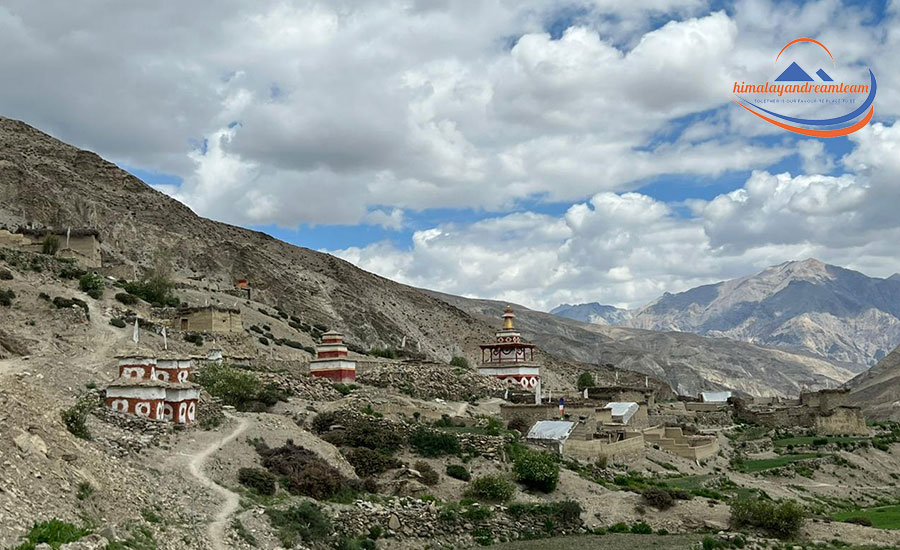
The Upper Dolpo Trek is one of Nepal's most remote and culturally fascinating Himalayan adventures. Hidden in the far-western mountains of Nepal, Upper Dolpo is a land of dramatic high passes, ancient monasteries, traditional villages, deep river valleys and vast landscapes that resemble the Tibetan Plateau.
Unlike Nepal's busier trekking regions, Upper Dolpo receives relatively few international visitors. Its geographical isolation has helped preserve distinctive cultural traditions, including Tibetan Buddhism, the ancient Bon religion and the historical connections between Himalayan communities and Tibet.
Our 26-day Upper Dolpo Trek itinerary begins in Kathmandu and continues by flight through Nepalgunj to Juphal. From there, the journey follows the Suli Gad Valley towards the turquoise waters of Phoksundo Lake before entering the remote landscapes of Upper Dolpo.
The trek visits sacred Shey Gompa and Crystal Mountain, crosses three major Himalayan passes and continues through traditional settlements including Namgung, Saldang, Namdo, Sibu, Tokyu and Dho Tarap.
Organised by Himalayan Dream Team Treks & Tours, this journey is designed as a private, fully supported camping expedition with an experienced trekking guide, camping crew, cooking team and appropriate logistical arrangements.
This comprehensive guide explains the Upper Dolpo trekking route, daily itinerary, permits, difficulty, accommodation, meals, best seasons, high-altitude safety, transportation and practical preparation.
Upper Dolpo Trek at a Glance
| Trip Information | Details |
|---|---|
| Destination | Nepal |
| Trekking Region | Upper Dolpo, Karnali Province |
| Trip Duration | 26 Days |
| Trekking Style | Private, fully supported camping trek |
| Trip Grade | Challenging / Strenuous |
| Highest Point | Kang La Pass, approximately 5,350 m (route-dependent) |
| Other High Passes | Sela La 5,095 m; Jeng La 5,220 m |
| Major Attractions | Phoksundo Lake, Shey Gompa, Crystal Mountain, Saldang, Dho Tarap |
| Culture | Tibetan Buddhism, Bon traditions and Himalayan village life |
| Accommodation | Hotels in Kathmandu and Nepalgunj; tented camps during the trek |
| Meals | Full-board meals during camping trek; city meals according to package inclusions |
| Best Trekking Seasons | May–June and September–October, subject to conditions |
| Trip Starts / Ends | Kathmandu / Kathmandu |
| Transportation | Private transfers and domestic flights |
| Required Permits | Applicable restricted-area permits and Shey-Phoksundo National Park entry permit |
Where Is Upper Dolpo Located in Nepal?
Upper Dolpo lies in the remote Dolpa District of Karnali Province in northwestern Nepal, close to the Tibetan border.
The region is protected from much of the summer monsoon by surrounding Himalayan mountains, creating a landscape of dry valleys, rugged cliffs, high-altitude plateaus and scattered settlements.
Dolpo is geographically and culturally different from popular trekking destinations such as Everest and Annapurna. Roads, medical facilities, communication networks and accommodation are limited in many parts of the region.
Traditional communities depend on agriculture, livestock, seasonal trade and other local livelihoods. Their culture reflects centuries of interaction with the wider Tibetan Himalayan world.
The remote location makes Upper Dolpo especially attractive to experienced trekkers who enjoy wilderness, cultural exploration and challenging mountain journeys.
Why Choose the Upper Dolpo Trek?
Upper Dolpo offers a rare combination of wilderness, traditional Himalayan culture and demanding high-altitude trekking.
- Phoksundo Lake: Discover one of Nepal's most beautiful turquoise mountain lakes.
- Shey Gompa: Visit an important pilgrimage site beneath sacred Crystal Mountain.
- Remote Villages: Experience traditional settlements including Ringmo, Saldang, Namdo and Dho Tarap.
- Three High Passes: Cross Kang La, Sela La and Jeng La on a demanding Himalayan route.
- Bon and Buddhist Heritage: Learn about distinctive spiritual traditions preserved in Dolpo.
- Shey-Phoksundo National Park: Explore protected forests, alpine ecosystems and wildlife habitats.
- Changing Landscapes: Travel from green river valleys to dry Tibetan-style mountain terrain.
- Remote Camping: Enjoy a fully supported expedition away from busy trekking routes.
Upper Dolpo Trek Highlights
1. The Turquoise Waters of Phoksundo Lake
Phoksundo Lake is one of the most memorable natural attractions of the Upper Dolpo Trek. Its striking turquoise water contrasts beautifully with the surrounding cliffs, forests and mountain landscapes.
Located at approximately 3,600 m, the lake is widely recognised as Nepal's deepest lake. The nearby village of Ringmo provides an opportunity to experience local culture and visit traditional religious sites.
Our itinerary includes an acclimatisation and exploration day at Phoksundo Lake before continuing into the more remote upper valleys.
Travellers with less time can explore the same lake on our Shey Phoksundo Lake Trek – 12 Days.
2. Sacred Shey Gompa and Crystal Mountain
Shey Gompa is among the most important cultural and spiritual destinations on the Upper Dolpo route.
The monastery stands in a remote mountain landscape associated with sacred Crystal Mountain, known locally for its religious importance.
For generations, pilgrims have travelled to the area to pray, meditate and undertake religious journeys.
Visiting Shey Gompa offers an opportunity to learn about the spiritual traditions of Dolpo and the close relationship between local communities and their mountain environment.
3. Traditional Villages of Upper Dolpo
Upper Dolpo contains remote settlements where traditional architecture, agricultural practices and religious customs remain important parts of everyday life.
Villages such as Saldang, Namdo and Dho Tarap provide insight into the region's cultural heritage.
Visitors may see stone houses, mani walls, chortens, monasteries, cultivated fields and livestock grazing areas.
These communities are living villages rather than tourist displays. Travellers should respect local privacy, ask permission before taking photographs and follow their guide's advice when visiting religious places.
4. Crossing Three Major Himalayan Passes
The Upper Dolpo Trek crosses three demanding mountain passes:
| Pass | Approximate Elevation | Route Section |
|---|---|---|
| Kang La Pass | 5,350 m | Approach to Shey Gompa |
| Sela La Pass | 5,095 m | Shey Gompa to Namgung |
| Jeng La Pass | 5,220 m | Jeng La Phedi to Tokyu |
Pass heights can vary between maps and GPS recordings. Snow conditions, route choice and weather may affect the exact crossing points.
These crossings require early starts, careful pacing, appropriate clothing and favourable weather. The guide must be prepared to adjust the route when conditions are unsafe.
5. Shey-Phoksundo National Park and Himalayan Wildlife
Shey-Phoksundo National Park protects a remarkable range of Himalayan environments, from forests and river valleys to alpine grasslands and high mountain deserts.
Wildlife recorded in the park includes blue sheep, Himalayan tahr, goral, musk deer, Himalayan black bear and snow leopard.
Snow leopards are extremely elusive, and sightings are rare. Wildlife encounters cannot be guaranteed.
Birdwatchers may also enjoy observing Himalayan bird species in different habitats along the trekking route.
6. Peaceful Trails and Remote Wilderness
Upper Dolpo is particularly appealing to travellers looking for a quiet and less-commercialised trekking experience.
Some days pass through areas with very few permanent settlements, making the journey feel like a true mountain expedition.
The remoteness also brings additional responsibilities. Trekkers must be prepared for basic facilities, changing weather, limited communications and a flexible itinerary.
Upper Dolpo Trek Itinerary – 26 Days
Our 26-day Upper Dolpo Trek itinerary follows the classic route from Juphal through Phoksundo Lake, Shey Gompa, Saldang, Dho Tarap and Tarakot before returning to Juphal.
The program includes acclimatisation days at Phoksundo Lake and Shey Gompa, together with a contingency day in Kathmandu for weather-related flight delays.
Important: All walking times, campsite elevations and pass heights are approximate. Remote trail conditions, weather and the availability of suitable campsites may require changes. The daily schedule should be reviewed by the operating guide before departure, particularly the altitude gain to Kang La Base Camp.
Day 1: Arrival in Kathmandu
Welcome to Nepal! Upon arrival at Tribhuvan International Airport, a representative from Himalayan Dream Team will meet you and transfer you to your hotel.
After check-in, you can relax following your international journey. Depending on your arrival time, you may enjoy a short walk around Kathmandu or rest at the hotel.
Our team will provide information about the upcoming Upper Dolpo expedition and confirm the next day's arrangements.
Elevation: Kathmandu – approximately 1,335 m
Accommodation: Hotel
Day 2: Kathmandu Sightseeing and Upper Dolpo Trek Preparation
Today is dedicated to final trekking preparations and an introduction to Kathmandu's cultural heritage.
Depending on the schedule, enjoy guided sightseeing at selected UNESCO World Heritage Sites in the Kathmandu Valley.
Our team will check your trekking equipment, review the expedition arrangements and complete the required permit documentation.
Because Upper Dolpo is a remote camping trek, it is important to confirm suitable clothing, sleeping equipment, insurance details and personal medication before leaving Kathmandu.
Elevation: Kathmandu – approximately 1,335 m
Accommodation: Hotel
Day 3: Fly from Kathmandu to Nepalgunj
After breakfast, transfer to the domestic airport for the flight to Nepalgunj in western Nepal.
The flight usually takes approximately one hour.
Nepalgunj is an important transportation centre and the main gateway for flights to Juphal in Dolpa.
After arrival, transfer to your hotel and prepare for the early mountain flight the following morning.
Elevation: Nepalgunj – approximately 150 m
Flight Duration: Approximately 55–60 minutes
Accommodation: Hotel
Day 4: Fly to Juphal and Trek to Sulighat
Take an early flight from Nepalgunj to Juphal, subject to weather and flight availability.
The flight offers beautiful views of the hills and mountain landscapes of western Nepal.
At Juphal, meet the local camping crew and begin the trekking journey.
The trail descends through cultivated hillsides and traditional settlements towards the river valley before continuing to Sulighat.
This first walking day allows the group to become familiar with the terrain and expedition routine.
Elevation: Juphal – 2,475 m; Sulighat – 2,080 m
Walking Duration: Approximately 3–4 hours
Accommodation: Tented Camp
Day 5: Trek from Sulighat to Chhepka
Follow the Suli Gad Valley through forested landscapes and traditional settlements.
The trail crosses suspension bridges and follows the river through increasingly remote terrain.
After entering Shey-Phoksundo National Park, continue towards Chhepka.
The surrounding forests and river scenery provide a beautiful introduction to the natural environment of Dolpo.
Elevation: Chhepka – approximately 2,720 m
Walking Duration: Approximately 6–7 hours
Accommodation: Tented Camp
Day 6: Trek from Chhepka to Jharana
Continue ascending through the Suli Gad Valley, following forest trails, riverbanks and suspension bridges.
The vegetation gradually changes as the route gains elevation.
Depending on the exact campsite location, the day may involve a combination of forest walking, rocky paths and steeper sections.
Arrive in the Jharana area and settle into camp.
Elevation: Jharana – approximately 3,130 m
Walking Duration: Approximately 6–7 hours
Accommodation: Tented Camp
Day 7: Trek to Ringmo Village and Phoksundo Lake
Today's trek leads towards one of the great natural highlights of Nepal: Phoksundo Lake.
Continue through the valley and enjoy views of the impressive waterfall associated with the lake's outlet.
As the trail approaches Ringmo, the surrounding landscape opens to reveal the extraordinary turquoise water of Phoksundo Lake.
Ringmo is a traditional village with distinctive cultural and religious traditions.
Spend the evening enjoying the peaceful lakeside surroundings.
Elevation: Phoksundo Lake – approximately 3,611 m
Walking Duration: Approximately 6–7 hours
Accommodation: Tented Camp
Day 8: Acclimatisation and Exploration at Phoksundo Lake
Spend a second night near Phoksundo Lake to support acclimatisation before entering higher terrain.
Enjoy a gentle walk around the permitted lakeside trails and explore Ringmo Village.
Depending on local arrangements, you may visit a monastery and learn about the Bon and Buddhist traditions associated with the region.
The lake is surrounded by steep cliffs and beautiful mountain landscapes, making this an excellent day for photography and relaxation.
Avoid unnecessary strenuous activity and inform your guide if you experience any altitude-related symptoms.
Elevation: Approximately 3,611 m
Optional Walking: Approximately 2–4 hours
Accommodation: Tented Camp
Day 9: Trek to Phoksundo Khola Camp
Leave Ringmo and follow the remote trail along the western side of Phoksundo Lake.
The route offers impressive views of the turquoise lake and surrounding cliffs.
Some sections are narrow and exposed, so careful walking is essential.
Continue towards Phoksundo Khola, where the camping crew prepares the overnight camp.
This section marks the beginning of the more isolated part of the Upper Dolpo expedition.
Elevation: Phoksundo Khola Camp – approximately 3,630 m
Walking Duration: Approximately 4–5 hours
Accommodation: Tented Camp
Day 10: Trek to Kang La Base Camp
Continue through a remote valley towards the base of Kang La Pass.
The trail becomes increasingly rugged as the route climbs through high-altitude terrain.
Vegetation becomes sparse, and the surrounding scenery is dominated by rocky slopes and mountain ridges.
The planned campsite is around 4,650 m, representing a substantial altitude gain from the previous night.
Important acclimatisation note: This is a demanding ascent. The guide must assess each trekker's condition and may use an intermediate camp or an additional acclimatisation day if required. The itinerary should not be followed rigidly when altitude symptoms occur.
Elevation: Kang La Base Camp – approximately 4,650 m
Walking Duration: Approximately 6–7 hours
Accommodation: Tented Camp
Day 11: Cross Kang La Pass and Trek to Shey Gompa
Begin early for one of the most challenging and memorable days of the Upper Dolpo Trek.
Climb towards Kang La Pass, approximately 5,350 m, following the safest available route according to snow and weather conditions.
The ascent requires stamina and careful pacing. At the pass, enjoy views of the surrounding Himalayan landscape when visibility is clear.
After crossing, descend towards Shey Gompa and the sacred Crystal Mountain area.
Arrive at camp and rest after the demanding high-altitude crossing.
Elevation: Kang La Pass – approximately 5,350 m; Shey Gompa – approximately 4,345 m
Walking Duration: Approximately 7–8 hours
Accommodation: Tented Camp
Day 12: Rest, Acclimatisation and Exploration at Shey Gompa
Enjoy a rest and exploration day at sacred Shey Gompa.
The monastery and surrounding Crystal Mountain landscape are among the cultural highlights of the expedition.
Learn about the area's spiritual importance, traditional pilgrimage practices and the Buddhist heritage of Upper Dolpo.
Depending on the group's condition and local arrangements, enjoy a gentle walk in the surrounding area.
This additional night also provides valuable recovery time after crossing Kang La Pass.
Elevation: Shey Gompa – approximately 4,345 m
Optional Walking: Approximately 3–4 hours
Accommodation: Tented Camp
Day 13: Cross Sela La Pass and Trek to Namgung
Leave Shey Gompa and begin the ascent towards Sela La Pass, approximately 5,095 m.
The route passes through dry, rugged mountain terrain with expansive views of the surrounding valleys.
After crossing the pass, descend towards Namgung, a remote settlement in Upper Dolpo.
The landscape becomes increasingly characteristic of the Tibetan Plateau, with sparse vegetation, rocky slopes and wide mountain valleys.
Elevation: Sela La Pass – approximately 5,095 m; Namgung – 4,360 m
Walking Duration: Approximately 6–7 hours
Accommodation: Tented Camp
Day 14: Trek from Namgung to Saldang
Today's shorter walk leads towards Saldang, one of the important traditional settlements of Upper Dolpo.
Follow trails through dry hillsides and mountain valleys, enjoying views of cultivated fields and scattered stone houses.
Saldang provides an opportunity to observe local village life and learn about the cultural traditions of this remote Himalayan region.
Spend the afternoon resting or exploring with your guide, while respecting local customs and privacy.
Elevation: Saldang – approximately 3,770 m
Walking Duration: Approximately 3–4 hours
Accommodation: Tented Camp
Day 15: Trek from Saldang to Sibu via Namdo
Continue along the Nagon Khola Valley, passing traditional settlements, agricultural fields and religious monuments.
The route passes through Namdo, where stone houses, chortens and mani walls reflect the region's Tibetan Buddhist heritage.
Follow the valley towards Sibu, surrounded by remote high-altitude landscapes.
This section offers another opportunity to experience the traditional communities of Upper Dolpo.
Elevation: Sibu – approximately 4,150 m
Walking Duration: Approximately 6–7 hours
Accommodation: Tented Camp
Day 16: Trek from Sibu to Jeng La Phedi
Leave Sibu and ascend towards the base of Jeng La Pass.
The trail passes through remote valleys and gradually climbs into high-altitude terrain.
As the vegetation becomes sparse, the surrounding mountains dominate the landscape.
Arrive at Jeng La Phedi and prepare for the following day's pass crossing.
Rest early, stay warm and follow your guide's instructions regarding weather conditions and departure time.
Elevation: Jeng La Phedi – approximately 4,700 m
Walking Duration: Approximately 6–7 hours
Accommodation: Tented Camp
Day 17: Cross Jeng La Pass and Trek to Tokyu
Begin early for the ascent to Jeng La Pass, approximately 5,220 m.
The climb is demanding, but the surrounding high-altitude landscape offers impressive views when the weather is clear.
After crossing the pass, descend towards the broad Tarap Valley.
The scenery changes as the route approaches Tokyu, a traditional settlement surrounded by mountain landscapes.
Arrive at camp and enjoy a well-earned rest.
Elevation: Jeng La Pass – approximately 5,220 m; Tokyu – 4,240 m
Walking Duration: Approximately 7–8 hours
Accommodation: Tented Camp
Day 18: Trek from Tokyu to Dho Tarap
Enjoy a shorter walking day through the culturally rich Tarap Valley.
The trail passes traditional settlements, religious monuments and cultivated fields before reaching Dho Tarap.
Dho Tarap is one of the most interesting villages on the Upper Dolpo Trek, known for its distinctive Himalayan culture and religious traditions.
Depending on local arrangements, visit nearby monasteries and learn about the history of the valley.
Elevation: Dho Tarap – approximately 4,040 m
Walking Duration: Approximately 3–4 hours
Accommodation: Tented Camp
Day 19: Trek from Dho Tarap to Toltol
Leave Dho Tarap and follow the Tarap Chu downstream.
The trail enters a dramatic valley surrounded by steep rocky cliffs.
Depending on seasonal conditions, the route may involve narrow paths, river crossings and sections affected by erosion.
The guide will assess bridge conditions and choose the safest available route.
Continue towards Toltol and settle into camp beside the valley.
Elevation: Toltol – approximately 3,523 m
Walking Duration: Approximately 6–7 hours
Accommodation: Tented Camp
Day 20: Trek from Toltol to Khanigaon
Continue descending through the impressive Tarap Chu gorge.
The trail follows the river through narrow valleys, rocky sections and gradually changing vegetation.
As the elevation decreases, the surroundings become warmer and greener.
Arrive in the Khanigaon area and enjoy a relaxing evening at camp.
Elevation: Khanigaon – approximately 2,950 m
Walking Duration: Approximately 6–7 hours
Accommodation: Tented Camp
Day 21: Trek from Khanigaon to Tarakot
Follow the river valley towards historic Tarakot.
The route passes through lower mountain landscapes, small settlements and cultivated areas.
Tarakot was historically an important settlement along regional trade routes.
Its traditional houses and surrounding landscape offer an interesting contrast to the high-altitude terrain crossed earlier in the trek.
Elevation: Tarakot – approximately 2,540 m
Walking Duration: Approximately 4–5 hours
Accommodation: Tented Camp
Day 22: Trek from Tarakot to Dunai
Continue along the Thuli Bheri River towards Dunai, the administrative centre of Dolpa District.
The trail passes villages, cultivated fields and lower river valleys.
After many days in remote mountain terrain, Dunai provides a welcome return to a larger settlement.
Enjoy the final evening with your camping crew before the last trekking day to Juphal.
Elevation: Dunai – approximately 2,140 m
Walking Duration: Approximately 5–6 hours
Accommodation: Tented Camp
Day 23: Trek from Dunai to Juphal
Complete the final trekking day with an ascent towards Juphal.
The trail passes through cultivated hillsides, small settlements and beautiful views of the surrounding valleys.
Arrive in Juphal and prepare for the return flight to Nepalgunj.
This evening marks the completion of an extraordinary journey through one of Nepal's most remote trekking regions.
Elevation: Juphal – approximately 2,475 m
Walking Duration: Approximately 3–4 hours
Accommodation: Tented Camp
Day 24: Fly from Juphal to Nepalgunj and Kathmandu
Weather permitting, take the morning flight from Juphal to Nepalgunj.
After arrival, connect with the onward domestic flight to Kathmandu, subject to airline schedules and seat availability.
Transfer to your hotel and enjoy a comfortable evening after the expedition.
Important: Juphal flights are highly weather-dependent. Delays or cancellations may require changes to the travel schedule.
Elevation: Kathmandu – approximately 1,335 m
Accommodation: Hotel
Day 25: Contingency and Leisure Day in Kathmandu
This day is reserved as a contingency for possible delays on the Juphal–Nepalgunj flight route.
If the flights operate as planned, enjoy a free day in Kathmandu.
You may relax at the hotel, explore local markets, visit cultural attractions or enjoy a meal at one of the city's restaurants.
Because flight delays in Dolpo can sometimes extend beyond one day, travellers should consider keeping additional flexibility around their international departure whenever possible.
Elevation: Kathmandu – approximately 1,335 m
Accommodation: Hotel
Day 26: Final Departure from Kathmandu
After breakfast, your Upper Dolpo Trek comes to an end.
At the appropriate time, a representative from Himalayan Dream Team will transfer you to Tribhuvan International Airport for your onward international flight.
Thank you for travelling with Himalayan Dream Team. We hope your journey through Upper Dolpo has provided lasting memories of Nepal's mountains, cultures and remote landscapes.
How Difficult Is the Upper Dolpo Trek?
The Upper Dolpo Trek is a strenuous high-altitude camping expedition and is best suited to trekkers with previous experience of multi-day mountain walking.
Several factors make the journey demanding:
- Long trekking days, often 5–8 hours or more.
- Three high mountain passes above 5,000 m.
- Remote terrain with limited emergency facilities.
- Cold nights and basic camping conditions.
- Steep ascents, rocky trails and occasional exposed sections.
- Weather-dependent domestic flights.
- Limited communication and access to medical assistance.
Previous experience of trekking above 4,000 m is strongly recommended.
Good physical preparation is essential, but fitness alone does not prevent altitude sickness. The itinerary must allow flexibility for acclimatisation and safety.
Altitude Sickness and Acclimatisation on the Upper Dolpo Trek
Altitude sickness is one of the most important safety considerations on the Upper Dolpo Trek.
The route reaches elevations above 5,000 m, where oxygen availability is substantially lower than at sea level.
Common symptoms of acute mountain sickness include headache, nausea, dizziness, unusual fatigue and difficulty sleeping.
More serious symptoms, including confusion, loss of coordination or breathlessness at rest, require urgent medical attention and descent.
Our itinerary includes rest days at Phoksundo Lake and Shey Gompa. However, these rest days do not guarantee adequate acclimatisation for every traveller.
In particular, the planned ascent from Phoksundo Khola Camp at approximately 3,630 m to Kang La Base Camp at approximately 4,650 m involves a large increase in sleeping altitude.
For safety, Himalayan Dream Team should review this section before confirming departures and allow an intermediate camp or additional acclimatisation day when appropriate.
Never continue ascending with worsening altitude symptoms simply to maintain the itinerary.
Upper Dolpo Trek Permits and Entry Requirements
Upper Dolpo is a restricted trekking region. Foreign visitors must obtain the appropriate permits before entering designated restricted areas.
The exact permits depend on the route, the wards entered and the number of days spent inside each restricted area.
Upper Dolpo Restricted Area Permit
According to Nepal's Department of Immigration, the published Upper Dolpo Restricted Area Permit fee is:
- USD 500 per person for the first 10 days.
- USD 50 per person per additional day beyond the first 10 days.
The fee applies to the permitted stay inside the designated restricted area, not automatically to the full 26-day holiday.
Himalayan Dream Team calculates the required permit duration according to the confirmed itinerary and current immigration rules.
Lower Dolpo Restricted Area Permit
Some sections of the approach and exit route may fall within areas requiring a separate Lower Dolpo permit.
The Department of Immigration currently publishes a Lower Dolpo fee of USD 20 per person for the first week and USD 5 per additional day.
Whether this permit applies depends on the exact route and administrative boundaries. The permit requirements should be confirmed before booking.
Shey-Phoksundo National Park Entry Permit
The published national park entrance fee is:
| Visitor Category | Entrance Fee |
|---|---|
| Foreign nationals | NPR 3,000 per person |
| SAARC nationals | NPR 1,500 per person |
| Nepali nationals | NPR 100 per person |
| Children under 10 | Free under the published park fee schedule |
All permit fees and regulations are subject to change. Himalayan Dream Team arranges the applicable permits and confirms the documentation requirements for each departure.
For official information, consult the Department of Immigration and Nepal Tourism Board.
Can You Trek Upper Dolpo Solo?
Upper Dolpo is not suitable for an unsupported independent trekking expedition.
Restricted-area permits must be arranged in accordance with the current immigration rules, and the trek requires a licensed guide and professional logistical support.
Permit eligibility for an individual traveller should be confirmed under the regulations applicable at the time of booking.
Himalayan Dream Team can arrange a private expedition for an individual traveller where permitted, with the necessary guide, camping crew, transportation and documentation.
Best Time for the Upper Dolpo Trek
The best trekking season depends on snow conditions, mountain weather, domestic flight availability and the condition of the high passes.
| Season | Conditions | Recommendation |
|---|---|---|
| May–June | Generally suitable trekking window, though snow may remain on high passes | Recommended with current route assessment |
| July–August | Upper valleys are relatively rain-shadowed, but lower approaches and flights may be affected by monsoon weather | Possible with additional flexibility |
| September–October | Often clearer weather and attractive mountain conditions; cold increases later in the season | Recommended |
| November–April | Very cold conditions, snow and possible high-pass closures | Generally unsuitable for the standard itinerary |
Unlike some other Himalayan regions, parts of Upper Dolpo lie in a rain-shadow area and may be trekkable during the summer monsoon.
However, the lower valleys, access flights and high passes can still be affected by rain, snow and unstable weather.
Himalayan Dream Team confirms suitable departure periods based on current conditions rather than relying only on seasonal averages.
Accommodation on the Upper Dolpo Trek
The 26-day Upper Dolpo Trek is organised as a fully supported camping expedition.
Hotels are arranged in Kathmandu and Nepalgunj according to the confirmed package standard.
During the trekking section, guests stay in tents at designated or locally approved campsites.
The expedition normally includes sleeping tents, a dining arrangement, cooking equipment and other essential camping facilities.
Toilet arrangements are basic and depend on the campsite and environmental regulations.
Unlike popular trekking regions, Upper Dolpo does not have a continuous network of comfortable teahouses. Travellers should be prepared for remote camping conditions.
Food and Drinking Water During the Upper Dolpo Trek
During the camping expedition, the cooking team prepares meals using supplies transported along the route and locally available ingredients where practical.
Meals may include porridge, eggs, bread, rice, lentils, vegetables, potatoes, noodles, soups and other suitable trekking dishes.
Food variety can become more limited in remote sections, so travellers should inform Himalayan Dream Team about dietary requirements before departure.
Safe drinking water is essential. Untreated water from rivers and streams should not be consumed.
The expedition should provide an agreed method of water treatment, such as boiling or effective filtration and disinfection.
Carry reusable water bottles and avoid unnecessary single-use plastic.
Transportation: Kathmandu, Nepalgunj and Juphal Flights
The usual approach to Upper Dolpo involves domestic flights from Kathmandu to Nepalgunj and onward to Juphal.
The Kathmandu–Nepalgunj flight normally takes approximately one hour.
The Nepalgunj–Juphal flight is shorter but more vulnerable to weather-related disruptions because of the mountainous terrain and operating conditions.
Flights may be delayed or cancelled because of cloud, poor visibility, strong winds, airport conditions or operational restrictions.
Passengers should be prepared for possible changes to the itinerary and baggage limits on smaller aircraft.
The 26-day itinerary includes one contingency day in Kathmandu, but extended delays may require additional arrangements.
What to Pack for the Upper Dolpo Trek
Proper equipment is essential for a remote camping expedition that crosses passes above 5,000 m.
Clothing and Footwear
- Comfortable, broken-in trekking boots
- Warm thermal base layers
- Fleece or insulated mid-layers
- Warm down or synthetic insulated jacket
- Waterproof and windproof jacket
- Waterproof trousers
- Trekking trousers and breathable shirts
- Warm gloves and spare glove liners
- Warm hat and sun hat
- Warm trekking socks
Camping and Trekking Equipment
- Warm sleeping bag suitable for expected high-altitude temperatures
- Insulated sleeping mat, if not supplied by the expedition
- Comfortable daypack
- Trekking poles
- Headlamp with spare batteries
- Reusable water bottles or hydration system
- Water purification backup
- Sunglasses with strong UV protection
- Sunscreen and lip balm
- Personal first-aid supplies and medication
- Personal hygiene items and biodegradable toiletries
- Power bank and charging equipment
- Passport, permits and insurance information
Himalayan Dream Team provides a detailed equipment checklist before departure and confirms which camping items are included in the package.
Travel Insurance and Emergency Evacuation
Comprehensive travel insurance is essential for the Upper Dolpo Trek.
Your insurance policy should explicitly cover trekking above 5,000 m, including the maximum altitude of the itinerary.
It should also include emergency medical treatment and medically necessary evacuation, including helicopter evacuation where applicable.
However, helicopter rescue is not guaranteed. Poor weather, limited landing locations, aircraft availability and communication difficulties can delay assistance.
Remote sections of Dolpo have limited medical facilities, so early recognition of illness and prompt decisions are particularly important.
Himalayan Dream Team recommends that all trekkers carry insurance details and emergency contact information in both printed and digital form.
Mobile Network, Internet and Electricity in Upper Dolpo
Mobile network coverage and internet access are limited or unavailable in many parts of Upper Dolpo.
Travellers should not expect regular Wi-Fi, phone service or electricity at remote campsites.
Charging facilities may be unavailable for several days.
Carry sufficient power banks or other appropriate charging solutions and protect electronic equipment from cold temperatures.
Before departure, share your itinerary and expected return date with family or emergency contacts.
For a remote expedition, the operating team should confirm its communication and emergency procedures before leaving Kathmandu.
Upper Dolpo Trek Cost: What Determines the Price?
The Upper Dolpo Trek is generally more expensive than a standard teahouse trek because of its remote location, restricted-area permits, domestic flights and fully supported camping arrangements.
The total cost depends on several factors:
- Number of trekkers in the group
- Duration inside restricted areas
- Required trekking permits
- Domestic flight fares and baggage arrangements
- Guide, cook, porter and support staff requirements
- Camping equipment and food transportation
- Hotel standard in Kathmandu and Nepalgunj
- Additional acclimatization or contingency days
- Private transportation and other requested services
Because every Upper Dolpo expedition requires detailed logistical planning, Himalayan Dream Team provides a personalized quotation based on the confirmed itinerary and group size.
We recommend confirming exactly which permits, domestic flights, camping services and emergency arrangements are included before booking.
Upper Dolpo Trek: Typical Service Inclusions and Exclusions
The following table explains the services commonly arranged for a fully supported expedition. Final inclusions and exclusions depend on the written quotation.
| Usually Arranged in the Trek Package | Normally Excluded Unless Specified |
|---|---|
| Airport transfers in Kathmandu | International flights to and from Nepal |
| Hotels according to the itinerary | Nepal entry visa fee |
| Domestic flights according to the itinerary | Personal travel and medical insurance |
| Licensed trekking guide | Emergency evacuation costs |
| Camping crew and necessary support staff | Personal trekking clothing and equipment |
| Camping equipment as agreed | Personal expenses, drinks and snacks not included |
| Full-board meals during the camping trek | Tips for guides, cooks and porters |
| Required permits as listed in the quotation | Additional costs caused by extended delays or itinerary changes |
Extend Your Upper Dolpo Trek with a Bardia National Park Safari
After completing the Upper Dolpo Trek, travelers can extend their Nepal holiday with a wildlife safari in Bardia National Park.
Bardia lies in western Nepal and protects important habitats for Bengal tigers, one-horned rhinoceroses, wild elephants, deer, crocodiles and numerous bird species.
Because Nepalgunj is an important gateway to Bardia, a safari extension can be arranged after returning from Juphal, subject to flight schedules and available time.
A typical extension may include guided wildlife activities, nature walks, cultural experiences and comfortable accommodation near the national park.
Wildlife sightings are never guaranteed, but Bardia offers an excellent contrast to the high mountains and remote valleys of Upper Dolpo.
Himalayan Dream Team can customize the itinerary to combine Himalayan trekking with a wildlife experience in western Nepal.
Upper Dolpo Trek vs Shey Phoksundo Lake Trek: Which Is Right for You?
| Feature | Upper Dolpo Trek | Shey Phoksundo Lake Trek |
|---|---|---|
| Duration | 26 Days | 12 Days |
| Difficulty | Strenuous | Moderate |
| Highest Elevation | Approximately 5,350 m | Approximately 3,640 m |
| High Passes | Three major passes above 5,000 m | No comparable high-pass crossing on the standard route |
| Main Highlights | Phoksundo Lake, Shey Gompa, Saldang, Dho Tarap | Phoksundo Lake, Ringmo Village, forest trails |
| Best For | Experienced trekkers seeking a remote expedition | Travellers seeking a shorter Dolpo trekking experience |
If you have limited time or prefer a less demanding trek, explore our Shey Phoksundo Lake Trek – 12 Days.
Responsible Trekking in Upper Dolpo
Upper Dolpo is environmentally fragile and culturally significant.
Responsible trekking helps protect its mountain ecosystems and supports the communities who live in the region.
- Carry rubbish out of remote areas.
- Avoid unnecessary single-use plastic.
- Respect monasteries, sacred sites and local customs.
- Ask permission before photographing people.
- Do not disturb or feed wildlife.
- Use established trails and approved campsites.
- Respect the safety and working conditions of guides and porters.
- Follow local rules regarding waste disposal and water sources.
Frequently Asked Questions About the Upper Dolpo Trek
1. Where is Upper Dolpo located?
Upper Dolpo is located in Dolpa District, Karnali Province, in northwestern Nepal near the Tibetan border.
2. How many days are needed for the Upper Dolpo Trek?
Our standard itinerary takes 26 days, including international arrival and departure, domestic flights, acclimatisation days and one contingency day.
3. What is the highest point of the Upper Dolpo Trek?
On our proposed route, Kang La Pass is the highest point at approximately 5,350 m. The exact elevation depends on the crossing route and mapping source.
4. How difficult is the Upper Dolpo Trek?
It is a strenuous high-altitude expedition involving long walking days, remote camping and three major passes above 5,000 m.
5. Do I need previous trekking experience?
Previous experience of multi-day trekking at altitude is strongly recommended. Good fitness, preparation and comfort with remote camping are important.
6. What permits are required for Upper Dolpo?
The trek requires an Upper Dolpo Restricted Area Permit, a Shey-Phoksundo National Park entry permit and any additional permit applicable to the confirmed approach and exit route.
7. How much does the Upper Dolpo Restricted Area Permit cost?
The published fee is USD 500 per person for the first 10 days inside the restricted area and USD 50 per additional day.
8. Can I trek Upper Dolpo without a guide?
Upper Dolpo is a restricted trekking region and is not suitable for unsupported independent travel. A licensed guide and properly arranged permits are required under applicable rules.
9. Can a solo traveller book the Upper Dolpo Trek?
A private expedition may be arranged for an individual traveller where current permit rules allow. Himalayan Dream Team will confirm eligibility and logistical arrangements before booking.
10. What is the best time for the Upper Dolpo Trek?
May–June and September–October are generally attractive trekking periods, although conditions vary and the region's rain-shadow climate can also allow some summer departures.
11. Is Upper Dolpo suitable during the monsoon?
Parts of Upper Dolpo receive less monsoon rainfall than southern Himalayan regions. However, lower trails, rivers and domestic flights can still be affected by rain and poor weather.
12. Is the Upper Dolpo Trek a teahouse trek?
Our 26-day itinerary is organized as a fully supported camping trek because accommodation and services are limited along the remote route.
13. What kind of food is provided during the trek?
The expedition cooking team prepares meals using transported supplies and locally available ingredients where practical. Dietary requirements should be communicated before departure.
14. Is drinking water available during the trek?
Water sources exist along the route, but untreated water should not be consumed. Safe water must be provided through an effective treatment method.
15. Is altitude sickness a risk?
Yes. The route reaches elevations above 5,000 m. Proper acclimatization, monitoring of symptoms and flexibility in the itinerary are essential.
16. How do I reach Upper Dolpo from Kathmandu?
The usual approach is to fly from Kathmandu to Nepalgunj and then take a weather-dependent flight to Juphal, where the trek begins.
17. Are Juphal flights reliable?
Flights can be delayed or cancelled because of mountain weather and operating conditions. Extra flexibility is strongly recommended.
18. Is mobile phone coverage available?
Coverage is limited or unavailable in many remote sections. Travelers should not rely on regular mobile or internet access.
19. Do I need travel insurance?
Yes. Insurance should cover high-altitude trekking above 5,000 m, emergency medical care and medically necessary evacuation, including helicopter rescue where applicable.
20. Can I see snow leopards in Upper Dolpo?
Snow leopards inhabit parts of the region, but sightings are extremely rare and cannot be guaranteed.
21. What is special about Shey Gompa?
Shey Gompa is an important religious site associated with sacred Crystal Mountain and the spiritual traditions of Dolpo.
22. What is the difference between Upper Dolpo and Lower Dolpo?
Upper Dolpo generally refers to more remote northern areas with restricted trekking regulations, high passes and strong Tibetan cultural connections. Lower Dolpo includes southern valleys and routes with different terrain and permit requirements.
23. Can I combine Upper Dolpo with Bardia National Park?
Yes. A wildlife safari in Bardia can be arranged after returning to Nepalgunj, depending on available time and transportation arrangements.
24. Is Upper Dolpo suitable for beginners?
It is generally not recommended as a first Himalayan trek. A shorter trek such as the Shey Phoksundo Lake Trek may be more suitable for travelers with limited high-altitude experience.
25. Can the Upper Dolpo itinerary be customized?
Yes. Himalayan Dream Team can adjust the itinerary, add acclimatization days, arrange a private departure or include additional destinations, subject to permits, weather and logistical feasibility.
26. Why book the Upper Dolpo Trek with Himalayan Dream Team?
Himalayan Dream Team is a Nepal-based trekking and tour company that arranges guided Himalayan journeys with local support. For Upper Dolpo, we coordinate the required permits, domestic flights, camping arrangements, support crew and itinerary planning, with an emphasis on safety, responsible travel and personal service.
Plan Your Upper Dolpo Trek with Himalayan Dream Team
The Upper Dolpo Trek is a remarkable journey for travelers who want to discover a quieter and more remote side of the Nepal Himalayas.
From the turquoise waters of Phoksundo Lake to sacred Shey Gompa and the traditional villages of Saldang and Dho Tarap, every stage reveals a different part of Dolpo's natural and cultural heritage.
Crossing Kang La, Sela La and Jeng La adds a demanding mountain challenge, while the fully supported camping expedition makes it possible to explore regions far from Nepal's popular trekking routes.
At Himalayan Dream Team Treks & Tours, we organize private trekking journeys according to your interests, available time and experience.
Our team can help with itinerary planning, trekking permits, domestic flights, camping logistics, acclimatization arrangements and optional extensions such as a Bardia National Park safari.
For travelers who prefer a shorter adventure in Dolpo, we also offer the Shey Phoksundo Lake Trek – 12 Days.
Explore more Himalayan journeys through Himalayan Dream Team Treks & Tours, or contact our team to plan your Upper Dolpo expedition.
We look forward to welcoming you to Nepal and helping you discover the extraordinary landscapes and traditions of Upper Dolpo.
Together is Our Favourite Place to Be.