

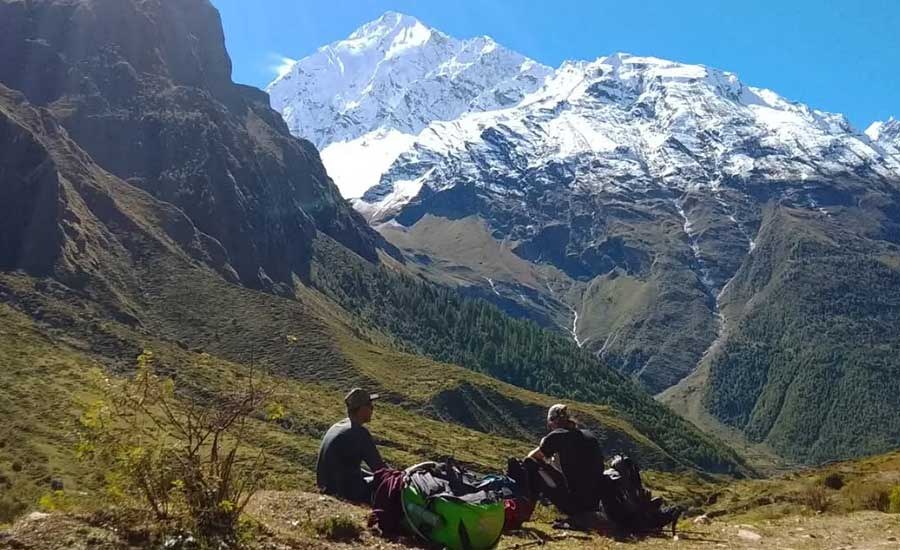
The best time for the Tsum Valley Trek is generally during spring (March to May) and autumn (September to November). These months usually provide the most favourable combination of comfortable trekking temperatures, clearer Himalayan views, workable trail conditions and operating mountain lodges.
However, choosing the best month for the Tsum Valley Trek is not quite as simple as saying spring or autumn. March can still carry winter conditions in the upper valley, May becomes warmer and increasingly affected by pre-monsoon cloud, September changes considerably as the monsoon withdraws, and November becomes progressively colder.
The experience also changes greatly with altitude. The journey begins in the much warmer Budhi Gandaki Valley before climbing through Lokpa, Chumling and Chhokang Paro (3,030 m) to Nile (3,360 m) and Mu Gompa (3,700 m). Himalayan Dream Team's itinerary also visits Gumba Lungdang and includes an optional higher hike toward Ganesh Himal Base Camp when weather, trail conditions and fitness permit.
This detailed guide explains the Tsum Valley weather month by month, including temperatures, rainfall, snowfall, mountain visibility, trail conditions, crowds, accommodation and what each season actually feels like on the trail.
If you are already planning the journey, see our Tsum Valley Trek – 16 Days for the complete itinerary, altitude information, permits, accommodation and current trip details.
Important: Himalayan weather is never completely predictable. Temperatures and conditions in this guide are approximate and vary considerably according to altitude, time of day, cloud, wind, snowfall and yearly weather patterns.
Best Time for Tsum Valley Trek at a Glance
| Season | Months | Typical Conditions | Mountain Views | Trail Conditions | Overall |
|---|---|---|---|---|---|
| Spring | March–May | Gradually warmer, flowering forests, occasional late-spring showers | Good to Excellent | Generally favourable | Excellent |
| Summer / Monsoon | June–August | Warm, humid and rainy on lower approaches | Variable | Wet, muddy and potentially disrupted | Less Recommended |
| Autumn | September–November | Post-monsoon conditions, generally drier with increasingly cold nights | Excellent | Generally favourable | Excellent |
| Winter | December–February | Cold to very cold, particularly in Upper Tsum | Often clear when weather is settled | Possible snow and ice | Possible with Preparation |
What Is the Best Month for the Tsum Valley Trek?
If you want the simplest answer, April and October are two of the strongest months to consider for the Tsum Valley Trek.
They provide quite different experiences.
April is an excellent spring choice because winter is retreating, days are becoming warmer, daylight is longer and flowering vegetation adds colour to the lower and middle sections of the trail.
October is an excellent autumn choice because the summer monsoon has normally withdrawn, the atmosphere is often clearer and the combination of visibility, trail conditions and temperature is particularly attractive.
That does not mean March, May, September or November are poor choices. Each can be excellent when matched to the trekker's priorities and the actual conditions that year.
Tsum Valley Weather: Why Altitude Matters
There is no single accurate temperature for the Tsum Valley Trek.
The route travels through very different elevations and landscapes. Conditions in Machha Khola at around 870 m can be completely different from conditions at Mu Gompa at 3,700 m on the same day.
| Location | Approx. Altitude | Climate Consideration |
|---|---|---|
| Machha Khola | 870 m | Much warmer; summer can be hot and humid |
| Jagat | 1,350 m | Mild to warm compared with Upper Tsum |
| Lokpa | 2,240 m | Noticeably cooler, especially morning and evening |
| Chumling | 2,386 m | Cooler mountain climate |
| Chhokang Paro | 3,030 m | Cold nights possible even during good trekking seasons |
| Nile | 3,360 m | Upper-valley conditions; frost possible in colder periods |
| Mu Gompa | 3,700 m | Cold Himalayan conditions, particularly mornings and nights |
| Ganesh Himal Base Camp Direction | Higher optional excursion | Conditions can change quickly; snow, cold and rough terrain possible |
This is why packing for Tsum Valley requires layers rather than planning around one temperature forecast.
Tsum Valley Trek Month-by-Month Overview
| Month | Typical Character | Visibility | Trail Conditions | Crowds | Our Assessment |
|---|---|---|---|---|---|
| January | Very cold in Upper Tsum | Often clear when settled | Snow / ice possible | Very Low | Winter specialists |
| February | Cold; gradual transition toward spring late in month | Good when settled | Snow / ice may remain | Very Low | Possible with preparation |
| March | Spring begins | Good | Improving; winter effects possible higher up | Low–Moderate | Good |
| April | Warmer spring conditions and flowering forests | Excellent | Generally favourable | Moderate | Excellent |
| May | Warm; increasingly green | Good, often better mornings | Generally good; showers become more possible | Moderate | Very Good |
| June | Monsoon developing | Variable | Increasingly wet | Low | Less Recommended |
| July | Peak monsoon | Often limited by cloud | Wet / muddy; disruption possible | Very Low | Generally Avoid |
| August | Monsoon continues | Variable to limited | Wet / muddy | Very Low | Generally Avoid |
| September | Monsoon transition to autumn | Improves through month | Damp early; generally improves later | Low–Moderate | Good, especially later |
| October | Classic autumn conditions | Excellent | Generally dry and favourable | Moderate | Excellent |
| November | Clearer, drier and progressively colder | Excellent | Generally favourable | Moderate–Low | Excellent |
| December | Winter develops | Often clear when settled | Snow / ice increasingly possible | Very Low | Possible with preparation |
Tsum Valley Trek in January
January is one of the coldest months in Tsum Valley.
The lower Budhi Gandaki sections can still be comfortable during sunny daytime periods, but Upper Tsum is a very different environment. Nights around Chhokang Paro, Nile and Mu Gompa can fall well below freezing.
Snow and ice may affect higher sections of the trail. Some seasonal lodge services can also be reduced because visitor numbers are very low.
What to Expect in January
- Very cold mornings and nights in Upper Tsum
- Shorter daylight hours
- Possibility of snow and icy trails
- Very few trekkers
- Quiet villages and trails
- Potentially clear mountain views during settled weather
- Limited services at some remote lodges
January is better suited to experienced trekkers who understand winter mountain conditions and are prepared for cold accommodation and itinerary flexibility.
Tsum Valley Trek in February
February remains a winter month, particularly in Upper Tsum.
Early February can feel similar to January. Towards the end of the month, days gradually become longer and the lower valleys begin moving toward spring, but winter snow and ice can remain at higher elevations.
February can appeal to experienced trekkers who value solitude, but it is not the easiest choice for a first Himalayan trek.
Tsum Valley Trek in March
March marks the beginning of the main spring trekking season.
The lower valleys become warmer and spring vegetation gradually appears. However, early March can still carry winter conditions in Upper Tsum.
Later March is generally more attractive for travellers wanting spring conditions without waiting until April.
Advantages of March
- Increasingly warmer daytime conditions
- Longer daylight than winter
- Spring vegetation beginning at lower elevations
- Generally good mountain-view opportunities
- Fewer trekkers than the busiest periods
Things to Consider
- Cold nights remain normal above 3,000 m
- Residual winter snow may remain on higher trails
- Early March can be substantially colder than late March
Tsum Valley Trek in April
April is one of the best months for trekking in Tsum Valley.
Spring is well established at lower and middle elevations. Days are generally warmer, forests are greener and rhododendrons and other seasonal flowers can add colour to suitable sections of the route.
Upper Tsum remains cool, particularly in the morning and evening, but conditions are generally more comfortable than during winter.
Why Choose April?
- Excellent spring trekking conditions
- Warmer days
- Longer daylight hours
- Flowering forests at suitable elevations
- Snow-covered Himalayan peaks can remain visible above greener valleys
- Generally good mountain visibility
- Teahouses operating for the main trekking season
For travellers asking us for a strong spring choice, April is usually one of the first months we suggest considering.
Tsum Valley Trek in May
May is the warmest part of the main spring trekking season.
The lower Budhi Gandaki Valley can become quite warm, while Upper Tsum remains considerably cooler.
Early May can provide excellent trekking conditions. As the month progresses, Nepal moves closer to the summer monsoon, so humidity, afternoon cloud development and occasional pre-monsoon showers become more likely.
What to Expect in May
- Warmer trekking temperatures
- Green lower valleys
- Long daylight hours
- Good morning mountain visibility on many days
- Increasing afternoon cloud later in the month
- Greater possibility of showers and thunderstorms as monsoon approaches
An early start can be particularly useful in May, allowing trekkers to walk during cooler hours and enjoy mountain views before afternoon cloud builds.
Tsum Valley Trek in June
June is a transition from late spring into Nepal's summer monsoon.
Rain becomes increasingly frequent on the lower approach through the Budhi Gandaki Valley. Trails can become wet and slippery, cloud can reduce mountain visibility, and road travel toward Machha Khola may become less predictable.
Upper Tsum can sometimes experience different conditions from Nepal's wetter southern slopes, but trekkers still have to reach the valley through lower terrain affected by monsoon weather.
For most first-time visitors, we prefer spring or autumn rather than June.
Tsum Valley Trek in July
July falls in the heart of Nepal's summer monsoon.
Rainfall affects the lower and middle sections of the route, while cloud can obscure mountain views.
Common July Challenges
- Heavy or prolonged rainfall on lower approaches
- Muddy and slippery trails
- Leeches at warm, lower elevations
- Cloud and reduced mountain visibility
- Possible landslides
- Higher river and stream levels
- Road delays or disruption
July is therefore not a first-choice month for most Tsum Valley trekkers.
Tsum Valley Trek in August
August continues the summer monsoon pattern.
The countryside is exceptionally green, visitor numbers are very low and the landscape can be beautiful between periods of rain. However, the practical disadvantages are similar to July.
Wet trails, cloud, transport uncertainty and landslide risk on the approach make August less suitable for most travellers.
Tsum Valley Trek in September
September is one of the most interesting transition months.
Early September and late September should not be treated as identical.
Early in the month, monsoon conditions may continue. Trails can remain wet and clouds can still limit Himalayan visibility.
As the month progresses and the monsoon withdraws, conditions generally improve. The countryside remains lush and green after the summer rains, while clearer periods become increasingly common.
Why Consider Late September?
- Fresh post-monsoon landscapes
- Green hills and valleys
- Improving mountain visibility
- Fewer trekkers than October
- Warmer conditions than late autumn
For trekkers who want autumn conditions but prefer to travel before October, late September can be a very attractive choice.
Tsum Valley Trek in October
October is one of the best overall months for the Tsum Valley Trek.
By October, Nepal's summer monsoon has normally withdrawn. The atmosphere is often clearer, trails are generally in better condition and Himalayan visibility can be excellent.
Daytime trekking temperatures are usually comfortable, although mornings and evenings become increasingly cold as you move into Upper Tsum.
Why Trek Tsum Valley in October?
- Generally stable autumn weather
- Excellent Himalayan visibility
- Comfortable daytime trekking conditions
- Usually drier trails than monsoon months
- Good conditions for landscape photography
- Main-season teahouse services operating
October is peak trekking season across Nepal. Tsum Valley, however, generally remains much quieter than famous routes in the Everest and Annapurna regions.
Tsum Valley Trek in November
November is another excellent month.
Post-monsoon clarity can continue, humidity is generally low and mountain views can be outstanding.
The main difference from October is temperature. November becomes progressively colder, particularly after sunset and at elevations above 3,000 m.
November Advantages
- Excellent mountain visibility
- Generally dry trail conditions
- Crisp autumn atmosphere
- Good photography conditions
- Quieter conditions later in the month
November Considerations
- Cold mornings and evenings
- Sub-zero nighttime temperatures possible in Upper Tsum
- Late November feels noticeably closer to winter
Travellers comfortable with colder nights often find November particularly rewarding.
Tsum Valley Trek in December
December marks the transition into winter.
Early December can sometimes provide dry trails and excellent visibility, but temperatures continue falling. Snow becomes increasingly possible in Upper Tsum as winter develops.
Visitor numbers decrease substantially, giving the valley an even quieter atmosphere.
A December trek requires warmer equipment and more flexibility than an October or April departure.
Spring in Tsum Valley: March to May
Spring is one of the two best trekking seasons for Tsum Valley.
The season changes noticeably from March through May.
| Spring Month | Main Character | Best For |
|---|---|---|
| March | Cooler early spring; winter effects can remain higher up | Quieter trails and cooler trekking |
| April | Warmer, flowering forests, generally favourable conditions | Best overall spring balance |
| May | Warmest spring month; increasing pre-monsoon cloud | Warm weather and green landscapes |
Autumn in Tsum Valley: September to November
Autumn is the other principal trekking season.
After the summer monsoon, the landscape is green and the atmosphere gradually becomes drier and clearer.
| Autumn Month | Main Character | Best For |
|---|---|---|
| September | Transition from monsoon; improves through the month | Green scenery and fewer trekkers, especially late month |
| October | Generally stable, clear and comfortable | Best overall autumn balance |
| November | Dry, clear and colder | Clear views and trekkers comfortable with colder nights |
Spring vs Autumn: Which Is Better for Tsum Valley?
Both are excellent, but they offer different experiences.
| Factor | Spring – March to May | Autumn – September to November |
|---|---|---|
| Temperature | Gradually warmer | Warm initially, progressively colder |
| Mountain Visibility | Generally very good; cloud can increase in late May | Often excellent after monsoon |
| Vegetation | Flowers and fresh spring growth | Green immediately after monsoon, becoming drier later |
| Trail Conditions | Generally favourable | Generally favourable after monsoon withdrawal |
| Photography | Flowers, forests and snowy mountains | Clearer atmosphere and crisp Himalayan views |
| Best Months | April and early May | October and November |
April vs October: Which Month Should You Choose?
If you are deciding between April and October for the Tsum Valley Trek, neither is automatically better for every traveller.
Choose April if you prefer:
- Spring flowers
- Fresh vegetation
- Increasingly warmer weather
- Longer daylight
- Snow-covered peaks above colourful lower landscapes
Choose October if you prefer:
- Classic post-monsoon Himalayan conditions
- Generally excellent visibility
- Drier trail conditions
- Crisp landscape photography
- Comfortable daytime walking temperatures
For most first-time Tsum Valley trekkers, both months are excellent choices.
Can You Trek Tsum Valley During the Monsoon?
Yes, trekking is possible during the monsoon, but June, July and August are not our preferred months for most visitors.
It is important not to look only at Upper Tsum's climate. To reach Tsum Valley, trekkers first travel through the lower Budhi Gandaki region, where monsoon rainfall can affect roads and trails.
Potential monsoon challenges include:
- Rain
- Mud
- Slippery stone trails
- Leeches at lower elevations
- Cloud and reduced mountain visibility
- Landslides
- Higher rivers and streams
- Road delays
Travellers who have complete flexibility will normally have a more comfortable Tsum Valley experience in spring or autumn.
Can You Trek Tsum Valley in Winter?
Yes, but winter trekking requires significantly more preparation.
December, January and February bring very cold conditions to Upper Tsum. Snow can affect higher trails, while some remote accommodation services may be reduced.
A winter trek can nevertheless appeal to experienced travellers who value solitude and are comfortable with:
- Sub-zero temperatures
- Snow and ice
- Shorter daylight
- Very basic cold-weather accommodation
- Potential itinerary changes
- Limited lodge services in remote areas
Winter should be approached as a different type of Himalayan journey rather than simply a quieter version of an autumn trek.
When Is Tsum Valley Most Crowded?
Tsum Valley is generally much quieter than Nepal's Everest and Annapurna trekking routes.
Visitor numbers are highest during the main spring and autumn trekking seasons, particularly around April and October.
Even then, Tsum Valley's restricted status, longer itinerary and remote location help preserve a quieter trekking atmosphere.
For travellers specifically looking for peaceful routes, see our guide to Less Crowded Treks in Nepal.
Best Time for Clear Mountain Views in Tsum Valley
If mountain visibility is your main priority, October and November are particularly attractive.
After the summer monsoon has cleared dust and haze from the atmosphere, autumn frequently brings crisp Himalayan visibility.
Spring can also offer excellent views, particularly in March and April. By later May, afternoon cloud becomes more common as Nepal approaches the monsoon.
Regardless of season, mountain views are often clearest in the morning before daytime heating creates additional cloud.
Best Time for Photography in Tsum Valley
The best photography season depends on what you want to photograph.
| Photography Interest | Good Period |
|---|---|
| Clear Himalayan panoramas | October–November |
| Flowers and spring forests | March–April |
| Green landscapes | Late monsoon / September |
| Snowy winter atmosphere | December–February, when snowfall occurs |
| Traditional villages and monasteries | Possible throughout the trekking year |
Tsum Valley is particularly rewarding for cultural photography because the trail passes traditional Tsumba villages, mani walls, chortens, prayer wheels, Rachen Gompa, Mu Gompa and other Buddhist sites.
Best Time to Visit Mu Gompa
Mu Gompa (approximately 3,700 m) is one of the cultural highlights of the Tsum Valley Trek and one of the highest points reached on the standard route.
Spring and autumn generally provide the most comfortable conditions for visiting Mu Gompa.
Winter can bring extreme cold and snow, while monsoon weather can complicate the lower approach to Tsum Valley.
Because Mu Gompa is considerably higher than the lower trail, trekkers should carry warm clothing even during the main trekking seasons.
Best Time for the Ganesh Himal Base Camp Hike
Himalayan Dream Team's Tsum Valley itinerary includes an optional hike from Gumba Lungdang toward Ganesh Himal Base Camp.
This is more demanding and weather-sensitive than the standard village-to-village sections of the Tsum Valley Trek.
Spring and autumn normally provide the best opportunity, but the hike should never be considered guaranteed simply because you are travelling in April or October.
The final decision depends on:
- Current weather
- Snow conditions
- Trail condition
- Available daylight
- Trekker fitness
- Acclimatization
- The guide's assessment
Safety and actual mountain conditions should always take priority over reaching a fixed turnaround point.
Tsum Valley Trek Temperature
People frequently search for the average temperature in Tsum Valley, but a single figure can be misleading because the trek covers almost 3,000 metres of elevation difference before optional higher excursions are considered.
A sunny afternoon at Machha Khola can feel warm or even hot while the same night at Mu Gompa can be close to or below freezing during colder periods.
As a practical guide:
- Lower elevations: considerably warmer, especially in late spring and summer
- 2,000–3,000 m: mild days can combine with cool or cold nights
- Above 3,000 m: cold mornings and evenings should be expected
- Winter: sub-zero nighttime temperatures are common in Upper Tsum
- Spring and autumn: comfortable daytime walking can still be followed by freezing or near-freezing nights at higher elevations
For this reason, Himalayan Dream Team recommends preparing for a wide temperature range rather than relying on a single monthly average.
Rainfall and Monsoon in Tsum Valley
Nepal's main summer monsoon generally occurs from June through August, with transitional conditions possible in May and September.
Upper Tsum can sometimes be relatively drier than the lower southern approaches, but this does not make the entire trek a dependable monsoon route.
The approach follows the Budhi Gandaki Valley, where heavy rain can cause:
- Muddy trails
- Slippery rocks
- Landslides
- Road delays
- Higher water levels
- Cloud and poor mountain visibility
For most travellers, the monsoon disadvantages outweigh the benefit of quieter trails.
Snowfall in Tsum Valley
Snow is most likely during the colder winter period and can affect Upper Tsum and higher side excursions.
However, Himalayan snowfall does not follow an exact calendar. A storm can occasionally bring snow outside the core winter months, particularly at higher elevations.
Do not choose a month expecting guaranteed snow—or guaranteed snow-free trails.
Best Time for Tsum Valley Culture and Monasteries
Tsum Valley is not only a mountain trek. Its distinctive Tsumba culture and Tibetan Buddhist heritage are central to the experience.
Important places on the Himalayan Dream Team route include:
- Mu Gompa
- Rachen Gompa
- Milarepa's Cave (Piren Phu)
- Gumba Lungdang
- Chhokang Paro
- Chumling
- Chhule and Nile
Religious life continues throughout the year, although individual ceremonies and festivals follow local and Tibetan Buddhist calendars rather than fixed Western dates.
If attending a specific festival or ceremony is important to you, confirm the date before choosing your trekking departure.
Tsum Valley Trek Permit Cost by Season
Tsum Valley is a restricted trekking area, and the Restricted Area Permit fee changes according to season.
| Period | Tsum Valley Restricted Area Permit |
|---|---|
| September–November | USD 40 per person for the first week + USD 7 per person/day beyond one week |
| December–August | USD 30 per person for the first week + USD 7 per person/day beyond one week |
These fees are set by Nepal's Department of Immigration and can be revised by the authorities.
Himalayan Dream Team arranges the required restricted-area permit and applicable conservation-area trekking documentation for guests booking the Tsum Valley Trek with us.
For current official restricted-area information, travellers can also consult the Nepal Department of Immigration Trekking Route and Permit Fee page.
Does the Tsum Valley Trek Cross Larkya La?
No. Himalayan Dream Team's standard Tsum Valley Trek does not cross Larkya La Pass.
This is an important distinction when researching Tsum Valley weather online.
The standard Tsum Valley journey explores the side valley through Chumling, Chhokang Paro, Nile and Mu Gompa before returning through the lower valley.
The Manaslu Circuit with Tsum Valley, on the other hand, continues around Manaslu and eventually crosses the high Larkya La Pass.
Weather considerations for the combined trek are therefore more demanding because conditions at the high pass must also be taken into account.
If you are interested in the longer route, see our Manaslu and Tsum Valley Trek.
Tsum Valley Trek vs Manaslu Circuit: Does the Best Season Differ?
The main trekking seasons are similar—spring and autumn—but the routes are not identical.
| Factor | Tsum Valley Trek | Manaslu Circuit |
|---|---|---|
| Main High Point | Mu Gompa 3,700 m on standard route; optional higher side hike | Larkya La Pass above 5,000 m |
| High Pass Crossing | No | Yes |
| Best Seasons | March–May and September–November | March–May and September–November |
| Winter Concern | Cold and snow in Upper Tsum | Cold, snow and possible difficulty crossing Larkya La |
| Monsoon Concern | Wet lower approaches and transport disruption | Rain, landslides, wet trails plus complete circuit conditions |
For more information about the main circuit, read our Complete Guide to the Manaslu Circuit Trek.
Best Time Based on Your Trekking Priority
| Your Priority | Months to Consider |
|---|---|
| Best overall spring conditions | April |
| Best overall autumn conditions | October |
| Spring flowers | March–April, depending on elevation |
| Clear Himalayan views | October–November |
| Warmer trekking | April–May |
| Green post-monsoon landscape | Late September–October |
| Fewer trekkers during main season | March, late September or later November |
| Winter solitude | December–February with appropriate experience |
| Photography | April or October–November depending on subject |
What to Pack for Tsum Valley by Season
Spring: March–May
- Layered trekking clothing
- Warm fleece or insulated mid-layer
- Down jacket for mornings and evenings
- Waterproof shell
- Trekking trousers
- Warm hat and gloves
- Sun hat
- Sunglasses and sunscreen
- Good trekking boots
- Sleeping bag suitable for mountain conditions
Autumn: September–November
- Layered clothing
- Warm down jacket
- Thermal base layers, particularly for November
- Warm gloves and hat
- Windproof / waterproof outer layer
- Good trekking boots
- Sunglasses and sun protection
- Warm sleeping bag
Monsoon: June–August
- Reliable waterproof jacket
- Waterproof pack cover / dry bags
- Quick-drying clothing
- Good-grip trekking footwear
- Trekking poles
- Protection for electronics and documents
- Leech protection for lower sections
Winter: December–February
- Warm thermal base layers
- High-quality insulated jacket
- Warm trekking trousers
- Insulated gloves
- Warm hat and neck protection
- Suitable winter sleeping bag
- Waterproof boots
- Traction equipment if conditions require it
Accommodation and Seasons in Tsum Valley
Tsum Valley is a remote teahouse trek.
During spring and autumn, the main trekking lodges are generally operating, although accommodation remains considerably simpler than in Nepal's more developed trekking regions.
During winter, some remote establishments may reduce services or close temporarily depending on local conditions and visitor numbers.
Monsoon travel can also create logistical difficulties because road and trail access can be affected by rainfall.
For this reason, season affects not only weather but also the overall ease of operating the trek.
Do You Need to Book Early for April and October?
April and October are popular trekking months throughout Nepal.
Tsum Valley itself remains relatively quiet, but guides, transport and Kathmandu services are in higher demand during these periods.
Because Tsum Valley also requires restricted-area trekking arrangements, we recommend planning ahead rather than leaving the organization until arrival.
How Weather Can Affect the Drive to Machha Khola
The journey to Tsum Valley begins with a long drive from Kathmandu toward Machha Khola.
Road conditions can vary throughout the year, but the summer monsoon requires particular flexibility. Heavy rainfall can cause:
- Muddy road sections
- Landslides
- Traffic delays
- Temporary road disruption
Travel times should therefore always be considered approximate, particularly during or immediately after periods of heavy rain.
Is Tsum Valley a Good Alternative to Busier Nepal Treks?
Yes. Tsum Valley is particularly attractive for travellers who want a Himalayan trek where culture, monasteries, remote villages and peaceful trails are as important as reaching a famous viewpoint.
It receives substantially fewer trekkers than routes such as Everest Base Camp or the busiest Annapurna trails.
For more ideas, read our Less Crowded Treks in Nepal.
Frequently Asked Questions About the Best Time for Tsum Valley Trek
What is the best time for the Tsum Valley Trek?
The best time for the Tsum Valley Trek is generally March to May and September to November. These periods usually offer the best balance of temperature, trail conditions, mountain visibility and lodge availability.
What is the best month for Tsum Valley Trek?
April and October are two particularly strong choices. April offers excellent spring conditions and flowering vegetation, while October is known for classic post-monsoon Himalayan visibility and generally stable trekking weather.
Is March a good time for the Tsum Valley Trek?
Yes. March marks the beginning of spring. Later March is generally warmer, while early March may still have winter-like conditions in Upper Tsum.
Is April a good time for the Tsum Valley Trek?
Yes. April is one of the best months for Tsum Valley, combining warmer spring weather, longer daylight, flowering forests and generally favourable trail conditions.
Is May a good time for Tsum Valley?
Yes. May can be very good, particularly earlier in the month. Later May becomes warmer and the possibility of afternoon cloud and pre-monsoon showers increases.
Can I trek Tsum Valley in June?
It is possible, but June marks the transition into the summer monsoon. Rain, wet trails, cloud and road disruption become increasingly possible.
Can I trek Tsum Valley in July or August?
It is technically possible, but July and August are generally less suitable for most travellers because of monsoon rain, slippery trails, leeches, landslide risk, cloud and transport uncertainty.
Is September a good time for Tsum Valley?
Yes, particularly later in September. Early September can still experience monsoon conditions, while the weather generally improves as the month progresses.
Is October the best month for Tsum Valley?
October is one of the best overall months because it usually provides a strong combination of clear Himalayan views, relatively stable weather, comfortable daytime temperatures and favourable trails.
Is November good for the Tsum Valley Trek?
Yes. November can provide excellent mountain visibility and dry trail conditions, although mornings and nights become increasingly cold, especially in Upper Tsum.
Can I trek Tsum Valley in December?
Yes, with appropriate cold-weather preparation. December becomes progressively colder and snowfall can affect Upper Tsum.
Can I trek Tsum Valley in January?
It is possible for experienced and properly equipped winter trekkers, but January is extremely cold in Upper Tsum and snow, ice and limited lodge services can affect the journey.
Can I trek Tsum Valley in February?
Yes, but February remains a winter month. Late February generally begins moving toward spring, although snow and cold can remain at higher elevations.
Does Tsum Valley receive monsoon rain?
Yes. Conditions vary by elevation and location, but the lower Budhi Gandaki approach is affected by Nepal's summer monsoon. Upper Tsum can sometimes be relatively drier, but the entire route should not be considered a rain-free monsoon trek.
Does it snow in Tsum Valley?
Yes. Snowfall is possible, particularly during winter and at higher elevations. The amount and timing vary from year to year.
How cold is Mu Gompa?
Mu Gompa sits at approximately 3,700 m, so mornings and nights can be cold even during the main trekking seasons. Winter temperatures can fall well below freezing.
Which is better for Tsum Valley: spring or autumn?
Both are excellent. Choose spring for flowers, fresh vegetation and gradually warmer weather. Choose autumn for classic post-monsoon conditions, generally clear visibility and drier trails.
Which is better: April or October?
April is ideal for spring scenery and flowering forests, while October is particularly attractive for post-monsoon clarity and classic Himalayan trekking conditions. Both are among the strongest months for first-time visitors.
When is Tsum Valley least crowded?
Winter and monsoon receive the fewest visitors, but these periods also have the most difficult weather. For a balance of favourable conditions and quieter trails, March, late September and later November can be worth considering.
Does the Tsum Valley Trek cross Larkya La Pass?
No. The standard Himalayan Dream Team Tsum Valley Trek does not cross Larkya La. The combined Manaslu and Tsum Valley Trek continues around Manaslu and includes the high-pass crossing.
What is the highest point of the Tsum Valley Trek?
Mu Gompa is approximately 3,700 m on the standard Upper Tsum route. Himalayan Dream Team also includes an optional higher hike from Gumba Lungdang toward Ganesh Himal Base Camp when weather, trail conditions, acclimatization and fitness permit.
Does the Tsum Valley permit cost change by season?
Yes. Under the current Nepal Department of Immigration fee structure, the Tsum Valley Restricted Area Permit costs USD 40 per person for the first week from September through November and USD 30 per person for the first week from December through August. Additional days beyond the first week currently cost USD 7 per person per day.
Do I need a guide for the Tsum Valley Trek?
Tsum Valley is a restricted trekking region. The trek should be arranged through a registered Nepal trekking agency with the required permit documentation and a licensed trekking guide. Himalayan Dream Team arranges the necessary trekking documentation and guide as part of our Tsum Valley Trek.
Himalayan Dream Team's Advice: When Should You Trek Tsum Valley?
For most travellers, we recommend choosing spring from March to May or autumn from September to November.
If you want one particularly balanced spring month, consider April.
If you want one particularly balanced autumn month, consider October.
Choose March if you prefer cooler conditions and fewer trekkers but are comfortable with the possibility of lingering winter weather.
Choose May if you prefer warmer temperatures and greener landscapes but understand that afternoon cloud and showers become more likely as the monsoon approaches.
Choose late September if you want fresh post-monsoon landscapes and prefer to arrive before October's main trekking period.
Choose November if clear mountain views are important and you do not mind colder mornings and nights.
Winter can work for experienced trekkers who are properly equipped for severe cold, while the summer monsoon is generally better avoided by first-time Tsum Valley visitors.
Most importantly, choose the season according to your own priorities. The best month for a photographer may not be the best month for someone who dislikes cold weather, and the best month for solitude may not provide the easiest trail conditions.
Plan Your Tsum Valley Trek with Himalayan Dream Team
The Tsum Valley is one of Nepal's most distinctive trekking regions, combining Himalayan scenery with remote villages, ancient monasteries and the living Buddhist traditions of the Tsumba people.
Our 16-Day Tsum Valley Trek follows the Budhi Gandaki Valley from Machha Khola through Jagat and Lokpa before entering Tsum Valley and continuing through Chumling, Chhokang Paro, Nile and Mu Gompa. The journey also visits Gumba Lungdang, with an optional higher excursion toward Ganesh Himal Base Camp when conditions permit.
Travellers wanting a longer and more challenging journey can combine the valley with the Manaslu and Tsum Valley Trek, while those interested primarily in the high-pass circuit can explore our Manaslu Circuit Trek.
Whichever month you choose, Himalayan Dream Team plans the trek around current weather, trail conditions, sensible altitude gain and the pace of the group rather than treating the itinerary as a rigid timetable.
Conclusion: Choosing the Best Time for the Tsum Valley Trek
The best time for the Tsum Valley Trek is spring (March to May) and autumn (September to November), but each month has its own character.
April offers one of the best combinations of spring warmth, flowering landscapes and favourable trekking conditions. October provides classic post-monsoon conditions with excellent Himalayan visibility and generally comfortable daytime walking temperatures.
March and November are excellent for travellers comfortable with colder conditions, while May offers warmer days with an increasing chance of pre-monsoon cloud and showers. Late September can be particularly beautiful as the monsoon retreats and the landscape remains fresh and green.
Winter trekking is possible with the right preparation, but Upper Tsum becomes extremely cold and snow can affect higher trails. June through August brings Nepal's summer monsoon, making the lower approach wetter, muddier and less predictable.
There is therefore no single perfect month for every traveller. Consider the temperature you prefer, your tolerance for cold or rain, whether flowers or crystal-clear mountain views matter most, and how much flexibility you have.
With the right timing and preparation, the Tsum Valley Trek offers something increasingly difficult to find in the Himalayas: a peaceful journey where dramatic mountain landscapes, remote village life and centuries-old Buddhist culture remain closely connected.