

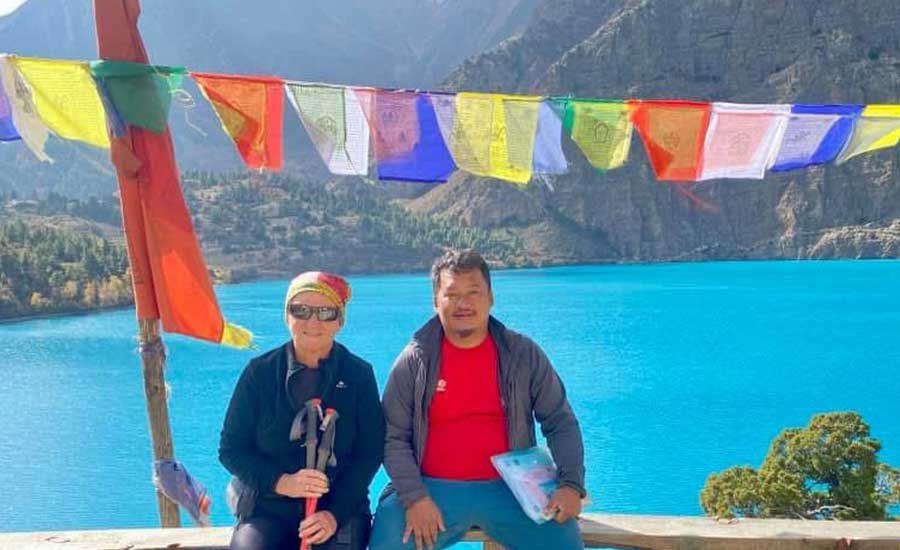
Shey Phoksundo Lake is one of Nepal's most extraordinary natural destinations. Hidden among the remote mountains of Dolpo in northwestern Nepal, the lake is famous for its brilliant turquoise water, dramatic rocky cliffs, peaceful forests and rich Himalayan cultural heritage.
Located at approximately 3,611 meters (11,847 feet) above sea level, Phoksundo Lake lies within Shey-Phoksundo National Park, Nepal's largest national park. Its remarkable beauty attracts trekkers, photographers, nature lovers and travelers interested in the traditional Bon and Tibetan Buddhist cultures of Dolpo.
Reaching the lake is an adventure in itself. Most international visitors travel from Kathmandu to Nepalgunj, continue by mountain flight to Juphal and then trek through the Suli Gad Valley, passing small settlements, suspension bridges, waterfalls and forests before arriving at Ringmo Village and the lake.
Unlike the busier trekking routes around Everest and Annapurna, the Shey Phoksundo Lake Trek offers a quieter Himalayan experience, with simple accommodation, limited modern facilities and a strong connection to local communities.
In this detailed guide, Himalayan Dream Team Treks & Tours explains where Phoksundo Lake is located, how to get there, the best time to visit, trekking difficulty, permits, accommodation, local culture, wildlife, photography opportunities and practical travel advice.
If you are planning to visit, explore our Shey Phoksundo Lake Trek – 12 Days, which combines the lake with a guided journey through the beautiful Dolpo region.
Shey Phoksundo Lake at a Glance
| Information | Details |
|---|---|
| Lake Name | Shey Phoksundo Lake, also called Phoksundo Lake or Ringmo Lake |
| Location | Shey Phoksundo Rural Municipality, Dolpa District, Karnali Province, Nepal |
| Altitude | Approximately 3,611 m (11,847 ft) |
| Lake Type | High-altitude freshwater lake |
| Reported Maximum Depth | Approximately 145 m in commonly cited park records; measurements vary between surveys |
| Approximate Surface Area | 4.9–5.0 square kilometres |
| Protected Area | Shey-Phoksundo National Park |
| International Recognition | Ramsar Wetland of International Importance |
| Nearest Traditional Village | Ringmo |
| Typical Trek Starting Point | Juphal, Dolpa |
| Typical Holiday Duration | 10–12 days or longer, depending on flights and itinerary |
| Trekking Difficulty | Moderate, with demanding uphill sections |
| Best Time to Visit | March–May and September–October; November can also be suitable |
| Accommodation | Basic local lodges, teahouses or arranged camping |
| Major Attractions | Turquoise lake, Ringmo Village, Bon monasteries, Phoksundo waterfall, national park scenery |
Where Is Shey Phoksundo Lake Located?
Shey Phoksundo Lake is located in Dolpa District of Karnali Province, in the remote northwestern part of Nepal.
The lake lies within Shey-Phoksundo National Park, a protected area extending across parts of Dolpa and Mugu districts.
The surrounding landscape is dramatically different from many other parts of Nepal. Deep valleys, steep cliffs, forests and dry trans-Himalayan mountains create a distinctive environment shaped by altitude and geography.
Ringmo Village, situated close to the lake's southern shore, is the main settlement associated with the destination.
Because the lake is remote, visitors normally need several days of travel from Kathmandu. Although road access to parts of Dolpa has improved, the traditional approach still involves a domestic flight to Juphal followed by trekking.
Why Is Shey Phoksundo Lake Famous?
Phoksundo Lake is especially famous for its vivid turquoise and deep-blue water, surrounded by rugged mountain cliffs and forested slopes.
The lake is also important for several other reasons:
- It is among Nepal's deepest high-altitude lakes.
- It is located inside Nepal's largest national park.
- It is recognised as an internationally important wetland under the Ramsar Convention.
- It is closely associated with the cultural and spiritual traditions of Ringmo Village.
- It provides access to the wider landscapes and traditional communities of Dolpo.
- It is a remarkable destination for landscape photography and remote Himalayan trekking.
The combination of natural beauty, cultural significance and geographical isolation makes Phoksundo one of Nepal's most distinctive trekking destinations.
Why Is Phoksundo Lake So Blue and Turquoise?
One of the first things visitors notice is the extraordinary color of Phoksundo Lake.
Depending on the sunlight, cloud cover, viewing angle and water conditions, the lake can appear bright turquoise, deep blue, greenish-blue or almost dark indigo.
The colour is influenced by the way sunlight interacts with the water, the lake's depth, its low nutrient levels and the surrounding geological environment.
Mineral particles and fine sediment may also influence the appearance of the water, but the lake's colour should not be attributed to one cause without specific water-quality measurements.
On a clear morning, the contrast between the turquoise water and the surrounding grey cliffs can be especially striking.
Visitors often find that the colours change throughout the day, making the lake particularly rewarding for photography.
How Deep Is Shey Phoksundo Lake?
Phoksundo is widely recognised as one of Nepal's deepest lakes, but published measurements differ.
National park documents commonly report a maximum depth of approximately 145 metres.
Other hydrological studies have reported different depth measurements, reflecting differences in survey methods and available data.
For this reason, it is more accurate to describe Phoksundo as one of Nepal's deepest lakes rather than relying on an unqualified national ranking.
The lake covers approximately 4.9–5.0 square kilometers and is surrounded by steep mountain slopes.
Shey-Phoksundo National Park: Nepal's Largest National Park
Shey-Phoksundo National Park was established in 1984 to protect the remarkable natural and cultural heritage of the Dolpo region.
Covering approximately 3,555 square kilometers, it is Nepal's largest national park.
The protected area includes forests, river valleys, alpine meadows, high mountain landscapes and dry trans-Himalayan environments.
Its vegetation changes considerably with altitude. Lower areas contain forests with species such as pine, oak, spruce and birch, while higher regions support alpine grasslands and sparse mountain vegetation.
The park also protects important habitats for Himalayan wildlife and preserves cultural landscapes associated with traditional mountain communities.
Phoksundo Lake was designated a Ramsar Wetland of International Importance in 2007, recognising its ecological value.
Wildlife and Birds Around Shey Phoksundo Lake
Shey-Phoksundo National Park is home to a diverse range of Himalayan wildlife.
Species recorded in the protected area include:
- Snow leopard
- Blue sheep
- Himalayan tahr
- Musk deer
- Himalayan black bear
- Goral
- Himalayan wolf
- Various mountain birds and birds of prey
Wildlife sightings depend on habitat, season, weather and luck. Snow leopards are exceptionally elusive and should never be presented as an animal trekkers are likely to see.
Birdwatchers may enjoy observing Himalayan pheasants, choughs, ravens and other species in the forests and mountain landscapes.
Visitors should observe wildlife from a respectful distance and avoid disturbing animals or their habitats.
Ringmo Village: Culture and Traditional Life Beside Phoksundo Lake
Ringmo Village is one of the cultural highlights of a visit to Phoksundo Lake.
Located close to the southern shore, Ringmo is a traditional Himalayan settlement with stone houses, cultivated fields, religious monuments and strong cultural ties to the wider Dolpo region.
The community's history reflects the influence of Tibetan cultural traditions and the ancient Bon religion.
Walking through the village provides an opportunity to learn about local farming, seasonal livelihoods, traditional architecture and religious customs.
Ringmo is not simply a sightseeing attraction. It is a living community, and visitors should respect local customs, privacy and daily routines.
Himalayan Dream Team encourages travellers to visit with an experienced local guide who can explain the area's cultural background and help ensure respectful interactions.
Bon Religion and Sacred Monasteries Near Phoksundo Lake
The Dolpo region is particularly important for its living traditions of Bon, a Himalayan religious tradition with historical roots predating the widespread establishment of Buddhism in Tibet.
Bon and Tibetan Buddhism share some cultural practices, artistic traditions and forms of ritual, but they are distinct religious traditions.
The area around Ringmo contains sacred sites and monasteries associated with local religious heritage.
Thasung Tsholing is among the monasteries connected with the Phoksundo area. Visitors may also encounter references to Tshowa Gompa in local trekking descriptions.
Access to religious buildings depends on local arrangements and the wishes of the community.
When visiting a monastery, dress modestly, ask before taking photographs and follow your guide's instructions.
Phoksundo Waterfall: A Spectacular Natural Highlight
Before reaching Ringmo Village, trekkers can enjoy impressive views of the waterfall associated with the lake's southern outlet.
The waterfall is often called Phoksundo Waterfall or Suligad Waterfall.
Water flowing from the lake descends through a dramatic rocky landscape before continuing into the Suli Gad river system.
Published estimates of the waterfall's height vary, with figures around 167–170 metres appearing in conservation references and larger figures appearing in tourism descriptions.
Rather than relying on a disputed measurement, visitors can appreciate it as one of the most striking waterfall viewpoints along the route to Phoksundo Lake.
The surrounding cliffs and valley scenery make this an excellent place for photography.
How to Reach Shey Phoksundo Lake from Kathmandu
The traditional journey to Phoksundo Lake combines domestic flights and trekking.
Step 1: Fly from Kathmandu to Nepalgunj
Begin with a domestic flight from Kathmandu to Nepalgunj in western Nepal.
The flight normally takes approximately one hour, depending on airline operations.
Nepalgunj is a major transportation gateway for travellers visiting Dolpa.
Step 2: Fly from Nepalgunj to Juphal
From Nepalgunj, take a mountain flight to Juphal, also written as Jhupal or Jufal.
Juphal Airport is located at approximately 2,475 metres above sea level.
The flight is short but highly weather-dependent. Delays or cancellations are possible, especially during periods of poor visibility.
Step 3: Trek Through the Suli Gad Valley
From Juphal, the trekking route passes through lower Dolpo settlements and follows the Suli Gad Valley towards Phoksundo Lake.
Common stopping points include Dunai, Chhepka and the Jharana or Shyanta area, depending on the chosen itinerary.
The route passes forests, bridges, waterfalls and small villages before reaching Ringmo and the lake.
Can You Reach Phoksundo Lake by Road?
Road connections into parts of Dolpa have improved, and overland journeys towards Dunai or other access points may be possible.
However, road conditions, seasonal closures and the final trekking route must be checked carefully.
There is no standard road journey that takes visitors directly to the lake shore.
Himalayan Dream Team can advise on flight-based or suitable overland access arrangements according to current conditions.
How Many Days Are Needed for the Shey Phoksundo Lake Trek?
Most international travellers should allow approximately 10–12 days or longer for a comfortable visit that includes travel from Kathmandu.
Our 12-day Shey Phoksundo Lake Trek includes domestic travel, guided trekking, time around the lake and the return journey.
The exact number of trekking days depends on the starting point, overnight stops, walking pace and flight arrangements.
Typical Route Overview
| Stage | Route | Main Experience |
|---|---|---|
| 1 | Kathmandu to Nepalgunj | Domestic flight to western Nepal |
| 2 | Nepalgunj to Juphal | Mountain flight into Dolpa |
| 3 | Juphal to Dunai / Suligad | Traditional villages and river valley |
| 4 | Suligad to Chhepka | Forest trails and national park scenery |
| 5 | Chhepka towards Jharana / Shyanta | River crossings and uphill trekking |
| 6 | Jharana / Shyanta to Ringmo | Waterfall viewpoints and arrival at Phoksundo Lake |
| 7 | Explore Phoksundo Lake | Lake photography, village culture and acclimatisation |
| 8 | Return through the Suli Gad Valley | Descending forest and river trails |
| 9 | Return to Juphal | Final trekking stages |
| 10 | Juphal to Nepalgunj and Kathmandu | Weather-dependent return flights |
This table is a general route overview, not a replacement for the detailed day-by-day package itinerary. The final overnight stops and travel days should follow the confirmed trekking program.
How Difficult Is the Shey Phoksundo Lake Trek?
The standard trek to Phoksundo Lake is generally considered moderate, although some sections can be demanding.
It is less technically challenging than an Upper Dolpo expedition crossing passes above 5,000 metres, but the journey still requires good walking fitness.
Trekkers should be prepared for:
- Several consecutive days of mountain walking.
- Uphill and downhill trails.
- Rocky paths and uneven steps.
- Suspension bridges and river crossings.
- Remote accommodation and limited facilities.
- Walking at elevations above 3,000 metres.
- Possible changes caused by weather and trail conditions.
Most reasonably fit travellers with suitable preparation can consider the trek, but it should not be described as an effortless walk.
Phoksundo Lake Altitude and Acclimatisation
Phoksundo Lake lies at approximately 3,611 metres, an elevation where altitude sickness can affect some visitors.
The risk depends on factors including ascent rate, individual susceptibility and previous acclimatisation.
Common symptoms include headache, nausea, dizziness, unusual fatigue and difficulty sleeping.
Trekkers should walk at a comfortable pace and avoid unnecessary rapid ascents.
If symptoms develop, inform your guide promptly. Do not continue ascending with symptoms of acute mountain sickness.
Severe symptoms such as confusion, difficulty walking normally or breathlessness at rest require urgent medical attention and descent.
Our trekking itineraries can be adapted when additional acclimatisation time is necessary.
Best Time to Visit Shey Phoksundo Lake
The best seasons for visiting Phoksundo Lake are generally spring and autumn, when trekking conditions are often more favourable.
| Season | Typical Conditions | Recommendation |
|---|---|---|
| Spring: March–May | Improving temperatures, forest scenery and variable mountain weather | Recommended |
| Summer: June–August | Green lower valleys, rainfall on access routes and possible flight disruption | Possible with flexibility |
| Autumn: September–October | Often clearer skies and excellent landscape views | Highly recommended |
| Late Autumn: November | Potentially clear days but increasingly cold nights | Suitable with preparation |
| Winter: December–February | Very cold conditions, possible snow and difficult access | Not generally recommended for casual trekkers |
Spring at Phoksundo Lake
Spring brings milder conditions to the lower trekking route, with greener forests and opportunities to see seasonal mountain vegetation.
Snow may still affect higher or shaded areas, especially early in the season.
Autumn at Phoksundo Lake
Autumn is particularly attractive for photography and trekking because skies are often clearer after the monsoon.
The lake's colour can be especially impressive against the dry mountain slopes and autumn landscape.
Can You Visit Phoksundo During the Monsoon?
Dolpo contains rain-shadow areas that receive less summer rainfall than many other parts of Nepal.
However, the approach to Phoksundo passes through lower valleys where rain, landslides, river conditions and flight disruptions can still affect travel.
Monsoon departures require careful planning and extra flexibility.
Accommodation and Meals on the Phoksundo Lake Trek
Accommodation on the standard lake trek is basic compared with popular routes in the Everest or Annapurna regions.
Local lodges and teahouses may be available in settlements such as Dunai, Chhepka and Ringmo, depending on season and current operations.
Rooms are generally simple, and private bathrooms, hot showers, heating and reliable electricity should not be expected.
Camping can also be arranged when suitable or necessary.
Typical meals may include dal bhat, rice, lentils, vegetable curries, potatoes, noodle dishes, soups, eggs and tea.
Food availability can be limited in remote areas, so dietary requirements should be discussed before departure.
Drink only properly treated water and carry reusable bottles.
Shey Phoksundo Lake Trek Permits and Entrance Fees
Permit requirements depend on the exact trekking route and administrative areas visited.
The standard visit to Phoksundo Lake should not automatically be confused with a longer Upper Dolpo expedition to Shey Gompa and beyond.
Shey-Phoksundo National Park Entry Permit
| Visitor Category | Published Entrance Fee |
|---|---|
| Foreign Nationals | NPR 3,000 per person |
| SAARC Nationals | NPR 1,500 per person |
| Nepali Nationals | NPR 100 per person |
| Children Under 10 | Exempt under the published fee schedule |
Lower Dolpo Restricted Area Permit
The current Nepal Tourism Board restricted-area schedule lists USD 20 per person for the first week in designated Lower Dolpo areas, followed by USD 5 per additional week.
Whether the permit is required, and for how long, depends on the exact route and wards entered.
Upper Dolpo Restricted Area Permit
The current published rate for designated Upper Dolpo areas is USD 50 per person per day.
This is particularly relevant for extended routes beyond the standard lake visit, including journeys towards Shey Gompa and other restricted Upper Dolpo destinations.
Himalayan Dream Team verifies the latest requirements for each itinerary and arranges applicable permits.
For official information, see the Nepal Tourism Board trekking permit schedule and national park entrance fee schedule.
Can You Swim or Boat in Phoksundo Lake?
Phoksundo is a protected high-altitude lake with cultural and religious significance.
Visitors should not assume that swimming, boating or other recreational water activities are permitted.
Water activities may be restricted by national park regulations, conservation requirements and local cultural practices.
Himalayan Dream Team recommends enjoying the lake from established viewpoints and following the instructions of park authorities and local guides.
Never enter the water without explicit local authorisation.
Best Photography Spots Around Phoksundo Lake
Phoksundo is an outstanding destination for landscape photography.
Ringmo Village Viewpoints
Views near Ringmo offer a beautiful combination of traditional village scenery, mountain slopes and the lake.
Southern Lake Shore
The southern shore provides impressive views of the turquoise water and surrounding cliffs.
Phoksundo Waterfall Viewpoint
The waterfall viewpoint along the approach trail is a memorable photography stop.
Permitted Lakeside Trails
Different viewpoints around the accessible lakeside reveal changing colours and perspectives.
Some trails beyond the lake are narrow, exposed or located in restricted areas. Do not continue onto these routes without the required permits, appropriate guide and suitable conditions.
Early morning and late afternoon can provide attractive lighting, although weather and the direction of sunlight affect the results.
Drone photography requires specific authorisation and must comply with national park and aviation regulations.
What to Pack for the Shey Phoksundo Lake Trek
- Comfortable, broken-in trekking boots
- Breathable trekking shirts and trousers
- Warm fleece or insulated jacket
- Waterproof and windproof outer clothing
- Warm hat and gloves
- Sleeping bag suitable for cold mountain nights
- Small daypack
- Trekking poles
- Reusable water bottles
- Reliable water treatment method
- Sun hat, sunglasses and sunscreen
- Headlamp and power bank
- Personal medication and basic first-aid supplies
- Cash in Nepalese rupees
- Travel insurance and emergency contact details
Himalayan Dream Team provides a more detailed equipment checklist according to your travel dates and trekking arrangements.
Travel Insurance, Flights and Safety
Phoksundo Lake is located in a remote mountain region with limited access to medical facilities.
Travel insurance should cover trekking at the maximum elevation of your itinerary, emergency medical treatment and evacuation where necessary.
Helicopter evacuation is not guaranteed and may be delayed by weather, aircraft availability or local conditions.
Domestic flights to Juphal are weather-dependent, so travellers should allow flexibility in their schedule.
We recommend keeping at least one contingency day and avoiding tight connections with international flights.
Mobile phone coverage and internet access may be unreliable or unavailable during parts of the trek.
Shey Phoksundo Lake vs Upper Dolpo Trek
Many travellers confuse the shorter Phoksundo Lake Trek with the longer Upper Dolpo expedition.
| Feature | Phoksundo Lake Trek | Upper Dolpo Trek |
|---|---|---|
| Typical Duration | Approximately 12 days | Approximately 26 days |
| Main Destination | Phoksundo Lake and Ringmo | Phoksundo Lake, Shey Gompa, Saldang and Dho Tarap |
| Highest Point | Approximately 3,640 m on our standard package | Above 5,000 m |
| Difficulty | Moderate | Strenuous |
| Accommodation | Basic lodges or arranged camping | Primarily fully supported camping |
| Best For | Travellers wanting a shorter remote lake trek | Experienced trekkers seeking a long Himalayan expedition |
For the longer adventure, read our Upper Dolpo Trek Guide, which explains the high passes, traditional villages and extended trekking route.
Can You Combine Phoksundo Lake with Bardia National Park?
Yes. Travellers with extra time can combine their Dolpo trekking holiday with a wildlife safari in western Nepal.
Bardia National Park is known for its forests, grasslands and wildlife habitats, including those used by Bengal tigers, rhinoceroses, elephants, deer and many bird species.
Because Nepalgunj is a gateway for both Dolpo flights and western Nepal travel, a Bardia extension can be arranged depending on flight schedules and available time.
This combination offers two very different experiences: peaceful Himalayan landscapes and lowland wildlife conservation.
Responsible Travel and Conservation at Phoksundo Lake
Phoksundo Lake is both an important protected wetland and a culturally meaningful place for local communities.
Visitors can help protect it by following responsible trekking practices.
- Carry rubbish out of the national park.
- Avoid unnecessary single-use plastic.
- Use established paths and approved campsites.
- Do not disturb wildlife or damage vegetation.
- Respect monasteries and sacred places.
- Ask permission before photographing local residents.
- Use properly managed toilet and waste facilities.
- Support local accommodation and services where appropriate.
- Follow all national park rules and guide instructions.
Frequently Asked Questions About Shey Phoksundo Lake
1. Where is Shey Phoksundo Lake located in Nepal?
Shey Phoksundo Lake is located in Dolpa District, Karnali Province, in northwestern Nepal. It lies inside Shey-Phoksundo National Park near Ringmo Village.
2. What is the altitude of Phoksundo Lake?
The lake is approximately 3,611 metres (11,847 feet) above sea level.
3. Is Phoksundo Lake the deepest lake in Nepal?
Phoksundo is among Nepal's deepest lakes. Published depth measurements and national rankings differ, so it is best not to rely on a single unqualified ranking.
4. How deep is Phoksundo Lake?
National park documents commonly report approximately 145 metres, although other hydrological surveys have reported different measurements.
5. Why is Phoksundo Lake turquoise?
The lake's colour results from the interaction of sunlight with water, depth and other environmental characteristics. Its appearance changes with lighting and weather.
6. How do I reach Phoksundo Lake from Kathmandu?
The traditional route involves flying from Kathmandu to Nepalgunj, then to Juphal, followed by a multi-day trek through the Suli Gad Valley.
7. How many days are needed to visit Phoksundo Lake?
Most international travellers should allow approximately 10–12 days or longer, including domestic flights, trekking and some flexibility for delays.
8. Is the Shey Phoksundo Lake Trek difficult?
The standard trek is moderately challenging, with several days of uphill and downhill walking, remote conditions and an altitude above 3,600 metres.
9. What is the best time to visit Phoksundo Lake?
Spring and autumn are generally the best seasons, particularly March–May and September–October. November may also be suitable with cold-weather preparation.
10. Can I visit Phoksundo Lake in winter?
Winter travel may be possible under suitable conditions, but cold weather, snow and transport difficulties make it less suitable for most casual trekkers.
11. Can I visit Phoksundo Lake during the monsoon?
It is possible in some periods, but rainfall, landslides and weather-dependent flights can affect access. Additional flexibility is necessary.
12. What permits do I need for Phoksundo Lake?
Visitors need a Shey-Phoksundo National Park entry permit and any additional permits required for the specific route. Restricted-area requirements must be checked against the current administrative boundaries.
13. How much is the national park entrance fee?
The published fee is NPR 3,000 for foreign nationals, NPR 1,500 for SAARC nationals and NPR 100 for Nepali nationals, subject to change.
14. Do I need an Upper Dolpo permit to visit the lake?
Not automatically. The standard lake visit and an extended Upper Dolpo trek enter different administrative areas. The required permits depend on the exact route.
15. Can I trek to Phoksundo Lake alone?
Independent travel eligibility depends on the route and current trekking regulations. A local guide is strongly recommended because of the region's remoteness and limited facilities.
16. Are there hotels near Phoksundo Lake?
Basic lodges and teahouses may be available around Ringmo and along the approach route. Facilities are simple and should be confirmed before departure.
17. Is there electricity or internet at Phoksundo Lake?
Electricity, charging and internet services can be limited or unreliable. Travellers should carry a power bank and prepare for periods without connectivity.
18. Can I swim in Phoksundo Lake?
Visitors should not assume swimming is permitted. The lake is protected and culturally important, so local park regulations and community guidance must be followed.
19. Can I go boating on Phoksundo Lake?
Recreational boating should not be assumed to be available or permitted. Confirm any proposed water activity directly with the relevant authorities.
20. What is Ringmo Village famous for?
Ringmo is known for its traditional Himalayan culture, stone houses, religious heritage and beautiful location near Phoksundo Lake.
21. What is the religion of the local community?
The Phoksundo area has important Bon religious traditions alongside wider Tibetan Buddhist cultural influences.
22. Can I see snow leopards near Phoksundo Lake?
Snow leopards inhabit parts of Shey-Phoksundo National Park, but sightings are extremely rare and cannot be guaranteed.
23. Is Phoksundo Lake suitable for beginners?
Fit beginners with appropriate preparation may be able to complete the standard route, but the trek involves remote mountain walking and should not be treated as an easy sightseeing excursion.
24. Do I need travel insurance?
Yes. Insurance should cover trekking at the planned altitude, medical emergencies and evacuation where applicable.
25. Is Phoksundo Lake the same as Shey Gompa?
No. Phoksundo Lake is a natural lake near Ringmo, while Shey Gompa is a sacred monastery reached on a longer route into Upper Dolpo.
26. Can I combine Phoksundo Lake with the Upper Dolpo Trek?
Yes. The longer Upper Dolpo Trek commonly visits Phoksundo Lake before continuing towards Shey Gompa, high mountain passes and remote traditional villages.
27. Is Phoksundo Lake worth visiting?
Yes, especially for travellers who appreciate remote natural landscapes, Himalayan culture, photography and quieter trekking routes. Reaching the lake requires more effort than visiting easily accessible tourist destinations.
28. Why book the Shey Phoksundo Lake Trek with Himalayan Dream Team?
Himalayan Dream Team is a Nepal-based trekking and tour company that arranges guided journeys with local support. We coordinate the trekking itinerary, transportation, accommodation, guides and applicable permits according to the confirmed package.
Plan Your Shey Phoksundo Lake Trek with Himalayan Dream Team
Shey Phoksundo Lake is one of those special places in Nepal where the journey is just as memorable as the destination.
Walking through the Suli Gad Valley, discovering Ringmo Village and finally seeing the brilliant turquoise water surrounded by steep mountain cliffs is a wonderful introduction to the remote beauty of Dolpo.
At Himalayan Dream Team Treks & Tours, we help travellers explore Nepal through carefully organised trekking holidays with experienced local guides and personal support.
Our Shey Phoksundo Lake Trek – 12 Days is designed for travellers who want to experience the lake, its surrounding landscapes and the cultural heritage of Dolpo.
For experienced trekkers looking for a longer and more demanding journey, our Upper Dolpo Trek Guide introduces the remote route towards Shey Gompa, Saldang and Dho Tarap.
Whether you are travelling as a couple, with friends or as a private group, we would be delighted to help you plan your visit to this remarkable corner of Nepal.
Discover Shey Phoksundo Lake with Himalayan Dream Team — Together is Our Favourite Place to Be.