

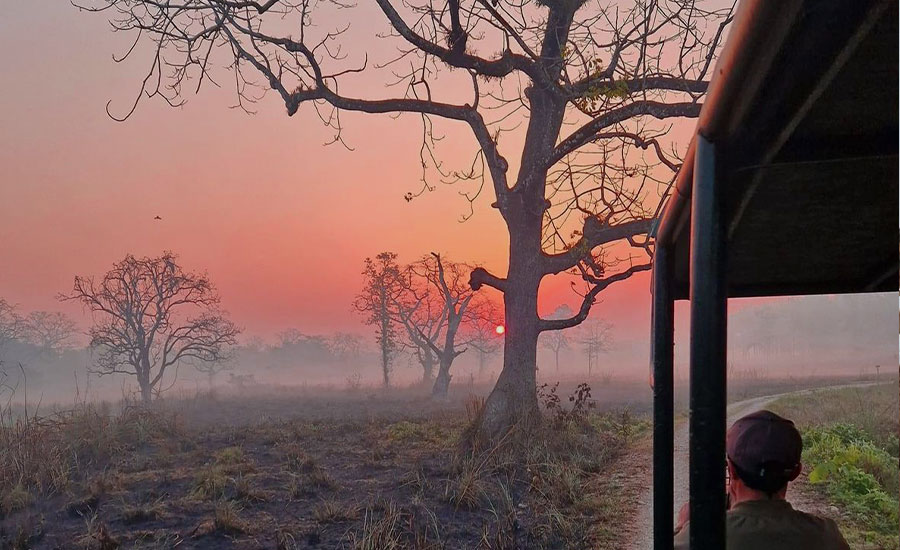
National Parks in Nepal: Wildlife, Trekking & Nature Guide
Nepal's national parks protect an extraordinary range of landscapes, from subtropical forests and wildlife-rich grasslands in the Terai to alpine valleys, high Himalayan peaks, remote lakes and some of the world's most spectacular trekking country.
For many travellers, Nepal is immediately associated with Mount Everest and Himalayan trekking. However, the country's protected areas also offer wildlife safaris, birdwatching, jungle walks, mountain lakes, cultural encounters and opportunities to experience some of South Asia's most important natural habitats.
Depending on the national park, you may be looking for greater one-horned rhinoceroses in Chitwan, trekking beneath Mount Everest in Sagarmatha, walking through the Langtang Valley, exploring the remote landscapes around Phoksundo Lake or discovering the forests and grasslands of western Nepal.
This guide to the national parks of Nepal explains their main characteristics, wildlife, landscapes and travel experiences, helping you understand which protected area may be most suitable for your Nepal journey.
National Parks in Nepal at a Glance
Nepal's national parks protect very different ecosystems. Some are primarily known for wildlife, while others are important trekking and mountain destinations.
| National Park | Region | Best Known For | Main Travel Experience |
|---|---|---|---|
| Chitwan | South-central Nepal | Rhinos, tigers, gharials and birdlife | Wildlife & jungle |
| Sagarmatha | Everest region | Mount Everest and the Khumbu Himalayas | Trekking & mountains |
| Langtang | North of Kathmandu | Langtang Valley, forests and Himalayan wildlife | Trekking & nature |
| Bardiya | Western Terai | Tigers, rhinos, elephants and wilderness | Wildlife & jungle |
| Shey Phoksundo | Dolpo | Phoksundo Lake and remote Himalayan landscapes | Remote trekking |
| Rara | Northwestern Nepal | Rara Lake and mountain forests | Nature & hiking |
| Khaptad | Far-western hills | Grasslands, forests and spiritual sites | Hiking & nature |
| Shivapuri Nagarjun | Kathmandu Valley | Forests, hiking and birdwatching | Day hiking & nature |
| Banke | Western Terai | Tiger habitat and wildlife corridors | Wildlife & conservation |
| Shuklaphanta | Far-western Terai | Grasslands and swamp deer | Wildlife & birdwatching |
| Makalu Barun | Eastern Nepal | Mount Makalu and extreme elevation range | Remote trekking |
| Parsa | Central Terai | Sal forests and wildlife habitat | Wildlife & nature |
| Chhayanath | Western Himalaya | Remote high-Himalayan protected landscapes | Remote nature & exploration |
Not every national park has the same tourism infrastructure or accessibility. Some are established visitor destinations, while others remain remote protected landscapes where travel requires considerably more planning.
1. Chitwan National Park – Nepal's Classic Wildlife Destination
Chitwan National Park was established in 1973 as Nepal's first national park. Located in the subtropical lowlands of south-central Nepal, it protects forests, grasslands, wetlands and the river systems of the Rapti, Narayani and Reu.
The park is one of Nepal's most important wildlife destinations and is particularly well known for the greater one-horned rhinoceros. It also provides habitat for Royal Bengal tigers, gharial and mugger crocodiles, deer, monkeys, wild boar and a remarkable variety of birdlife.
Chitwan was inscribed as a UNESCO World Heritage Site in 1984 because of its exceptional ecosystems and importance for threatened wildlife.
What Can You Do in Chitwan?
- Jeep safari
- Guided nature and jungle walks
- Birdwatching
- Canoe excursions on suitable waterways
- Visit local Tharu communities
- Enjoy sunset views along the Rapti River
Wildlife is free-ranging, so sightings can never be guaranteed. A safari should be approached as an opportunity to experience the complete ecosystem rather than only as a search for one particular animal.
Chitwan is also relatively easy to combine with Kathmandu and Pokhara, making it a natural addition to many cultural and trekking holidays in Nepal.
2. Sagarmatha National Park – Home of Mount Everest
Sagarmatha National Park protects the heart of Nepal's Everest region. Established in 1976, the park covers approximately 1,148 square kilometres and includes Mount Everest together with some of the world's most dramatic Himalayan landscapes.
The park was inscribed on the UNESCO World Heritage List in 1979.
For travellers, Sagarmatha National Park is closely connected with famous trekking routes including Everest Base Camp, Gokyo Valley, Everest View and the high passes of the Khumbu.
Its importance goes beyond mountains. The region also contains Sherpa settlements, Buddhist monasteries and high-altitude wildlife habitat. Species found within the wider park ecosystem include Himalayan tahr, musk deer, goral and the elusive snow leopard.
Why Visit Sagarmatha National Park?
- See Mount Everest and the high Khumbu Himalayas
- Trek towards Everest Base Camp
- Explore Gokyo Valley and its high-altitude lakes
- Experience Sherpa communities and Buddhist culture
- Visit mountain monasteries such as Tengboche
- Walk through one of the world's most famous high-altitude landscapes
Unlike Nepal's lowland national parks, Sagarmatha is primarily experienced on foot as part of a multi-day Himalayan trek.
3. Langtang National Park – Himalayan Nature Close to Kathmandu
Langtang National Park was established in 1976 and is recognised as Nepal's first Himalayan national park. It extends across parts of Rasuwa, Nuwakot and Sindhupalchok districts north of Kathmandu.
The park protects approximately 1,710 square kilometres of mountain landscapes ranging from forested lower valleys to alpine environments and high Himalayan peaks.
For travellers, the best-known journey is the Langtang Valley Trek, but the national park also encompasses routes towards Gosaikunda and other mountain areas.
The varied forest and alpine habitats support wildlife including red pandas, Himalayan black bears, musk deer and numerous bird species, although sightings of shy mountain wildlife are never guaranteed.
Why Choose Langtang?
Langtang is particularly suitable for travellers who want a genuine Himalayan trekking experience without taking a domestic mountain flight. Access is normally by road from Kathmandu, followed by trekking into the national park.
4. Bardiya National Park – Wildlife and Wilderness in Western Nepal
Bardiya National Park lies in Nepal's western Terai and covers approximately 968 square kilometres. Its forests, grasslands and river systems provide important habitat for a wide range of wildlife.
The park is known for species including the Royal Bengal tiger, greater one-horned rhinoceros, wild elephant, deer and gharial. The Karnali and Babai river systems also add another important dimension to its ecosystem.
Compared with Chitwan, Bardiya requires more travel from Kathmandu but can appeal strongly to travellers who want a quieter and more remote wildlife experience.
Chitwan or Bardiya?
| Chitwan | Bardiya |
|---|---|
| Easier to combine with Kathmandu and Pokhara | More remote western Nepal location |
| Well-developed tourism infrastructure | Quieter wilderness atmosphere |
| Excellent rhino habitat | Important tiger, rhino and elephant habitat |
| Suitable for many first-time Nepal visitors | Suitable for travellers willing to spend more time reaching the park |
Neither park can guarantee sightings of particular wildlife, including tigers.
5. Shey Phoksundo National Park – Dolpo's Remote Himalayan Wilderness
Shey Phoksundo National Park lies in the remote Dolpo region of northwestern Nepal and protects one of the country's most dramatic high-Himalayan landscapes.
Its best-known natural attraction is Phoksundo Lake, famous for its striking colour and spectacular mountain setting.
The wider national park contains rugged valleys, high mountains and habitats associated with wildlife such as blue sheep and snow leopards. The region is also culturally important, with communities whose traditions have strong Tibetan and Himalayan influences.
Travel here is very different from a Chitwan safari or a short hike near Kathmandu. Reaching the region requires considerably more planning, and trekking conditions are remote.
For travellers interested in wilderness, photography, Himalayan culture and less-visited trekking regions, Shey Phoksundo can be one of Nepal's most memorable national parks.
6. Rara National Park – Nepal's Great Mountain Lake Landscape
Rara National Park was established in 1976 and covers approximately 106 square kilometres, making it relatively small in area compared with several of Nepal's other mountain national parks.
Its centrepiece is beautiful Rara Lake, surrounded by forest and mountain landscapes in northwestern Nepal.
The national park provides habitat for Himalayan wildlife and rich birdlife, while the lake and surrounding forests create a completely different atmosphere from the high, rocky landscapes associated with Everest or Dolpo.
Rara is a good choice for travellers particularly interested in remote nature, lake scenery, walking and photography.
7. Khaptad National Park – Grasslands, Forests and Spiritual Heritage
Khaptad National Park was established in 1984 and covers approximately 225 square kilometres across the far-western hill districts of Bajhang, Bajura, Doti and Achham.
The landscape is characterised by forests, open grasslands and rolling upland terrain rather than the dramatic high peaks associated with Everest.
Khaptad also has considerable spiritual importance. Sites including Triveni and other sacred locations attract pilgrims during important religious occasions.
For travellers, Khaptad offers a quieter combination of nature, hiking, birdlife, landscapes and spiritual heritage.
8. Shivapuri Nagarjun National Park – Nature on Kathmandu's Doorstep
Shivapuri Nagarjun National Park is one of the most accessible protected areas for visitors staying in Kathmandu.
Shivapuri was declared a national park in 2002, and the Nagarjun forest area was later added. The park now covers approximately 159 square kilometres and protects important forest and watershed areas around the northern and western sides of Kathmandu Valley.
The park is particularly useful for travellers who have limited time but would still like to experience Nepal's forests and hills.
Popular Activities
- Day hiking
- Birdwatching
- Forest walks
- Nature photography
- Hiking towards viewpoints and nearby settlements
Routes around Sundarijal and Shivapuri can also form the beginning of longer walks into the hills surrounding Kathmandu Valley.
9. Banke National Park – An Important Terai Wildlife Corridor
Banke National Park was established in 2010 and covers approximately 550 square kilometres in western Nepal.
The park forms part of the wider Terai Arc Landscape and is particularly important for tiger habitat and ecological connectivity. It adjoins the wider Bardiya landscape and contributes to wildlife movement through connected forest corridors.
Banke protects sal forest, grasslands and Churia foothill ecosystems and provides habitat for species including tigers, wild elephants, four-horned antelope, pangolin and other Terai wildlife.
For most international visitors, Banke is less established as a tourism destination than Chitwan or Bardiya, but its conservation importance is considerable.
10. Shuklaphanta National Park – Grasslands and Swamp Deer
Shuklaphanta National Park lies in Kanchanpur District in Nepal's far-western Terai.
Originally managed as a wildlife reserve, it became a national park in 2017. It covers approximately 305 square kilometres and protects extensive grassland, wetland and forest habitats.
Shuklaphanta is particularly famous for its swamp deer and extensive grasslands. The park also supports Royal Bengal tigers, wild elephants, greater one-horned rhinoceroses and rich birdlife.
For wildlife enthusiasts interested in travelling beyond Nepal's better-known safari areas, Shuklaphanta provides another important view of the biodiversity of the western Terai.
11. Makalu Barun National Park – From Deep Valleys to Mount Makalu
Makalu Barun National Park lies in eastern Nepal and covers approximately 1,500 square kilometres.
One of its most remarkable characteristics is its enormous variation in elevation. The protected landscape rises from lower river valleys towards Mount Makalu (8,463 m), the world's fifth-highest mountain.
This rapid change in elevation creates a wide variety of ecosystems within a relatively compact geographic area.
For travellers, the region is best known for the demanding Makalu Base Camp Trek. It is considerably more remote than trekking in the Everest or Annapurna regions and is better suited to trekkers prepared for longer days, simpler facilities and a more isolated Himalayan environment.
12. Parsa National Park – Forests of Nepal's Central Terai
Parsa National Park protects approximately 627 square kilometres of the central Terai and Churia landscape east of Chitwan National Park.
The park contains extensive sal forest and forms part of an important connected wildlife landscape in southern Nepal.
It provides habitat for large mammals and other Terai wildlife and plays an important conservation role alongside neighbouring protected landscapes.
Parsa receives fewer international leisure visitors than Chitwan, but it remains an important part of Nepal's lowland conservation network.
13. Chhayanath National Park – Nepal's Newest High-Himalayan National Park
Chhayanath National Park is the newest addition to Nepal's national park system and represents an important recent development in the conservation of Nepal's remote western Himalayan landscapes.
Because the park is newly established and visitor infrastructure and tourism information are still developing, travellers should not approach Chhayanath in the same way as established tourism destinations such as Chitwan, Sagarmatha or Langtang.
For now, its importance is best understood in terms of high-Himalayan landscape and biodiversity conservation. Travellers interested in exploring this remote part of Nepal should obtain current information about access, permits, routes and local conditions before planning a journey.
Which National Park in Nepal Should You Visit?
The best national park depends entirely on what you want to experience.
| Your Main Interest | National Parks to Consider |
|---|---|
| Rhinos and classic Nepal wildlife safari | Chitwan |
| Remote Terai wildlife experience | Bardiya |
| Everest and high-altitude trekking | Sagarmatha |
| Himalayan trekking without a mountain flight | Langtang |
| Remote Himalayan lake and Dolpo landscapes | Shey Phoksundo |
| Lake scenery and remote western Nepal | Rara |
| Easy nature access from Kathmandu | Shivapuri Nagarjun |
| Grasslands and swamp deer | Shuklaphanta |
| Remote high-altitude trekking | Makalu Barun |
| Quiet hills, nature and spiritual heritage | Khaptad |
Best National Parks in Nepal for Wildlife
Travellers whose main goal is wildlife observation will generally look first towards Nepal's Terai national parks.
Chitwan National Park
Chitwan is the most established choice for a first wildlife experience in Nepal. It combines good tourism infrastructure with important rhino, tiger, crocodile and bird habitat.
Bardiya National Park
Bardiya appeals to travellers who are willing to travel farther west for a quieter and more remote wilderness experience.
Shuklaphanta National Park
Shuklaphanta is particularly interesting for its open grasslands, swamp deer and birdlife.
Banke and Parsa are also ecologically important Terai national parks, although they are less commonly included in first-time Nepal itineraries.
Best National Parks in Nepal for Trekking
Several of Nepal's famous trekking routes pass through national parks.
| National Park | Famous Trekking Experience |
|---|---|
| Sagarmatha | Everest Base Camp, Gokyo and other Khumbu treks |
| Langtang | Langtang Valley and Gosaikunda region |
| Shey Phoksundo | Phoksundo Lake and Dolpo trekking routes |
| Makalu Barun | Makalu Base Camp Trek |
| Rara | Rara Lake and surrounding hiking routes |
| Shivapuri Nagarjun | Day hikes and short routes from Kathmandu Valley |
National Parks vs Conservation Areas in Nepal
One common source of confusion for travellers is the difference between a national park and a conservation area.
Not every famous trekking region in Nepal is a national park.
For example, the Annapurna region is primarily protected through the Annapurna Conservation Area, rather than Annapurna National Park. Similarly, Manaslu is associated with the Manaslu Conservation Area.
This distinction is important because entry permits, management systems and trekking requirements can differ between protected areas.
| Famous Nepal Region | Protected Area |
|---|---|
| Everest / Khumbu | Sagarmatha National Park |
| Langtang | Langtang National Park |
| Annapurna | Annapurna Conservation Area |
| Manaslu | Manaslu Conservation Area |
| Makalu | Makalu Barun National Park |
| Dolpo / Phoksundo | Shey Phoksundo National Park |
UNESCO National Parks in Nepal
Nepal has two national parks inscribed as natural UNESCO World Heritage properties:
- Sagarmatha National Park – inscribed in 1979
- Chitwan National Park – inscribed in 1984
They represent two very different sides of Nepal's natural heritage: the extreme high-altitude Himalayan environment surrounding Mount Everest and the subtropical wildlife ecosystems of the Terai.
Wildlife in Nepal's National Parks
Nepal's dramatic change in elevation, from subtropical lowlands to the highest mountains on Earth, creates habitats for an extraordinary variety of wildlife.
| Wildlife | Protected Areas Where It May Occur |
|---|---|
| Greater one-horned rhinoceros | Chitwan, Bardiya and Shuklaphanta |
| Royal Bengal tiger | Chitwan, Bardiya, Banke, Parsa and Shuklaphanta |
| Snow leopard | Selected high-Himalayan protected areas |
| Red panda | Selected temperate and Himalayan forests including Langtang |
| Himalayan tahr | High-Himalayan protected areas including Sagarmatha |
| Blue sheep | High mountain areas including Dolpo |
| Gharial | River systems of selected Terai parks including Chitwan and Bardiya |
| Wild elephant | Selected Terai protected areas |
Wildlife sightings are never guaranteed. Seasons, habitat, weather, time of day and simple luck all influence what visitors may see.
Best Time to Visit Nepal's National Parks
The best season depends on whether your main interest is wildlife, trekking, birdwatching or mountain scenery.
| Season | General Conditions | Suitable Experiences |
|---|---|---|
| Spring March–May | Warmer weather with spring vegetation; temperatures rise in the Terai | Mountain trekking, nature and selected wildlife trips |
| Summer/Monsoon June–September | Rainy in much of Nepal; trails and roads can be affected | Selected destinations depending on local conditions |
| Autumn October–November | Popular trekking period with generally favourable mountain conditions | Trekking, hiking and nature travel |
| Winter December–February | Cold at altitude; generally milder in the lowlands | Terai wildlife, birdwatching and selected lower-altitude trips |
Because Nepal's national parks range from subtropical lowlands to extreme Himalayan elevations, there is no single best month for every park.
Responsible Wildlife and Nature Travel in Nepal
Visiting a national park also means entering a protected habitat. Responsible behaviour helps reduce the impact of tourism on wildlife and local communities.
- Observe wildlife from a respectful distance.
- Never expect or pressure a guide to approach wild animals too closely.
- Do not feed wildlife.
- Avoid unnecessary noise during wildlife observation.
- Follow national park regulations and your guide's instructions.
- Do not leave plastic, food wrappers or other rubbish behind.
- Stay on designated routes where required.
- Respect local communities, religious sites and cultural traditions.
- Use experienced local guides for wildlife and trekking activities.
Himalayan Dream Team prefers responsible wildlife experiences based on observation of animals in their natural habitat rather than activities that compromise animal welfare.
Frequently Asked Questions About National Parks in Nepal
1. Which is the most famous national park in Nepal?
Chitwan and Sagarmatha are probably the best known internationally, but for completely different reasons. Chitwan is famous for wildlife and jungle experiences, while Sagarmatha protects Mount Everest and the high Khumbu region.
2. Which was Nepal's first national park?
Chitwan National Park was established in 1973 and was Nepal's first national park.
3. Which national park contains Mount Everest?
Sagarmatha National Park contains Mount Everest and much of the high Khumbu landscape used by trekkers travelling towards Everest Base Camp and Gokyo.
4. Which national park is best for wildlife in Nepal?
Chitwan is the most established wildlife destination for many first-time visitors because of its accessibility, tourism infrastructure and biodiversity. Bardiya is an excellent alternative for travellers wanting a more remote western Terai experience, while Shuklaphanta is particularly interesting for grassland wildlife and swamp deer.
5. Where can I see rhinos in Nepal?
The greater one-horned rhinoceros is particularly associated with Chitwan National Park. Rhinos also occur in Bardiya and Shuklaphanta. As with all wildlife, sightings cannot be guaranteed.
6. Where can I see a Bengal tiger in Nepal?
Royal Bengal tigers occur in several Terai protected areas, including Chitwan, Bardiya, Banke, Parsa and Shuklaphanta. Tigers are elusive wild animals, however, and even spending several days in tiger habitat does not guarantee a sighting.
7. Which national park is closest to Kathmandu?
Shivapuri Nagarjun National Park lies directly beside the Kathmandu Valley and is the easiest national park to include as a day hike or short nature experience from the capital.
8. Is Annapurna a national park?
No. The famous Annapurna trekking region is primarily protected as the Annapurna Conservation Area. This is different from a national park, although both are part of Nepal's wider protected-area system.
9. Is Manaslu a national park?
No. The trekking region around Manaslu is associated with the Manaslu Conservation Area, not a national park.
10. Which national parks in Nepal are UNESCO World Heritage Sites?
Sagarmatha National Park and Chitwan National Park are Nepal's two natural UNESCO World Heritage properties.
11. Do I need permits to enter Nepal's national parks?
Protected-area entry requirements depend on the destination and activity. Trekking routes may also involve additional permits beyond national park entry. Regulations and fees can change, so travellers should check the current requirements for their exact itinerary before travelling.
12. Can I combine trekking and wildlife on one Nepal holiday?
Yes. This is one of the best ways to experience Nepal's environmental diversity. For example, a Himalayan trek can be followed by several days in Chitwan, allowing travellers to experience both high mountain landscapes and the subtropical Terai during the same journey.
Explore Nepal's National Parks with Himalayan Dream Team
Nepal's national parks show just how diverse this small Himalayan country really is. Within one journey, travellers can move from the forested hills around Kathmandu to the world's highest mountains or continue south towards subtropical grasslands inhabited by rhinos, crocodiles and tigers.
For some visitors, the highlight is trekking beneath Mount Everest in Sagarmatha National Park. Others come specifically for the wildlife of Chitwan or Bardiya, the mountain valleys of Langtang, the turquoise waters of Phoksundo Lake or the remote landscapes of western Nepal.
At Himalayan Dream Team Treks & Tours, we can combine Nepal's national parks with trekking, cultural sightseeing and other destinations according to your available time and interests.
Whether your Nepal dream is about mountains, wildlife, culture or a combination of all three, we can help you create a journey that shows you more than just one side of Nepal.