

Rhododendron: Nepal’s National Flower and the Himalayan Bloom
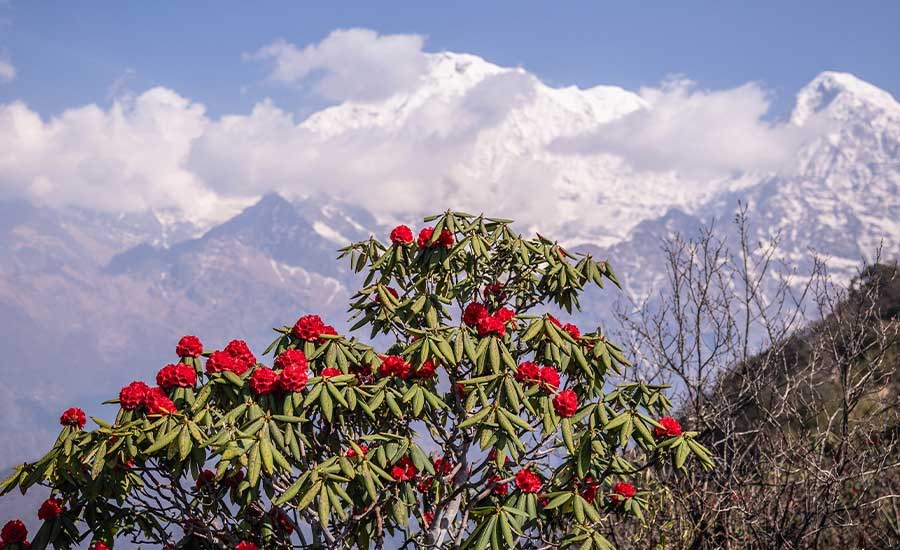
Every spring, Nepal’s Himalayan hills come alive with one of the country’s most beautiful natural displays. Forests that remain green through much of the year suddenly burst into shades of red, pink and white as rhododendrons begin to bloom. Against a backdrop of snow-covered Himalayan peaks, these flowering forests create some of the most memorable trekking landscapes in Nepal.
The rhododendron is the national flower of Nepal and is locally known as Gurans. The famous red Lali Gurans, Rhododendron arboreum, holds a particularly special place in Nepalese identity, culture and mountain life.
For travellers, the rhododendron is much more than a flower to see beside the trail. During the rhododendron season in Nepal, entire hillsides and forests can become colourful natural gardens. Some of Nepal's most popular trekking routes pass directly through these forests, making spring from March to May one of the most rewarding times for travellers who want to combine Himalayan trekking, mountain views and Nepal's remarkable plant life.
In this guide, Himalayan Dream Team explains the story of Nepal's national flower, when rhododendrons bloom, where they grow and some of the best treks in Nepal for experiencing rhododendron forests in spring.
What Is the National Flower of Nepal?
The national flower of Nepal is the rhododendron, with Rhododendron arboreum – commonly known in Nepal as Lali Gurans – recognized as the country's national flower.
Lali Gurans is best known for its striking clusters of red flowers and evergreen leaves. In spring, flowering trees can transform Nepal's forested hillsides into brilliant patches of colour.
Although the deep-red Lali Gurans is the flower most closely associated with Nepal's national identity, travellers trekking through different elevations of the Himalayas may encounter rhododendrons in several colours and forms.
Quick Facts About Nepal's National Flower
| National Flower of Nepal | Rhododendron |
| Nepali Name | Lali Gurans / Gurans (लालीगुराँस) |
| Scientific Name of Nepal's National Flower | Rhododendron arboreum |
| Plant Family | Ericaceae |
| Main Flowering Season | Spring, generally March to May depending on altitude, species and local weather |
| Common Colours Seen in Nepal | Red, pink, white and other shades depending on species and location |
| Famous Rhododendron Areas | Annapurna, Langtang, Everest/Khumbu, Manaslu and eastern Nepal |
Why Is the Rhododendron Nepal's National Flower?
The rhododendron is closely associated with Nepal's Himalayan landscape. It grows naturally across many of the country's hill and mountain environments and is familiar to generations of Nepalese people.
Its importance is not limited to its beauty. Rhododendrons are part of Nepal's forest ecosystems and are closely connected with mountain communities, local traditions and the seasonal rhythm of life in the hills.
For many Nepalese, the appearance of Lali Gurans is also one of the most recognizable signs of spring. The bright red blossoms against green forest and white Himalayan peaks have become an unmistakable image of Nepal.
What Does Lali Gurans Mean?
Lali Gurans is the commonly used Nepali name associated with the red rhododendron. “Lali” refers to its red or crimson colour, while “Gurans” is the Nepali word used for rhododendron.
Visitors sometimes use “Lali Gurans” to describe all rhododendrons they see in Nepal, but Nepal actually contains numerous rhododendron species. Their appearance, size, colour and preferred habitat can vary considerably with species and elevation.
How Many Species of Rhododendron Are Found in Nepal?
Nepal has an exceptionally rich diversity of rhododendrons. Botanical and conservation references commonly report around 30 or more species in the country, with published sources differing slightly in the exact number according to taxonomy and classification.
This diversity is possible because Nepal rises dramatically from low subtropical landscapes to high Himalayan environments within a relatively short geographical distance. Different rhododendron species are adapted to different elevations, temperatures and forest types.
One of the most remarkable areas is the Tinjure–Milke–Jaljale region of eastern Nepal, which is especially well known for its concentration and diversity of rhododendron species.
When Do Rhododendrons Bloom in Nepal?
The main rhododendron blooming season in Nepal is during spring, generally from March to May. However, there is no single flowering date for the whole country.
Blooming depends on several factors:
- Altitude
- Rhododendron species
- Aspect of the mountain slope
- Winter temperatures and snowfall
- Spring temperatures
- Local weather conditions
Flowers at lower and warmer elevations generally appear earlier, while rhododendrons growing higher in the mountains tend to flower later. This creates a gradual rhododendron bloom moving up through the Himalayan elevations as spring progresses.
Rhododendron Season in Nepal: March, April and May
Rhododendrons in March
March marks the beginning of Nepal's main spring trekking season. As temperatures begin to rise, rhododendrons start flowering in many lower and middle-elevation forests.
By the second half of March, trekkers may find increasingly colourful forests along popular routes in the Annapurna region and other parts of Nepal.
Rhododendrons in April
April is generally one of the best months for rhododendron trekking in Nepal. Many forest sections at popular trekking elevations can be in flower, while spring conditions also make April an excellent month for Himalayan trekking.
On a clear morning, the combination of colourful rhododendron forests and snow-covered peaks such as Annapurna, Dhaulagiri, Machhapuchhre, Manaslu and the mountains of the Everest region can be spectacular.
Rhododendrons in May
By May, flowering at some lower elevations may be declining, while rhododendrons at higher and cooler elevations can still be blooming. Conditions vary from year to year, and warmer temperatures usually become more noticeable as Nepal approaches the summer monsoon.
Important: Rhododendron flowering is a natural event and exact peak-bloom dates cannot be guaranteed. Weather and temperature patterns can make the flowers appear earlier or later in a particular year.
At What Altitude Do Rhododendrons Grow in Nepal?
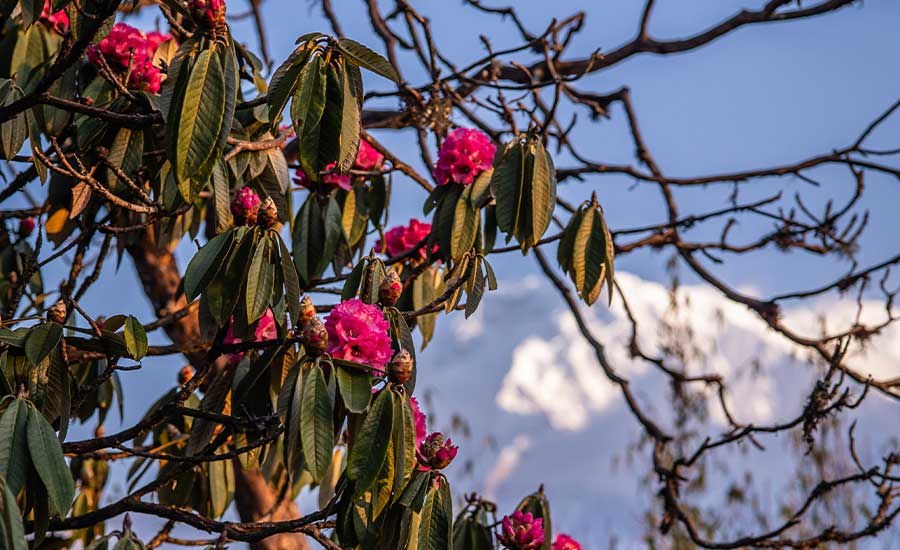
Rhododendrons occur across a broad range of Himalayan elevations, and different species occupy different ecological zones. Travellers may encounter tree-sized rhododendrons in temperate forests and smaller shrub species in colder, higher mountain environments.
For trekkers, some of the most impressive displays are often encountered in the middle mountain forests between approximately 2,000 and 3,500 metres, although rhododendron species occur both below and above this general range.
This is one reason routes such as Ghorepani, Tadapani, Mardi Himal, Mohare Danda, Khopra Danda, Langtang and the forested approaches of the Everest and Manaslu regions can be especially attractive during spring.
Best Places to See Rhododendrons in Nepal
You do not need to visit a botanical garden to see Nepal's national flower. Some of the finest displays grow naturally along trekking trails.
The Annapurna region is particularly famous for accessible rhododendron trekking, especially around Ghorepani, Poon Hill, Tadapani and the forested ridges leading towards Mardi Himal and other Annapurna routes.
Rhododendrons are also found along trekking routes in Langtang National Park, the Everest/Khumbu region, Manaslu and Tsum Valley. Eastern Nepal, especially the Tinjure–Milke–Jaljale landscape, is particularly important for rhododendron diversity.
Best Rhododendron Treks in Nepal
If seeing blooming rhododendron forests is an important part of your Nepal holiday, the following treks are excellent spring choices. The amount of flowering you see will depend on your travel dates, altitude and the season's weather.
1. Ghorepani Poon Hill Trek – A Classic Rhododendron Trek
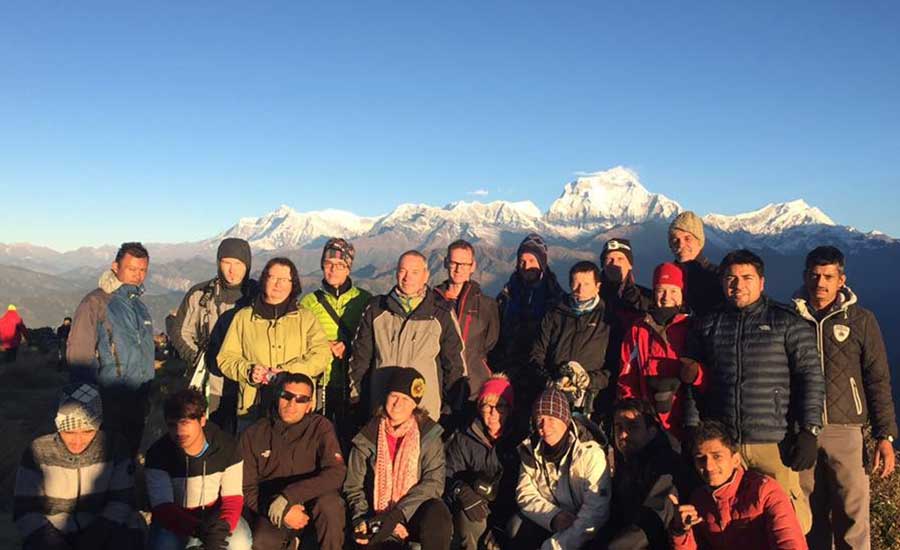
For travellers specifically looking for a rhododendron trek in Nepal, the Ghorepani Poon Hill Trek is one of our first recommendations.
The trail passes through beautiful forests around Ghorepani and the surrounding Annapurna foothills. During spring, these forests can become filled with colourful rhododendron blossoms.
The trek also includes the famous Poon Hill viewpoint, where clear mornings reveal a magnificent Himalayan panorama including peaks of the Annapurna and Dhaulagiri ranges.
Because the trek is relatively short compared with major high-altitude expeditions, it is an excellent choice for travellers who want to combine rhododendron forests, Himalayan sunrise views, Gurung and Magar villages and a manageable trekking itinerary.
2. Annapurna Base Camp Trek
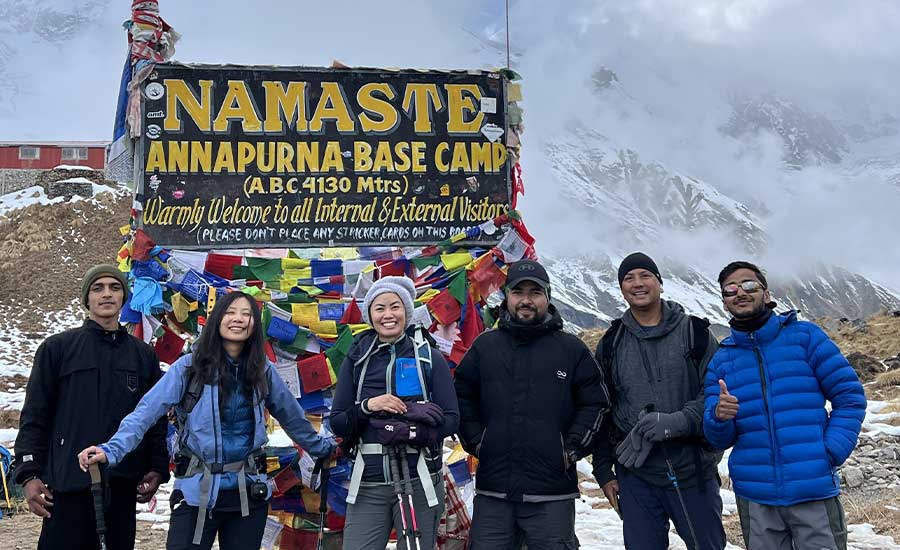
Our Annapurna Base Camp Trek combines some of the finest forest scenery in the Annapurna region with the dramatic high-mountain environment of the Annapurna Sanctuary.
The route passes through areas such as Ghorepani and Tadapani and continues through rhododendron and oak forests before eventually reaching Annapurna Base Camp at 4,130 metres.
In spring, trekkers can experience an extraordinary transition: colourful forested hills at lower elevations gradually give way to bamboo, alpine vegetation and finally the glacial mountain landscape beneath Annapurna I and the surrounding peaks.
It is an excellent choice for travellers who want both spring flowers and a major Himalayan base camp experience.
3. Mardi Himal Trek
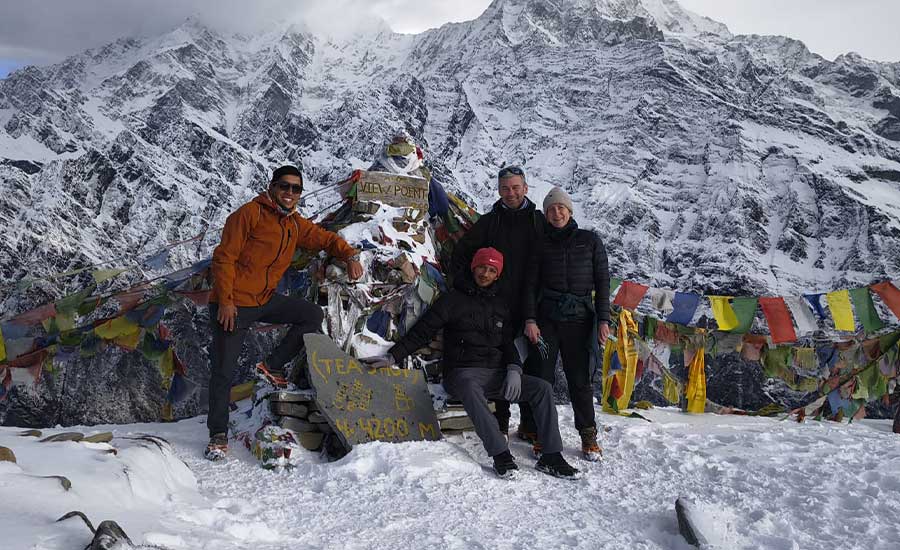
The Mardi Himal Trek is another excellent spring trek for rhododendron lovers.
The trail from Pitam Deurali toward Forest Camp, Rest Camp and Low Camp passes through extensive rhododendron, oak and maple forest. As the trek climbs higher, the dense woodland gradually opens onto a spectacular ridge with increasingly close views of Machhapuchhre (Fishtail), Mardi Himal, Annapurna South and Hiunchuli.
This combination of peaceful forest trails and dramatic high ridges makes Mardi Himal particularly attractive for trekkers interested in nature, flowers, mountain photography and quieter trekking trails.
4. Mohare Danda Community Trek
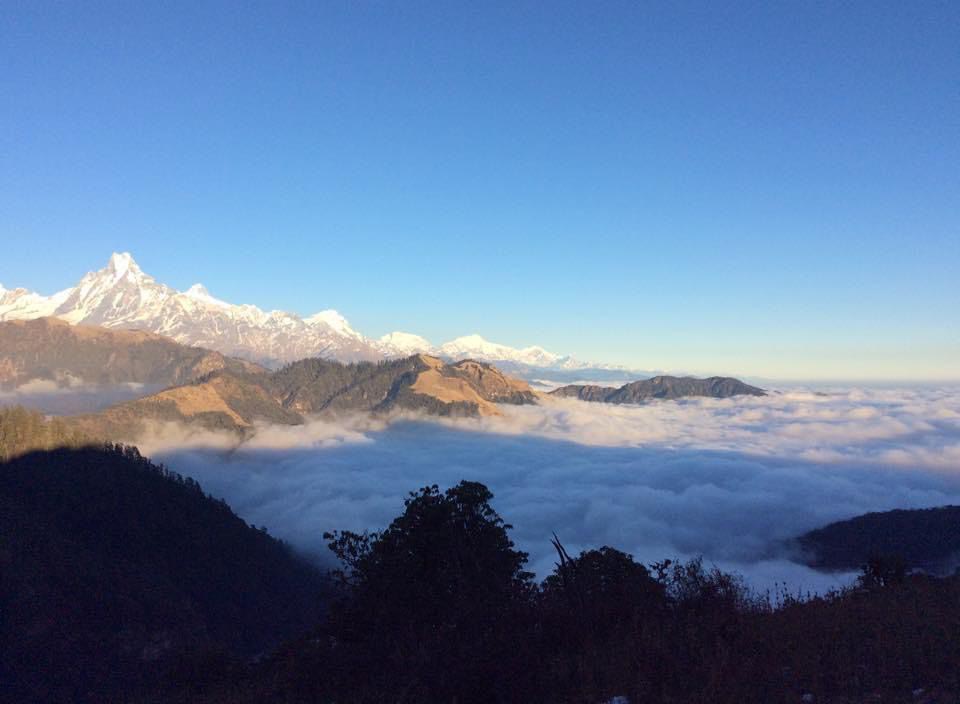
For travellers looking for a quieter alternative to Nepal's busiest trekking trails, the Mohare Danda Community Trek is a wonderful spring option.
The route passes through rhododendron and oak forests before reaching Mohare Danda, a beautiful ridge viewpoint overlooking the Annapurna and Dhaulagiri ranges.
The trek is also known for its community-based accommodation and village experiences, making it an appealing choice for travellers who want to combine rhododendron forests, Himalayan scenery and locally connected tourism.
5. Khopra Danda Trek
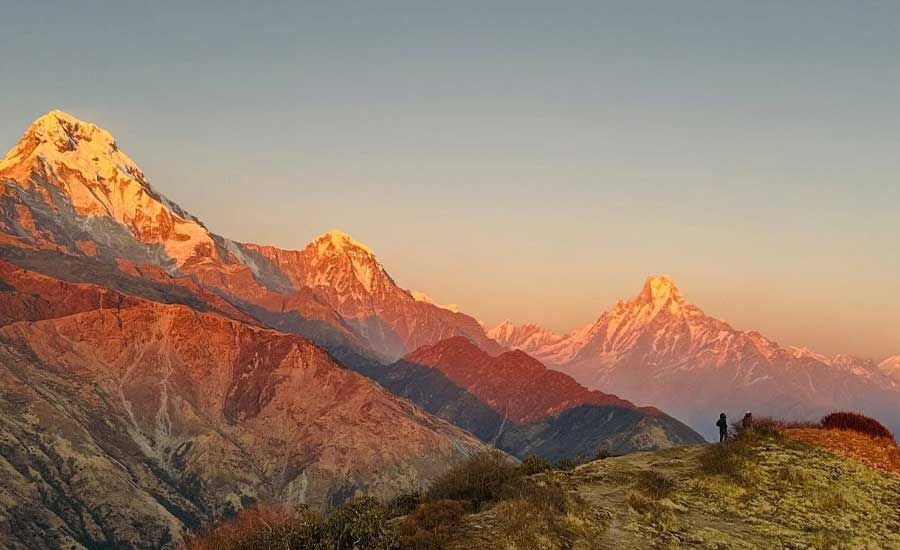
The Khopra Danda Trek explores a quieter part of the Annapurna region and passes through beautiful forest between Ghandruk, Tadapani, Bayli Kharka and the higher ridges.
Spring is particularly attractive because sections of the route pass through rhododendron forest. Above the forests, the landscape opens towards extraordinary views of Dhaulagiri, Annapurna South, Nilgiri and surrounding Himalayan peaks.
Khopra is a good choice for trekkers looking for rhododendrons combined with a more peaceful trail and spectacular ridge-top scenery.
6. Annapurna Circuit Trek
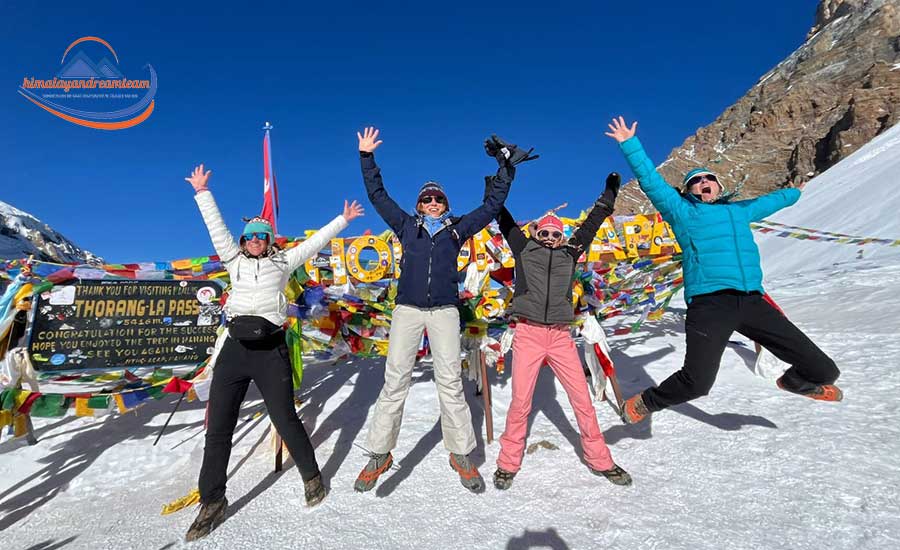
The Annapurna Circuit Trek is famous for its extraordinary changes in landscape and climate.
During a spring journey, lower and middle sections of the route can offer flowering forests before the trek climbs into the much drier high-altitude landscapes around Manang and the approach to Thorong La.
This trek is less focused on rhododendrons than Ghorepani or Mardi Himal, but it provides a much broader Himalayan journey through forest, river valleys, traditional villages, alpine landscapes and high mountain terrain.
7. Langtang Valley Trek
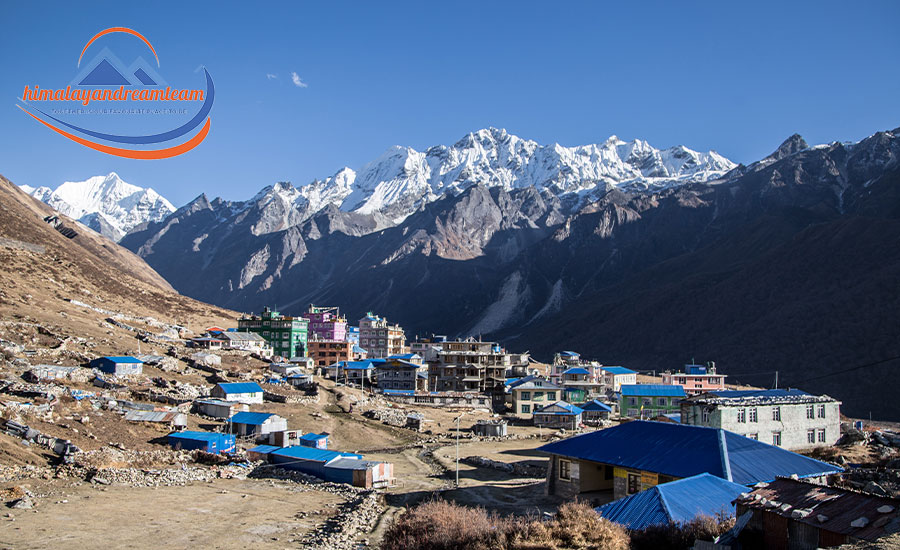
Close to Kathmandu yet distinctly Himalayan, the Langtang Valley Trek passes through Langtang National Park, where rhododendron forest, bamboo, waterfalls and mountain wildlife form part of the lower and middle sections of the trail.
Spring brings flowers and greener forest landscapes before the route reaches the open mountain environment around Kyanjin Gompa. Trekkers can also enjoy views of Langtang Lirung, Dorje Lakpa, Gangchempo and Langshisa Ri.
For travellers with limited time who want a combination of rhododendron forest, Tamang culture and Himalayan scenery, Langtang is an excellent alternative to the Annapurna region.
8. Manaslu Circuit Trek
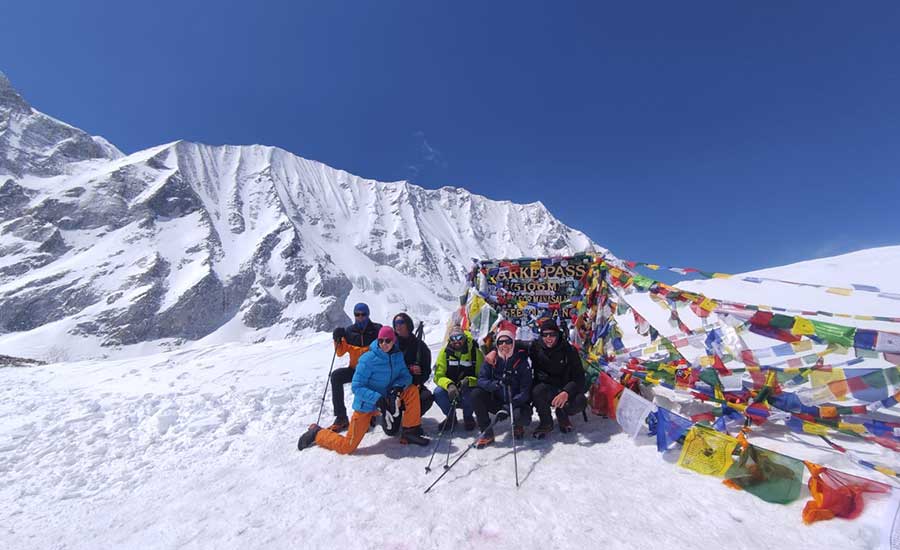
The Manaslu Circuit Trek is one of Nepal's finest choices for trekkers looking for a more remote Himalayan experience.
During spring, the lower and middle sections of the route pass through increasingly green forest, including rhododendron, pine and mixed woodland. Higher up, flowering forest gives way to the dramatic alpine and glacial scenery surrounding Mount Manaslu and Larkya La Pass.
This is a longer and more demanding choice than Poon Hill or Mardi Himal, but it beautifully demonstrates how Nepal's landscape changes from spring forest to the high Himalaya.
9. Tsum Valley Trek
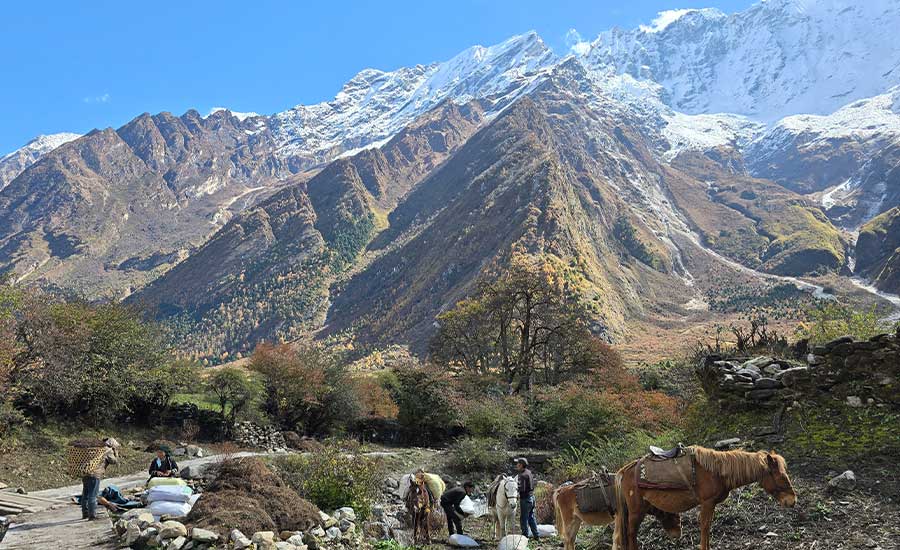
The remote Tsum Valley Trek combines Himalayan nature with one of Nepal's most fascinating Tibetan Buddhist cultural landscapes.
Spring brings flowering rhododendrons to lower forest sections of the route. Around Gumba Lungdang, trekkers pass through pine and rhododendron forest before reaching higher mountain landscapes beneath the Ganesh Himal.
This trek is particularly suitable for travellers whose priorities include remote villages, Buddhist monasteries, quiet trails, Himalayan culture and spring nature.
10. Manaslu and Tsum Valley Trek
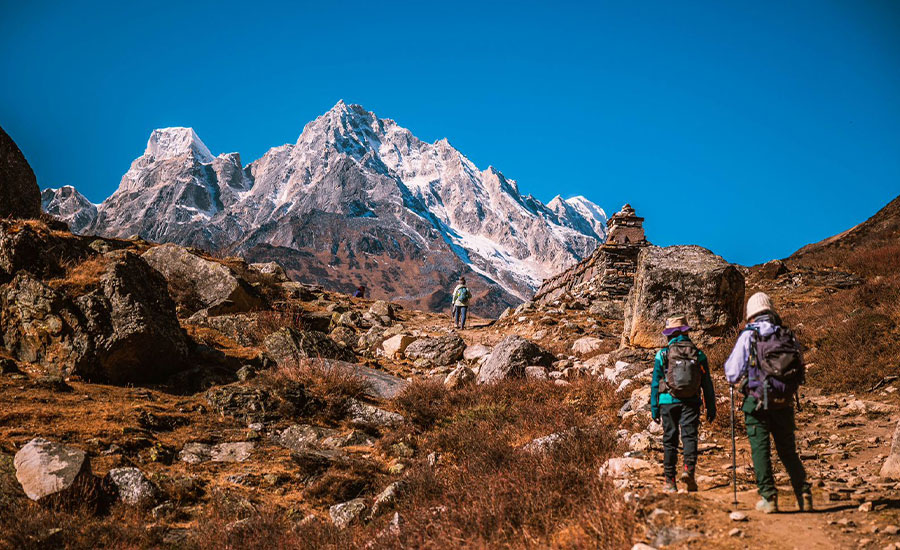
Travellers with more time can combine both regions on our Manaslu and Tsum Valley Trek.
The route includes peaceful sections of rhododendron and pine forest as well as traditional Buddhist villages, remote valleys and the dramatic landscapes of the Manaslu region.
It is an excellent choice for experienced trekkers looking for a longer spring adventure away from Nepal's busiest trails.
11. Everest Base Camp Trek in Spring

Rhododendrons are not limited to Annapurna. The Everest Base Camp Trek also passes through rhododendron forest at lower and middle elevations of the Khumbu.
The forested route around Namche, Kyangjuma, Phunki Tenga, Tengboche and Deboche is particularly beautiful in spring. Higher up, the trees disappear and the landscape changes dramatically as trekkers continue toward Dingboche, Lobuche and Everest Base Camp.
This makes spring special in the Everest region: trekkers can begin among flowering Himalayan forests and eventually walk into the world of glaciers and some of Earth's highest mountains.
12. Gokyo Lakes and Gokyo Ri Trek
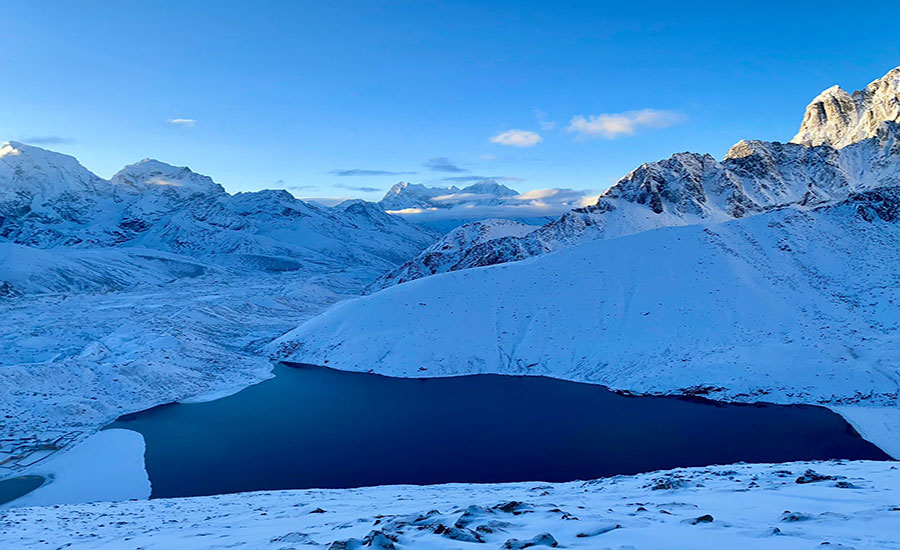
Another beautiful spring option in the Everest region is our Gokyo Lakes and Gokyo Ri Trek.
The route from the Namche area towards Dole includes forested sections with rhododendron and birch. Eventually, the forests give way to high alpine landscapes and the spectacular turquoise Gokyo Lakes.
This is a wonderful alternative for trekkers wanting to combine spring forest, Everest-region scenery, high-altitude lakes and panoramic Himalayan views.
Which Is the Best Rhododendron Trek in Nepal?
The best trek depends on how much time you have and the type of Himalayan experience you want.
| Trek | Best For | Spring Experience |
|---|---|---|
| Ghorepani Poon Hill | Short trek & rhododendron forests | Excellent |
| Annapurna Base Camp | Flowers + major base camp | Excellent |
| Mardi Himal | Forest + mountain ridge | Excellent |
| Mohare Danda | Quieter trails & community tourism | Excellent |
| Khopra Danda | Off-the-beaten-path Annapurna | Excellent |
| Langtang Valley | Forest, culture & proximity to Kathmandu | Very Good |
| Manaslu Circuit | Remote high-altitude adventure | Very Good at lower/middle elevations |
| Everest Base Camp | Flowers + iconic Everest trek | Very Good at lower/middle elevations |
If rhododendrons are your main reason for trekking, we particularly recommend the Annapurna foothills. Ghorepani, Tadapani, Mardi Himal, Mohare Danda and Khopra Danda contain some especially rewarding forest sections.
Why Trek in Nepal During Rhododendron Season?
Spring trekking in Nepal is not only about flowers. March, April and May form one of Nepal's major trekking seasons.
Depending on the region and elevation, spring can offer:
- Colourful rhododendron forests
- Warmer daytime temperatures than winter
- Longer daylight hours
- Beautiful Himalayan scenery
- Active village and trekking life
- Excellent opportunities for nature and landscape photography
- A gradual transition from green forests to snow-covered high mountains
Mountain weather remains changeable, and afternoon cloud can develop during spring. At high altitude, snow, freezing temperatures and rapidly changing weather are still possible, so trekkers should always be properly prepared.
Rhododendrons and Himalayan Wildlife
Rhododendron forests are more than beautiful places to photograph. They form part of complex Himalayan ecosystems that provide habitat and food resources for birds, insects and other wildlife.
Depending on the trekking region, observant walkers may encounter colourful Himalayan birds and signs of mammals while passing through these forests. Wildlife sightings can never be guaranteed, but travelling quietly with a knowledgeable local guide can make a forest walk much more rewarding.
Rhododendron and Nepali Culture
Lali Gurans has a special place in Nepalese cultural identity. Its bright red flower is immediately recognizable to people throughout the country and appears in Nepali songs, poetry, art and cultural references.
In some communities, rhododendron flowers have traditionally been used in local preparations and drinks. However, travellers should never eat wild rhododendron flowers, leaves, nectar or products made from unidentified species without reliable local knowledge. Some rhododendron species contain naturally occurring toxins.
The best way for trekkers to appreciate the national flower is simple: enjoy it in its natural environment and leave the flowers on the tree for others and for the ecosystem.
Responsible Rhododendron Trekking in Nepal
A hillside covered in flowers is tempting to touch and photograph up close, but responsible trekking helps protect these forests for the future.
- Do not break branches or pick large quantities of flowers.
- Stay on established trekking trails whenever possible.
- Do not carve names or markings into trees.
- Carry your waste out or dispose of it responsibly.
- Avoid disturbing birds and wildlife.
- Respect protected-area regulations and local community rules.
- Use local lodges, guides and services to help trekking tourism benefit mountain communities.
Photography Tips for Nepal's Rhododendron Season
Rhododendron season is a wonderful time for Himalayan landscape photography. Instead of photographing only individual flowers, try using them to frame the mountains and tell the story of spring in Nepal.
Early morning is often particularly rewarding because mountain visibility can be better and the softer light adds depth to forest and mountain landscapes.
Some of the classic compositions include red rhododendrons with Machhapuchhre, Annapurna South or Dhaulagiri in the background, flowering forest trails around Ghorepani and Tadapani, and blossoms framing mountain villages.
Remember that flowers, weather and mountain visibility are natural conditions and cannot be guaranteed on any particular day.
Planning a Rhododendron Trek in Nepal
If your main goal is to experience Nepal's rhododendrons in bloom, late March through April and into early May is generally the most useful period to consider. The ideal dates depend on the route and elevation you choose.
For lower and middle-elevation Annapurna routes, travelling during the main spring bloom can provide excellent opportunities. For higher areas, flowering may continue later as spring gradually moves uphill.
At Himalayan Dream Team, we can help you choose a route based on your available days, trekking experience, preferred altitude, fitness and interest in flowers, culture or mountain scenery.
Frequently Asked Questions About Nepal's National Flower
1. What is the national flower of Nepal?
The rhododendron is the national flower of Nepal. The species most closely recognized as Nepal's national flower is Rhododendron arboreum, commonly known as Lali Gurans.
2. What is rhododendron called in Nepali?
Rhododendron is commonly called Gurans in Nepali. The famous red rhododendron associated with Nepal's national flower is known as Lali Gurans.
3. What is the scientific name of Nepal's national flower?
The scientific name of Nepal's national flower is Rhododendron arboreum.
4. When is rhododendron season in Nepal?
The main rhododendron season in Nepal is generally from March to May. Exact flowering periods vary according to elevation, species, temperature and annual weather patterns.
5. What is the best month to see rhododendrons in Nepal?
April is generally one of the best months for travellers hoping to see rhododendrons while trekking. However, lower elevations may flower earlier and higher elevations later, so there is no guaranteed nationwide peak date.
6. Where can I see rhododendrons in Nepal?
Rhododendrons grow across many Himalayan regions of Nepal. Popular trekking areas include Ghorepani and Poon Hill, Tadapani, Mardi Himal, Mohare Danda, Khopra Danda, Langtang, Everest/Khumbu, Manaslu and Tsum Valley. Eastern Nepal's Tinjure–Milke–Jaljale area is particularly renowned for rhododendron diversity.
7. Which is the best rhododendron trek in Nepal?
For travellers whose main interest is flowering rhododendron forest, the Ghorepani Poon Hill Trek is one of the strongest choices. The Mardi Himal Trek, Annapurna Base Camp Trek, Mohare Danda Community Trek and Khopra Danda Trek are also excellent spring options.
8. Can I see rhododendrons on the Everest Base Camp Trek?
Yes. The lower and middle sections of the Everest Base Camp Trek pass through rhododendron forest, particularly around the forested trails between Namche Bazaar, Phunki Tenga, Tengboche and Deboche. Rhododendrons do not grow around Everest Base Camp itself because the elevation is far above the forest zone.
9. Can I see rhododendrons on the Annapurna Base Camp Trek?
Yes. The Annapurna Base Camp Trek passes through extensive forest sections, including beautiful rhododendron and oak forests. Spring is particularly attractive because trekkers can experience flowering forest before entering the high-altitude Annapurna Sanctuary.
10. Are all rhododendrons in Nepal red?
No. Although Nepal's famous Lali Gurans is associated with brilliant red flowers, different rhododendron species and forms can produce flowers in several colours, including shades of red, pink and white.
11. Can rhododendron flowers be eaten?
Some rhododendron flowers have traditional local uses, but not every rhododendron species or plant part should be consumed. Certain rhododendrons contain natural toxins. Travellers should never eat wild rhododendrons or products made from unidentified species without appropriate local knowledge.
12. Is spring a good time for trekking in Nepal?
Yes. March to May is one of Nepal's main trekking seasons. Spring combines warmer conditions, longer days, flowering forests and excellent trekking opportunities across Annapurna, Everest, Langtang and Manaslu. Conditions at high altitude can still be cold and change quickly.
Experience Nepal's Rhododendron Season with Himalayan Dream Team
Seeing Nepal's national flower in a photograph is beautiful. Walking beneath an entire forest of blooming rhododendrons with the snow-covered Himalayas rising behind it is something completely different.
Spring brings together many of the things that make trekking in Nepal unforgettable: colourful forests, traditional mountain villages, birds and wildlife, warmer days and some of the world's greatest mountain landscapes.
Whether you prefer the famous forests of Ghorepani and Poon Hill, the mountain sanctuary of the Annapurna Base Camp Trek, the quieter forest trail of Mardi Himal, the valleys of Langtang, or a longer adventure through Manaslu, there is a spring trek for almost every level of experience.
Himalayan Dream Team is a Nepal-based trekking company with local knowledge and experienced guides throughout Nepal's Himalayan regions. Tell us when you plan to visit, how many days you have and the type of trek you prefer, and we can help you choose a spring itinerary that gives you the best possible opportunity to experience Nepal's beautiful rhododendron season.
Come to Nepal in spring – and discover why Lali Gurans is much more than Nepal's national flower. It is part of the colour, culture and living landscape of the Himalayas.