

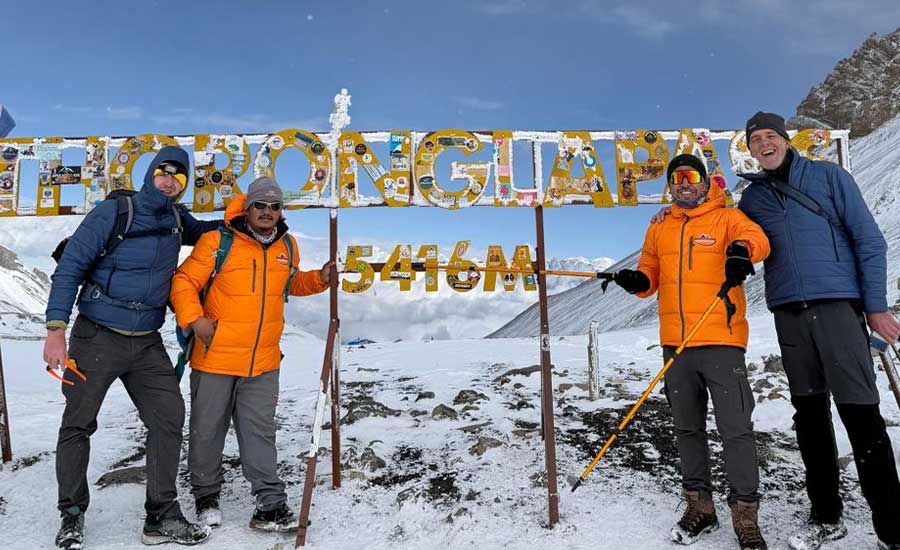
What Is a Mountain Pass?
A mountain pass is a naturally lower crossing point through a mountain range or between high peaks. For centuries, mountain passes have allowed people to travel between valleys and otherwise isolated regions.
In Nepal, many Himalayan passes historically formed important routes for trade, migration and cultural exchange between Nepal and Tibet. Salt, wool, grain and other goods were transported across high mountain routes, often by yak and mule caravans.
This history helps explain the strong Tibetan Buddhist cultural influence found in many of Nepal's high-altitude communities.
You will also notice that many Himalayan passes end in “La.” In Tibetan, La means mountain pass, which explains names such as Thorong La, Cho La, Renjo La, Kongma La and Larkya La.
Today, many of these historic crossings have become highlights of some of the best trekking routes in Nepal.
Why Are Mountain Passes in Nepal So Special?
Crossing a Himalayan pass is about much more than reaching a high elevation.
A mountain pass often marks the transition from one valley, landscape or cultural region into another. A trek may begin among forests, farmland and traditional villages before gradually climbing through alpine meadows, rocky moraine and glacial terrain.
At the top, trekkers can be surrounded by some of the world's greatest mountains, including Mount Everest, Lhotse, Makalu, Cho Oyu, Annapurna, Dhaulagiri and Manaslu, depending on the region.
High passes also give many Nepal trekking routes their distinctive circuit character. Rather than walking to a destination and returning along the same trail, trekkers cross the mountains and descend into an entirely different valley.
Famous Mountain Passes in Nepal at a Glance
| Mountain Pass | Approx. Elevation | Trekking Region | Best Known For |
|---|---|---|---|
| Amphu Lapcha Pass | 5,845 m | Everest/Hinku | Technical high-altitude crossing |
| Kongma La Pass | 5,535 m | Everest | Highest of the Everest Three Passes |
| Cho La Pass | 5,420 m | Everest | Connects Gokyo and EBC routes |
| Thorong La Pass | 5,416 m | Annapurna | Highest point of Annapurna Circuit |
| Renjo La Pass | approx. 5,360 m | Everest | Everest and Gokyo panoramas |
| Larkya La Pass | approx. 5,160 m | Manaslu | Highlight of Manaslu Circuit |
| Mesokanto La Pass | approx. 5,099 m | Annapurna | Remote Tilicho–Mustang crossing |
| Laurebina La Pass | approx. 4,610 m | Langtang | Gosainkunda–Helambu crossing |
Important: Elevations can vary slightly between maps, guidebooks and GPS readings. Weather, snow and trail conditions can also significantly change the difficulty of any Himalayan pass.
1. Thorong La Pass – Annapurna Region
Elevation: 5,416 m / 17,769 ft
Region: Annapurna
Main Trek: Annapurna Circuit Trek
Difficulty: Strenuous high-altitude trekking
Best Seasons: Spring and autumn
Thorong La Pass is one of the most famous mountain passes in Nepal and the highest point of the classic Annapurna Circuit Trek.
The pass connects the high-altitude landscapes around Manang with Muktinath in Mustang, an important pilgrimage destination for both Hindus and Buddhists.
Trekkers generally approach Thorong La after spending sufficient time acclimatizing around Manang and the upper Marsyangdi Valley. The crossing day normally begins very early because of the altitude, distance and possibility of stronger winds and changing weather later in the day.
Although Thorong La is normally considered a trekking pass rather than a technical mountaineering crossing, reaching 5,416 metres makes altitude and endurance serious considerations.
Highlights of Thorong La Pass
- Highest point of the Annapurna Circuit Trek
- Spectacular high-altitude Himalayan scenery
- Views across the Annapurna and surrounding ranges
- Dramatic transition between Manang and Mustang
- Descent towards sacred Muktinath
- One of Nepal's classic high-pass trekking experiences
For trekkers wanting to combine a famous Himalayan pass with villages, varied landscapes and teahouse trekking, the Annapurna Circuit with Thorong La remains one of Nepal's outstanding adventures.
2. Cho La Pass – Everest Region
Elevation: approximately 5,420 m / 17,782 ft
Region: Everest/Khumbu
Main Treks: Everest Three High Passes Trek and Gokyo–Everest Base Camp Trek
Difficulty: Strenuous
Best Seasons: Spring and autumn
Cho La Pass is one of the best-known high mountain passes in the Everest region. It provides an adventurous connection between the Gokyo Valley and the Everest Base Camp trekking route.
This makes Cho La particularly attractive to trekkers who do not want to choose between Gokyo and Everest Base Camp.
Depending on the season and current conditions, trekkers may encounter snow and ice around the pass. The crossing is therefore more demanding than a normal trekking day and requires good fitness, proper acclimatization and appropriate equipment.
From the surrounding high ground, trekkers experience dramatic views of glaciers and peaks including Cholatse, Ama Dablam and Lobuche, along with the immense landscapes of the Khumbu.
Highlights of Cho La Pass
- Links Gokyo Valley with the Everest Base Camp route
- One of the famous Everest Three High Passes
- Spectacular glacial landscapes
- High-altitude adventure at over 5,400 metres
- Excellent option for combining Gokyo and Everest Base Camp
3. Renjo La Pass – Everest Region
Elevation: approximately 5,360 m
Region: Everest/Khumbu
Main Trek: Everest Three High Passes Trek
Difficulty: Strenuous
Best Seasons: Spring and autumn
Renjo La Pass is another of the legendary Everest Three High Passes and connects the beautiful Gokyo Valley with the Bhote Koshi Valley towards Lungden.
Renjo La is especially celebrated for its Himalayan panorama. On a clear day, trekkers can enjoy exceptional views towards Mount Everest, Lhotse, Makalu, Cho Oyu and the turquoise Gokyo Lakes.
Compared with Cho La and Kongma La, Renjo La generally involves less glacial and technical terrain. However, it remains a serious high-altitude crossing requiring good acclimatization and physical preparation.
Historically, routes through this part of the Khumbu were also associated with Himalayan trade towards Tibet, adding a cultural dimension to the journey.
Highlights of Renjo La Pass
- Exceptional panorama of Mount Everest and surrounding peaks
- Beautiful views over Gokyo Valley and its lakes
- Part of the Everest Three High Passes Trek
- Quieter trails than the main Everest Base Camp route
- Links Gokyo with the Bhote Koshi Valley
4. Kongma La Pass – Everest Region
Elevation: 5,535 m / 18,159 ft
Region: Everest/Khumbu
Main Trek: Everest Three High Passes Trek
Difficulty: Very strenuous
Best Seasons: Spring and autumn
At approximately 5,535 metres, Kongma La Pass is the highest of the three major passes crossed on the Everest Three High Passes Trek.
It links the upper Khumbu around Chhukung with the Everest Base Camp trail near Lobuche.
Kongma La is generally considered the most remote and demanding of the Three Passes. Trekkers encounter steep climbs, rocky terrain and a long day at very high altitude.
The reward is an extraordinary wilderness experience accompanied by views of the Khumbu Glacier, Lhotse, Nuptse, Makalu and Ama Dablam.
Highlights of Kongma La Pass
- Highest of the Everest Three High Passes
- Remote and less-travelled trail
- Outstanding Khumbu Glacier scenery
- Views of some of the world's highest mountains
- One of the biggest challenges on the Everest Three Passes Trek
5. Larkya La Pass – Manaslu Region
Elevation: approximately 5,160 m / 16,929 ft
Region: Manaslu
Main Trek: Manaslu Circuit Trek
Difficulty: Strenuous
Best Seasons: Spring and autumn
Larkya La Pass, also commonly written Larke La, is the great high-altitude crossing of the Manaslu Circuit Trek.
The pass links the upper Budhi Gandaki Valley with the region leading towards the Marsyangdi Valley and the Annapurna area.
While Larkya La is lower than Kongma La, Cho La and Thorong La, the crossing should not be underestimated. Its remoteness, length, altitude and rapidly changing mountain weather make it one of the most memorable trekking days on the Manaslu Circuit.
The surrounding panorama can include Manaslu, Himlung Himal, Cheo Himal, Kang Guru and Annapurna II.
Highlights of Larkya La Pass
- Main high point of the Manaslu Circuit Trek
- Remote Himalayan environment
- Spectacular glacier and mountain scenery
- Rich Tibetan Buddhist culture along the approach
- Far fewer trekkers than many classic Everest and Annapurna routes
The combination of wilderness, traditional villages and the crossing of Larkya La is one of the main reasons the Manaslu Circuit Trek has become one of Nepal's most sought-after alternatives to the busier classic routes.
6. Amphu Lapcha Pass – Everest/Hinku Valley
Elevation: approximately 5,845 m / 19,177 ft
Region: Hinku/Honku–Everest
Difficulty: Technical / expedition-style
Experience Required: Previous high-altitude and mountaineering experience recommended
Best Seasons: Spring and autumn
Amphu Lapcha Pass is very different from standard trekking passes such as Thorong La.
At approximately 5,845 metres, it is one of Nepal's highest and most technically demanding commonly attempted Himalayan crossings.
The pass provides a spectacular route from the remote Hinku/Honku side towards the Everest region. It is frequently associated with adventurous itineraries involving Mera Peak, the Honku Valley and the Imja Valley.
Snow, ice, glaciers and steep terrain mean ropes, harnesses, crampons and ice axes may be required. This is therefore not an ordinary teahouse trekking pass.
Highlights of Amphu Lapcha Pass
- One of Nepal's great technical high passes
- Approximately 5,845 metres above sea level
- Dramatic glacier and ice scenery
- Remote Himalayan wilderness
- Can form part of challenging Mera Peak–Everest traverses
- Views towards major Himalayan peaks
Who is it for?
Experienced trekkers and climbers looking for an expedition-style Himalayan adventure with qualified climbing support.
7. Mesokanto La Pass – Annapurna Region
Elevation: approximately 5,099 m / 16,729 ft
Region: Annapurna/Manang–Mustang
Associated Route: Tilicho Lake–Mustang/Jomsom
Difficulty: Very strenuous and remote
Mesokanto La Pass, sometimes spelled Mesokanto Pass, offers a much more remote alternative to the standard Thorong La route.
The crossing is associated with the wilderness between Tilicho Lake and Mustang/Jomsom.
Unlike the classic Annapurna Circuit, this is not a straightforward teahouse route. Trekkers can encounter steep slopes, loose terrain, isolation and difficult route conditions. Proper planning and experienced support are particularly important.
Its remoteness is also its greatest attraction. The area provides spectacular perspectives of Tilicho Lake and the surrounding Annapurna landscapes without the volume of trekkers found on more established sections of the Annapurna Circuit.
Highlights of Mesokanto La
- Remote high-altitude Annapurna crossing
- Associated with Tilicho Lake
- Alternative route towards Mustang/Jomsom
- Very few trekkers
- Wild Himalayan landscapes
- Best suited to experienced adventurers
8. Laurebina La Pass – Langtang Region
Elevation: approximately 4,610 m
Region: Langtang/Gosainkunda
Main Trek: Gosainkunda–Helambu Trek
Difficulty: Moderate to strenuous high-altitude trekking
Often associated with Gosainkunda Pass, Laurebina La is one of the most important trekking passes in the Langtang region north of Kathmandu.
The crossing is closely associated with Gosainkunda, the sacred alpine lake revered by Hindu and Buddhist pilgrims.
The surrounding region lies within Langtang National Park and combines alpine scenery with forests, lakes, Buddhist culture and mountain views.
Although considerably lower than the Everest Three Passes or Thorong La, the altitude remains significant and trekkers should acclimatize appropriately.
Highlights of Laurebina La Pass
- Close to sacred Gosainkunda Lake
- Accessible from Kathmandu compared with more remote high passes
- Beautiful Langtang Himalayan scenery
- Combines nature, trekking and pilgrimage culture
- Can be incorporated into a Gosainkunda–Helambu trekking itinerary
Other Important Mountain Passes in Nepal
Nepal contains many more mountain passes than those regularly encountered on commercial trekking routes.
Other notable passes include:
Nangpa La Pass
Nangpa La is a historic Himalayan crossing associated with traditional trade between Tibet and the Khumbu region. Yak caravans and traders historically travelled through this high-altitude corridor.
Kora La Pass
Kora La lies on the Nepal–Tibet frontier in the Upper Mustang region. The area has long-standing historical connections with trans-Himalayan trade and Tibetan culture.
Tinkar Pass
Located in Nepal's far west, Tinkar Pass is another remote Himalayan border crossing with historical importance for local communities and trans-Himalayan movement.
Nyalu Lagna Pass
Nyalu Lagna lies in the remote northwestern Himalayan region and represents the type of wild, isolated mountain terrain for which western Nepal is renowned.
Lho La Pass
Lho La is a high Himalayan pass close to the Everest region and the Nepal–Tibet frontier. It should not be confused with the standard trekking passes used on the Everest Three Passes Trek.
These remote border passes should be distinguished from established trekking passes. Access, permits and local regulations can differ significantly, and some should not be treated as normal recreational trekking routes.
What Are the Everest Three High Passes?
The Everest Three High Passes Trek combines three major mountain passes in the Khumbu:
- Kongma La – 5,535 m
- Cho La – approximately 5,420 m
- Renjo La – approximately 5,360 m
Together they create one of the most challenging and rewarding trekking circuits in the Everest region.
Rather than walking directly to Everest Base Camp and returning along essentially the same corridor, the Three Passes route explores several different valleys and can incorporate Everest Base Camp, Kala Patthar, Gokyo Lakes and Gokyo Ri.
For experienced trekkers seeking a more comprehensive Everest adventure, the Three High Passes route is one of Nepal's great high-altitude trekking journeys.
Which Is the Highest Trekking Pass in Nepal?
This question requires some clarification.
Nepal contains numerous extremely high passes, cols and mountaineering crossings, so there is no useful reason to describe one pass as simply “the highest mountain pass in Nepal.”
Among Nepal's well-known trekking crossings, Amphu Lapcha at approximately 5,845 m is exceptionally high, but it is a technical crossing requiring mountaineering skills and equipment.
Among Nepal's famous non-technical trekking passes, Kongma La at approximately 5,535 m is one of the highest and is the highest of the Everest Three High Passes.
Thorong La at 5,416 m is one of Nepal's most famous high trekking passes and the highest point of the Annapurna Circuit.
This distinction is important when comparing Himalayan trekking routes.
Which Mountain Pass Is Best for First-Time High-Altitude Trekkers?
There is no single best pass for everyone.
For trekkers with good fitness who are new to Himalayan high-pass trekking, Thorong La on the Annapurna Circuit is one of the most established choices because the route offers teahouse accommodation and a well-known acclimatization progression.
Trekkers looking for something quieter may consider Larkya La on the Manaslu Circuit, although Manaslu is more remote.
Experienced high-altitude trekkers seeking a greater challenge can progress to Cho La, Renjo La and Kongma La.
Technical passes such as Amphu Lapcha should only be attempted with the appropriate mountaineering experience, equipment and qualified support.
Best Time to Cross Mountain Passes in Nepal
For most of Nepal's major high-pass trekking routes, the two principal trekking seasons are:
Spring – March to May
Spring generally brings improving temperatures, longer daylight hours and colourful rhododendron forests at lower elevations.
Snow may still remain on high passes, particularly early in the season.
Autumn – September to November
Autumn is one of the most popular seasons for high-altitude trekking in Nepal. After the summer monsoon, the weather is generally more stable and mountain visibility can be excellent.
Winter – December to February
Winter trekking is possible on some routes, but heavy snowfall, extreme cold and ice can make high passes difficult or temporarily impossible to cross.
Monsoon – June to August
Rain, cloud, landslides and difficult trail conditions make many classic high-pass routes less suitable during the summer monsoon.
Conditions in the Himalayas can change rapidly regardless of season. The decision to cross a pass should always be based on current weather, snow, trail conditions and professional local advice rather than the calendar alone.
How Difficult Is High-Pass Trekking in Nepal?
Difficulty varies enormously.
A pass such as Thorong La follows an established trekking trail but still involves prolonged walking above 5,000 metres.
Cho La may involve snow and icy sections.
Kongma La combines altitude with remote and rocky terrain.
Larkya La involves a long crossing in a relatively remote environment.
Amphu Lapcha is fundamentally different because ropes, crampons, harnesses and other climbing equipment can be required.
When choosing a high-pass trek, consider:
- Maximum altitude
- Daily walking time
- Acclimatization schedule
- Previous trekking experience
- Snow and ice conditions
- Remoteness
- Technical requirements
- Availability of accommodation
- Emergency evacuation possibilities
A higher pass is not automatically more difficult than a lower one. Terrain, weather, remoteness and the length of the crossing day can be equally important.
Acclimatization and Altitude on Nepal High-Pass Treks
Most major mountain passes in Nepal lie at altitudes where acute mountain sickness (AMS) is a genuine concern.
Proper acclimatization is therefore essential.
Good itineraries should gain elevation gradually and include acclimatization days where appropriate. Trekkers should walk at a sustainable pace, remain hydrated, eat properly and communicate immediately with their guide if they develop symptoms.
Never regard reaching a mountain pass as more important than your safety.
If symptoms become serious or continue to worsen, descending to a lower elevation may be necessary.
What Should I Pack for a Mountain Pass Trek in Nepal?
Equipment depends on the route and season, but a typical high-altitude trekking kit includes:
- Well-broken-in trekking boots
- Warm base and mid layers
- Insulated/down jacket
- Waterproof and windproof outer shell
- Trekking trousers
- Thermal underwear
- Warm hat and sun hat
- Insulated gloves
- UV-protection sunglasses
- High-SPF sunscreen
- Trekking poles
- Headlamp
- Reusable water bottles or hydration system
- Sleeping bag suitable for the expected temperatures
- Personal medication
- Small first-aid essentials
Technical routes such as Amphu Lapcha require additional mountaineering equipment appropriate to current conditions.
Himalayan Dream Team provides clients with a detailed recommended packing list before their trek, based on the route, season and expected conditions.
Essential Safety Tips for Crossing Mountain Passes in Nepal
High-altitude passes should always be approached with respect.
Acclimatize properly. A sensible itinerary is far more important than trying to complete a trek quickly.
Start early. Major pass-crossing days often begin before sunrise to take advantage of more favourable morning conditions.
Check current conditions. Snowfall and storms can completely change the difficulty of a route.
Walk steadily. Maintaining a slow, sustainable pace is generally more effective at altitude than repeatedly stopping after walking too quickly.
Dress in layers. Temperatures can change dramatically between valleys and exposed passes.
Protect yourself from the sun. UV radiation is intense at high altitude, particularly around snow.
Stay hydrated and eat properly. Long crossing days demand energy.
Follow your guide's advice. Local guides can assess weather, snow, trail conditions and individual trekkers far better than an itinerary printed months earlier.
Be willing to turn back. The mountains will remain. Safety should always take priority over reaching a pass.
Trekking Nepal's Mountain Passes with Himalayan Dream Team
At Himalayan Dream Team, we believe a successful high-altitude trek is not simply about reaching the highest point. It is about reaching it safely while enjoying the landscapes, people and cultures that make the Nepal Himalayas extraordinary.
Our trekking team can arrange adventures across many of Nepal's classic high-pass routes, including the Annapurna Circuit, Everest Three High Passes, Manaslu Circuit, Nar Phu Valley and other remote Himalayan journeys.
Our experienced trekking guides understand the importance of acclimatization, weather assessment, realistic walking times and responsible decision-making at altitude.
Whether you are looking for your first Himalayan high-pass experience or a demanding expedition-style adventure, choosing the right route for your fitness and previous experience is essential.
Frequently Asked Questions About Mountain Passes in Nepal
1. What are the most famous mountain passes in Nepal?
Some of Nepal's best-known trekking passes include Thorong La, Cho La, Renjo La, Kongma La and Larkya La. More technical crossings include Amphu Lapcha, while remote passes such as Mesokanto La offer wilderness alternatives to established trekking routes.
2. What are the Three High Passes in Everest?
The Everest Three High Passes are Kongma La (5,535 m), Cho La (approximately 5,420 m) and Renjo La (approximately 5,360 m). They form the core of the Everest Three High Passes Trek.
3. Which is the highest pass on the Annapurna Circuit?
Thorong La Pass at 5,416 metres is the highest point of the classic Annapurna Circuit Trek.
4. Which pass is crossed on the Manaslu Circuit Trek?
The main high-altitude crossing on the Manaslu Circuit is Larkya La Pass, at approximately 5,160 metres.
5. Is Thorong La Pass difficult?
Thorong La is a strenuous high-altitude crossing rather than a technical climb. Its difficulty comes primarily from the altitude, cold, elevation gain and long trekking day. Proper acclimatization is essential.
6. Is Cho La Pass technical?
Cho La is normally crossed as a trekking pass, but snow and ice can make sections more difficult and appropriate traction equipment may be required depending on current conditions.
7. Is Renjo La easier than Cho La and Kongma La?
Renjo La generally involves less technical terrain than Cho La and Kongma La, but at more than 5,000 metres it remains a strenuous high-altitude trek requiring good fitness and acclimatization.
8. Which is the hardest of the Everest Three Passes?
Kongma La is generally considered the most demanding of the Everest Three Passes because of its altitude, remoteness and challenging terrain. Conditions, however, can change the relative difficulty of all three passes.
9. Does Amphu Lapcha require climbing equipment?
Yes. Amphu Lapcha is a technical high-altitude crossing where ropes, harnesses, crampons and ice axes may be necessary. It should not be treated like a standard trekking pass.
10. What is the best season for high-pass trekking in Nepal?
Spring (March–May) and autumn (September–November) are generally the main seasons for most high-pass treks. Exact conditions vary by region, altitude and year.
11. Can beginners cross mountain passes in Nepal?
Some well-established passes can be suitable for fit trekkers with limited previous Himalayan experience when they follow a properly acclimatized itinerary. Remote or technical passes are better suited to experienced trekkers or mountaineers.
12. Do I need a guide for mountain-pass trekking in Nepal?
Requirements depend on the trekking region and current Nepal trekking regulations. Beyond legal requirements, an experienced guide is strongly recommended for high-altitude, remote and technical crossings because weather, snow and trail conditions can change quickly.
13. What happens if a mountain pass is closed by snow?
Your guide will assess current conditions and determine whether it is safe to continue, wait, use an alternative route or turn back. A high pass should never be attempted simply because it appears on the planned itinerary.
14. Do I need travel insurance for a high-pass trek in Nepal?
Comprehensive travel insurance is strongly recommended. Your policy should specifically cover trekking at the maximum altitude of your itinerary, emergency medical treatment and evacuation where applicable.
15. Which Nepal mountain pass offers the best Everest views?
Renjo La is particularly famous for its panorama over Gokyo and towards Everest, Lhotse, Makalu and Cho Oyu. Kongma La and Cho La provide different but equally dramatic perspectives of the Everest region.
16. Which high-pass trek in Nepal is less crowded?
The Manaslu Circuit via Larkya La, Nar Phu routes and remote wilderness crossings generally provide a quieter experience than Nepal's busiest trekking corridors. Visitor levels vary by season.
17. How should I choose the right high-pass trek in Nepal?
Consider your fitness, previous altitude experience, available trekking days, preferred region and whether you want a classic teahouse trek, a remote wilderness route or a technical expedition-style crossing.
For personalised advice, Himalayan Dream Team can help you select a high-pass trek that matches your experience, travel dates and trekking goals.
Final Thoughts: Which Mountain Pass in Nepal Should You Cross?
Nepal's mountain passes reveal the Himalayas in a way few ordinary trekking routes can.
Thorong La offers the classic Annapurna experience. Cho La, Renjo La and Kongma La create one of the world's great high-altitude trekking circuits in Everest. Larkya La combines wilderness and traditional Himalayan culture in Manaslu, while Amphu Lapcha takes experienced adventurers into genuine expedition terrain.
There is no single “best” mountain pass in Nepal.
The best pass is the one that matches your experience, fitness, available time and appetite for adventure.
Crossing a Himalayan pass should never be a race. With proper acclimatization, preparation, experienced guidance and respect for changing mountain conditions, it can become one of the most memorable experiences of your journey through Nepal.
Ready to experience Nepal's high mountain passes? Himalayan Dream Team can help you choose and customise the right trekking adventure for your experience, travel dates and goals.