

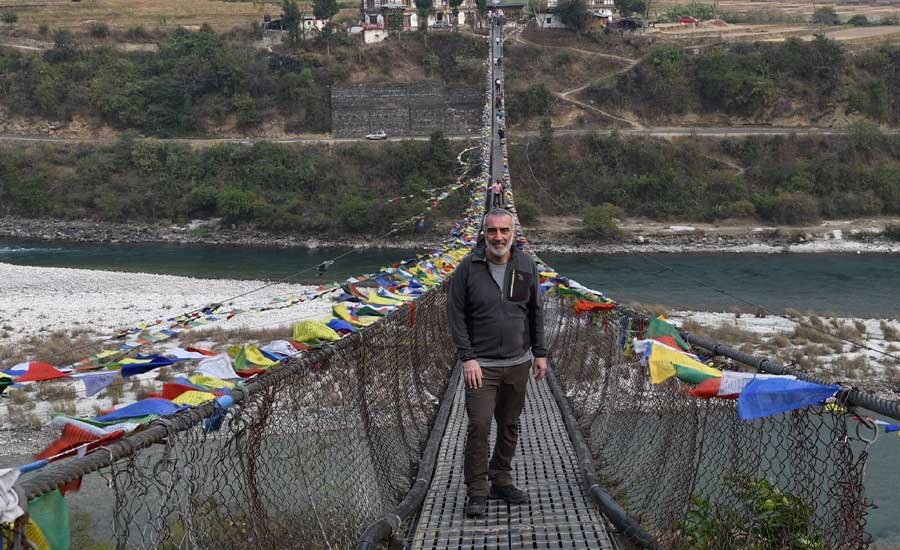
The Punakha Suspension Bridge is one of the most scenic places to visit in Punakha and one of Bhutan's best-known pedestrian suspension bridges. Stretching high above the Pho Chhu River, the bridge is surrounded by forested hills, traditional villages and the peaceful landscape of the Punakha Valley.
Colourful Buddhist prayer flags line the bridge, fluttering above the river as visitors and local residents cross from one side of the valley to the other. Although crossing takes only a short time, the combination of river views, mountain scenery and the gentle movement of the bridge makes it a memorable addition to a Bhutan journey.
Located close to the magnificent Punakha Dzong, the suspension bridge can easily be combined with the dzong, Chimi Lhakhang, Khamsum Yulley Namgyal Chorten and other attractions in the Punakha Valley.
For travellers planning a complete journey through the country, explore our Bhutan Tours or read our Bhutan Tour Guide.
Punakha Suspension Bridge Quick Facts
| Attraction | Punakha Suspension Bridge |
| Country | Bhutan |
| Region | Punakha |
| River | Pho Chhu |
| Bridge Type | Pedestrian Suspension Bridge |
| Length | Approx. 230 metres |
| Width | Approx. 1.2 metres |
| Nearby Landmark | Punakha Dzong |
| Main Experience | Bridge crossing, river views, prayer flags and photography |
| Walking Difficulty | Easy |
| Typical Visit | Approx. 20–45 minutes |
| Best Combined With | Punakha Dzong and Punakha Valley sightseeing |
| Best Time to Visit | Spring and autumn; possible year-round depending on conditions |
Where Is Punakha Suspension Bridge?
The Punakha Suspension Bridge is located in Punakha District in western Bhutan, crossing the Pho Chhu River near Punakha Dzong.
Punakha lies at a considerably lower elevation than places such as Paro and Thimphu, giving the valley a warmer climate and a greener landscape for much of the year.
The bridge provides an important pedestrian connection between the area around Punakha Dzong and settlements on the opposite side of the river. Today, it continues to be used by local residents while also becoming one of Punakha's most photographed attractions.
Because it is close to Punakha Dzong, both places can easily be visited during the same sightseeing program.
How Long Is Punakha Suspension Bridge?
The current Punakha Suspension Bridge is approximately 230 metres long and around 1.2 metres wide, according to information published by the Punakha Dzongkhag administration.
You may find websites describing the bridge as 160 metres or 180 metres long. Different figures have circulated online for many years, and some descriptions appear to mix information about earlier bridges with the present structure.
For travellers, the most important point is that this is a long pedestrian suspension bridge crossing above the Pho Chhu River and providing excellent views across the Punakha Valley.
Is Punakha Suspension Bridge the Longest Suspension Bridge in Bhutan?
The Punakha Suspension Bridge is widely described as one of Bhutan's longest pedestrian suspension bridges, and Bhutanese reporting has also referred to the present bridge as the country's longest suspension bridge.
Because different sources publish different measurements and Bhutan has many suspension bridges, we prefer to describe Punakha Suspension Bridge as one of the longest and most famous suspension bridges in Bhutan rather than relying only on a tourism superlative.
What makes the bridge especially worthwhile is not simply its length. Its location above the Pho Chhu, colourful prayer flags, surrounding mountains and proximity to Punakha Dzong make it one of the most memorable short walks in the Punakha Valley.
History of Punakha Suspension Bridge
Suspension bridges have long played an important role in Bhutan, connecting communities separated by steep valleys and fast-flowing Himalayan rivers.
Various tourism websites connect Punakha's bridge tradition with the famous Tibetan Buddhist saint and bridge builder Thangtong Gyalpo, who is associated with the development of iron-chain bridges across the Himalayan region.
However, travellers should distinguish these historical bridge traditions from the present Punakha Suspension Bridge. Current Bhutanese reporting describes today's approximately 230-metre bridge as having been constructed in 1994 to improve access between local settlements and the district administration around Punakha Dzong.
As road access improved, the bridge's role changed, but it remained useful to local communities and became increasingly popular with visitors. This combination of practical local infrastructure and tourism attraction is part of what makes the bridge interesting today.
What Is It Like to Cross Punakha Suspension Bridge?
Crossing the bridge is easy for most travellers, but it feels quite different from walking on an ordinary road bridge.
As you step onto the narrow pedestrian deck, you can feel a gentle movement beneath your feet. The bridge may sway more when several people are crossing or when the valley is windy.
Colourful Buddhist prayer flags stretch along the sides, while below you the Pho Chhu River flows through the valley. From different points along the crossing, you can look towards the surrounding hills, rural settlements and river landscape.
There is no need to rush. Walk comfortably, allow other people to pass and take time to enjoy the surroundings. Travellers who are uncomfortable with heights may prefer to walk only part of the way before returning.
Why Are There So Many Prayer Flags on the Bridge?
One of the most recognisable features of Punakha Suspension Bridge is the large number of colourful Buddhist prayer flags attached along the crossing.
Prayer flags are common throughout Bhutan and the wider Himalayan Buddhist region. Traditionally, they carry prayers, mantras and sacred symbols, while the movement of the wind is associated with carrying blessings and positive intentions into the surrounding environment.
Against the green Punakha Valley and the river below, the flags also make the bridge particularly photogenic. Visitors should remember that prayer flags are religious objects and should always be treated respectfully.
Punakha Suspension Bridge and the Pho Chhu River
The bridge crosses the Pho Chhu, one of the two famous rivers associated with Punakha Dzong.
The Pho Chhu and Mo Chhu meet beside Punakha Dzong, creating one of Bhutan's most recognisable landscapes. Their names are commonly translated as the Male River (Pho Chhu) and Female River (Mo Chhu).
The rivers are an important part of the character of Punakha Valley and also provide opportunities for outdoor activities such as rafting when seasonal conditions permit.
The suspension bridge provides an excellent elevated perspective over the Pho Chhu and surrounding river valley.
Punakha Suspension Bridge and Punakha Dzong
A visit to the suspension bridge is best combined with Punakha Dzong, one of Bhutan's most impressive fortress-monasteries.
Punakha Dzong stands dramatically at the confluence of the Pho Chhu and Mo Chhu rivers and played a central role in Bhutanese history. Punakha itself served as Bhutan's political centre before the capital moved to Thimphu.
The combination works particularly well because the two experiences are very different. At Punakha Dzong, you experience Bhutanese architecture, Buddhist heritage and history. At the suspension bridge, the focus changes to the river landscape, prayer flags, local life and open valley scenery.
Together, they make one of the most rewarding sightseeing combinations in western Bhutan.
Best Things to Do at Punakha Suspension Bridge
1. Walk Across the Entire Bridge
The simplest experience is also the best. Walk slowly from one side to the other and enjoy the changing views across the river and valley.
2. Photograph the Prayer Flags
The colourful flags create excellent foregrounds for photographs of the bridge, river and surrounding mountains.
3. Enjoy Views of the Pho Chhu
Stop safely along the crossing and look down towards the river and surrounding valley.
4. Observe Local Life
The bridge is not simply a tourist attraction. Local residents also use it as part of everyday life, connecting communities on either side of the river.
5. Combine It with a Punakha Valley Walk
Rather than simply crossing and immediately returning to your vehicle, the bridge can form part of a longer countryside walk through villages, fields and forested sections of Punakha Valley.
Himalayan Dream Team includes Punakha and its surrounding countryside in several of our Bhutan Tours.
Is Punakha Suspension Bridge Safe?
The bridge is a pedestrian crossing used by both residents and visitors. Like any suspension bridge, it moves naturally when people walk across it and can sway more noticeably in windy conditions.
Visitors should walk normally, avoid deliberately making the bridge swing and follow any instructions provided locally. Travellers who have significant difficulty with heights, balance or mobility should discuss the crossing with their guide before walking across.
Weather and maintenance conditions can also affect access, so current local conditions should always be checked before visiting.
Important Information About Bridge Conditions
Travellers should be aware that concerns regarding the condition of the bridge were reported locally in September 2026, including reports relating to sagging and deterioration of some side-wire mesh. Local authorities were discussing the need for maintenance.
Bridge conditions, repairs and access arrangements can change. Travellers should therefore not rely entirely on old travel blogs when checking whether the bridge is accessible.
Himalayan Dream Team and our Bhutanese partners will check local conditions when arranging sightseeing in Punakha. If temporary maintenance or access restrictions are in place, your guide can adjust the day's program accordingly.
How Much Time Do You Need at Punakha Suspension Bridge?
For most travellers, approximately 20–45 minutes is sufficient if you simply want to walk across the bridge, take photographs and enjoy the river views.
Allow more time if you plan to continue walking into the surrounding countryside or combine the crossing with a longer village walk.
Because Punakha Dzong is nearby, the two attractions fit naturally into a half-day or full-day Punakha sightseeing program.
Best Time to Visit Punakha Suspension Bridge
The bridge can be visited during much of the year, although weather and scenery vary considerably by season.
| Season | Months | Conditions in Punakha | Recommendation |
|---|---|---|---|
| Spring | March–May | Pleasant temperatures, green landscapes and flowering vegetation | Excellent |
| Summer / Monsoon | June–August | Warm, lush and wetter; rain can affect outdoor sightseeing | Possible with flexibility |
| Autumn | September–November | Generally clear skies, comfortable weather and beautiful valley scenery | Excellent |
| Winter | December–February | Cooler and drier, with relatively mild conditions compared with higher Bhutanese valleys | Very Good |
For most first-time travellers, spring and autumn provide an excellent combination of comfortable walking conditions and scenery.
For a complete seasonal comparison, read our Best Time to Visit Bhutan.
Best Time of Day for Photography
Morning and late afternoon generally provide softer light than the middle of the day. The colourful prayer flags, river and surrounding green hills offer several different compositions, while clear days provide better visibility across the valley.
Photography conditions change with the season, weather and water level, so there is no single guaranteed perfect time. When photographing local people using the bridge, always ask permission before taking close portraits.
What to Wear When Visiting Punakha Suspension Bridge
No special trekking equipment is needed simply to visit Punakha Suspension Bridge. Comfortable walking shoes are recommended because the visit may involve uneven paths before or after the bridge.
During spring and autumn, light layers are generally useful. Winter mornings can be cool, while summer brings warmer temperatures and possible rain.
If your Punakha program includes temples or Punakha Dzong, dress respectfully with shoulders and knees covered.
Is Punakha Suspension Bridge Suitable for Children and Seniors?
For travellers who are comfortable walking and do not have significant problems with heights or balance, the bridge itself is not physically demanding.
Families should supervise young children carefully throughout the crossing. Older travellers can also enjoy the bridge at a relaxed pace, although anyone with mobility difficulties, vertigo or balance problems should speak with the guide first.
The crossing is optional. Travellers who prefer not to walk across can still enjoy Punakha's other cultural attractions.
Best Places to Visit Near Punakha Suspension Bridge
Punakha Dzong
The most important nearby attraction and one of Bhutan's great architectural landmarks. Its location between the Pho Chhu and Mo Chhu rivers makes it particularly beautiful.
Chimi Lhakhang
Known internationally as the Temple of Fertility, Chimi Lhakhang is associated with the unconventional Buddhist saint Drukpa Kunley. Reaching the temple includes an enjoyable walk through villages and agricultural fields.
Khamsum Yulley Namgyal Chorten
A rewarding short hike through the Punakha countryside leads to this hilltop religious monument, with panoramic views across the valley.
Sangchhen Dorji Lhuendrup Nunnery
Located above the Punakha and Wangdue valleys, the nunnery combines Buddhist culture with beautiful viewpoints.
Punakha Dzong and River Confluence
The meeting point of the Pho Chhu and Mo Chhu is one of the defining landscapes of Punakha and should not be missed.
Punakha Tshechu
If your journey coincides with the annual festival period, Punakha becomes an especially rewarding cultural destination. Himalayan Dream Team offers a dedicated Punakha Tshechu Festival Tour.
Travellers interested in Bhutan's traditional celebrations can also explore our Bhutan Festival Tours and Bhutan Tshechu Festival Guide.
How to Include Punakha in a Bhutan Itinerary
For most travellers, Punakha is included after visiting Thimphu. A typical journey follows:
Paro → Thimphu → Dochula Pass → Punakha
The drive crosses Dochula Pass, famous for its 108 Druk Wangyel Chortens and Himalayan views on clear days, before descending into the warmer Punakha Valley.
After Punakha, travellers can return towards Paro or continue east towards Phobjikha, Trongsa and Bumthang for a longer exploration of Bhutan.
This makes Punakha an important link between the classic western Bhutan circuit and longer journeys into central Bhutan.
Our Bhutan with Gangtey Festival Tour combines Punakha with Phobjikha and central Bhutan, while our Bumthang Cultural Trek explores further into the country's cultural heartland.
Can You Visit Punakha Suspension Bridge from Thimphu?
Yes. Punakha is commonly reached from Thimphu by road via Dochula Pass.
However, rather than rushing to Punakha only to photograph the bridge and immediately return, we recommend allowing enough time to experience the valley properly.
Punakha Dzong, the suspension bridge, Chimi Lhakhang and the surrounding countryside together provide a much better understanding of the region. An overnight stay also allows you to experience Punakha at a more relaxed pace.
Punakha Suspension Bridge vs Nepal's Suspension Bridges
Travellers combining Nepal and Bhutan sometimes expect Punakha Suspension Bridge to resemble the dramatic bridges found on Himalayan trekking routes in Nepal. The experience is different.
Many Nepalese suspension bridges form part of mountain trekking trails and are crossed while walking between villages. Punakha Suspension Bridge is primarily a cultural sightseeing experience within a fertile river valley, easily combined with historic Punakha Dzong and nearby villages.
Both offer excellent Himalayan scenery, but Punakha's colourful prayer flags, Buddhist setting and proximity to one of Bhutan's most important dzongs give it a distinctly Bhutanese character.
Travellers planning both countries can explore our Nepal and Bhutan Tour.
Do You Need a Guide to Visit Punakha?
Having a knowledgeable Bhutanese guide is particularly useful in Punakha because the experience is not limited to taking photographs. Your guide can explain Punakha Dzong, local Buddhist traditions, village life, prayer flags and the historical importance of the valley.
For current entry requirements and practical travel planning, see our Bhutan Visa Guide.
Is Punakha Suspension Bridge Worth Visiting?
Yes. Punakha Suspension Bridge is worth visiting, particularly because it requires relatively little time and combines naturally with Punakha Dzong.
The bridge itself is scenic, but its location makes the experience special. You have the Pho Chhu below, prayer flags surrounding the walkway, mountains and villages around the valley, and one of Bhutan's most important historic dzongs nearby.
It is not an attraction that requires an entire day. Instead, it is one of those short Bhutan experiences that fits naturally into a well-planned journey and often becomes a favourite photography stop.
For travellers already visiting Punakha Dzong, we recommend including the suspension bridge whenever local access and conditions allow.
Punakha Suspension Bridge FAQs
How long is Punakha Suspension Bridge?
The current bridge is approximately 230 metres long, according to information published by the Punakha Dzongkhag administration. Different measurements, including 160 and 180 metres, continue to appear on older tourism websites.
How wide is Punakha Suspension Bridge?
The bridge is approximately 1.2 metres wide.
Which river does Punakha Suspension Bridge cross?
The bridge crosses the Pho Chhu River in Punakha.
Is Punakha Suspension Bridge the longest bridge in Bhutan?
It is widely described as one of Bhutan's longest pedestrian suspension bridges. Because measurements and descriptions differ between sources, we prefer to describe it as one of the longest and most famous suspension bridges in Bhutan.
Is the bridge near Punakha Dzong?
Yes. The suspension bridge is located close to Punakha Dzong and can easily be combined with a visit to the dzong.
How long does it take to visit Punakha Suspension Bridge?
Allow approximately 20–45 minutes for a relaxed crossing, photographs and river views. A longer countryside walk requires additional time.
Does the bridge move when you walk across it?
Yes. Like most pedestrian suspension bridges, it can move gently as people cross and may sway more noticeably in windy conditions.
Is Punakha Suspension Bridge difficult to cross?
No strenuous hiking is required. However, travellers who are uncomfortable with heights or have balance difficulties may find the movement challenging.
Can children cross Punakha Suspension Bridge?
Yes, but young children should be closely supervised throughout the crossing.
Can senior travellers visit the bridge?
Yes, provided they are comfortable walking and do not have significant balance or vertigo problems. The crossing can be taken slowly.
Is there an entrance fee for Punakha Suspension Bridge?
Access arrangements can change, so it is best to check current local information with your Bhutanese guide when visiting rather than relying on older online information.
What is the best time to visit Punakha Suspension Bridge?
Spring and autumn are excellent for sightseeing, although Punakha can be visited throughout much of the year. Winter is comparatively mild because of Punakha's lower elevation, while summer is greener but wetter.
Can I visit Punakha Suspension Bridge and Punakha Dzong on the same day?
Yes. This is the most logical combination, and both attractions fit comfortably into a Punakha sightseeing program.
What else should I see in Punakha?
Punakha Dzong, Chimi Lhakhang, Khamsum Yulley Namgyal Chorten, the Pho Chhu and Mo Chhu river landscapes and surrounding villages are among the best places to include.
Is Punakha Suspension Bridge currently open?
Access and maintenance conditions can change. Because local concerns about bridge maintenance were reported in September 2026, travellers should confirm current conditions before visiting. Himalayan Dream Team and our local Bhutanese partners can check the latest situation when arranging your Punakha sightseeing program.
Visit Punakha with Himalayan Dream Team
Punakha is much more than a quick sightseeing stop between Thimphu and Paro. Its rivers, monasteries, villages, historic dzong, countryside walks and famous suspension bridge make it one of the most rewarding valleys to include in a Bhutan journey.
At Himalayan Dream Team, we combine Punakha with carefully planned cultural journeys through Paro, Thimphu, Phobjikha, Trongsa, Bumthang and other regions of Bhutan according to your available time and interests.
Explore our Bhutan Tours, read our Bhutan Tour Guide, or check the Best Time to Visit Bhutan when planning your journey.
If you are travelling through Nepal before Bhutan, our Nepal and Bhutan Tour is another convenient way to experience both Himalayan countries in one journey.