

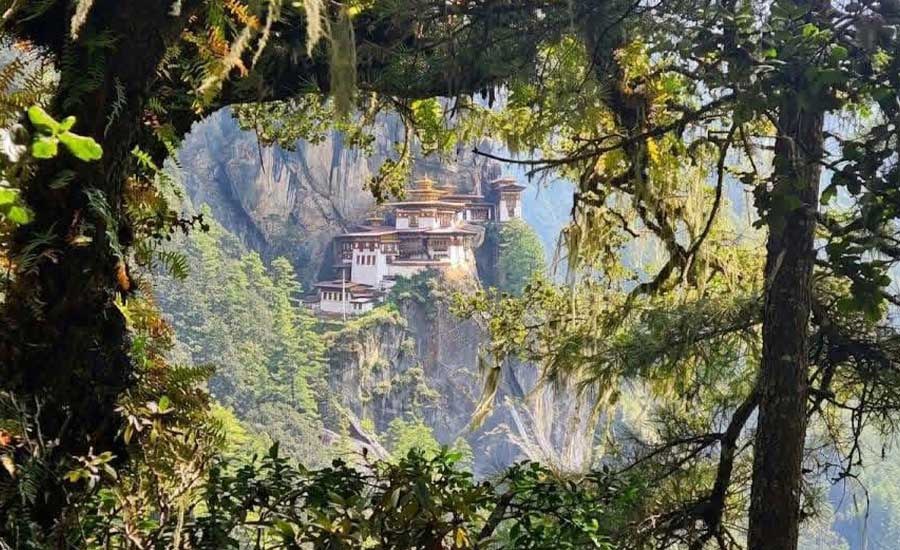
Tiger's Nest Monastery (Paro Taktsang): Complete Hiking Guide, History & Travel Tips for 2026–2027
Tiger's Nest Monastery (Paro Taktsang) is one of Bhutan's most famous landmarks and sacred Buddhist pilgrimage sites. Perched dramatically on a cliff at approximately 3,120 metres (10,240 feet) above sea level, this extraordinary monastery overlooks the beautiful Paro Valley in western Bhutan.
For many travellers, the Tiger's Nest Monastery hike is the highlight of their Bhutan holiday. The journey combines peaceful pine forests, colourful prayer flags, breathtaking mountain scenery and centuries of Buddhist history.
At Himalayan Dream Team Treks & Tours, we include Tiger's Nest in many of our Bhutan tours and trekking holidays. Our local Bhutanese guides help travellers experience this remarkable place at a comfortable pace while learning about its history, legends and spiritual importance.
This updated 2026–2027 Tiger's Nest Monastery travel guide covers everything you need to know before visiting, including hiking distance, walking time, difficulty, altitude, entrance fees, the best seasons, monastery etiquette and practical travel tips.
Tiger's Nest Monastery at a Glance
| Information | Details |
|---|---|
| Official Name | Paro Taktsang (Taktsang Palphug Monastery) |
| Location | Paro Valley, Bhutan |
| Altitude | Approximately 3,120 m (10,240 ft) |
| Distance from Paro | Approximately 10–12 km north of Paro town |
| Hiking Starting Point | Ramthangkha, approximately 2,600 m |
| Hiking Distance | Approximately 6–9 km round trip, depending on route |
| Walking Duration | Approximately 4–5 hours walking |
| Total Visiting Time | Approximately 5–7 hours including breaks and sightseeing |
| Hiking Difficulty | Moderate to challenging |
| Best Time to Visit | March–May and September–November |
| Entrance Fee | Approximately Nu 1,000 per adult; reconfirm current rate |
| Photography | Allowed at outdoor viewpoints, prohibited inside temples |
| Guide | Licensed Bhutanese guide required for international tourist sightseeing |
What Is Tiger's Nest Monastery (Paro Taktsang)?
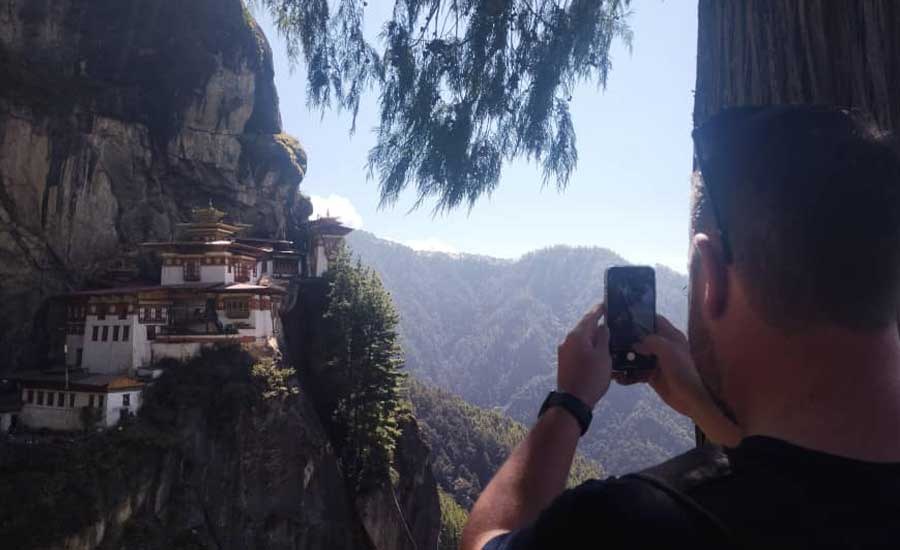
A memorable moment as our Himalayan Dream Team guest captures the breathtaking Tiger's Nest Monastery (Paro Taktsang).
Tiger's Nest Monastery is a sacred Buddhist complex built against a steep granite cliff high above Bhutan's Paro Valley. Its whitewashed walls, golden roofs and traditional Bhutanese architecture create one of the most recognisable sights in the Himalayas.
The monastery appears almost suspended above the mountainside, surrounded by dense forests, rocky cliffs and deep valleys. Visitors approaching along the hiking trail can enjoy spectacular views of the buildings from several viewpoints.
Although Tiger's Nest is one of Bhutan's most visited attractions, it remains an active religious site where Buddhist monks practise meditation, prayer and traditional rituals.
For Bhutanese people, Paro Taktsang is much more than a beautiful monastery. It represents an important connection to Guru Rinpoche and the country's spiritual heritage.
Why Is It Called Tiger's Nest? The Legend of Guru Rinpoche
The name Tiger's Nest comes from a famous Buddhist legend associated with Guru Rinpoche (Padmasambhava), the eighth-century Buddhist master closely connected with the spread of Vajrayana Buddhism in Bhutan.
According to traditional accounts, Guru Rinpoche travelled to this sacred cliff on the back of a flying tigress. In some versions of the legend, the tigress is associated with Yeshe Tsogyal, his spiritual consort and disciple.
After reaching the cliff, Guru Rinpoche is believed to have meditated inside a cave for three years, three months, three weeks, three days and three hours.
During this period, Buddhist tradition holds that he subdued harmful spiritual forces and blessed the surrounding landscape.
The cave became known as Taktsang, meaning Tiger's Lair or Tiger's Nest.
This legend remains central to the monastery's religious identity and is an important part of Bhutanese Buddhist culture.
History of Tiger's Nest Monastery
The religious history of Paro Taktsang dates back to the eighth century, when Guru Rinpoche is traditionally believed to have meditated at the sacred cave.
Over the following centuries, the site attracted Buddhist teachers, monks and pilgrims.
The present monastery complex was constructed between 1692 and 1694 under Gyalse Tenzin Rabgye, an important Bhutanese religious and political leader.
Building a monastery in such a remote and dramatic location was an extraordinary achievement. Traditional Bhutanese architecture was adapted to the steep rock face, with temples, stairways and passages connecting different parts of the complex.
In April 1998, a major fire damaged the monastery. Restoration and reconstruction work was completed in 2005, preserving the traditional architecture and religious significance of the site.
Important Historical Dates
| Year | Historical Event |
|---|---|
| 8th Century | Guru Rinpoche is traditionally believed to have meditated at the sacred cave. |
| 1692 | Construction of the main monastery complex begins. |
| 1694 | The main monastery complex is completed. |
| 1998 | A major fire damages the monastery. |
| 2005 | Restoration and reconstruction are completed. |
| Today | Paro Taktsang remains an important Buddhist pilgrimage destination. |
How Long Is the Tiger's Nest Hike and How Difficult Is It?
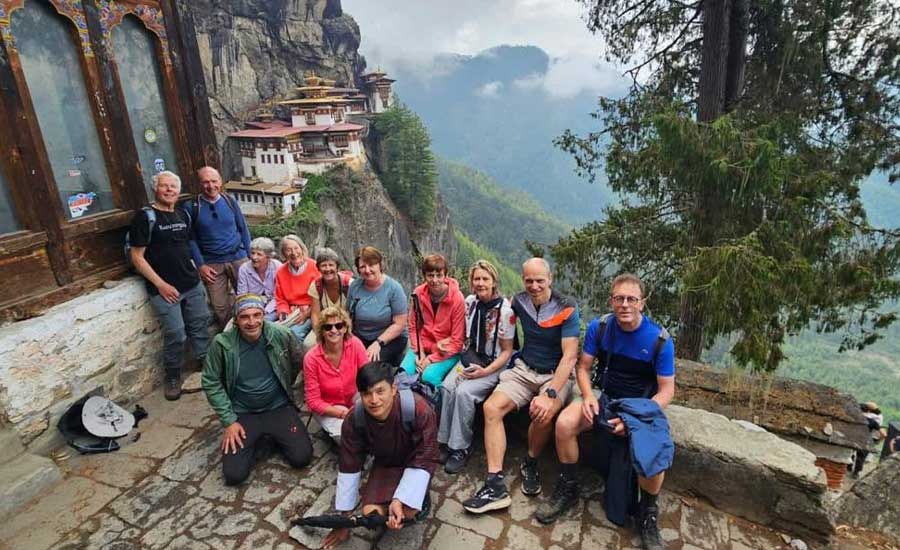
Our Belgian guests hiking to the iconic Tiger's Nest Monastery in Bhutan.
The Tiger's Nest hike is generally considered moderate to challenging. It does not require technical climbing experience, but visitors should be prepared for a sustained uphill walk, uneven mountain paths, high altitude and steep stone steps.
The trail starts at approximately 2,600 metres, while the monastery stands at around 3,120 metres above sea level.
Although the elevation difference is approximately 520 metres, the total uphill effort can be greater because the trail descends into a gorge and climbs again near the monastery.
Most travellers with reasonable walking fitness can complete the hike by maintaining a comfortable pace and taking regular breaks.
However, the hike may be more demanding for visitors who are not accustomed to mountain walking or who have recently arrived at altitude.
Tiger's Nest Hiking Time and Distance
| Hiking Section | Estimated Duration |
|---|---|
| Trailhead to Taktsang Cafeteria | 1–1.5 hours |
| Cafeteria to Main Viewpoint | 30–60 minutes |
| Viewpoint to Monastery Entrance | 20–40 minutes |
| Visiting the Monastery | 45–60 minutes |
| Return to Trailhead | 1.5–2 hours |
| Total Experience | Approximately 5–7 hours |
The actual duration depends on your fitness, walking pace, weather conditions and the number of breaks taken along the trail.
Tiger's Nest Hiking Route: Step-by-Step Guide
Stage 1: Trailhead to Taktsang Cafeteria
The hike begins near Ramthangkha, a short drive from Paro town.
The first section follows a broad uphill path through beautiful pine and rhododendron forests. Along the way, visitors pass colourful prayer flags, prayer wheels and peaceful mountain scenery.
This part of the trail involves a steady ascent and can feel challenging if you are not accustomed to walking at altitude.
Allow approximately 1–1.5 hours to reach the cafeteria, depending on your pace.
Stage 2: Taktsang Cafeteria and First Viewpoint
The Taktsang Cafeteria is a popular resting point along the hiking route.
Visitors can usually stop for refreshments while enjoying their first impressive views of Tiger's Nest Monastery across the valley.
The monastery appears high on the opposite cliff, surrounded by forests and rocky mountains.
For visitors who cannot complete the entire hike, reaching the cafeteria can still be a rewarding experience.
Refreshment services and operating arrangements should be confirmed locally.
Stage 3: Cafeteria to the Main Tiger's Nest Viewpoint
Beyond the cafeteria, the trail continues through forested slopes towards the main viewpoint.
As you approach, the monastery becomes increasingly impressive.
This section offers some of the best photography opportunities along the entire hike.
From the main viewpoint, visitors can clearly see the monastery's white buildings and golden roofs clinging to the cliff.
It is an excellent place to take photographs before continuing towards the monastery entrance.
Stage 4: Stone Steps, Waterfall and Bridge
One of the most memorable sections of the Tiger's Nest hike is the final approach.
From the main viewpoint, the trail descends steeply by stone steps into a gorge.
Visitors then cross a bridge near a waterfall before climbing another staircase towards the monastery entrance.
This section can be tiring, particularly after the earlier uphill walk.
The number of steps is often described as several hundred down and several hundred up, although published counts vary.
Take care on wet or slippery steps and use the handrails where available.
Stage 5: Entering Tiger's Nest Monastery
At the monastery entrance, visitors must follow the site's religious and security rules.
Bags, cameras and mobile phones generally need to be deposited in the designated storage area.
Shoes and hats must be removed before entering the shrine rooms.
Your Bhutanese guide will explain the monastery's history, religious significance and customs associated with the temples.
Take time to appreciate the peaceful atmosphere, traditional architecture and spiritual importance of this extraordinary place.
Can You Visit Tiger's Nest Without Hiking?
There is no road directly to Tiger's Nest Monastery.
Visitors must complete at least part of the journey on foot to reach the religious complex.
Horse or mule services may be available for part of the uphill route, commonly towards the cafeteria area, depending on local operating arrangements.
Animals do not take visitors all the way to the monastery entrance.
The final approach involves narrow trails and steep stone steps that must be completed on foot.
If you cannot complete the entire hike, you can still enjoy views from a lower viewpoint or the cafeteria.
Himalayan Dream Team can help arrange alternative cultural sightseeing in Paro for travellers who prefer not to attempt the full hike.
Is the Tiger's Nest Hike Suitable for Beginners and Older Travellers?
Many first-time hikers and active older travellers successfully visit Tiger's Nest.
The most important factors are individual fitness, comfort with uphill walking and the ability to manage uneven stone steps.
We recommend preparing with regular walks, gentle hill training and stair climbing before travelling to Bhutan.
If possible, spend some time in Paro or Thimphu before attempting the hike to become more comfortable at altitude.
Walk slowly, rest whenever needed and avoid comparing your pace with other visitors.
Travellers with heart, lung, mobility or other relevant medical conditions should seek advice from their healthcare professional before planning a demanding hike at altitude.
Tiger's Nest Altitude and Acclimatisation Tips
Tiger's Nest Monastery is located at approximately 3,120 metres above sea level.
At this elevation, some visitors may notice that walking uphill requires more effort than at lower altitudes.
Symptoms such as headache, nausea, dizziness and unusual fatigue should not be ignored, particularly after a recent ascent to higher altitude.
To reduce altitude-related risks:
- Walk slowly and avoid rushing the hike.
- Consider spending time at altitude before your visit.
- Drink according to thirst and weather conditions.
- Take regular breaks along the trail.
- Inform your guide immediately if you feel unwell.
- Do not continue ascending if you develop symptoms suggestive of altitude sickness.
Severe symptoms, including confusion, difficulty walking normally or breathlessness at rest, require urgent medical attention and descent.
What Is Inside Tiger's Nest Monastery?
Tiger's Nest is more than a single temple.
The religious complex contains several shrines, sacred caves, prayer rooms and traditional Buddhist artworks.
The temples are connected by stairways and passages built into the mountain.
Visitors may encounter statues of Guru Rinpoche, butter lamps, colourful paintings and important religious symbols.
Guru Rinpoche's Meditation Cave
This sacred cave is associated with the legend of Guru Rinpoche and the origins of Tiger's Nest.
Guru Tsengye Lhakhang
This temple is associated with the Eight Manifestations of Guru Rinpoche.
Dorje Drolo Lhakhang
A shrine dedicated to one of Guru Rinpoche's powerful manifestations.
Sacred Statues and Religious Shrines
The monastery contains revered Buddhist images, paintings and religious objects that are important to pilgrims.
Not every shrine or cave is necessarily accessible during every visit. Your guide will explain which areas are open and the religious customs to follow.
Photography is not permitted inside the temples.
Why Is Tiger's Nest Monastery Spiritually Important?
Tiger's Nest is one of Bhutan's most significant Buddhist pilgrimage destinations.
For Bhutanese Buddhists, visiting the monastery is an act of devotion connected with prayer, reflection and spiritual merit.
The sacred site is closely associated with Guru Rinpoche and the spread of Vajrayana Buddhism in Bhutan.
Prayer flags, sacred images, meditation caves and the surrounding mountain landscape all contribute to the monastery's religious importance.
Visitors are encouraged to respect the peaceful atmosphere and remember that the site remains a place of worship.
Tiger's Nest Monastery Entrance Fee and Bhutan Travel Costs in 2026–2027
Visitors should distinguish between the entrance fee for Tiger's Nest and the broader costs of travelling to Bhutan.
The monastery entrance fee is separate from Bhutan's Sustainable Development Fee and visa application fee.
Estimated Visitor Costs for 2026–2027
| Cost | Amount |
|---|---|
| Tiger's Nest Entrance Fee | Approximately Nu 1,000 per adult; reconfirm the current rate and child concessions |
| Sustainable Development Fee for Most International Adults | USD 100 per person per night under the reduced-rate policy currently scheduled through 31 August 2027 |
| SDF for Eligible Children Aged 6–11 | USD 50 per night |
| SDF for Children Under 6 | Exempt |
| SDF for Indian Adults | Nu/INR 1,200 per person per night |
| Bhutan Tourist Visa Application | USD 40 for visitors requiring a visa |
| Horse or Mule Service | Additional local charge; confirm availability and price |
The reduced USD 100 SDF is currently scheduled to remain in effect until 31 August 2027. Rates for travel after that date should be checked against the latest government policy.
Travel packages may also include accommodation, meals, transportation, guiding services and other monument entrance fees.
Himalayan Dream Team can explain which expenses are included in your Bhutan tour quotation.
Best Time to Visit Tiger's Nest Monastery
Tiger's Nest can be visited in different seasons, although trail conditions and mountain views vary throughout the year.
Spring: March to May
Spring is one of the most attractive periods to visit Tiger's Nest.
The forests become greener, rhododendrons may be in bloom and daytime temperatures are generally pleasant for hiking.
Spring is also an important season for Bhutan's religious festivals.
Autumn: September to November
Autumn is another excellent season for the Tiger's Nest hike.
The weather is often clearer after the monsoon, with beautiful mountain views and comfortable walking conditions.
October and November are especially popular for cultural tours and hiking holidays.
Winter: December to February
Winter offers quieter trails and beautiful clear days.
However, mornings can be cold and shaded sections of the path may become icy.
Warm clothing and suitable footwear are particularly important.
Summer and Monsoon: June to August
During the summer monsoon, the Paro Valley becomes lush and green.
However, rain can make the trails slippery, and clouds or mist may obscure the monastery.
Visitors should allow flexibility and follow local advice about trail conditions.
What Is the Best Time of Day to Hike Tiger's Nest?
An early morning start is generally recommended.
Starting around 7–8 am, when local access arrangements permit, allows visitors to walk during the cooler part of the day and provides more time for breaks.
Morning conditions may also offer better visibility before clouds develop later in the day.
However, the best photography light depends on the season, cloud cover and position of the sun.
Your guide can recommend the most suitable departure time based on current conditions and monastery visiting hours.
What to Pack for the Tiger's Nest Hike
You do not need technical mountaineering equipment, but comfortable clothing and appropriate footwear make the experience much more enjoyable.
- Comfortable hiking shoes with good grip
- Lightweight trekking trousers and breathable clothing
- Warm fleece or jacket
- Waterproof or windproof outer layer
- Drinking water and small snacks
- Sunscreen and sunglasses
- Sun hat
- Walking poles, if helpful
- Small daypack
- Personal medication
- Camera or phone for outdoor photography
Wear modest clothing suitable for visiting a Buddhist monastery.
Avoid carrying unnecessary weight, especially if you are not accustomed to hiking at altitude.
Tiger's Nest Monastery Dress Code and Visitor Etiquette
Tiger's Nest is a sacred Buddhist monastery, so respectful behaviour is essential.
- Dress modestly, covering your shoulders and knees.
- Remove shoes and hats before entering shrine rooms.
- Do not take photographs or videos inside the temples.
- Follow your guide's instructions regarding sacred objects and religious ceremonies.
- Avoid loud conversations and do not disturb monks or worshippers.
- Do not fly drones without the necessary official permissions.
- Carry your rubbish back down the trail.
Is Tiger's Nest Monastery Open Every Day?
Tiger's Nest is generally open to visitors on most days, but visiting hours can change because of religious activities, maintenance or other local arrangements.
A midday closure may apply.
For this reason, Himalayan Dream Team recommends confirming the latest opening hours with your Bhutanese guide before setting out.
Longer Hiking Options Near Tiger's Nest
Bumdra Monastery Hike
Bumdra is a sacred monastery located in the mountains above the Tiger's Nest area.
The hike offers beautiful forest scenery, mountain views and an opportunity to experience a quieter pilgrimage route.
A longer Bumdra itinerary may include an overnight camping experience, depending on the chosen route and arrangements.
Druk Path Trek
The Druk Path Trek is one of Bhutan's best-known trekking routes.
It connects the Paro and Thimphu regions through forests, high ridges, alpine lakes and traditional mountain landscapes.
This is an excellent option for travellers who want a multi-day trekking experience in Bhutan.
Jomolhari Trek
For experienced trekkers, the Jomolhari Trek offers a more demanding Himalayan adventure.
The route passes through remote valleys, traditional settlements and spectacular mountain scenery near Mount Jomolhari.
Other Beautiful Places to Visit in Paro Valley
Rinpung Dzong
Rinpung Dzong is a magnificent traditional Bhutanese fortress and monastery overlooking Paro.
It is also an important location for the annual Paro Tshechu Festival.
National Museum of Bhutan
The National Museum preserves important examples of Bhutanese art, textiles, religious objects and cultural history.
Kyichu Lhakhang
Kyichu Lhakhang is one of Bhutan's oldest and most sacred Buddhist temples.
It is an important place of pilgrimage and a peaceful stop during a cultural tour of Paro.
Drukgyel Dzong
Drukgyel Dzong is a historic fortress associated with Bhutan's military and cultural history.
Its setting offers attractive views of the surrounding mountains.
Chele La Pass
Chele La is a high mountain pass connecting the Paro and Haa regions.
On clear days, visitors can enjoy beautiful Himalayan views and the surrounding alpine landscape.
Frequently Asked Questions About Tiger's Nest Monastery
1. Where is Tiger's Nest Monastery located?
Tiger's Nest Monastery is located in the Paro Valley of western Bhutan, on a steep cliff above the valley floor.
2. What is the altitude of Tiger's Nest Monastery?
The monastery stands at approximately 3,120 metres (10,240 feet) above sea level.
3. How long does the Tiger's Nest hike take?
Most visitors should allow approximately 5–7 hours for the complete hike, including breaks and the monastery visit.
4. How far is the Tiger's Nest hike?
The round-trip distance is commonly estimated at approximately 6–9 kilometres, depending on the route and starting point.
5. Is the Tiger's Nest hike difficult?
The hike is moderate to challenging because of its sustained ascent, altitude and steep stone steps.
6. Can beginners hike to Tiger's Nest?
Yes. Many reasonably fit beginners complete the hike with a comfortable pace and regular breaks. Previous hill-walking experience is helpful.
7. Can older travellers visit Tiger's Nest?
Yes, depending on individual fitness and mobility. The steep steps and altitude should be considered carefully.
8. Can I reach Tiger's Nest by car?
No. There is no road directly to the monastery. Visitors must walk at least part of the route.
9. Can I ride a horse to Tiger's Nest?
Horse or mule services may be available for part of the uphill route, but they do not take visitors to the monastery entrance.
10. How many steps are there at Tiger's Nest?
The final approach involves several hundred stone steps descending into a gorge and another staircase ascending to the monastery. Exact published counts vary.
11. Is there a cafeteria on the Tiger's Nest trail?
Yes. The Taktsang Cafeteria is a well-known rest stop along the route, although services should be confirmed locally.
12. What is the best month to visit Tiger's Nest?
April, May, October and November are generally attractive months, although March and September can also be suitable.
13. Can I visit Tiger's Nest during winter?
Yes, when the trail is safe and the monastery is open. Visitors should prepare for cold weather and possible icy sections.
14. Can I take photographs inside the monastery?
No. Photography is prohibited inside the temples, but photographs can be taken from permitted outdoor viewpoints.
15. Is there an entrance fee?
Yes. An entrance fee applies, with approximately Nu 1,000 per adult commonly listed for 2026. Confirm the current 2026–2027 amount before visiting.
16. Do I need a guide to visit Tiger's Nest?
International tourists are required to use a licensed Bhutanese guide for sightseeing visits.
17. Is Tiger's Nest suitable for children?
Some active children can complete the hike, but suitability depends on their age, fitness, experience and ability to manage the steep steps.
18. Can I visit Tiger's Nest from Thimphu?
Yes. A visit can be arranged from Thimphu, although staying in Paro before or after the hike is often more convenient.
19. How far is Tiger's Nest from Paro town?
The monastery is located approximately 10–12 kilometres north of Paro town, with road access to the hiking trailhead.
20. Why is Tiger's Nest Monastery famous?
Tiger's Nest is famous for its dramatic cliffside location, beautiful Bhutanese architecture and association with Guru Rinpoche.
21. Is Tiger's Nest worth visiting?
For many travellers, Tiger's Nest is one of the most memorable experiences in Bhutan because it combines mountain scenery, history, hiking and Buddhist culture.
22. Can I combine Tiger's Nest with the Paro Tshechu Festival?
Yes. A Bhutan tour during the Paro Tshechu Festival can combine traditional Buddhist mask dances with a visit to Tiger's Nest Monastery.
Plan Your Tiger's Nest Monastery Visit with Himalayan Dream Team
A visit to Tiger's Nest Monastery is one of the most memorable experiences you can enjoy in Bhutan.
Whether you are interested in Buddhist history, mountain landscapes, photography or discovering one of the Himalayas' most extraordinary sacred places, the hike offers something special.
At Himalayan Dream Team Treks & Tours, we arrange private Bhutan tours, cultural journeys, festival holidays and trekking adventures.
Our experienced local Bhutanese guides help you explore Tiger's Nest at a comfortable pace while sharing the history and traditions of this remarkable monastery.
You can combine your visit with the colourful Paro Tshechu Festival, discover Bhutan's beautiful valleys on a Bhutan cultural tour, or enjoy a longer trekking adventure on the Druk Path Trek.
Travellers visiting Nepal can also combine Kathmandu and Bhutan in one Himalayan holiday through our Bhutan tours and trekking programs.
We would be delighted to help you plan a memorable and well-organised journey to Bhutan.
Together is Our Favourite Place to Be.