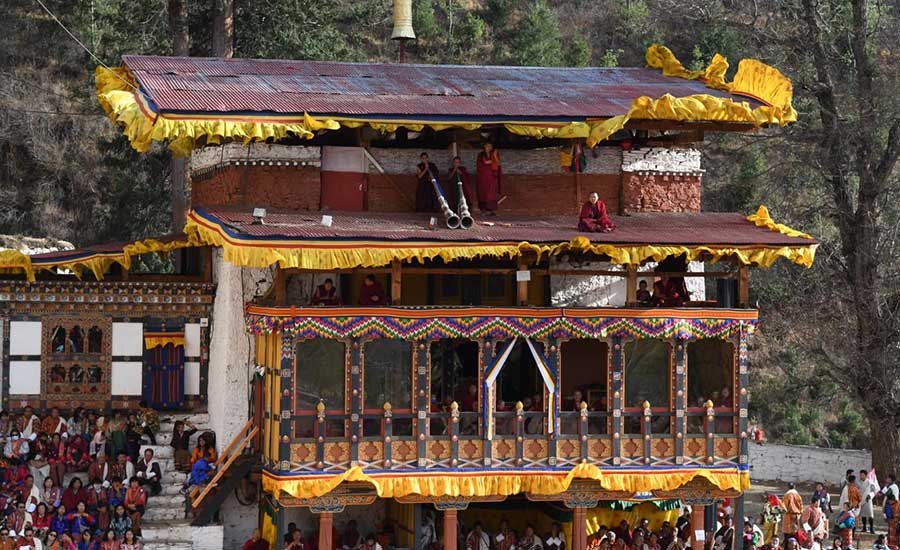
The Trongsa Tshechu Festival Tour – 12 Days is a special winter journey through Bhutan, designed around one of the country's important traditional Buddhist festivals. Held at the magnificent Trongsa Dzong in central Bhutan, the Trongsa Tshechu brings together monks, local families and visitors for several days of sacred mask dances, religious ceremonies and colourful community celebrations.
For travellers interested in experiencing Bhutan's living Buddhist traditions, the Trongsa Tshechu offers a wonderful alternative to the larger festivals in Paro and Thimphu. You can also explore our other Bhutan Festival Tours or check our Bhutan Festivals Calendar when comparing different festival dates and regions.
Travelling to Bhutan in December offers a very different experience from the busier spring and autumn months. Winter brings crisp mountain air, quieter roads and valleys, and often beautifully clear Himalayan views. Combined with the festival atmosphere in Trongsa, December is an excellent time for travellers who want to discover Bhutan's culture at a peaceful pace.
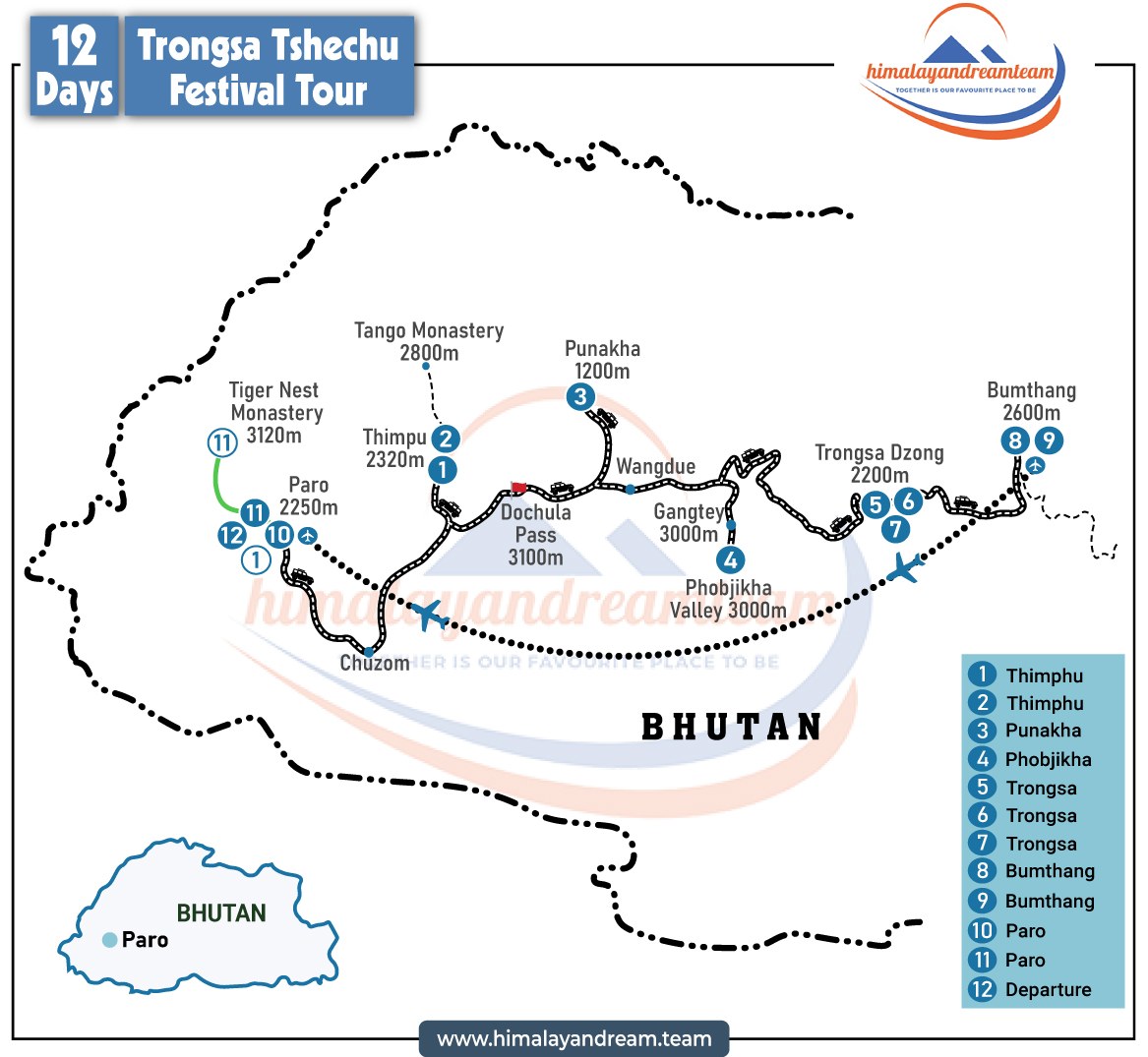
Your journey begins in Paro and continues to Bhutan's capital, Thimphu. From Thimphu, travel across the scenic Dochula Pass towards Punakha before continuing through the beautiful Phobjikha Valley. This peaceful glacial valley is particularly special in winter, when the endangered black-necked cranes migrate to the region.
Travellers especially interested in Phobjikha and its festival traditions may also like our Bhutan with Gangtey Festival Tour.
From Phobjikha, the journey continues deeper into central Bhutan to Trongsa, historically one of the kingdom's most important regions. The impressive Trongsa Dzong rises dramatically above the Mangde Chhu valley and provides a remarkable setting for the annual Tshechu.
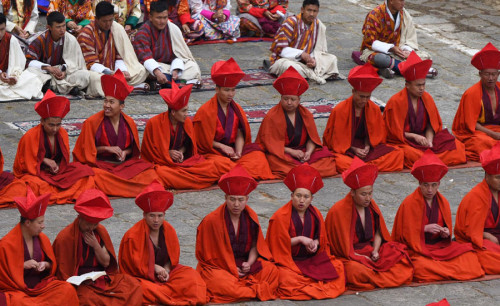
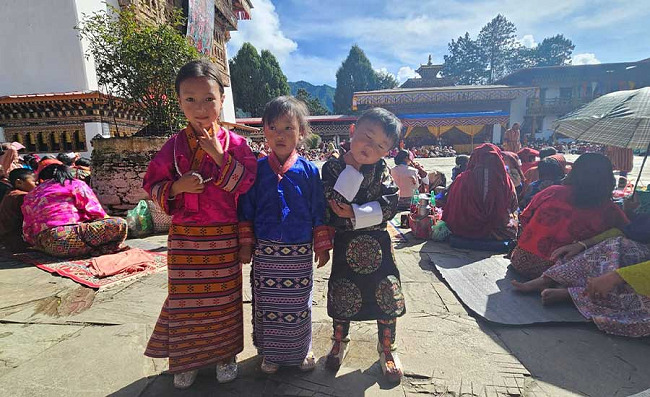
The heart of this journey is the Trongsa Tshechu Festival. Local families arrive dressed in their finest traditional clothing while monks and trained performers present sacred Cham mask dances accompanied by drums, horns and traditional music. These ritual dances are closely connected with Bhutan's Buddhist traditions and transform the courtyards of Trongsa Dzong into a colourful gathering of faith, culture and community life.
The final part of the festival is particularly meaningful. When the itinerary coincides with the concluding ceremonies, visitors may witness the unfurling of the sacred Thongdrel, a large religious appliqué displayed for devotees to see and receive blessings. For travellers interested in understanding more about Bhutan's Tshechus and other traditional celebrations, our Bhutan Festivals Guide provides a wider introduction to festivals throughout the country.
After Trongsa, continue to Bumthang, often described as the spiritual heartland of Bhutan. Its peaceful valleys contain some of the country's oldest temples, monasteries and sacred sites, making Bumthang an important addition to a cultural journey through central Bhutan. Travellers who would like to explore this region on foot can also consider our Bumthang Cultural Trek.
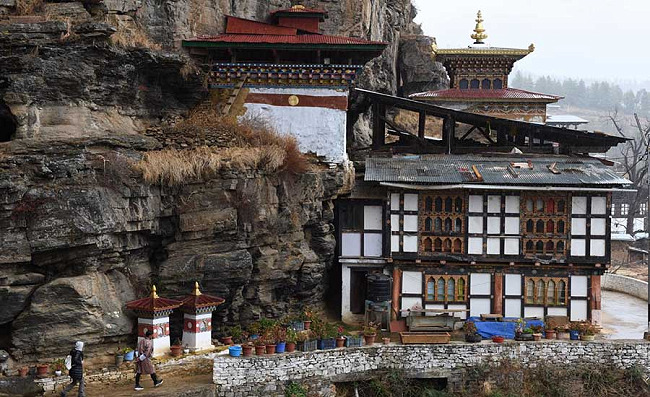
The journey eventually returns to Paro for one of Bhutan's most memorable experiences: the hike to Taktsang Monastery, better known as Tiger's Nest. Built dramatically against a cliff high above the Paro Valley, Tiger's Nest is one of Bhutan's most sacred Buddhist sites and a fitting final highlight of the journey.
With Himalayan Dream Team, this 12-day Bhutan festival tour is carefully paced so that the journey is not only about reaching Trongsa for the festival. It combines Bhutan's important cultural highlights, beautiful winter landscapes, historic dzongs, Buddhist heritage, rural valleys and local life while allowing enough time to enjoy each region without unnecessary rushing.
If this is your first journey to the country, our Bhutan Tour Guide provides useful information about Bhutan's culture, weather, travel costs and practical planning. Travellers beginning their journey through Nepal can also read our Nepal to Bhutan Travel Guide for information about flights, visas and travelling from Kathmandu to Bhutan.
For travellers looking for a Bhutan festival tour in December that goes beyond the classic Paro–Thimphu–Punakha route, the Trongsa Tshechu Festival Tour offers an excellent opportunity to explore western and central Bhutan while experiencing one of the country's traditional winter celebrations.
Explore our complete collection of Bhutan Tours to discover more cultural, festival and trekking journeys with Himalayan Dream Team.
| Day | Activity |
|---|---|
| Day 1 | Arrival in Paro and Drive to Thimphu |
| Day 2 | Thimphu Sightseeing and Cultural Exploration |
| Day 3 | Drive from Thimphu to Punakha via Dochula Pass |
| Day 4 | Punakha Sightseeing and Drive to Phobjikha Valley |
| Day 5 | Explore Phobjikha Valley and Drive to Trongsa |
| Day 6 | Experience the Trongsa Tshechu Festival at Trongsa Dzong |
| Day 7 | Trongsa Tshechu Festival and Cultural Exploration |
| Day 8 | Final Trongsa Tshechu Celebrations and Drive to Bumthang |
| Day 9 | Bumthang Cultural and Heritage Sightseeing |
| Day 10 | Fly from Bumthang to Paro |
| Day 11 | Hike to Tiger's Nest Monastery (Taktsang) |
| Day 12 | Final Departure from Paro |
The Trongsa Tshechu is one of Bhutan's traditional religious festivals and is celebrated at the impressive Trongsa Dzong in central Bhutan. Compared with some of the larger festivals in Paro and Thimphu, Trongsa offers a more intimate atmosphere, with people from surrounding communities gathering at the dzong to celebrate together.
The festival is dedicated to Guru Rinpoche (Padmasambhava), the revered Buddhist master associated with the spread of Buddhism in Bhutan. During the Tshechu, the courtyards come alive with sacred Cham mask dances, religious rituals, traditional music and colourful costumes. The dances are not simply performances for visitors; they carry religious meanings and form an important part of Bhutan's living Buddhist traditions.
One of the main highlights is watching monks and trained performers appear in elaborate costumes and symbolic masks representing different Buddhist figures and spiritual themes. The dances are accompanied by traditional drums, cymbals, horns and religious chants, creating a very special atmosphere within the historic surroundings of Trongsa Dzong.
Tshechu is also an important social occasion for Bhutanese families. Many local people attend wearing their finest traditional clothes—the gho for men and kira for women. Families and friends gather to watch the ceremonies, receive blessings and spend time together, giving visitors an excellent opportunity to experience Bhutanese culture as part of everyday community life.
A particularly important moment can be the unveiling of the enormous sacred Thongdrel, a religious appliqué displayed during special festival ceremonies. Seeing the Thongdrel and receiving its blessing is considered highly auspicious by Bhutanese Buddhists. When the official festival program allows, Himalayan Dream Team will arrange the itinerary to give you the opportunity to experience this important ceremony.
The colourful costumes, masks, architecture and local gatherings make Trongsa Tshechu wonderful for photography. Visitors should, however, remember that this is first and foremost a religious celebration. Always respect worshippers and ceremonies, avoid blocking people's view, ask permission before taking close portraits and follow your guide's advice about where photography is permitted. Photography may be restricted inside temples and other sacred areas.
During the Trongsa Tshechu Festival Tour, your Bhutanese guide will help you understand the meaning behind the dances, ceremonies and traditions rather than simply watching them from the sidelines. Festival schedules can follow the Bhutanese lunar calendar, so the exact program and timing of individual ceremonies will always be reconfirmed before your journey.
For more traditional celebrations around the country, explore our Bhutan Festival Tours and our Major Festivals in Bhutan guide.
December is a beautiful time to visit Bhutan, with generally clear skies, dry weather and excellent mountain views. Days can be sunny and pleasant, while mornings and evenings are cold, especially in Trongsa, Phobjikha and Bumthang.
| Place | Daytime | Night | December Conditions |
|---|---|---|---|
| Paro | 8–14°C | -2–4°C | Clear, dry and cold |
| Thimphu | 10–15°C | 0–5°C | Sunny days, cold mornings |
| Punakha | 15–20°C | 5–10°C | Milder and comfortable |
| Phobjikha | 5–12°C | -5–2°C | Cold, with frost possible |
| Trongsa | 8–14°C | 0–5°C | Cool, dry and generally clear |
| Bumthang | 5–12°C | -5–2°C | Cold mornings and nights |
What to pack: Bring warm layers, a good insulated jacket, gloves, a warm hat and comfortable walking shoes. Layered clothing works best, as sunny daytime temperatures can feel considerably warmer than early mornings and evenings.
During the Trongsa Tshechu Festival Tour, accommodation is arranged in comfortable, carefully selected hotels and lodges in Thimphu, Punakha, Phobjikha, Trongsa, Bumthang and Paro. Rooms are generally provided on a twin or double-sharing basis with private bathroom facilities.
| Service | What to Expect |
|---|---|
| Accommodation | Comfortable hotels and lodges selected according to the destination and availability. |
| Meals | Breakfast, lunch and dinner throughout the Bhutan tour. |
| Food | A mixture of Bhutanese, Indian, Chinese and continental dishes, depending on the hotel or restaurant. |
| Vegetarian Meals | Widely available and can be arranged throughout the journey. |
| Special Diets | Please inform Himalayan Dream Team in advance about allergies or dietary requirements. |
Festival period: Hotel availability in Trongsa can be limited during the Tshechu. Early booking is recommended so that we can secure the best suitable accommodation for your festival dates.
The Trongsa Tshechu Festival Tour is graded Easy to Moderate and is suitable for most travellers with a normal level of fitness. Most days involve cultural sightseeing, festival visits and travel by private vehicle.
| Trip Grade | Easy to Moderate |
| General Fitness | A normal level of fitness is sufficient for most sightseeing days. |
| Main Challenge | The Tiger's Nest hike involves several hours of uphill and downhill walking. |
| Highest Road Point | Yotong La Pass – approx. 3,425 m |
| High Passes | Dochula, Pele La and Yotong La are crossed by vehicle. |
| Previous Experience | No previous trekking experience is required. |
Regular walking before your trip will help you enjoy the Tiger's Nest hike more comfortably. The hike can be taken at a relaxed pace with rest stops along the way.
| Festival | Trongsa Tshechu |
| 2026 Festival Dates | 17–21 December 2026 |
| Location | Trongsa Dzong, Trongsa, Bhutan |
| Festival Duration | 5 Days |
| Main Experience | Sacred Cham dances, Buddhist ceremonies, traditional dress and local celebrations |
| Final Day | 21 December 2026 – concluding ceremonies and traditional Thongdrel display |
The Trongsa Tshechu Festival Tour – 12 Days is planned to experience selected festival days, including the important concluding celebrations and final-day ceremonies.
Important: Bhutanese festival dates are based on the lunar calendar and may occasionally be adjusted. Himalayan Dream Team will reconfirm the official dates and festival program before finalizing your journey.
During the festival period, hotels in Trongsa and surrounding areas have limited availability. We therefore recommend booking this tour well in advance, particularly if you wish to stay close to the festival venue.
Festival programs can begin early in the morning, and the timing of individual dances and ceremonies may change. Your Bhutanese guide will arrange each festival day according to the official local schedule.
The Trongsa Tshechu Festival Tour cost depends on your group size and preferred accommodation category. Himalayan Dream Team offers both comfortable 3-star accommodation and a 4-star accommodation upgrade for travellers looking for additional comfort during their Bhutan journey.
| Group Size | 3-Star Package | 4-Star Package |
|---|---|---|
| 1 Traveller | USD 4,195 | USD 4,795 |
| 2 Travellers | USD 3,399 per person | USD 3,884 per person |
| 4 Travellers | USD 3,275 per person | USD 3,760 per person |
| 6 Travellers | USD 3,250 per person | USD 3,735 per person |
The above prices are based on the complete 12-day Trongsa Tshechu Festival Tour and include the Bhutan Sustainable Development Fee (SDF), meals, private transportation, licensed Bhutanese guide, sightseeing entrance fees and the domestic flight from Bumthang to Paro as mentioned in the itinerary.
Accommodation: Prices are based on twin/double-sharing rooms, except for solo travellers. The 4-star option is subject to hotel availability. In destinations such as Phobjikha and Trongsa, where higher-category accommodation is limited, the best suitable available hotel or lodge may be used.
Festival Booking: Accommodation in Trongsa is limited during the Tshechu festival period. Early booking is strongly recommended, and all hotel availability and final prices will be reconfirmed at the time of booking.
For larger groups, private departures or other hotel upgrades, please contact Himalayan Dream Team for a customized Bhutan festival tour quotation.
Your Trongsa Tshechu Festival Tour begins with your arrival at Paro International Airport (2,250 m). On a clear day, the flight into Bhutan offers beautiful views of the Himalayan landscape before descending into the Paro Valley.
After completing immigration and baggage formalities, you will be welcomed by your Bhutanese guide and driver representing Himalayan Dream Team. From Paro, begin the scenic drive to Thimphu (2,320 m), Bhutan's capital.
The road follows the river valley through forested hills, traditional settlements and peaceful countryside. A short stop can be made at Chuzom, the river confluence on the route between Paro and Thimphu.
After arriving in Thimphu, check into your hotel and take some time to rest. Depending on your flight arrival time, you can enjoy a relaxed orientation walk around Thimphu before returning to the hotel.
The first day is intentionally kept comfortable, giving you time to settle into Bhutan before beginning the cultural and festival journey through western and central Bhutan.
After breakfast, spend the day exploring Thimphu, Bhutan's capital and an interesting combination of Buddhist traditions, historic landmarks and modern Bhutanese life.
Begin at the National Memorial Chorten, where local people gather for prayers and circumambulation. Continue to the impressive Buddha Dordenma, a 51.5-metre-high Buddha statue overlooking the Thimphu Valley. From here, enjoy beautiful views across the capital.
Continue to Changangkha Lhakhang, one of the oldest temples in Thimphu, and visit the Motithang Takin Preserve to see Bhutan's unusual national animal.
During the afternoon, explore Bhutanese arts, handicrafts and traditional life. Depending on opening hours and local conditions, visits may include the Folk Heritage Museum, traditional arts and crafts centers or the local market.
Later, visit Tashichho Dzong, one of Thimphu's most important landmarks and an impressive example of traditional Bhutanese architecture.
This relaxed sightseeing day provides a good introduction to Bhutanese history, Buddhism and everyday culture before traveling towards Punakha and central Bhutan.
After breakfast, leave Thimphu and begin the scenic journey towards the warmer Punakha Valley (approx. 1,200 m).
The road gradually climbs from Thimphu to Dochula Pass (3,100 m), the highest point of today's journey. Stop here to visit the famous 108 Druk Wangyel Chortens. On a clear winter morning, Dochula can offer beautiful views towards Bhutan's snow-covered Himalayan peaks.
December can be very cold at Dochula, and frost or occasional snowfall is possible. Warm clothing should therefore be kept easily accessible during the drive.
From the pass, descend through changing vegetation towards the lower and noticeably warmer Punakha Valley.
After arriving in Punakha, visit the magnificent Punakha Dzong, dramatically situated at the confluence of the Pho Chhu and Mo Chhu rivers. The dzong is one of Bhutan's most important historic and religious buildings and was closely connected with the country's early political history.
Depending on available time, enjoy a short walk in the surrounding valley before transferring to your hotel.
After breakfast, enjoy some additional time exploring the beautiful Punakha Valley before continuing towards Phobjikha Valley, also known as Gangtey Valley.
Depending on the previous day's sightseeing and available time, you may visit the Punakha Suspension Bridge or enjoy a short walk through the rural surroundings of the valley.
Later, begin the drive towards Phobjikha. The route gradually leaves the warmer Punakha Valley and climbs through forested mountain landscapes towards the cooler highland valley of Gangtey.
Upon arrival, visit Gangtey Goenpa, an important Nyingma Buddhist monastery overlooking the broad Phobjikha Valley. The peaceful setting provides an excellent introduction to one of Bhutan's most beautiful rural regions.
December is a particularly interesting time to visit Phobjikha because the valley is an important winter habitat for the endangered black-necked cranes. If time allows, visit the Black-Necked Crane Information Centre to learn more about the birds and local conservation efforts.
After breakfast, spend some time enjoying the peaceful landscape of Phobjikha Valley. Depending on weather and road conditions, take a short section of the Gangtey Nature Trail, passing through pine forest, open meadows and traditional rural surroundings. The full nature trail is approximately 4–5 km, but the walking time can be adjusted according to the group.
Continue by road towards Trongsa, travelling deeper into central Bhutan. The journey crosses the important Pele La Pass (3,420 m), one of the highest road points on this itinerary and traditionally considered a gateway between western and central Bhutan.
In December, Pele La can be particularly cold, with frost, strong winds and possible snow. The road conditions will therefore be checked before travelling, and stops will be adjusted according to the weather.
After crossing the pass, descend through forested mountain scenery and stop at Chendebji Chorten, an impressive white stupa beside the highway.
Continue towards Trongsa, where the road offers dramatic views across the deep valleys of central Bhutan. On arrival in Trongsa (approx. 2,200 m), check into your hotel and rest after the day's journey.
The following day begins the main highlight of your journey—the Trongsa Tshechu Festival at Trongsa Dzong.
After breakfast, travel to the magnificent Trongsa Dzong for your first full experience of the Trongsa Tshechu Festival.
The historic dzong rises dramatically above the Mangde Chhu valley and provides a spectacular setting for one of central Bhutan's important religious festivals. Local families arrive dressed in their finest traditional clothing, while monks and trained performers gather in the courtyards for the day's ceremonies.
Spend the morning watching colourful Cham mask dances, accompanied by traditional drums, horns and cymbals. Your Bhutanese guide will explain the religious meaning and stories connected with the dances, helping you understand the festival rather than simply watching the performances.
There will also be time to observe local festival life, photography opportunities and the impressive architecture of Trongsa Dzong.
After experiencing the day's main ceremonies, return to your hotel for the evening.
After breakfast, return to Trongsa Dzong for another day of the Tshechu. Festival programs vary from day to day, allowing you to experience different sacred dances, costumes, ceremonies and gatherings.
Spend time among Bhutanese families who have travelled from surrounding villages to attend the festival, receive blessings and celebrate together. This provides an excellent opportunity to experience the social and spiritual importance of a traditional Bhutanese Tshechu.
Depending on the official festival program and available time, you can also explore more of Trongsa Dzong and the surrounding town.
A visit to the Ta Dzong, the historic watchtower above Trongsa Dzong that now houses a museum dedicated to Bhutan's monarchy and religious heritage, may also be arranged according to opening hours.
Return to your hotel after another colorful day in Trongsa.
Rise early for the final and particularly important day of the Trongsa Tshechu Festival. According to the 2026 festival schedule, the final day includes the traditional Thongdrel display.
The large sacred religious appliqué is traditionally displayed for devotees to view and receive blessings. Your guide will arrange an early visit according to the official local program and timing.
After experiencing the concluding festival ceremonies, return for breakfast if required and prepare for the journey east towards Bumthang, Bhutan's spiritual heartland.
The road climbs from Trongsa through beautiful forested mountain scenery towards Yotong La Pass (3,425 m), the highest point of today's journey. In December, the pass can be very cold and may experience frost or snow, so road and weather conditions will always be considered before traveling.
After crossing Yotong La, descend towards the Bumthang valleys. Along the way, pass through rural communities and changing landscapes before reaching the main Chokhor Valley.
Arrive in Bumthang (2,600 m) and check into your hotel for a well-earned rest.
After breakfast, spend the day discovering Bumthang, often described as the spiritual heartland of Bhutan. The region contains some of the country's oldest and most important Buddhist temples and sacred sites.
Begin with a visit to Jambay Lhakhang, one of Bhutan's ancient temples. Continue to Kurjey Lhakhang, an important sacred complex associated with Guru Rinpoche and surrounded by beautiful countryside.
Enjoy a pleasant walk through the Chokhor Valley, crossing rural landscapes and small villages before visiting Tamshing Lhakhang, an important temple connected with the Buddhist master Pema Lingpa.
Depending on available time and opening hours, additional cultural sites around Jakar and the Bumthang Valley can be included.
The combination of ancient temples, quiet villages and mountain scenery makes Bumthang very different from western Bhutan and provides a peaceful cultural day after the busy festival celebrations.
After breakfast, transfer to Bathpalathang Domestic Airport in Bumthang for the short flight back to Paro (35 - 40 minutes)
The domestic flight is a convenient way to return from central to western Bhutan without repeating the long overland journey. On a clear day, the flight can offer beautiful views across Bhutan's mountainous landscape.
Upon arrival at Paro Airport, meet your vehicle and transfer to the hotel. Depending on the flight schedule and arrival time, the rest of the day can be used for a relaxed exploration of Paro town, local handicraft shops or simply resting before the Tiger's Nest hike the following morning.
Important: Domestic flights between Bumthang and Paro operate according to airline schedules and weather conditions. If the flight is not operating on the confirmed travel date, Himalayan Dream Team will adjust the travel arrangements and advise the best available alternative in advance.
After an early breakfast, drive to the trailhead for the hike to Taktsang Monastery, better known as Tiger's Nest, one of Bhutan's most sacred and iconic Buddhist sites.
Begin the gradual uphill walk through a beautiful pine forest. The trail climbs steadily towards the Taktsang Cafeteria, where you can take a rest and enjoy the first impressive views of the monastery clinging dramatically to the cliffside.
Continue towards the main viewpoint before descending a series of stone steps, crossing a bridge near the waterfall and making the final climb to Tiger's Nest Monastery at approximately 3,120 m.
According to Bhutanese tradition, Guru Rinpoche meditated at this sacred site in the 8th century. Your guide will explain the history, legends and religious importance of the monastery while you explore the temple complex.
After the visit, walk back down to the trailhead and drive to Paro. The remainder of the day is free to relax after the hike or enjoy some final time in Paro.
The hike is moderately challenging because of the continuous ascent and descent, but it can be completed at a comfortable pace with regular rest stops.
After breakfast at your hotel, your Trongsa Tshechu Festival Tour – 12 Days comes to an end.
According to your international flight schedule, your Himalayan Dream Team guide and driver will transfer you to Paro International Airport (2,250 m) and assist you with your departure arrangements.
After experiencing Thimphu, Punakha, Phobjikha, the Trongsa Tshechu Festival, Bumthang and the unforgettable Tiger's Nest hike, it is time to say goodbye to Bhutan.
We hope you leave with wonderful memories of Bhutan's Buddhist culture, winter landscapes, traditional festivals and warm hospitality.
Himalayan Dream Team wishes you a safe onward journey and hopes to welcome you back to the Himalayas again.
The Trongsa Tshechu is normally held during the Bhutanese winter according to the traditional lunar calendar. For this tour, Himalayan Dream Team plans the itinerary around the officially announced festival dates. As festival dates and individual ceremonies may occasionally change, we reconfirm the program before your journey.
Trongsa Tshechu is a traditional Buddhist festival held at historic Trongsa Dzong. Visitors can experience sacred Cham mask dances, religious ceremonies, traditional music and local families dressed in their finest Bhutanese clothing. Its central Bhutan location also makes it a wonderful festival to combine with Phobjikha and Bumthang.
Yes. December is winter in Bhutan and generally brings crisp, dry and clear conditions. It is colder than the main autumn season, particularly in Phobjikha, Trongsa and Bumthang, but the clear winter atmosphere can offer excellent mountain views and a quieter travel experience. Frost is common and snow is possible at higher elevations.
Daytime conditions can be comfortable in the sunshine, but mornings and evenings can be very cold. Punakha is generally warmer, while Phobjikha and Bumthang are considerably colder. Warm layers are therefore essential throughout the December journey.
Bring warm layered clothing, an insulated jacket, thermal base layers, gloves, a warm hat, comfortable walking shoes and sun protection. For dzongs, monasteries and religious sites, wear respectful clothing covering the shoulders and knees.
Photography is generally possible in outdoor festival areas, but visitors should respect worshippers and avoid obstructing ceremonies. Always ask before taking close photographs of local people. Photography is normally restricted inside temples and other sacred interiors, so please follow your guide's instructions.
No. Visitors are not required to wear Bhutanese national dress. Smart, modest and comfortable clothing is perfectly suitable. Bhutanese people often attend Tshechus wearing their finest traditional gho and kira.
The overall tour is graded Easy to Moderate. Most days involve cultural sightseeing and traveling by private vehicle. The most demanding activity is the hike to Tiger's Nest Monastery in Paro, which involves several hours of uphill and downhill walking.
Tiger's Nest is one of the major highlights of the tour, but the hike can be adjusted according to your fitness and walking ability. Your guide will help you maintain a comfortable pace and allow time for rest along the way.
Most international visitors require a Bhutan visa before travel. Indian nationals follow a permit system, while specific arrangements apply to visitors from Bangladesh and the Maldives. A Bhutan tour operator can assist with the application process on your behalf. A correctly submitted visa application may take up to five working days to process.
For complete information, see our Bhutan Visa Guide.
The Sustainable Development Fee is a government levy paid by international visitors. The standard rate for most international adult travellers is currently USD 100 per person per night, with reduced rates for eligible children and different arrangements for Indian nationals. The applicable SDF for your confirmed journey will be included or clearly shown in your Himalayan Dream Team quotation.
Yes. Visitors are required to be accompanied by a certified guide when traveling around Bhutan, and a guide is required for entry to monuments and dzongs. Your licensed Bhutanese guide is arranged as part of this Himalayan Dream Team package.
Most of the journey is by comfortable private vehicle with an experienced driver. Bhutan's mountain roads are scenic but winding, so traveling between valleys can take several hours even when the distance looks short on a map. If a domestic flight is included in the final itinerary, it will be clearly mentioned in your confirmed program.
We use comfortable hotels and lodges suitable for the itinerary, normally on a twin or double-sharing basis with private bathroom facilities. Accommodation options in Trongsa can be limited during the festival, so early booking is recommended.
Yes. Breakfast, lunch and dinner are included throughout the Bhutan tour. Meals generally include a combination of Bhutanese, Indian, Chinese and continental dishes. Vegetarian meals are widely available. Please inform us in advance about allergies or special dietary requirements.
Travel insurance is no longer a mandatory entry requirement for Bhutan, but it is strongly recommended. Your policy should ideally cover medical treatment, trip interruption, flight disruption and emergency evacuation.
Bhutan's currency is the Ngultrum (BTN), which is pegged 1:1 to the Indian Rupee. International cards are accepted in many urban hotels and businesses, but card facilities may be less reliable outside larger towns. Carrying some cash for small purchases is recommended.
Most hotels provide Wi-Fi, although speed and reliability can vary, particularly in central and rural Bhutan. Visitor SIM cards are available after arrival, including at Paro International Airport and authorized outlets.
We recommend booking several months in advance. Trongsa has fewer hotels than Paro and Thimphu, and accommodation becomes more limited during the festival. Early confirmation also gives us more flexibility when arranging flights, suitable hotels and the overall festival itinerary.
Bhutanese Tshechu dates are connected to the lunar calendar, and the timing of individual ceremonies may occasionally be adjusted locally. Himalayan Dream Team will check the latest available festival schedule and, where necessary, adjust the sightseeing program so you have the best possible opportunity to experience the main celebrations.
Yes. The Trongsa Tshechu Festival Tour – 12 Days can be arranged as a private journey for couples, families, friends or small groups. We can also discuss hotel upgrades and additional nights depending on your travel plans.
Yes. Kathmandu has direct air connections with Paro, making Nepal and Bhutan an excellent combination. Himalayan Dream Team can arrange your Nepal program together with the Bhutan festival journey, including the necessary transfers and travel coordination.
See our Nepal to Bhutan Travel Guide or explore our Bhutan Tours for more travel ideas.
No reviews yet. Traveled with us on this trip? Be the first to share your experience.
Enjoy the popular trekking and tour packages in Nepal Himalayas. 2026.
© 2011 - 2026 All rights reserved. Himalayan Dream Team