

Bhutan in September is a fascinating time to experience the Himalayan kingdom as the country gradually moves from the summer monsoon into the clearer autumn travel season. Valleys remain beautifully green after the summer rains, waterfalls and rivers carry plenty of water, and conditions generally become more settled as the month progresses.
September is particularly interesting for travellers who enjoy nature, culture, photography, hiking and trekking. Early September can still receive monsoon rainfall, while the second half of the month generally moves more clearly toward autumn conditions with improving opportunities for outdoor activities and Himalayan views.
Bhutan is also famous for its colourful Buddhist festivals, known as Tshechus. Festival dates follow the traditional Bhutanese lunar calendar and therefore change every year. Travellers planning Bhutan in September 2027 should be aware that several famous autumn festivals, including the Thimphu Tshechu and Gangtey Tshechu, fall in October rather than September in 2027.
This complete Bhutan in September travel guide covers September weather, temperatures, rainfall, trekking conditions, festivals, the best places to visit, Tiger's Nest, accommodation, costs, packing advice and suggested itineraries.
If you are still comparing different months, read our Best Time to Visit Bhutan. For general planning information covering the entire country, our Bhutan Tour Guide is another useful starting point.
Is September a Good Time to Visit Bhutan?
Yes, September can be a very good time to visit Bhutan, particularly for travellers interested in green landscapes, cultural sightseeing, photography, hiking and the beginning of the autumn trekking season.
September is a transitional month. The summer monsoon does not necessarily disappear immediately at the beginning of the month, so travellers should still be prepared for occasional rain, cloud and changing mountain visibility, particularly during early September.
As the month progresses, conditions generally become more favourable for sightseeing, hiking and trekking. Late September is particularly attractive because it combines fresh post-monsoon landscapes with the beginning of Bhutan's popular autumn travel season.
The exact experience will depend on your travel dates, altitude and itinerary. Someone spending a week in Paro, Thimphu and Punakha will experience September differently from a traveller undertaking a high-altitude trek.
Bhutan in September at a Glance
| September Travel Information | What to Expect |
|---|---|
| Season | Transition from summer monsoon into autumn |
| General Weather | Mild to warm days in lower valleys with cooler conditions at higher elevations |
| Landscape | Green valleys, active rivers, waterfalls and fresh post-monsoon scenery |
| Rainfall | Still possible, especially during early September |
| Mountain Visibility | Variable early in the month and generally improving toward late September |
| Trekking | Conditions generally improve through the month |
| Festivals | Depends on the year because Bhutanese festivals follow the lunar calendar |
| Popular Places | Paro, Thimphu, Punakha, Phobjikha Valley and Bumthang |
| Tiger's Nest | Normally possible; prepare for changing weather and potentially wet trail sections |
| Visitor Levels | Increasing as Bhutan enters its popular autumn travel period |
| Best For | Culture, photography, sightseeing, hiking and autumn trekking |
Bhutan Weather in September
Bhutan's weather in September reflects the transition between the wet summer monsoon and the drier autumn season.
The country has considerable variations in altitude, so there is no single September temperature or weather pattern that accurately describes all of Bhutan. Punakha and other lower valleys can feel relatively warm, while Paro, Thimphu, Phobjikha and Bumthang are cooler. High mountain areas can be considerably colder, particularly at night.
Early September may still bring cloud, showers and periods of heavier rain. Roads and walking trails can also remain wet following the monsoon.
During the second half of September, rainfall generally becomes less dominant and periods of clearer weather become more common as Bhutan moves toward autumn.
Early September vs Late September in Bhutan
The difference between travelling at the beginning and end of September can be important, especially for travellers interested in trekking or mountain views.
| Period | General Conditions | Best For |
|---|---|---|
| Early September | Very green landscapes, greater possibility of monsoon rain, cloud and wet trails | Cultural touring and travellers comfortable with changing weather |
| Mid-September | Transition toward autumn becomes more noticeable, although rain remains possible | Sightseeing, photography and cultural journeys |
| Late September | Generally improving autumn conditions with better trekking possibilities | Trekking, hiking, photography and classic Bhutan tours |
If your main priority is trekking and Himalayan visibility, the latter part of September is generally preferable to the beginning of the month.
Bhutan Temperature in September
Temperatures vary significantly according to altitude, location, weather and time of day. Travellers should therefore use temperature information as general planning guidance rather than expect identical conditions throughout Bhutan.
| Destination | Typical September Conditions |
|---|---|
| Paro | Generally mild during the day with cooler mornings and evenings |
| Thimphu | Pleasant daytime conditions with cooler nights as autumn approaches |
| Punakha | Warmer than Paro and Thimphu because of its lower elevation |
| Phobjikha Valley | Cooler valley conditions, particularly in the morning and evening |
| Bumthang | Mild days with increasingly cool mornings and evenings |
| High-Altitude Trekking Areas | Significantly colder, particularly at night and at high camps |
Layered clothing is therefore much more useful than packing for one fixed temperature.
Does It Rain in Bhutan in September?
Yes, rain is still possible in Bhutan during September, particularly during the first half of the month.
September should not automatically be treated as a completely dry month. Bhutan's monsoon transition varies from year to year, and mountain weather can change quickly.
Short showers may not seriously affect a cultural itinerary, but prolonged rain can influence road conditions, walking trails, mountain visibility and flight operations.
Travellers should carry a lightweight waterproof jacket or rain shell and protect important documents, phones and camera equipment from moisture.
Himalayan Views in September
September can offer beautiful Himalayan views, particularly as the month progresses, but clear mountain visibility should never be guaranteed.
Early in the month, residual monsoon cloud may obscure distant peaks. Later September often brings improving visibility as autumn conditions become established.
Locations such as Dochula Pass can provide impressive Himalayan panoramas in clear weather, while the flight into Paro can also offer beautiful mountain scenery when visibility is favourable.
Why Visit Bhutan in September?
September has a character of its own. The countryside is still fresh and green after the monsoon, while the atmosphere gradually begins to change toward autumn.
Reasons to consider Bhutan in September include:
- Fresh green valleys and forests after the summer rains
- Active rivers and waterfalls
- Improving autumn weather as the month progresses
- Cultural sightseeing
- Short hikes and village walks
- Improving trekking opportunities later in the month
- Photography
- Visits to Paro, Thimphu, Punakha, Phobjikha and Bumthang
- The possibility of combining Bhutan with Nepal during the Himalayan autumn season
Bhutan Festivals and September Travel
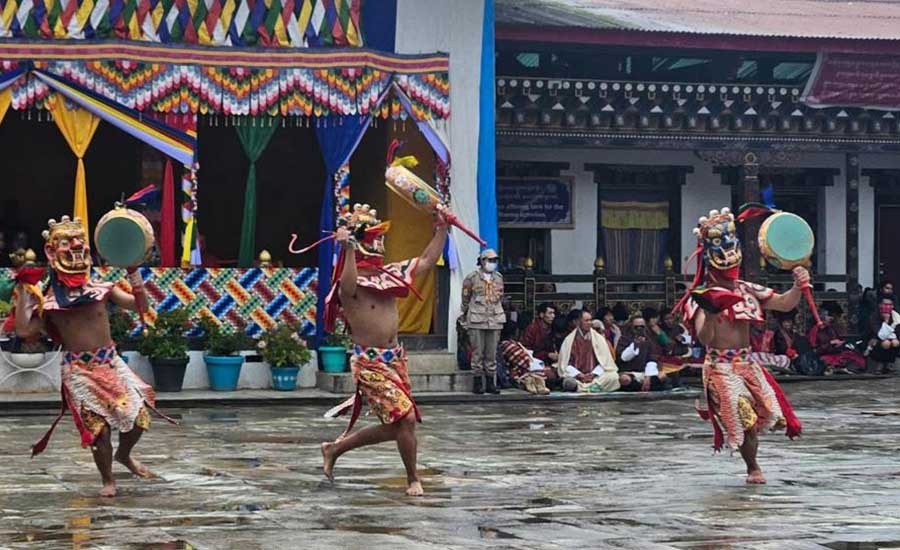
Bhutan's religious festivals are an important part of the country's cultural identity. Many are known as Tshechus and feature sacred Cham mask dances, Buddhist rituals, traditional clothing, blessings and large community gatherings.
These festivals are not performances created for tourists. They remain important religious and social occasions for Bhutanese communities.
However, travellers should understand that Bhutanese festival dates are not fixed to the same Gregorian dates every year. They follow the traditional lunar calendar and therefore move between September, October and other periods depending on the year.
For a broader overview of Bhutan's celebrations, see our Bhutan Festivals Calendar & Travel Guide.
Bhutan Festivals in September 2027
Travellers planning Bhutan in September 2027 should pay particular attention to the festival calendar. Several famous autumn festivals that have taken place in September in other years move into October in 2027.
This does not make September a poor month to visit. September remains attractive for its green landscapes, cultural sightseeing and improving autumn trekking conditions. However, travellers whose main purpose is to attend a major Tshechu may want to extend their journey into October.
| Major Autumn Festival | Location | 2027 Tentative Dates |
|---|---|---|
| Wangdue Tshechu | Wangdue Phodrang | 8–10 October 2027 |
| Thimphu Tshechu | Thimphu | 10–12 October 2027 |
| Tamshing Phala Chhoepa | Bumthang | 10–12 October 2027 |
| Gangtey Tshechu | Gangtey Gonpa, Phobjikha region | 13–15 October 2027 |
| Thangbi Mewang | Bumthang | 15–16 October 2027 |
Planning Bhutan in September 2027? September remains an excellent period for landscapes, cultural sightseeing, hiking and the beginning of the autumn trekking season. However, travellers specifically hoping to attend the Thimphu Tshechu, Wangdue Tshechu or Gangtey Tshechu should consider travelling into October 2027.
Why Do Bhutan Festival Dates Change Every Year?
Bhutan's traditional Tshechus follow the Bhutanese lunar calendar rather than fixed Gregorian dates.
This means a festival can take place in September one year and move into October the following year. Travellers should therefore never assume that a famous Bhutan festival will occur during the same month every year.
Festival dates can also initially be published as tentative dates before final confirmation. We recommend reconfirming festival dates before purchasing non-refundable international flights.
For updated festival planning, see our Bhutan Festival Calendar. Travellers interested specifically in Bhutan's famous capital festival can also explore our Thimphu Tshechu Festival Tour.
Can I Combine September 2027 with an October Bhutan Festival?
Yes. This can actually be an excellent strategy for travellers with flexible dates.
A journey beginning in late September can take advantage of Bhutan's green post-monsoon landscapes and improving autumn weather before continuing into October for one of the major festivals.
For example, a longer itinerary can combine Paro, Thimphu, Punakha and Phobjikha with an October festival, depending on the final confirmed dates.
Travellers interested in Phobjikha and its cultural traditions can explore our Bhutan with Gangtey Festival Tour.
Best Places to Visit in Bhutan in September
September works particularly well for Bhutan's classic western cultural route, while travellers with more time can continue into Phobjikha and Bumthang.
Paro
Paro is Bhutan's principal international gateway and one of the country's most attractive valleys.
Highlights include traditional villages, monasteries, Rinpung Dzong, the National Museum and the famous Tiger's Nest Monastery.
September's green landscapes make the valley particularly attractive, although cloud and rain remain possible.
Thimphu
Bhutan's capital combines traditional culture with modern Bhutanese life.
Visitors can explore monasteries, memorial chortens, cultural institutions, traditional arts and local markets while learning more about Bhutan's society and development.
Even when the Thimphu Tshechu does not fall during September, the capital remains an essential cultural stop on a first Bhutan journey.
Punakha
Punakha lies at a lower altitude and generally feels warmer than Paro and Thimphu.
The magnificent Punakha Dzong, located between the Pho Chu and Mo Chu rivers, is one of Bhutan's architectural highlights.
The surrounding valley also offers village walks, rural scenery and short hikes.
Phobjikha Valley
Phobjikha is a broad glacial valley known for its peaceful landscapes, traditional villages and Gangtey Monastery.
September's green scenery can make the valley especially attractive for walking and photography.
Travellers should note that the famous black-necked cranes are mainly associated with the later autumn and winter period, so September should not be promoted primarily as a crane-watching month.
Bumthang
Bumthang is ideal for travellers with enough time to explore Bhutan beyond the classic western route.
Ancient temples, monasteries, villages and strong Buddhist traditions make the region particularly interesting for cultural travellers.
Bumthang requires additional travel time, so we recommend including it only when the itinerary is long enough to enjoy the region comfortably.
Dochula Pass
Dochula Pass lies on the route between Thimphu and Punakha and is known for its 108 chortens.
In clear weather, the pass can provide beautiful Himalayan views. September visibility depends on cloud and weather, with clearer conditions generally becoming more likely later in the month.
Tiger's Nest Monastery in September
No first journey to Bhutan feels complete without considering a hike to Paro Taktsang, commonly known as Tiger's Nest Monastery.
The monastery clings dramatically to a cliff above Paro Valley and is reached by a steady uphill hike.
September can be a beautiful time for the walk because the surrounding forest and valley remain green after the monsoon.
However, travellers should be prepared for:
- Occasional rain
- Wet or slippery trail sections
- Changing cloud conditions
- Cooler conditions at higher points
- Strong sunshine when skies clear
Good walking shoes, water, layered clothing and a lightweight waterproof jacket are recommended.
We generally prefer placing the Tiger's Nest hike toward the end of a Bhutan itinerary so travellers have had some time to adjust to the altitude and walking conditions.
Trekking in Bhutan in September
September marks the beginning of Bhutan's important autumn trekking period.
Conditions generally improve as the monsoon retreats, but early September can still be wet. Trails may be muddy, streams can carry more water and cloud can limit mountain visibility.
Later September is normally more attractive for trekking as conditions move further toward autumn.
Travellers planning a high-altitude trek should consider not only rainfall but also trail conditions, camping temperatures, route altitude, acclimatization and the specific requirements of their chosen trek.
Druk Path Trek in September
The Druk Path Trek is one of Bhutan's classic shorter trekking routes, connecting the Paro and Thimphu regions through mountain landscapes, lakes and high ridges.
September can be suitable, particularly later in the month when weather conditions are improving.
Because conditions vary from year to year, final trekking preparation should always be based on current trail and weather information.
Jomolhari Trek in September
The Jomolhari Trek is a more demanding high-altitude journey and one of Bhutan's best-known trekking experiences.
Autumn is an important season for this route, and late September can mark the beginning of increasingly favourable trekking conditions.
Travellers interested in a serious Bhutan trek should allow sufficient time for acclimatization and should not select an itinerary based only on the number of days available.
Early or Late September for Trekking?
If trekking is the main purpose of your Bhutan holiday, late September is generally preferable to early September.
Early September remains closer to the monsoon, which can mean wetter trails, more cloud and greater weather uncertainty.
Later September generally offers improving trail conditions and visibility as the autumn season develops.
Suggested 7-Day Bhutan Itinerary in September
| Day | Journey | Main Experience |
|---|---|---|
| Day 1 | Arrive Paro – Thimphu | Arrival in Bhutan and transfer to the capital |
| Day 2 | Thimphu | Cultural sightseeing and introduction to Bhutan |
| Day 3 | Thimphu – Dochula – Punakha | Dochula Pass and Punakha Valley |
| Day 4 | Punakha | Punakha Dzong, villages and short walks |
| Day 5 | Punakha – Paro | Scenic journey and Paro sightseeing |
| Day 6 | Paro | Tiger's Nest Monastery hike |
| Day 7 | Paro Departure | Airport transfer and onward journey |
Suggested 10-Day Bhutan Itinerary in September
With around ten days, travellers can enjoy a more relaxed itinerary and include Phobjikha Valley rather than rushing through Bhutan's main highlights.
| Day | Destination | Main Experience |
|---|---|---|
| Day 1 | Paro – Thimphu | Arrival and transfer to Thimphu |
| Day 2 | Thimphu | Cultural sightseeing |
| Day 3 | Thimphu | Additional cultural experiences and local exploration |
| Day 4 | Thimphu – Punakha | Dochula Pass and Punakha Valley |
| Day 5 | Punakha | Punakha Dzong, villages and valley walks |
| Day 6 | Punakha – Phobjikha | Scenic drive to Gangtey and Phobjikha Valley |
| Day 7 | Phobjikha | Gangtey Monastery, valley walks and rural scenery |
| Day 8 | Phobjikha – Paro | Return to Paro |
| Day 9 | Paro | Tiger's Nest Monastery hike |
| Day 10 | Paro | International departure |
What to Wear in Bhutan in September
September requires flexible clothing because travellers can experience warm sunshine, rain, cool mornings and noticeably colder conditions at higher elevations.
Recommended clothing includes:
- Lightweight daytime clothing
- Long trousers
- Long-sleeved shirts
- Light fleece or warm mid-layer
- Waterproof or water-resistant outer layer
- Comfortable walking shoes
- Extra socks
- Sun hat
- Modest clothing for monasteries and dzongs
Shorts and sleeveless clothing are generally not suitable when entering important religious and administrative sites.
Bhutan September Packing List
| Category | Recommended Items |
|---|---|
| Clothing | Light layers, long trousers, warm mid-layer and comfortable shirts |
| Rain Protection | Waterproof jacket and waterproof protection for valuables |
| Footwear | Comfortable walking or hiking shoes with good grip |
| Sun Protection | Sun hat, sunglasses and sunscreen |
| Day Bag | Small comfortable backpack for water, camera and extra layers |
| Health | Personal medication and basic travel health items |
| Documents | Passport, visa or permit documentation, insurance and flight information |
| Photography | Camera, spare batteries and moisture protection |
Accommodation in Bhutan in September
September moves into Bhutan's popular autumn travel period, so booking in advance is recommended, particularly for travellers who have fixed dates or specific hotel preferences.
Bhutan offers accommodation ranging from comfortable locally operated hotels to high-end properties and luxury resorts.
Travellers interested in premium accommodation can explore our Bhutan in Top Hotels journey.
Is Bhutan Crowded in September?
Bhutan does not experience tourism on the same scale as many mass-market destinations, but visitor numbers begin to increase as the country enters the popular autumn travel period.
Paro, Thimphu and Tiger's Nest naturally receive more visitors than remote villages and rural valleys.
If you prefer quieter experiences, your itinerary can combine the major highlights with Phobjikha, village walks, smaller monasteries and less busy cultural sites.
Flights to Bhutan in September
International visitors commonly arrive through Paro International Airport.
Flight schedules vary according to origin, airline and season, while mountain weather can occasionally affect operations.
Travellers should avoid building unnecessarily tight international connections immediately after a Paro flight.
If you are travelling through Nepal, our Nepal to Bhutan Travel Guide explains Kathmandu–Paro flights, visa requirements, costs and practical travel arrangements in detail.
Bhutan Visa and Sustainable Development Fee
Most international visitors need to arrange the appropriate Bhutan visa before travelling.
Bhutan also charges a Sustainable Development Fee (SDF), which is separate from normal travel expenses such as hotels, guides, transportation, meals and international flights.
Visa procedures, SDF rates and tourism regulations can change, so travellers should confirm the latest official requirements for their nationality and travel dates rather than relying on outdated information.
How Much Does Bhutan Cost in September?
The cost of a Bhutan journey depends on much more than the month itself.
Your total travel budget can include:
- International flights
- Bhutan visa fee where applicable
- Sustainable Development Fee
- Hotel accommodation
- Certified guide
- Private vehicle and driver
- Meals
- Monument entrance fees
- Trekking services where applicable
- Travel insurance
- Personal expenses
Hotel category, itinerary length, airfare and group size can all make a significant difference to the final price.
Photography in Bhutan in September
September can be excellent for photography because landscapes remain green after the monsoon and changing weather can create dramatic mountain and valley scenes.
When visiting monasteries, dzongs or religious ceremonies, travellers should always respect local photography rules.
- Follow instructions from your guide
- Respect photography restrictions inside temples and monasteries
- Ask before taking close portraits
- Do not interrupt religious ceremonies for photographs
- Protect camera equipment from rain and moisture
Food and Local Experiences in September
A journey through Bhutan is also an opportunity to experience local food and hospitality.
Bhutanese cuisine commonly includes rice, vegetables, cheese, chillies and meat dishes, although meals available to international travellers vary between hotels and regions.
Travelling through rural valleys during the green post-monsoon period also provides an interesting perspective on Bhutan's agricultural landscapes, villages and everyday life.
Travelling from Nepal to Bhutan in September
September is an excellent month to consider combining Nepal and Bhutan, particularly for travellers interested in autumn Himalayan travel.
Direct flights connect Kathmandu with Paro, making Nepal a convenient starting point for a Bhutan journey.
You can spend time exploring Kathmandu, Pokhara, Chitwan or a trekking region in Nepal before continuing to Bhutan.
For complete planning information, read our Nepal to Bhutan Travel Guide.
Combine Nepal and Bhutan in September
Nepal and Bhutan offer very different Himalayan experiences, which makes them particularly rewarding to combine.
Nepal offers historic cities, trekking regions, wildlife, varied landscapes and a broad range of travel styles. Bhutan offers peaceful valleys, dzongs, monasteries, carefully managed tourism and distinctive Buddhist traditions.
Our Best of Nepal and Bhutan Tour is a good starting point for travellers who want to experience the highlights of both countries.
Travellers who want to combine a Himalayan trek in Nepal with Bhutan can consider our Nepal & Bhutan Tour with Annapurna Base Camp Trek.
For a more exclusive journey, our Exclusive Bhutan with Nepal Stopover offers another way to combine the two destinations.
Advantages of Visiting Bhutan in September
- Green landscapes: Valleys and forests remain fresh after the summer rains.
- Beginning of autumn: Conditions generally improve as the month progresses.
- Trekking possibilities: Later September begins an important autumn trekking period.
- Cultural experiences: Monasteries, dzongs, villages and traditional Bhutanese life can be explored throughout the month.
- Photography: Green scenery and changing mountain weather create varied photographic opportunities.
- Nepal combination: September works well for travellers planning a broader Himalayan journey.
- October festival extension: In 2027, travellers can continue into October for several important Tshechus.
Things to Consider Before Visiting Bhutan in September
- Early September can still be wet.
- Mountain views cannot be guaranteed.
- Walking trails can remain muddy after monsoon rain.
- Festival dates change every year.
- Several major festivals fall in October rather than September in 2027.
- Flight operations can occasionally be affected by mountain weather.
- High-altitude trekking conditions are different from conditions in the main valleys.
These are not necessarily reasons to avoid September. They are simply factors to consider when designing a realistic itinerary.
Bhutan in September vs October
| Factor | September | October |
|---|---|---|
| Landscape | Very green after the monsoon | Autumn landscapes and generally drier conditions |
| Rain | More likely, particularly early in the month | Generally lower chance of monsoon rain |
| Trekking | Improves through the month | Prime autumn trekking period |
| Mountain Visibility | Variable but generally improving | Often more consistently favourable |
| 2027 Festivals | Fewer major autumn Tshechus | Thimphu, Wangdue, Gangtey and other important festivals |
| Overall Character | Green transition from monsoon to autumn | Established autumn season |
If you prefer green landscapes, improving weather and fewer festival-related crowds, September can be an excellent choice. If attending a major Tshechu is your priority in 2027, October is the stronger option.
Bhutan in September vs November
November is later in the autumn season and generally cooler and drier than September.
September offers greener landscapes and warmer conditions but also a greater possibility of rain. November tends to offer crisper autumn conditions, cooler mornings and nights, and increasingly dry scenery.
The better month therefore depends on whether you prioritise green landscapes and milder temperatures or cooler and generally drier late-autumn travel.
Who Should Visit Bhutan in September?
September is particularly suitable for:
- Cultural travellers
- Photographers
- Couples
- Private groups
- Families with a well-paced itinerary
- Senior travellers who prefer cultural touring and short walks
- Trekkers travelling later in the month
- Travellers combining Nepal and Bhutan
- Travellers who want to continue into October 2027 for a major festival
If your only priority is completely predictable dry weather, September may not be the ideal month because rain remains possible. For travellers comfortable with changing Himalayan conditions, however, September can be extremely rewarding.
Useful Tips for Visiting Bhutan in September
- Choose your dates carefully: Early and late September can offer noticeably different conditions.
- Check festival dates: Never assume that a Tshechu takes place in September every year.
- Consider late September: This can be particularly attractive for trekking and for continuing into October festivals.
- Carry rain protection: September remains a transitional month.
- Wear layers: Conditions vary considerably with altitude and time of day.
- Use good walking shoes: Trails can remain wet after rain.
- Protect electronics: Carry waterproof protection for cameras, phones and documents.
- Do not overpack the itinerary: Mountain roads can require more time than the distance suggests.
- Allow flexibility: Weather can influence flights, views and outdoor activities.
- Confirm current entry requirements: Visa, SDF and tourism regulations can change.
Frequently Asked Questions About Bhutan in September
Is September a good month to visit Bhutan?
Yes. September can be a very good month to visit Bhutan, particularly for green landscapes, cultural sightseeing, photography and the beginning of the autumn trekking season. Conditions generally improve as the month progresses.
What is the weather like in Bhutan in September?
September is a transition between the summer monsoon and autumn. Early September can still receive rain and cloud, while later September generally brings increasingly favourable autumn conditions.
Does it rain in Bhutan in September?
Yes. Rain is still possible, especially during the first half of September. Travellers should carry suitable rain protection and avoid assuming that September is completely dry.
Is early September or late September better for Bhutan?
For trekking and generally improving autumn weather, late September is usually preferable. Early September offers very green landscapes but normally carries a greater chance of monsoon rain.
Are there festivals in Bhutan in September?
Festival dates vary every year because Bhutanese Tshechus follow the traditional lunar calendar. Some years have important September festivals, while in other years the same celebrations fall in October.
Are there major Bhutan festivals in September 2027?
Several of Bhutan's best-known autumn festivals fall in October rather than September in 2027. Travellers specifically interested in the Thimphu, Wangdue or Gangtey Tshechus should consider extending a late-September journey into October.
When is the Thimphu Tshechu in 2027?
The current tentative dates for the Thimphu Tshechu are 10–12 October 2027. Festival dates should always be reconfirmed before booking non-refundable international travel.
Can I start my trip in September and attend Thimphu Tshechu in October 2027?
Yes. This can be an excellent itinerary. You can begin with Paro, Punakha or other parts of Bhutan in late September and arrange the route so that you reach Thimphu for the festival in October.
Is September good for Tiger's Nest Monastery?
Yes. The Tiger's Nest hike is normally possible in September. However, rain can make parts of the trail wet or slippery, particularly earlier in the month.
Is September good for trekking in Bhutan?
Yes, particularly later in the month as Bhutan moves into its autumn trekking season. Early September can still have wetter trails and more cloud due to the retreating monsoon.
Can I do the Druk Path Trek in September?
September can be suitable for the Druk Path Trek, particularly later in the month. Current trail and weather conditions should always be considered before departure.
Can I do the Jomolhari Trek in September?
Yes. Autumn is an important trekking period for Jomolhari, and late September can mark the beginning of increasingly favourable conditions. Proper acclimatization and preparation remain essential.
Can I see the Himalayas in September?
Yes, but mountain views cannot be guaranteed. Early September may have more cloud, while visibility generally improves as autumn develops.
What should I wear in Bhutan in September?
Bring layers, long trousers, comfortable walking shoes, a warm mid-layer and a waterproof jacket. Clothing should also be respectful when entering monasteries, temples and dzongs.
Is September busy in Bhutan?
Visitor numbers begin to increase as Bhutan enters its popular autumn travel season. However, the experience varies considerably between popular destinations such as Paro and quieter rural valleys.
Should I book Bhutan early for September?
Yes. Booking in advance provides better choices for flights, hotels, guides and itinerary arrangements, particularly for late September and journeys continuing into October.
Is September suitable for families?
Yes. A well-paced cultural itinerary through Paro, Thimphu and Punakha can work very well for families. The program should be adjusted according to children's ages, walking ability and interests.
Is September suitable for senior travellers?
Yes. Senior travellers can enjoy Bhutan in September with a comfortable itinerary focused on cultural sightseeing, scenic drives and shorter walks. More demanding hikes such as Tiger's Nest should be considered according to individual fitness.
Can I combine Nepal and Bhutan in September?
Yes. September is an excellent period for a combined Himalayan journey. Kathmandu has direct air connections with Paro, allowing travellers to experience Nepal before continuing to Bhutan.
How many days should I spend in Bhutan in September?
For a first visit, around 6–8 days allows time for Paro, Thimphu, Punakha and Tiger's Nest without making the itinerary too rushed. Around 9–12 days is better if you want to include Phobjikha, Bumthang or an October festival extension.
Is September or October better for Bhutan?
Both months can be excellent. September is greener and marks the transition into autumn, while October is more firmly established within the drier autumn season. In 2027, October also has the advantage for travellers specifically interested in several major Tshechu festivals.
Is September or November better for Bhutan?
September is greener and generally warmer, while November is cooler and usually drier. September suits travellers who enjoy fresh post-monsoon landscapes, while November is attractive for those who prefer crisp late-autumn conditions.
Plan Your Bhutan in September Tour with Himalayan Dream Team
Bhutan in September offers a rewarding combination of green post-monsoon landscapes, improving autumn weather, cultural experiences, photography, hiking and the beginning of the autumn trekking season.
Explore our complete collection of Bhutan Tours or read our Bhutan Tour Guide for additional planning information.
If Bhutan's traditional festivals are important to you, check our Bhutan Festivals Calendar & Travel Guide. Travellers planning for 2027 can also explore our Thimphu Tshechu Festival Tour or Bhutan with Gangtey Festival Tour.
Travellers combining the two Himalayan countries can consider our Best of Nepal and Bhutan Tour or read our detailed Nepal to Bhutan Travel Guide.
If trekking is part of your Nepal journey before Bhutan, our Nepal & Bhutan Tour with Annapurna Base Camp Trek combines both experiences in one Himalayan holiday.
For travellers who prefer additional comfort, see our Bhutan in Top Hotels or Exclusive Bhutan with Nepal Stopover.
Himalayan Dream Team can customise your September Bhutan journey around your exact travel dates, number of days, trekking interests, preferred hotel category and whether you would like to combine Bhutan with Nepal or continue into October for one of Bhutan's major festivals.
Final Thoughts: Is Bhutan Worth Visiting in September?
Yes. September is one of Bhutan's most interesting transition months, particularly for travellers who appreciate green landscapes and want to experience the country as it moves from the summer monsoon into autumn.
The beginning of the month can still feel connected to the monsoon, with lush scenery, clouds and occasional rain. As September progresses, conditions generally move toward the clearer autumn season, improving opportunities for sightseeing, photography, hiking and trekking.
For travellers planning Bhutan in September 2027, it is particularly important to understand that several major autumn festivals move into October. This can actually create an excellent opportunity for travellers with flexible dates: begin the journey in late September and continue into October for the Thimphu, Wangdue or Gangtey Tshechu.
Choose your dates carefully, allow enough time for the places you want to visit, remain flexible with mountain weather and avoid trying to fit too much into too few days. With thoughtful planning, Bhutan in September can be one of the most rewarding times to experience the country.